
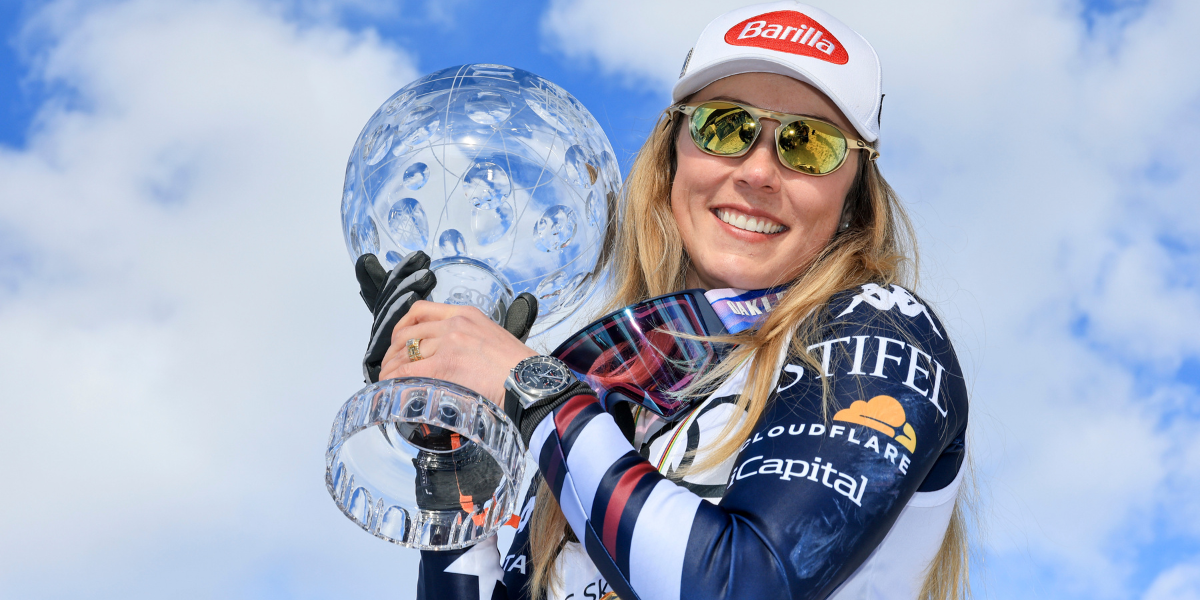
Mikaela Shiffrin’s 2026 season did more than add another glittering title to an already unmatched résumé; it reaffirmed why the Stifel U.S. Ski Team star remains the defining athlete of her era, demonstrating an unparalleled ability to adapt, evolve, and dominate at the highest level of alpine skiing. At 31, Shiffrin navigated a demanding Olympic year with characteristic poise and power, securing the coveted overall World Cup title, claiming an Olympic slalom gold medal in Cortina, and clinching another season slalom crown. These achievements, remarkable by any standard, for Shiffrin represent a continuation of a career that stands alone in alpine skiing history, constantly pushing the boundaries of what is thought possible in a sport defined by relentless speed and precision.
Defining an Era: The Unmatched Legacy Continues
The sheer volume and quality of Shiffrin’s career statistics are staggering, setting a benchmark that may never be surpassed. Her 2026 triumphs elevate her total to an astonishing 110 World Cup victories, a monumental figure that places her far beyond any other alpine skier, male or female. This record eclipses the legendary Ingemar Stenmark’s 86 wins and Lindsey Vonn’s 82, underscoring a consistency and winning mentality that defies historical comparison. Beyond victories, Shiffrin has amassed 168 World Cup podiums, a testament to her consistent presence at the sport’s pinnacle. To put this into perspective, merely reaching 100 World Cup podiums is enough to enshrine a skier among the all-time greats. Shiffrin has not only surpassed this but converted an extraordinary 110 of those 168 podium finishes into victories – a conversion rate of nearly 65%. In a sport where fractions of a second separate triumph from disappointment, and where constant risk-taking is inherent, this level of clinical execution is not just rare; it is unprecedented.
Her trophy cabinet further boasts three Olympic gold medals and eight World Championship gold medals across five distinct disciplines (slalom, giant slalom, super-G, downhill, and alpine combined). This versatility, especially her ability to win across technical and speed events, distinguishes her from many specialists and highlights her complete mastery of the sport. While the 2026 season saw a strategic narrowing of her focus, the breadth of her career achievements paints a picture of an athlete capable of excelling in every facet of alpine racing.
The 2026 Season: A Triple Crown at 31
The 2026 season unfolded as a meticulously managed campaign, culminating in a triumphant triple crown. The overall World Cup title, her sixth, was a testament to her unwavering consistency and strategic point accumulation. The centerpiece of her season, however, was undoubtedly the Olympic Winter Games in Cortina d’Ampezzo. Cortina, a venerable venue steeped in alpine skiing history, provided a fitting stage for Shiffrin to secure her third Olympic gold, dominating the slalom event with a performance that combined flawless technique and immense competitive pressure. This victory was particularly poignant, coming after the disappointment of the previous Olympic cycle and reaffirming her status as the queen of slalom. The slalom season crown, her eighth, solidified her reign in her signature discipline, earned through a series of dominant performances throughout the World Cup calendar.
For most athletes, any one of these accomplishments would define a career. For Shiffrin, they are the latest chapters in an ongoing saga of excellence, achieved at an age when many athletes begin to contemplate retirement. Her ability to maintain such a high level of performance at 31 speaks volumes about her dedication, her team, and her evolving approach to the sport.
Beyond the Numbers: A Mindset of Curiosity and Evolution
Despite a career overflowing with records and medals, Shiffrin’s driving force remains rooted not in accolades, but in an intrinsic desire for improvement. When asked about her motivation, she articulated a philosophy centered on curiosity and exploration. "I think it’s all built around curiosity and exploration," Shiffrin shared in written responses. "I like to feel like I’m improving somehow, or that I have the capability to improve. That improvement really happens in the day-to-day work, rather than the races." This profound perspective highlights a fundamental understanding that sustained success is a byproduct of relentless daily dedication and an insatiable hunger for growth, rather than a singular focus on outcomes.
This mindset has been the bedrock of her remarkable career, carrying her through 15 consecutive seasons of scoring World Cup points. However, sustaining this drive and performance level has necessitated significant strategic adjustments, particularly in how she manages her body. The physical toll of elite alpine skiing is immense, and as an athlete ages, the demands on the body intensify.
Adapting to the Demands: Physical Management and Efficiency
Shiffrin openly discussed the most significant adjustments she’s made, which revolve around her physical management. "As I’ve gotten older, I’ve had to adjust my expectations for what my body can handle," she explained. This candid acknowledgment underscores a critical evolution in her training philosophy. The days of simply increasing volume and intensity are long past. Progress now depends on a sophisticated blend of efficiency and acute body awareness. This involves not just knowing how to train, but intimately understanding how her body responds to specific training loads.
A key part of this evolution, Shiffrin revealed, has been learning to differentiate between muscular fatigue and deeper structural stress, especially concerning her back. This nuanced understanding allows for more precise communication with her medical and coaching team, enabling them to tailor training plans that optimize performance while mitigating injury risk. This level of awareness has fundamentally reshaped her training regimen, dictating how intensity is managed, when recovery is prioritized, and ultimately, how she sustains peak performance across a grueling full season. "Understanding my body and the impacts and demands of the sport – that’s what has changed the most," she affirmed.
This refined approach defined her sixth overall title season. While her capacity for high-volume training has naturally decreased with age, her efficiency in reaching and maintaining a high level of skiing has dramatically improved. "I’ve also gotten more efficient at reaching a higher level of skiing more quickly with experience," she noted, highlighting the invaluable role of years of accumulated knowledge and muscle memory. It’s a testament to her mastery that she can now achieve elite form with less physical expenditure, a critical adaptation for longevity in her sport.
The Cortina Olympics: Mastering the Mental Game
The 2026 Olympic season added an extra layer of complexity and pressure. For Shiffrin, the biggest shift in preparation was mental rather than purely physical. Recognizing the unique emotional demands of the Games, her Olympic preparation began months before the opening ceremonies in Cortina. "I really shifted my focus in my psychology sessions toward Olympic emotions, feelings, fears, expectations, in the middle of the summer," she recounted. This proactive approach to mental conditioning allowed her to address potential psychological hurdles long before they manifested under the intense Olympic spotlight.
Her preparation extended beyond individual sessions, encompassing a holistic team approach. Shiffrin emphasized building strong connections and a unified front across her entire support system – coaches, technicians, and staff. "We had group therapy sessions with my whole team. I wanted to feel connected to everyone and really unified when we went into Cortina," she shared. This innovative strategy underscores her understanding that individual performance, especially at an event as high-stakes as the Olympics, is deeply intertwined with the collective strength and cohesion of the team. By fostering an environment of shared understanding and mutual support, Shiffrin ensured that every member of her entourage was aligned and mentally prepared for the challenges ahead, ultimately contributing to her triumphant Olympic gold.
A Season-Long Duel: Shiffrin vs. Aicher
The 2026 season was not a coronation but a hard-fought battle, particularly for the overall title. This year, Shiffrin’s triumphs came almost exclusively from slalom and giant slalom. This was not a strategic narrowing of her focus by choice but a necessity, shaped by the immense demands of Olympic preparation and the need to maximize her chances in her strongest events. While Super-G remained part of her long-term vision, the compressed timeline and finite energy resources meant she simply didn’t have the bandwidth to bring all elements of speed events to a competitive level for the entire season. "I didn’t have that time this year, and I put focus where it made the most sense," she pragmatically stated.
This narrower path, however, left no margin for error in the fiercely contested overall race. Shiffrin faced a formidable challenger in Germany’s 22-year-old Emma Aicher, who emerged as the most complete skier on the 2026 World Cup circuit. Aicher’s breakout season included five World Cup victories – three in Super-G and two in downhill – alongside consistent podium contention across all four disciplines. Her remarkable versatility meant that the overall title race remained incredibly tight deep into the season. While Shiffrin methodically accumulated points through her unparalleled dominance in technical events, Aicher’s consistent high finishes in both speed and technical races kept the pressure squarely on the American. "I never thought, ‘Oh, I’ve got this,’" Shiffrin admitted, acknowledging the persistent threat. "It was really possible for Emma to take that lead as we got towards the end of the season." The season became a fascinating contrast: Shiffrin’s specialized, almost unbeatable mastery in slalom versus Aicher’s broad, all-around excellence across the entire spectrum of alpine disciplines. This dynamic battle captivated fans and pushed Shiffrin to maintain her absolute peak throughout.
Precision Under Pressure: Shiffrin’s Slalom Supremacy

In her favored discipline, slalom, Shiffrin delivered one of the most dominant stretches of her storied career. Winning nine out of ten World Cup slalom races, alongside her Olympic gold in Cortina, showcased a level of control and execution that was simply unmatched. Yet, these results, she explained, stemmed from something more refined than mere speed or aggressive skiing. "I felt like technical precision and my understanding of how the turnshape really needs to feel was on another level this year," she elaborated. "More like I could get to the good turns pretty quickly and find repetition of those good turns – basically, only repeating high-level skiing and very few ‘bad turns.’"
This ability – to access and sustain high-level skiing faster and for longer periods within a race run – is perhaps the clearest explanation of her continued dominance at this advanced stage of her career. With less overall training volume than in her younger years, Shiffrin is no longer building form through sheer repetition alone. Instead, she is arriving at peak performance more quickly and holding that elevated state consistently, run after run. It is a testament to her profound understanding of the mechanics of skiing, her finely tuned proprioception, and her mental fortitude to execute under immense pressure.
The Cost of Greatness: Sustainability and Future Outlook
Even with such refined efficiency, Shiffrin was candid about the immense cost of maintaining this elite level of performance. "You don’t get a single day to recover or take it easy," she stated bluntly. "You need to have the after-burners on every single moment that you’re on skis. That is just so draining, rewarding of course, but definitely draining." This insight offers a rare glimpse into the relentless physical and mental taxation required to operate at the absolute zenith of a physically demanding sport.
Her candor extended to the sustainability of such a demanding season. "I don’t think a season like that is repeatable," she concluded. This statement, while perhaps surprising from an athlete who consistently defies expectations, is a testament to her self-awareness and strategic planning. It suggests a future where further adaptation will be necessary, potentially involving more selective scheduling or an even more rigorous focus on specific disciplines. For the alpine skiing community, this raises questions about how much longer Shiffrin can maintain her extraordinary pace and what her strategic adjustments might mean for her pursuit of further records.
Broader Implications for Alpine Skiing
Mikaela Shiffrin’s 2026 season carries significant implications for the sport of alpine skiing. Her continued success at 31 challenges conventional wisdom about an athlete’s prime, demonstrating that longevity at the highest level is achievable through intelligent adaptation and a growth-oriented mindset. She serves as an unparalleled role model for aspiring skiers, showcasing not just the glory of victory, but the profound importance of process, resilience, and personal evolution.
Her battle with Emma Aicher also highlighted the dynamic future of the sport. While Shiffrin represents the pinnacle of sustained technical excellence, Aicher’s emergence as a versatile all-rounder signals the rise of a new generation capable of challenging across disciplines. This competitive tension is healthy for the sport, pushing all athletes to refine their skills and strategies.
In essence, at 31, Shiffrin is not merely maintaining greatness; she is actively redefining how it is sustained. The intensity of her training has changed. Her preparation methods have evolved. Her overall approach to competing has been meticulously refined. Yet, one constant remains: the standard she sets for herself and for the sport has not wavered. Driven by an unyielding curiosity, shaped by strategic adaptation, and executed with breathtaking precision, Mikaela Shiffrin continues to push the limits of alpine skiing, turn after turn, and season after season. Her 2026 triumphs are not just another set of records; they are a living testament to an athlete’s journey of perpetual evolution and unparalleled mastery.

