
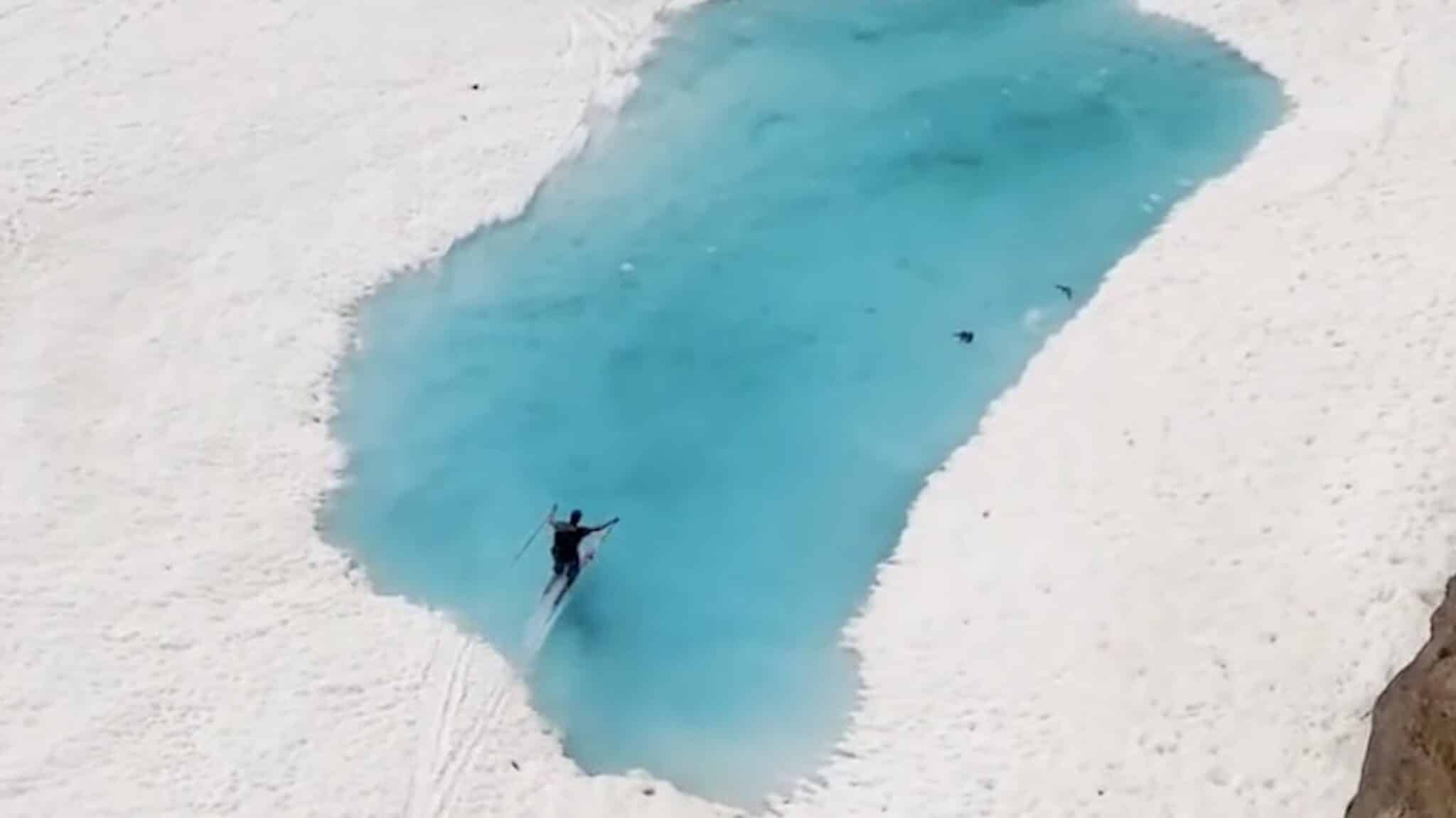
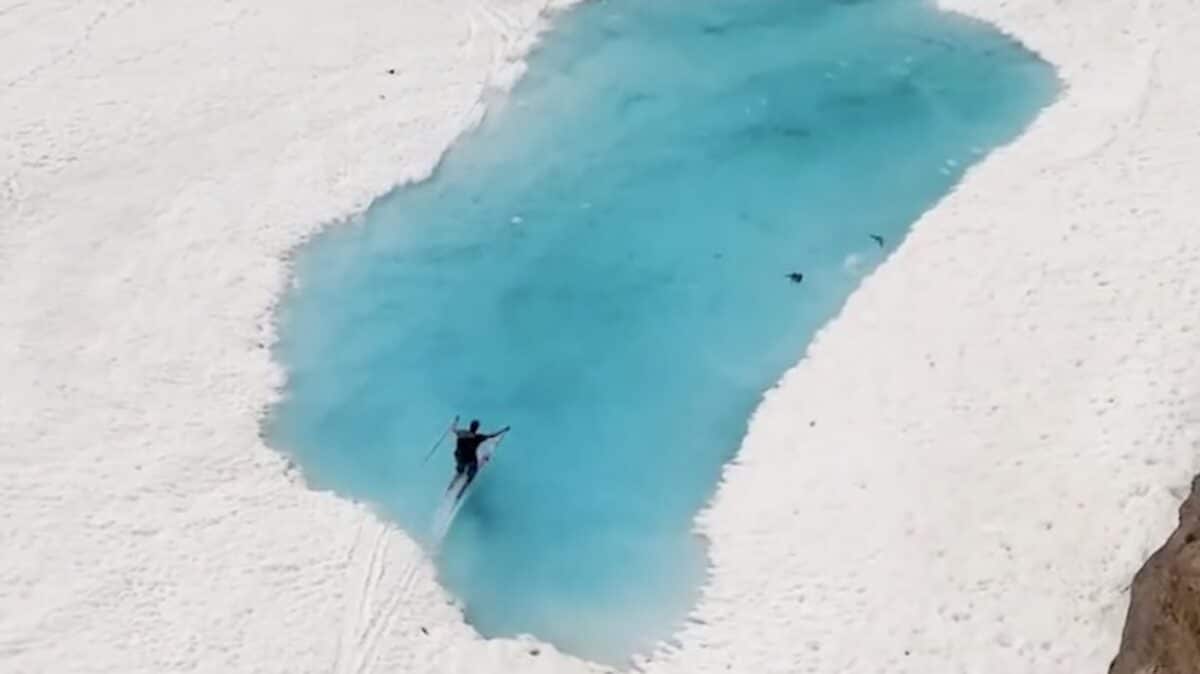
In a display of audacious spring skiing prowess, renowned big mountain skier and mountaineer Owen Leeper successfully navigated a challenging backcountry pond skim in Jackson Hole, Wyoming. The impressive feat, captured on video, showcases Leeper launching himself across a striking aquamarine water feature, a fitting culmination to a day spent in the rugged Jackson Hole backcountry. So exhilarating was the initial success that Leeper, driven by the thrill of the accomplishment, ascended the slope once more to repeat the daring maneuver.
The event, which took place during the late spring season, highlights a popular, albeit risky, tradition among skiers and snowboarders: the pond skim. This activity typically involves skiers using their momentum to glide across a body of water, often at the conclusion of a ski season, as a celebratory and entertaining stunt. The Jackson Hole setting, known for its demanding terrain and vibrant ski culture, provides a dramatic backdrop for such endeavors.
Leeper’s initial successful skim, which saw him clear the expanse of water with apparent ease, was met with evident satisfaction. His quote, “So fun I hit it twice,” encapsulates the exhilaration and confidence derived from the successful crossing. This sentiment is a common theme among participants in pond skims, where overcoming the challenge and achieving a clean pass across the water is a significant accomplishment.
The visual evidence, disseminated through social media and skiing communities, portrays Leeper as a skilled athlete capable of executing complex and high-risk maneuvers. His reputation as a big mountain skier and mountaineer further underscores his comfort and expertise in challenging natural environments. The pristine, snow-covered slopes juxtaposed with the bright blue water create a visually arresting scene, amplifying the spectacle of the stunt.
However, the nature of pond skimming is inherently unpredictable. Even for experienced athletes, the success of such a crossing is contingent on numerous factors, including speed, angle of approach, snow conditions, and the water feature itself. Recognizing this inherent risk, the original report included a cautionary note, emphasizing that not all attempts are guaranteed to be successful. A secondary video clip, purportedly showing Leeper coming up short on a different pond skim attempt, serves as a stark reminder of the potential for failure and the importance of safety protocols. This instance, where a participant did not successfully clear the water, underscores the need for careful planning and awareness of potential consequences.
The Art and Danger of the Pond Skim
Pond skimming has evolved from a simple end-of-season party trick into a competitive and often highly publicized event within ski resorts and backcountry communities. The practice typically involves participants skiing or snowboarding down a slope and aiming to cross a pool of water without sinking. Success is often measured by distance traveled or simply by remaining dry. The risk factor increases exponentially with the size of the pond, the speed required to clear it, and the terrain leading up to the water.
While resort-based pond skims are often organized with safety measures in place, such as rescue personnel and controlled environments, backcountry versions, like the one documented with Leeper, carry significantly higher risks. These environments lack the oversight of ski patrol and resort management, placing the onus entirely on the participants for safety. Factors such as unpredictable snowmelt, hidden obstacles beneath the water, and the isolation of backcountry locations can exacerbate the dangers.
The appeal of these stunts lies in their visual spectacle and the challenge they present to athletes. For skiers like Leeper, who are accustomed to navigating extreme terrain, a successful pond skim represents a different kind of mastery – one that blends precision, nerve, and a touch of playful showmanship. The decision to attempt the skim twice suggests a desire to not only achieve the feat but to perfect it, perhaps pushing the boundaries of what is considered possible in such a setting.
Contextualizing Leeper’s Achievement in Jackson Hole
Jackson Hole Mountain Resort is globally recognized for its challenging terrain, steep chutes, and abundant snowfall, attracting some of the world’s most accomplished skiers. The backcountry surrounding Jackson Hole offers an even more extreme and less forgiving environment. Spring skiing in this region often presents a unique set of conditions: variable snowpack, potential for avalanche activity, and the emergence of natural water features as snow melts.
The timing of Leeper’s successful skim, likely in late spring or early summer as snowmelt becomes more prevalent, is consistent with when such water features become accessible. The "picturesque aquamarine water feature" suggests a natural pond formed by melting snow, adding to the natural beauty and inherent wildness of the location. The fact that Leeper chose to repeat the successful attempt speaks to his deep connection with the mountain and his pursuit of pushing personal limits.
Safety Considerations and Expert Analysis
The inclusion of a cautionary narrative alongside Leeper’s success is crucial for responsible reporting. Experts in outdoor safety consistently advise against undertaking high-risk activities without proper planning and safety measures. For pond skimming, this includes:
- Thorough assessment of the water feature: Understanding its depth, length, and any potential hazards beneath the surface.
- Adequate speed and approach: Calculating the necessary velocity to clear the water, which can be influenced by the slope angle and snow conditions.
- Exit strategy: Planning for what happens if the crossing is not successful, including safe ways to exit the water and a means of communication.
- Buddy system: Never attempting such a stunt alone. Having a partner present for observation and assistance in case of an emergency is paramount.
- Appropriate gear: While often not worn for pond skims, understanding the risks associated with wet and cold conditions is vital.
The failure depicted in the secondary video serves as a practical illustration of these safety concerns. A failed attempt can lead to significant exposure to cold water, potential injury from submersion, and difficulty in self-rescue, especially in remote backcountry locations.
Broader Implications for the Ski Community
The dissemination of videos and images depicting stunts like Owen Leeper’s pond skim has a dual impact on the ski community. On one hand, it inspires awe and admiration for athletic achievement, showcasing the incredible capabilities of skiers. It can also foster a sense of camaraderie and shared passion for the sport. On the other hand, it carries the potential to encourage imitative behavior among less experienced individuals who may underestimate the risks involved.
Therefore, it is imperative that reporting on such events balances the excitement of the achievement with a clear emphasis on safety and responsible participation. The inclusion of expert advice and cautionary tales is not intended to diminish the spectacle but to ensure that the spirit of adventure is pursued with a conscious awareness of potential dangers. The success of Owen Leeper, while impressive, should be viewed within the context of his extensive experience and skill, and not as an endorsement for untrained individuals to attempt similar feats.
The ongoing evolution of skiing, particularly in the backcountry, continues to push the boundaries of what is possible. Events like this, while perhaps unconventional, contribute to the narrative of human-powered adventure and the pursuit of extraordinary experiences in natural landscapes. As the ski season draws to a close in many regions, the allure of the pond skim, whether in a controlled resort setting or a remote backcountry locale, remains a potent symbol of dedication, daring, and the enduring spirit of winter sports.

