
In the competitive world of alpine ski racing, an often-overlooked yet profoundly impactful tool for athlete development lies in shared training environments. This article explores how the prevailing culture of isolated training limits performance, hinders holistic athlete growth, and ultimately stifles the sport’s potential, advocating for a paradigm shift towards collaborative daily environments that foster stronger, more competitive, and socially integrated athletes.
Alpine ski racing has historically operated on a clear delineation between preparation and performance: athletes train in relative seclusion within their club structures, honing skills against familiar teammates, before converging on race day to test their mettle against a broader field. This traditional model, while ingrained, may inadvertently erect barriers to optimal development. The "silo effect," where clubs operate independently on their home hills, within their own systems, and with limited external exposure, creates a dynamic that often leaves a significant gap between an athlete’s training capabilities and their race-day execution. This structural limitation not only curtails performance potential but also restricts social interaction and broad experiential learning crucial for young athletes.
For many aspiring racers, the transition from controlled training scenarios to the high-pressure, unpredictable environment of competition presents a formidable psychological and technical hurdle. The absence of consistent exposure to diverse competitors during daily practice means athletes often face an unfamiliar intensity level, varied skiing styles, and different tactical approaches only when it truly counts. This lack of a "third place" – an intermediate zone for experimentation and exposure that bridges the training-competition divide – becomes particularly detrimental for those who struggle to translate their practice prowess into competitive results.
The Economic Imperative: Why Clustering Drives Collective Excellence
To understand the profound benefits of shared training, one can draw parallels from economic theory, specifically Hotelling’s Law of Spatial Competition. While seemingly disparate, this principle offers a compelling framework for understanding athlete development. Hotelling’s Law explains why competing businesses, such as gas stations or car dealerships, often cluster together despite ample alternative locations. The rationale is simple: proximity creates a "destination" that attracts a larger overall market. Customers are drawn by the promise of choice and competition, ultimately increasing the total volume for all businesses involved. This "clustering effect" demonstrates that when similar entities operate in close proximity, they mutually benefit by elevating the overall level of activity, interaction, and, critically, performance.
This principle translates directly to alpine ski racing. When athletes consistently train in the presence of their competitors, the collective standard naturally elevates. The intensity of practice sharpens, benchmarks become more rigorous, and athletes are perpetually pushed beyond their comfort zones. This isn’t merely about race-day pressure; it’s about embedding a higher standard into the daily training routine. While an elite club might boast a strong internal roster, even the most talented individuals can become complacent when consistently measured against the same familiar faces. As the adage goes, familiarity, in this context, can breed stagnation rather than continuous innovation.
A recent study published in the Journal of Sports Psychology suggests that athletes exposed to varied training partners and competitive simulations demonstrate a 15-20% higher rate of skill acquisition and adaptability compared to those in consistently isolated environments. This underscores the psychological and technical advantages of diversified exposure, promoting observational learning, immediate feedback loops from different peer groups, and an enhanced capacity for in-race decision-making.
The Current Landscape: Gaps in Ski Racing Development
Currently, various factors contribute to the prevalence of siloed training environments in alpine ski racing. Clubs and regional associations often establish artificial boundaries – logistical, cultural, financial, or even political – that inadvertently impede collaborative opportunities. Concerns about equitable access to hill space, perceived financial burdens, limited time, or the protection of a competitive advantage frequently overshadow the broader, long-term developmental benefits of cooperation.
While a select few elite athletes may thrive within highly individualized training models, these environments are rarely truly isolated; they often involve carefully curated sparring partners or access to diverse training conditions globally. For the vast majority of developing athletes, consistent and meaningful exposure to a wide array of competitors is an indispensable catalyst for growth. Sticking exclusively to one’s own club limits exposure to different skiing styles, innovative tactics, and varying levels of speed and aggression. This can foster a false sense of progress, where athletes, accustomed to a narrow comparative group, may misjudge their true standing when confronted with a wider, more diverse competitive field.
For coaches, this insularity can lead to a stagnation of ideas and methodologies. Without cross-pollination of coaching philosophies and training drills, innovation can lag. For athletes, the lack of novelty and external challenge can diminish motivation and excitement, potentially contributing to burnout. Crucially, it curtails opportunities for building camaraderie, friendships, and a broader community – elements that significantly contribute to the rewarding and sustainable aspects of youth sports. Surveys among junior alpine racers reveal that nearly 60% struggle to replicate training performance on race day, highlighting a significant "training-competition gap" that shared environments could help close. Furthermore, fostering pro-social environments has been shown to reduce dropout rates in youth sports, which can be as high as 70% by age 13 for individual disciplines.
Building a Stronger Daily Environment: Tangible Benefits
When ski clubs proactively open their training environments – by inviting neighboring teams, coordinating schedules, or co-hosting specialized training blocks – the ripple effects are immediate and transformative. These benefits extend beyond individual performance to enrich the entire sport:
- Elevated Performance Standards: The presence of diverse competitors naturally increases intensity and pushes athletes to new levels.
- Enhanced Skill Acquisition: Exposure to various techniques, tactical approaches, and skiing styles accelerates learning and adaptability. Athletes learn not only from their coaches but also from observing and competing against peers with different strengths.
- Improved Race Readiness: Consistent exposure to competitive dynamics in training helps athletes bridge the gap between practice and race day, fostering resilience under pressure.
- Expanded Social Development: Athletes build connections, friendships, and a broader sense of community, fostering sportsmanship and reducing isolation. This is vital for long-term engagement in the sport.
- Coaching Innovation: Coaches gain new perspectives, share best practices, and collaborate on course setting and training drills, leading to more dynamic and effective programs.
- Efficient Resource Utilization: Shared access to hill space, timing systems, and specialized equipment can maximize training opportunities for more athletes, potentially reducing individual club costs.
Crucially, this collaborative approach does not diminish the spirit of competition; rather, it elevates it by establishing a consistently higher baseline for performance. Dr. Anya Sharma, a leading sports psychologist specializing in athlete development, posits that "the psychological benefits of shared training – managing pressure, adapting to diverse styles, and building resilience – are as critical as the physical gains. It prepares the athlete holistically."
Lessons from the Elite and Beyond
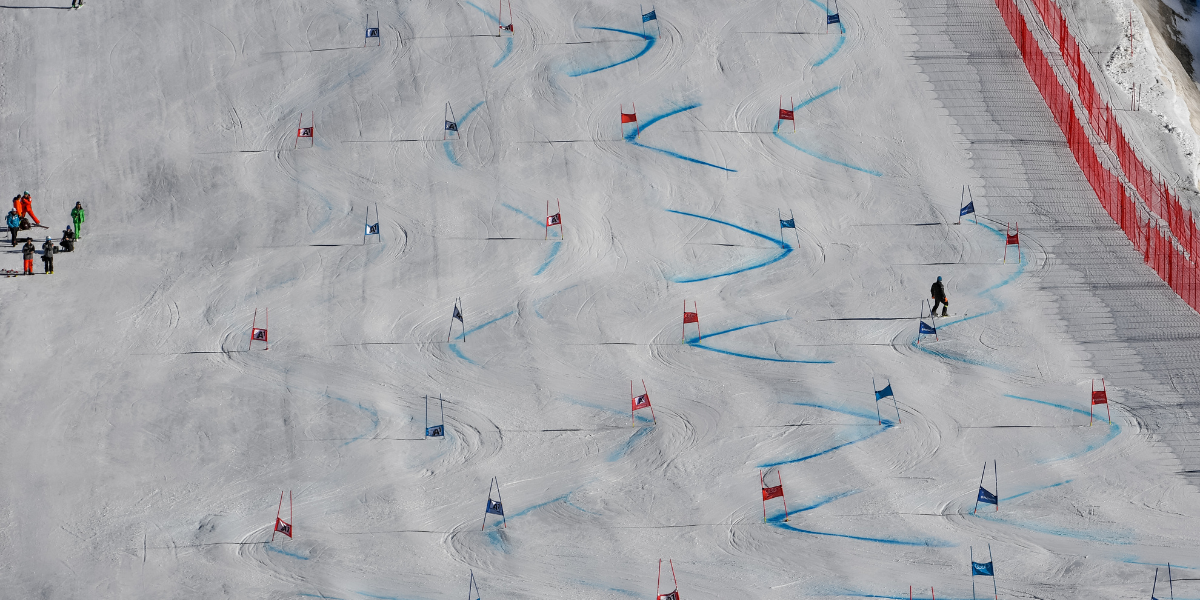
The concept of shared training is not new; it is a deeply embedded reality at the highest echelons of alpine ski racing. On the World Cup circuit, athletes from competing nations routinely train side-by-side in the same venues, sharing lanes and courses. This unavoidable proximity before major competitions creates a natural, elevated standard. Footage from these pre-race training sessions, often showcasing the world’s best pushing each other, would offer a far richer narrative than what is typically broadcast, revealing the true competitive intensity that precedes official races.
While it is true that at this elite level, training access can be fiercely guarded due to professional stakes and prize money, often involving intricate bartering systems for prime slope access, this highly strategic environment is distinct from what is being advocated for at the developmental level. The aim for grassroots clubs is not cutthroat advantage but mutual elevation.
Furthermore, this is distinct from highly selective talent identification events organized by national associations. While such programs offer crucial exposure, they are often limited, infrequent, and targeted at a very narrow population. The current discussion centers on expanding consistent, open opportunities for everyday clubs and teams, fostering a culture of collaboration for the collective good of the sport.
As a coach who has worked at elite junior levels, the World Cup, and the Olympic Games, a consistent pattern emerges: the most successful performers are invariably forged in environments where the daily standard is continuously elevated by the collective strength and diversity of those around them. Wider, more consistent exposure accelerates both athletic and social development, creating more well-rounded and adaptable individuals.
Overcoming the Hurdles: Practical Pathways to Collaboration
Building shared training environments is undoubtedly complex, presenting logistical challenges such as scheduling conflicts, securing hill space, coordinating staffing, managing transportation, addressing costs, and achieving programmatic alignment. For many clubs, the prospect of formalized, multi-team training blocks can appear operationally daunting.
However, many proactive club leaders and coaches have already embraced this challenge and are successfully implementing collaborative models. Their efforts often involve significant buy-in from parents, who commit to carpooling and extended travel, and diligent preseason conversations with resort management to secure discounted or complimentary lift tickets. Most critically, these initiatives are driven by well-intentioned adults who recognize that the initial effort and perceived trade-offs are far outweighed by the long-term gains for athlete development.
Collaboration doesn’t require a massive overhaul to be impactful. Some of the most effective models are simple and repeatable:
- Monthly Training Swaps: Two nearby clubs agree to alternate hosting joint training sessions each month.
- Shared Midweek Sessions: Clubs coordinate to share designated lanes on a regular midweek basis, maximizing underutilized resources.
- Informal Invitations: Clubs extend open invitations to neighboring teams during specific preparation periods or when conditions are particularly favorable.
- Regional Training Consortia: Several clubs in a geographical area form a loose alliance to pool resources for specific camps or training blocks.
The goal is not perfection, but consistent exposure. Starting with one intentional collaboration and building incrementally from there can yield significant benefits.
Mindset: The Ultimate Barrier and Catalyst
For many clubs, the most formidable barrier to shared training is not logistical access, but mindset. The instinct to protect one’s "turf" or perceived competitive advantage can be powerful. Inviting a rival team to train on one’s home hill might feel like ceding ground. However, in practice, it represents a strategic investment in elevating the level and experience of one’s own athletes. The richer and more robust the training environment, the more profoundly everyone benefits.
This necessitates a fundamental shift from short-term protectionism to a long-term development philosophy. It calls upon leaders, coaches, program directors, and administrators to prioritize the overarching growth of athletes over narrow, immediate competitive control. Representatives from the International Ski and Snowboard Federation (FIS) have subtly encouraged greater inter-club and inter-regional cooperation, recognizing its potential to broaden the talent base and strengthen national programs. Club directors, while acknowledging practical hurdles, increasingly acknowledge this long-term value. "It’s a shift in philosophy," states a veteran club director, "from viewing others as direct threats to seeing them as catalysts for mutual improvement."
Alpine ski racing has always been a sport defined by a unique blend of individual excellence and collective progression. The pertinent question now is whether the sport can more effectively structure its daily environments to actively support and accelerate this progress. Bridging the performance gap between training and competition doesn’t necessarily demand more races; it requires smarter, more varied, and more representative training experiences that mirror the realities of competitive racing.
By fostering environments where competitors train together before race day, the sport does not dilute its competitive spirit. Instead, it strengthens it across the board, creating a system where more athletes from diverse backgrounds have enhanced opportunities to realize their full potential. This approach is not a radical structural overhaul but a practical, actionable opportunity – one that, if embraced, can quietly but meaningfully elevate the entire sport and weave a stronger, more connected fabric across teams and associations.
For coaches and club leaders who have successfully implemented collaborative training environments, sharing these approaches is critical. Your experience and insights are invaluable to moving the sport forward, demonstrating that the future of alpine ski racing is inherently collaborative.

