
The inaugural Red Bull Features Cup concluded with a dramatic and mathematically improbable three-way tie, ultimately broken by a sudden-death hip session that saw Team Asia-Pacific claim overall victory. The event, held on an elaborately sculpted course, brought together 12 of the world’s most dynamic snowboarders, challenging traditional competition formats by prioritizing creativity, teamwork, and diverse skillsets across four distinct zones. This groundbreaking debut has set a new benchmark for competitive snowboarding, emphasizing progression, collaboration, and a session-driven atmosphere over conventional pressure.
A New Paradigm for Snowboard Competition
In an era where action sports constantly seek innovation, the Red Bull Features Cup emerged as a bold experiment, designed to push the boundaries of competitive snowboarding. Unlike traditional slopestyle or big air contests that often focus on singular, high-difficulty tricks, this event championed a holistic approach. It sought to reward adaptability, strategic thinking, and the collective synergy of a team, drawing inspiration from the roots of snowboarding where riders sessioned features together, feeding off each other’s energy. Red Bull, a long-standing patron of extreme sports, has historically been at the forefront of creating unique platforms that foster innovation and celebrate rider culture, and the Features Cup stands as a testament to this legacy. The event’s underlying philosophy aimed to counteract potential stagnation in contest formats by injecting elements of unpredictability and collaborative challenge.
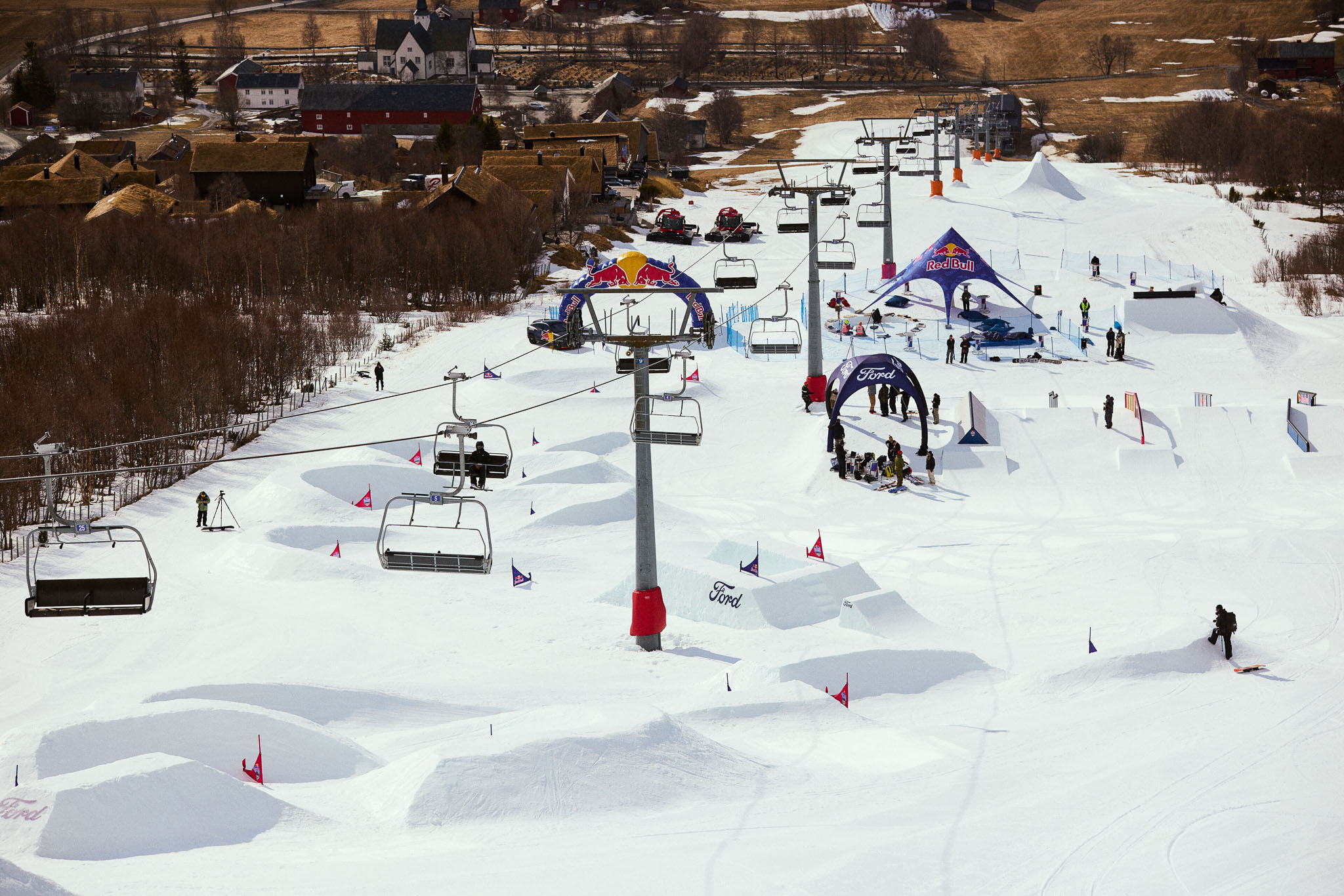
The meticulously crafted course, described by participants and observers as "outrageous," was a central character in this narrative. It was designed not merely as a series of obstacles but as an integrated playground that encouraged diverse lines, creative interpretations, and strategic teamwork. This approach was further amplified by the "Mischief Multiplier," a series of creative challenges and format twists layered throughout the competition, designed to keep riders on their toes and prevent rote execution.
Global Talents Converge: The Teams
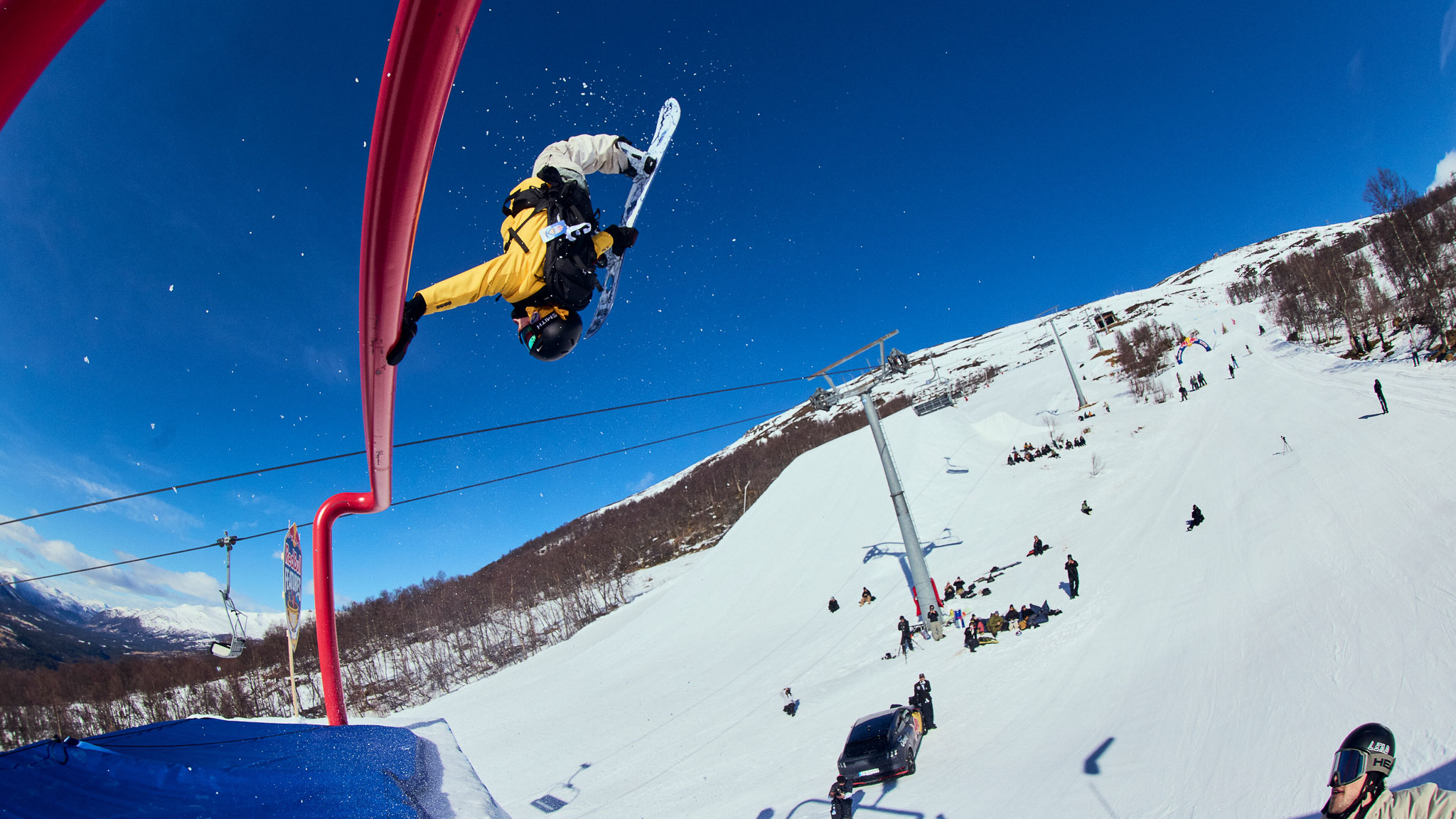
Three formidable regional teams assembled, each bringing a distinct blend of talent, experience, and style to the unique challenges of the Red Bull Features Cup. Their diverse compositions underscored the event’s commitment to showcasing a wide spectrum of snowboarding prowess.
Team Europe was a powerhouse, featuring Norwegian phenom Marcus Kleveland, renowned for his unparalleled air game and technical mastery. Alongside him were fellow Norwegian Fridtjof Tischendorf, affectionately known as "Fridge," a rider celebrated for his effortless style and deep bag of rail tricks, Isak Ulstein, known for his versatility, and Swiss rider Celia Petrig, a rising star recognized for her smooth flow and creative approach. This team was expected to excel in zones requiring technical precision and aerial innovation.
Representing North America were American talents Luke Winkelmann, whose speed and precision are hallmarks of his riding, Denver Orr, a consistent performer on rails and technical features, Egan Wint, known for his all-mountain capabilities, and Lane Weaver, a stylish rider with a strong park background. The North American contingent was anticipated to leverage their collective experience in diverse park and slopestyle settings, particularly in zones demanding consistent execution and quick adaptation.
The Asia-Pacific team comprised Japanese sensation Cool Wakushima, celebrated for her progressive style and amplitude, New Zealander Zephyr Lovelock, whose smooth air awareness makes him a quarterpipe specialist, Australian Rocco Jamieson, a versatile rider with a strong competitive record, and Miyabi Onitsuka from Japan, known for her powerful riding and technical jumps. This team was seen as a dark horse, capable of surprising with their unique blend of creativity and raw talent, particularly in air-focused disciplines.
The Gauntlet: A Zone-by-Zone Breakdown
The competition unfolded across four dynamic zones: banked slalom, rail jam, quarterpipe, and jump. Points were awarded 5-3-1 for first, second, and third place in each zone, ensuring that consistency across disciplines was as crucial as individual brilliance. The "Mischief Multiplier" infused each zone with an additional layer of strategy and excitement.
Zone 1: The Banked Slalom – Speed, Strategy, and Surprise
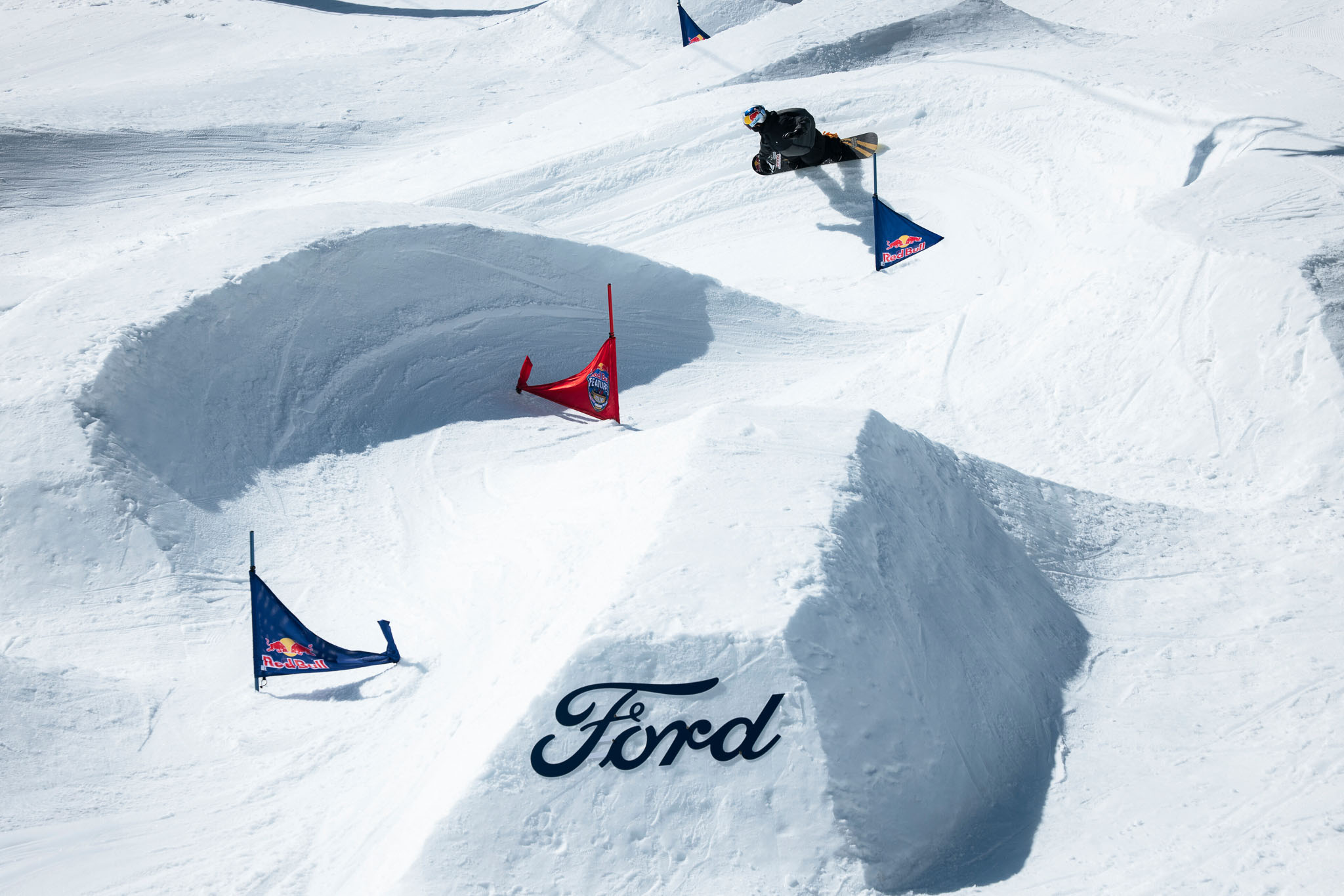
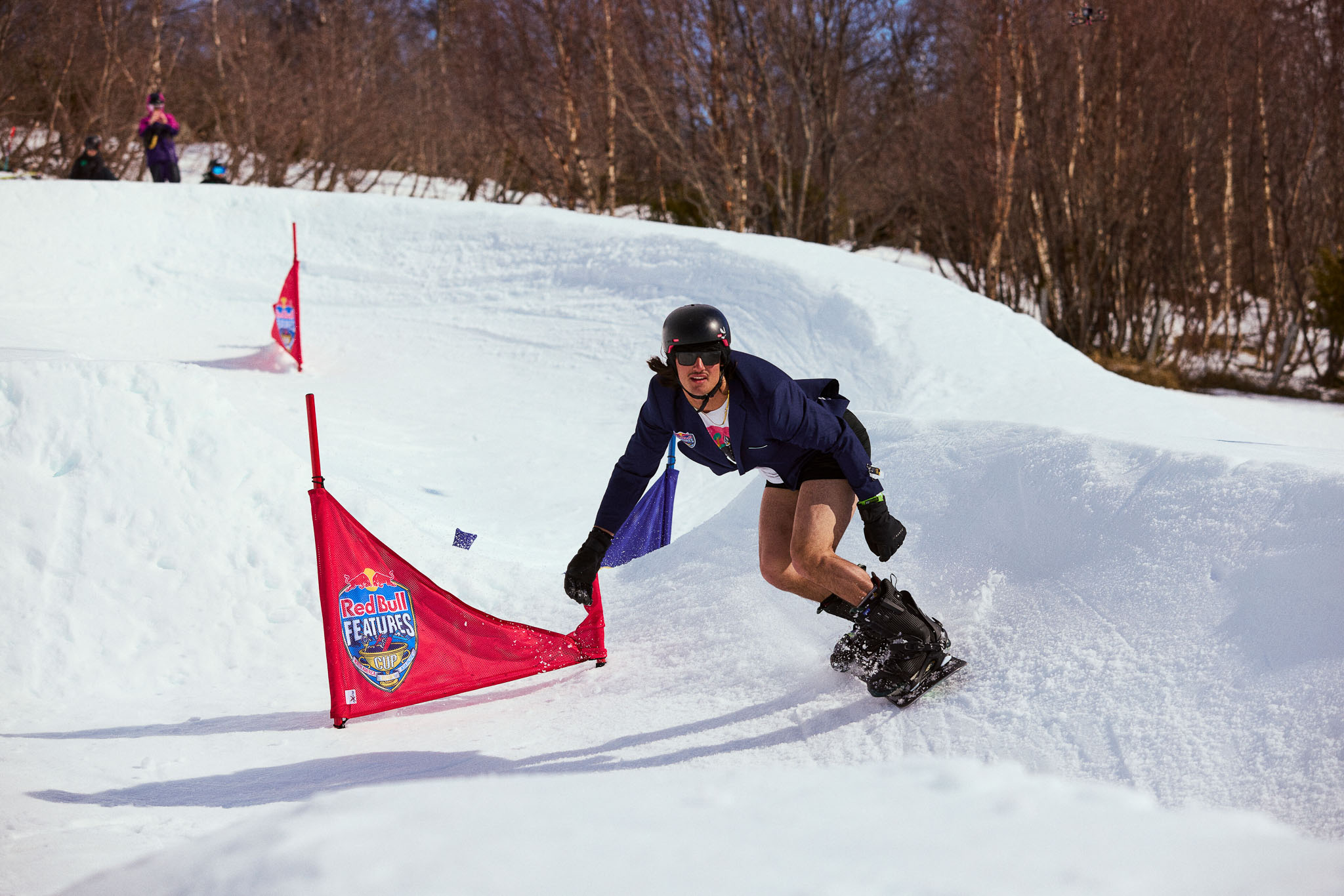
The Red Bull Features Cup kicked off with the banked slalom, a discipline that immediately underscored the event’s innovative spirit. This wasn’t a conventional race against the clock; it was a complex challenge combining raw speed with strategic decision-making and a dash of unpredictability. Teams logged cumulative times across two runs, but with a significant twist: one run was executed on standard boards, while the other demanded mastery of mini boards, forcing riders to adapt their technique and balance instantly. Penalties for missed gates added pressure, but the "Mischief Multiplier" offered tantalizing bonuses. Time deductions were awarded for creative risk-taking, such as executing flips mid-course, turning a speed event into a canvas for freestyle expression.
North America’s Luke Winkelmann set an blistering pace on his standard board, immediately showcasing his team’s formidable speed and precision. His clean lines and aggressive attack through the banks put his team in a strong initial position. However, the unique format, particularly the mini-board runs and the flip bonuses, ensured that standings remained incredibly tight. Teams had to weigh the risk of a mid-course trick against potential penalties, making for a thrilling strategic opening that saw positions constantly shift. Asia-Pacific and Europe demonstrated strong tactical awareness, ensuring no single team could runaway with an early lead.
Zone 2: The Rail Jam – Technicality Meets Randomization
The rail jam quickly emerged as one of the most dynamic and unpredictable zones, perfectly encapsulating the "Mischief Multiplier" ethos. It began as a traditional, open session, allowing riders to showcase their technical prowess on a variety of rail and box features. However, the atmosphere intensified dramatically with the introduction of a randomizer element: a spin wheel that dictated specific tricks or features riders had to incorporate on the fly. This twist demanded rapid adaptation, deep technical versatility, and an unshakeable creative mindset under pressure.
North America, known for its deep bench of technically proficient park riders, leaned heavily into its rail depth here. Riders like Denver Orr consistently delivered complex combinations and clean executions, making this zone a clear strength for their team. However, it was Europe’s Fridtjof Tischendorf, or "Fridge," who truly shone. His fluid style and seemingly endless repertoire of rail tricks allowed him to consistently deliver under both open and randomized conditions. Tischendorf’s ability to seamlessly integrate dictated tricks while maintaining his signature flow earned him widespread acclaim and anchored Europe’s strong performance in this challenging zone, preventing North America from dominating completely.
Zone 3: The Quarterpipe – Amplitude, Air Awareness, and Alliance
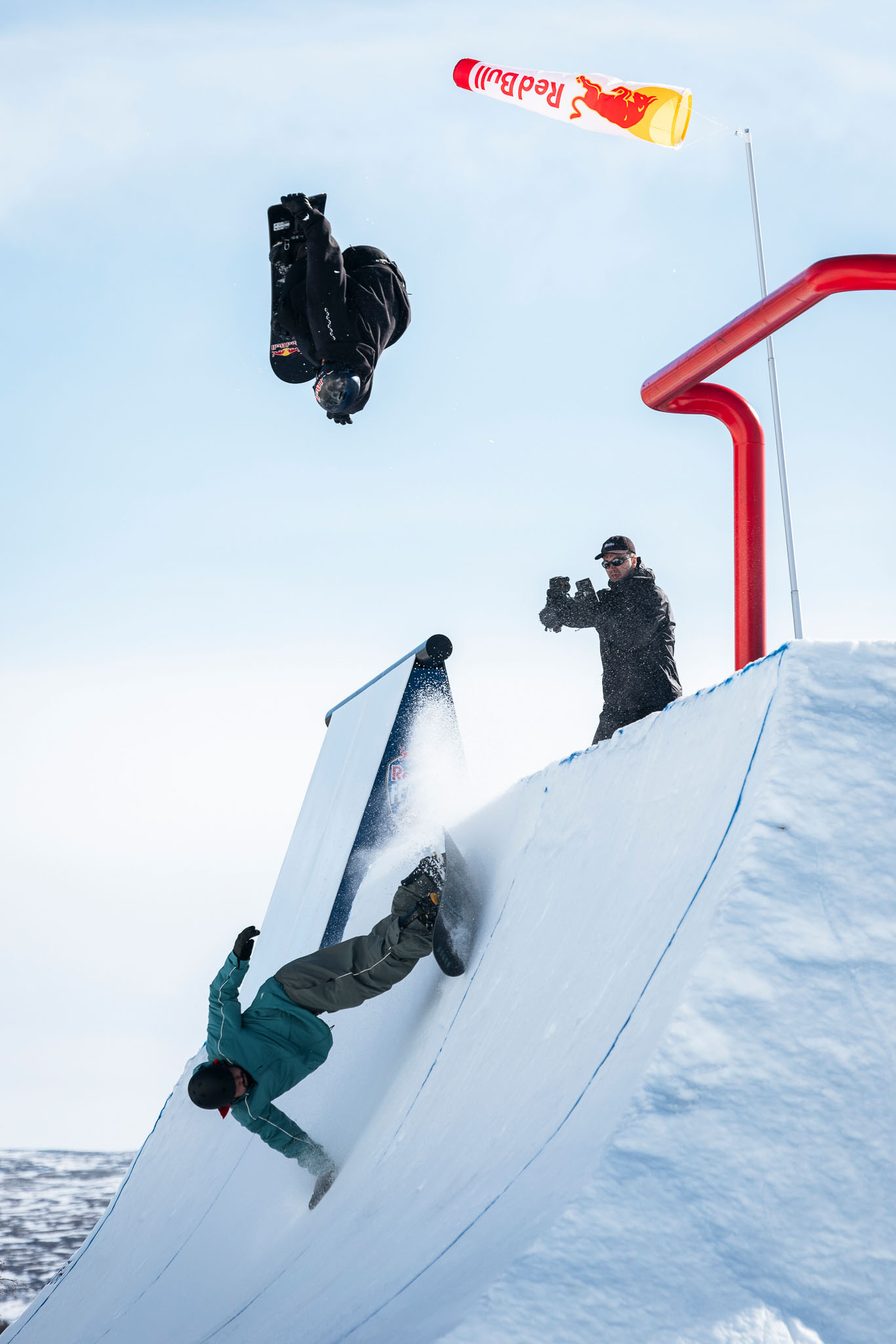
The quarterpipe zone shifted the focus to amplitude, air awareness, and, crucially, team coordination. The feature itself was enhanced with additional elements like a wall ride and a hitching post, expanding the creative possibilities beyond simple straight airs. A key element of the "Mischief Multiplier" in this zone was the bonus points on offer for synchronized "doubles" runs. This required one rider to hit low on the coping while a teammate aired directly over them, a maneuver demanding impeccable timing, trust, and collaborative spirit.
In a testament to the camaraderie and skill level of the field, all three teams successfully pulled off these synchronized doubles, generating an electric, collaborative energy that resonated with the event’s core philosophy. Europe’s Tischendorf again played a pivotal role, anchoring his team’s performance with consistent, high-amplitude airs and precise execution. Asia-Pacific, despite showcasing strong individual air awareness across its roster, including Zephyr Lovelock’s fluid style, ultimately fell just short in the zone standings. Their individual brilliance was undeniable, but Europe’s collective execution and the successful integration of the synchronized element gave them a slight edge, further tightening the overall team standings.
Zone 4: The Jump Session – Style, Progression, and Precision
The final jump session was designed to be a defining highlight, offering a unique progression format that diverged significantly from typical big air contests. Rather than pushing for ever-increasing rotations, each rider was required to build their trick selection from 180s up to a maximum of 900-degree rotations. This capped rotation level deliberately shifted the focus away from sheer difficulty and towards flawless execution, impeccable style, and consistent landings. Teams had to carefully plan their trick sequences, ensuring each rider contributed to a cohesive and stylish display.
Europe, spearheaded by the undisputed air maestro Marcus Kleveland, came into this zone as a formidable powerhouse. Kleveland’s effortless 720s and 900s, executed with his signature style, were expected to be a major advantage. However, the unique format meant that simply spinning big was not enough. All three teams rose to the challenge, demonstrating remarkable control and creativity within the imposed limitations. Asia-Pacific’s Miyabi Onitsuka delivered powerful, clean jumps, while North America’s Luke Winkelmann showcased his diverse trick bag. The emphasis on style and consistency, rather than raw rotation numbers, created a tightly contested finale that showcased the depth of talent across all regions and kept the overall results in suspense until the very last landing.
The Unprecedented Conclusion: A Three-Way Tie
In a truly astonishing turn of events, the Red Bull Features Cup culminated in a rare and mathematically improbable three-way tie after all four zones. Each team – Europe, North America, and Asia-Pacific – finished with an identical 12 points. This outcome was a powerful testament to the evenly matched field, the effectiveness of the diverse zone challenges, and the strategic depth required to navigate the "Mischief Multiplier."
Europe secured two zone wins, showcasing their dominance in specific disciplines. Asia-Pacific, while not clinching as many outright victories, demonstrated remarkable consistency, combining one zone win with multiple second-place finishes, steadily accumulating points. North America’s strength lay in its consistent performance across all zones, never falling far behind and frequently securing crucial second and third-place points that kept them level with their competitors. The deadlock created an atmosphere of palpable tension and excitement, forcing event organizers into an unplanned, sudden-death scenario.
Sudden Death: The Hip Session Decider
With the overall title hanging in the balance, a high-stakes hip session was announced as the tie-breaker – an unplanned fifth zone that would decide the champion. Hip features are renowned for rewarding creativity, amplitude, and unique lines, allowing riders to launch off a curved transition and land on a different part of the same or an adjacent transition. It’s a less structured, more freestyle-oriented challenge, perfectly aligned with the event’s spirit.
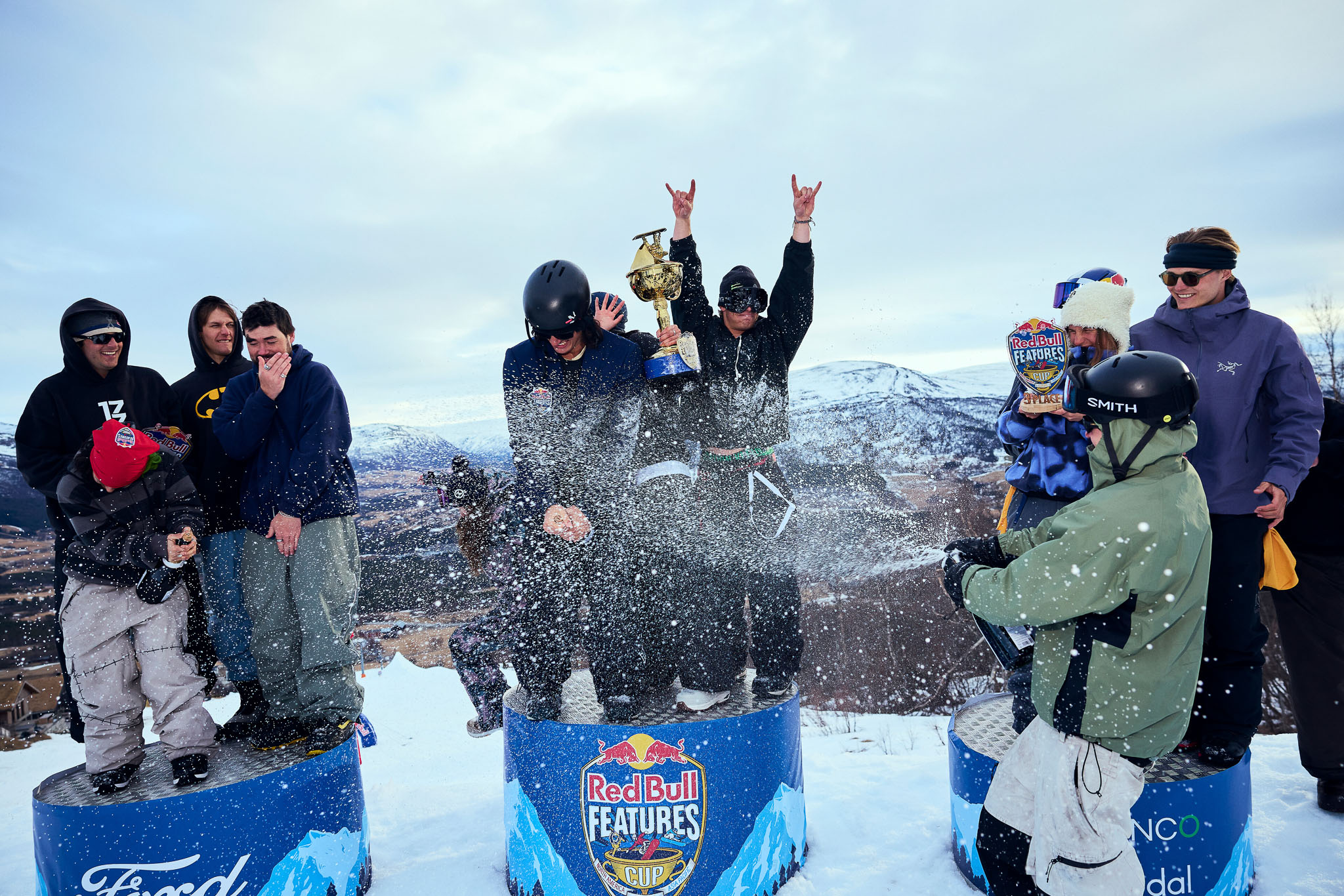
In this sudden-death showdown, Team Asia-Pacific capitalized on its momentum and the collective depth of its roster to secure the overall victory. Their riders, including Cool Wakushima and Zephyr Lovelock, showcased exceptional air awareness, creativity, and clean landings off the hip feature, demonstrating a natural affinity for the improvisational demands of the challenge. Their ability to deliver under immense pressure, coupled with their consistent performance throughout the earlier zones, ultimately propelled them to the top of the podium. North America secured second place, followed closely by Europe in third, reflecting the razor-thin margins that separated the elite competitors throughout the entire event.
Final Results:
1st Asia-Pacific
2nd North America
3rd Europe
Beyond the Podium: A New Benchmark for Snowboarding
While the podium celebrated Asia-Pacific’s hard-fought victory, the defining takeaway from the inaugural Red Bull Features Cup transcended mere rankings. The event successfully cultivated a unique "vibe"—a session-driven environment where riders genuinely fed off each other’s energy, pushing creative boundaries and fostering progression without the suffocating pressure often associated with traditional contests. The infectious camaraderie and mutual respect among competitors were palpable, suggesting a successful departure from the cutthroat intensity of some established formats.
The Red Bull Features Cup, with its successful debut, has undoubtedly set a new benchmark for competitive snowboarding. Its innovative format, which prioritized creativity, teamwork, and diverse skillsets, offers a compelling alternative to existing structures. The emphasis on adaptability through elements like mini boards and randomized challenges, combined with the collaborative nature of synchronized runs, demonstrates a forward-thinking approach to contest design.
Implications for the Future of Snowboarding
The success of the Red Bull Features Cup carries significant implications for the future trajectory of competitive snowboarding. It suggests a growing appetite among both riders and fans for events that prioritize style, flow, and creative expression over purely technical difficulty or numerical scores.
- Rider-Centric Design: The event’s positive reception from athletes indicates a potential shift towards more rider-centric contest formats that allow for greater individual expression and less restrictive judging criteria. Riders consistently lauded the format for fostering a fun, progressive atmosphere where they could genuinely enjoy their sport.
- Team Dynamics: The introduction of team-based competition adds a compelling layer of strategy and camaraderie that is often absent in individual sports. This could inspire similar team formats in other action sports, enhancing spectator engagement and creating new narratives.
- Innovation in Course Design: The "outrageous" and highly integrated course design underscores the importance of imaginative terrain creation. Future events may increasingly move towards bespoke, multi-feature courses that encourage versatility rather than specialized skills on isolated obstacles.
- Broadened Appeal: By emphasizing creativity and the "vibe," the Red Bull Features Cup has the potential to appeal to a broader audience, including those who appreciate the artistic and cultural aspects of snowboarding beyond the sheer athletic spectacle.
- Red Bull’s Continued Influence: The event further solidifies Red Bull’s role as a leading innovator and patron in the action sports world, willing to invest in experimental formats that challenge the status quo and push the sport forward.
The Red Bull Features Cup has not only delivered an unforgettable competition but has also laid down a gauntlet, challenging the industry to rethink what competitive snowboarding can be. It has proven that creativity can indeed lead, teamwork can matter profoundly, and, crucially, that fun can remain at the very core of high-stakes competition. Its influence is likely to resonate for years to come, shaping the landscape of snowboarding events worldwide.

