
The pursuit of optimal muscular mechanics and function under the extreme loading conditions of alpine ski racing has long fascinated the scientific community. However, a persistent and perplexing challenge remains: the often-modest transfer of gains from conventional strength and conditioning programs into tangible on-snow performance. Despite athletes demonstrating clear improvements in general strength capacities through rigorous training, research has consistently revealed only weak correlations, typically in the range of r = 0.3–0.4, between these general strength metrics and actual ski performance outcomes. This persistent gap compels a fundamental re-evaluation of current training paradigms, prompting critical questions about what constitutes optimal muscular development for ski racing and, crucially, how to effectively train for meaningful, high-impact performance transfer.
The Historical Context of Ski Training Evolution
For decades, alpine ski training methodologies largely mirrored those of other power-dominant sports, emphasizing brute force, maximal strength, and explosive power. Early programs focused on heavy squats, plyometrics, and general conditioning, with the underlying assumption that stronger muscles inherently translated to faster skiing. While foundational strength is undeniably critical, the limitations of this approach began to surface as the sport evolved. Skis became shorter, sidecuts more aggressive, and courses increasingly technical, demanding a level of precision and adaptability that raw power alone could not provide. Coaches observed that some of the strongest athletes in the gym weren’t always the most efficient or fastest on the snow, leading to an intuitive understanding that something more nuanced was at play. This growing disparity fueled the drive for a deeper scientific inquiry into the specific biomechanical and neuromuscular demands of high-performance alpine skiing.
Unpacking the "Clean Ski" Phenomenon
Within the ski racing community, a distinct performance characteristic has been observed for generations, a phenomenon that modern neuromuscular research is now beginning to unravel. Elite coaches, seasoned athletes, and expert practitioners consistently identify certain skiers who produce what is colloquially known as a "clean" or "quiet" ski on the snow. These athletes appear to glide through turns with remarkable fluidity, often exhibiting what seems to be lower ground reaction forces yet achieving superior efficiency and control throughout the turn radius. They navigate the course with an almost effortless grace, a stark contrast to the aggressive, often visibly strenuous efforts of less refined competitors.
This observable mastery suggests a superior ability to conserve and recycle elastic energy, minimizing energy dissipation across the various phases of a turn. Such athletes seem to harness the forces acting upon them rather than merely resisting them, allowing them to maintain speed and line with unparalleled consistency. This critical observation shifts the analytical focus away from a singular emphasis on absolute force production and redirects it toward the intricate processes of how force is dynamically managed, precisely absorbed, and judiciously reapplied within the complex skier-ski-snow system. It highlights a fundamental difference in how top performers interact with their environment, moving beyond simply applying power to orchestrating a symphony of subtle, high-speed adjustments.
Dynamic Stability Under High-Frequency Vibration
A pivotal insight into the "clean ski" phenomenon reveals that maintaining a stable ski under immense load is not a function of static rigidity, but rather the outcome of a dynamically stabilized system. This stability is actively maintained through rapid, continuous oscillations between eccentric (lengthening under tension) and concentric (shortening under tension) muscle actions, all occurring under conditions of high-frequency vibration.
When a ski is aggressively loaded in a turn, particularly on hard-packed or artificially injected surfaces common in competitive racing, the entire system—skier, boot, binding, ski—is subjected to intense, high-frequency vibrations, often ranging from 10 Hz to over 50 Hz. These vibrations are compounded by rapid fluctuations in edge pressure, nuanced snow feedback, and pervasive micro-instabilities that propagate rapidly up through the entire kinetic chain of the athlete. These disturbances are far from isolated events; they represent a continuous barrage of perturbations that the neuromuscular system must detect, interpret, and resolve in real-time, often within milliseconds. The ability to effectively manage these oscillations is paramount, distinguishing those who maintain control from those who succumb to the chaos of the vibrating ski.
The Intricacies of Eccentric-Concentric Coupling
In this highly dynamic environment, the traditional view of muscular action as a simple, sequential process—first eccentric, then concentric—proves inadequate. Instead, high-level skiing is characterized by continuous, rapid micro-cycles of eccentric-concentric coupling. These cycles occur at extremely high speeds, reflecting the instantaneous demands of the sport. Eccentric muscle actions are critical for absorbing sudden increases in load, effectively damping vibrations and controlling the descent into the turn. Immediately following, concentric actions are deployed to re-establish pressure, optimize body alignment, and maintain precise control through the arc. This continuous, rapid interplay repeats incessantly throughout a turn and can be physiologically understood as reflex-driven stretch-shortening cycles (SSCs) operating under significant and variable loads. The efficiency and speed of these micro-cycles are key determinants of a skier’s ability to maintain a consistent edge and fluid movement.

Reflex-Driven Control: The Unconscious Master of Stability
Crucially, these instantaneous muscular adjustments largely operate beyond the realm of conscious control. At the blistering speeds of ski racing, the human neuromuscular system relies heavily on sophisticated, involuntary mechanisms. Muscle spindle reflexes, which detect changes in muscle length and rate of change, trigger rapid, short-latency reflex loops (typically occurring within 30-50 milliseconds). These reflexes are complemented by highly refined feed-forward (anticipatory) activation strategies. When the ski vibrates or chatters, the musculature rapidly lengthens under load, immediately triggering reflexive contractions that work to stabilize the system. This reflex loop operates significantly faster than any voluntary correction could, forming the fundamental basis of dynamic stability in high-performance skiing. It’s a testament to the body’s incredible ability to self-regulate and adapt at speeds that conscious thought cannot match.
Synchronization and Optimized Force Management
What truly sets elite athletes apart is not the absence of vibration—as all skiers encounter it—but their extraordinary capacity to manage it with exceptional efficiency. These top performers develop a "tunable stiffness" within their musculoskeletal system through highly refined co-contraction of agonist and antagonist muscle groups. This creates a structural integrity that is sufficiently stiff to effectively transmit forces into the ski, yet simultaneously compliant enough to absorb and dissipate disruptive perturbations.
Elite skiers demonstrate an uncanny ability to dissipate and redistribute energy through exquisitely coordinated muscle-tendon behavior and active involvement of connective tissues. Most critically, they appear to synchronize almost perfectly with the oscillatory behavior of the ski, operating "in phase" with the ski-snow interaction rather than merely reacting to it. This synchronization allows them to maintain consistent edge grip and pressure, transforming potential energy loss into productive movement. When this critical synchronization is lost, the consequences are immediate and detrimental: edge grip becomes inconsistent, ski chatter intensifies, and valuable energy is dissipated chaotically instead of being conserved and reapplied, leading to a noticeable reduction in efficiency and control.
Cellular and Tissue-Level Adaptations to Vibration
These unique neuromuscular demands pose a significant challenge for traditional training design. If superior performance hinges not merely on maximal force production but on high-frequency oscillatory control, reflex-driven stability, and efficient energy management, then conventional strength development alone is demonstrably insufficient. This realization forces coaches and practitioners to confront a central question: How do we specifically develop these highly specialized qualities, and at what stage of an athlete’s long-term progression should such targeted training commence?
Extensive research and detailed applied observations strongly suggest that elite ski racers possess a distinct and superior ability to absorb and dampen oscillations as vibration frequency increases. Compared to less experienced skiers, higher-level athletes consistently exhibit a more refined capacity to manage these complex perturbations. This indicates that profound adaptation occurs not only at the technical, skill-based level but also deep within the neuromuscular and connective tissue systems of the body. For instance, studies using electromyography (EMG) show elite skiers having more precise and modulated muscle activation patterns under vibrating loads, suggesting enhanced neural control and muscular dampening capabilities.
Neuromuscular and Connective Tissue Adaptation: A Deeper Dive
These profound adaptations are a direct reflection of the body’s highly specific response to the unique mechanical environment of alpine skiing. Repeated and sustained exposure to high-frequency vibration and intense eccentric loading provides a potent, highly specific stimulus. Over extended periods, the entire system progressively adjusts to handle these demanding conditions with increasing efficiency and resilience.
Neurologically, the intricate coordination between afferent (sensory input) and efferent (motor output) signaling becomes exquisitely refined. Muscle spindles, constantly monitoring rapid changes in muscle length and tension, send instantaneous feedback to the central nervous system. In turn, the CNS adjusts motor output with unprecedented precision and speed. This continuous, adaptive feedback loop significantly enhances both the disinhibition (relaxation of antagonist muscles) and the precise timing of force application and absorption. This allows the elite athlete to regulate load more effectively and respond to rapidly changing snow conditions and terrain with seamless control. Research by Dr. Thomas Stöggl and others has highlighted how long-term exposure to these stimuli can lead to improved reflex potentiation and more efficient motor unit recruitment, directly contributing to superior on-snow performance.
At the tissue level, repeated exposure instigates structural adaptations within the crucial connective tissue system. Fascia and tendinous structures, which play vital roles in force transmission and elastic energy storage, become more organized, stiffer, and mechanically efficient. This improved organization enhances their ability to transmit force effectively while simultaneously damping detrimental oscillations. Consequently, this reduces the amount of mechanical "noise" that reaches the primary muscle fibers, enabling more precise and economical control. In parallel, the entire muscle-tendon unit improves its intrinsic capacity for elastic energy storage and rapid release, acting like a highly tuned spring system.

Furthermore, the neuromuscular system evolves to become significantly more predictive. With prolonged and targeted exposure, feed-forward activation strategies—where the brain anticipates and pre-activates muscles before a perturbation even occurs—become highly sophisticated. This allows the athlete to proactively manage incoming perturbations rather than relying primarily on delayed, reactive corrections. This shift from reactive to predictive control is a hallmark of elite performance, granting precious milliseconds of advantage in a sport where races are won and lost by hundredths of a second.
Biological Cost and Adaptive Resilience
An additional, often overlooked, benefit of these specialized adaptations is a significant decrease in the biological cost of high-intensity loading. With repeated exposure to the specific stresses of ski racing, the body’s inflammatory response becomes far more controlled. There is reduced cellular migration and less tissue disruption following repeated bouts of similar mechanical stress. This phenomenon, known as the "repeated bout effect," helps to explain why elite athletes can tolerate incredibly high mechanical demands with relatively low levels of perceived muscle soreness or fatigue. Their internal systems have adapted to manage the load with minimal internal disturbance, facilitating faster recovery and enabling higher training volumes and intensities.
Elite vs. Developing Athletes: A Clear Distinction
In stark contrast to the highly adapted elite, less experienced or developing skiers typically lack these specialized neuromuscular and tissue adaptations. They often respond to instability with an excessive and generalized co-contraction, which, rather than creating functional stiffness, leads to rigidity. This rigidity diminishes their ability to feel the snow, limits range of motion, and ultimately impedes dynamic stability. Their neuromuscular responses are slower, less precise, and often poorly timed, placing them out of phase with the critical ski-snow interaction. Moreover, insufficient eccentric strength during key phases of the turn severely limits their capacity to effectively absorb and control load.
As a direct result, oscillations and vibrations are not managed but are instead amplified throughout their kinetic chain. What should be controlled and productive movements become chaotic and energy-leaking, leading to inconsistent edge engagement, premature fatigue, and a marked reduction in overall efficiency. This difference is not just about speed; it’s about how gracefully and effectively an athlete navigates the inherent challenges of the racecourse.
Training Methodology: Developing Oscillatory Control and Dynamic Stability
If alpine ski performance is fundamentally understood as the ability to manage high-frequency perturbations through precisely coordinated eccentric-concentric oscillations, then contemporary training methodologies must evolve beyond traditional models that exclusively center on maximal force production and linear movement patterns. While general strength remains an indispensable foundation—providing the raw material for force generation—it is demonstrably insufficient to fully address the intricate neuromuscular demands of ski racing, particularly the critical requirement to regulate and modulate force under rapidly changing, unpredictable, and highly dynamic conditions.
Force Production vs. Force Modulation: A Paradigm Shift
The overarching objective of modern ski training, therefore, is not simply to incrementally increase an athlete’s absolute force capacity. Instead, it is to cultivate a highly adaptive system capable of absorbing, precisely modulating, and rapidly reapplying force with exquisite timing under conditions of high-frequency disturbance. This represents a profound conceptual shift: moving from viewing strength as a static, measurable output to understanding it as a continuously regulated, dynamic process.
A central distinction emerges between "force production" and "force modulation." Traditional strength training inherently emphasizes achieving peak output and maximizing the rate of force development, often within controlled and predictable laboratory or gym environments. In stark contrast, the unforgiving reality of ski racing demands constant and instantaneous adjustment of force magnitude, rapid and seamless transitions between absorption and production, and the unwavering ability to maintain optimal body alignment under perpetually shifting and unpredictable loads. This dynamic interplay is the essence of high-performance skiing.
Developing Adaptability and Predictive Control
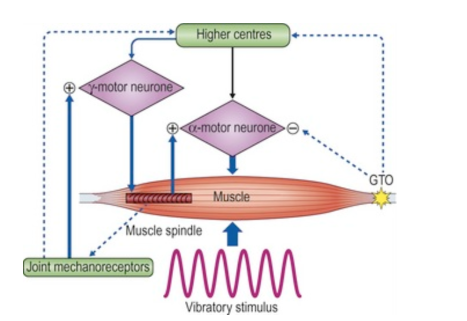
To effectively bridge this gap, training protocols must fundamentally reflect the unpredictable reality of the sport by deliberately introducing variability and perturbation. This requires the athlete to continuously adapt and make real-time adjustments rather than merely executing pre-planned, rote movements.
Within this evolved training framework, eccentric strength assumes a fundamentally different and elevated role. In the context of skiing, the crucial ability to accept, control, and absorb load precedes—and enables—the ability to produce force effectively. An athlete must first skillfully manage the forces acting upon them during the turn initiation and shaping phases before they can powerfully drive out of the turn. As these highly specific adaptations develop over time, the athlete’s control progressively shifts from a reactive to a highly predictive mode. At the zenith of performance, the neuromuscular system no longer relies primarily on delayed corrective actions but instead anticipates incoming perturbations through exquisitely refined feed-forward activation, setting the stage for the next movement before it even arrives.
Practical Applications: Translating Science to Snow
Translating these advanced neuromuscular principles into actionable training programs demands a deliberate shift away from isolated strength development towards creating environments that consistently challenge the athlete to absorb, modulate, and reapply force under continuous perturbation.
Off-snow, this begins with systematically exposing athletes to irregular and unpredictable loading patterns. Training should intentionally introduce variability through external perturbations (e.g., reactive drills, unstable surfaces), oscillating loads (e.g., specific vibration platforms, oscillating resistance), and dynamic, reactive environments that mimic the demands of the ski course. Examples include single-leg plyometrics on unstable surfaces, lateral bounds with unexpected directional changes, eccentric overload drills with varying resistances, and reactive agility ladders that challenge proprioception and rapid force modulation. The focus is on quality of movement and rapid, precise adjustments, not just peak power.
On-snow, these principles become most evident in how the athlete manages the intricate ski-snow interaction. Coaching emphasis should be placed strategically on the early phase of the turn, where superior eccentric control critically determines the quality of initial edge engagement and the subsequent ability to shape the turn effectively. Drills that focus on subtle pressure management, feeling the ski’s interaction with the snow, and developing a nuanced sense of balance through the entire arc are paramount. This includes exercises designed to exaggerate eccentric loading at turn initiation, promote early edge engagement, and encourage a fluid, progressive build-up of pressure rather than an abrupt, rigid application.
Closing Perspective and Future Implications
The ultimate challenge for coaches and sports scientists in alpine skiing is not simply to build physically stronger athletes in a general sense, but to cultivate highly specialized biological systems that can operate with unparalleled efficiency and adaptability within the very specific, high-frequency, and unpredictable constraints of alpine ski racing. This modern understanding underscores the need for an integrated approach that synthesizes general physical preparation with highly specific neuromuscular training.
By designing training environments that meticulously reflect these unique demands—focusing on dynamic stability, reflex-driven control, and the nuanced modulation of force—the sport moves significantly closer to effectively bridging the persistent gap between general physical preparation in the gym and truly exceptional, race-winning performance on the snow. The future of ski racing development lies in understanding and optimizing the intricate dance between the athlete, the ski, and the snow, elevating the art of ski training to a sophisticated science of dynamic adaptation. This paradigm shift promises not only faster race times but also more resilient and adaptable athletes capable of pushing the boundaries of human performance in one of the world’s most demanding sports.

