
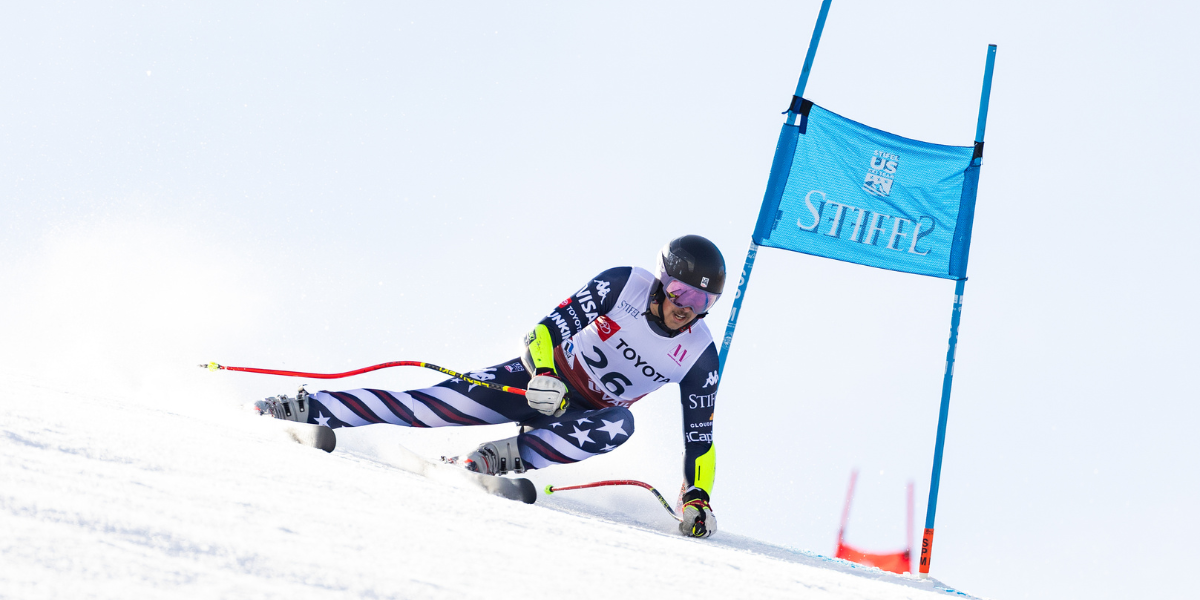
Twenty-year-old Alex Krupka, a promising multidiscipline skier from Ski & Snowboard Club Vail, has officially earned his spot on the Stifel U.S. Ski Team C Team following a decisive giant slalom victory at his home mountain in Vail, Colorado. This pivotal win, which marked the first FIS giant slalom triumph of his career, provided the crucial low-point score needed to meet the stringent U.S. Ski Team criteria, culminating a season of remarkable progression and quiet anticipation among U.S. alpine coaches. Krupka’s nomination is a testament to years of dedicated training, a unique blend of East Coast resilience and Western refinement, and a strategic approach to his burgeoning career, particularly in the speed disciplines where he has shown exceptional aptitude.
The final race of Krupka’s season was charged with high stakes. Arriving at the U.S. Nationals Super-G, he knew a strong giant slalom result could be transformative. The precise requirement was a giant slalom score low enough to satisfy the Stifel U.S. Ski Team criteria—a benchmark designed to identify and fast-track athletes demonstrating international potential. Rather than succumbing to the pressure and skiing cautiously, Krupka embraced the challenge on his familiar terrain, attacking the course with an aggressive yet controlled style that ultimately secured his outright win. This victory was not merely a personal best; it was the strategic culmination of his season, validating a trajectory that saw him finish the winter ranked third in the world for his birth year in Super-G, seventh in downhill, and eighth in giant slalom, underscoring his versatility and consistent high-level performance across multiple disciplines.
A Foundation Forged: From Vermont’s Icy Slopes to Vail’s Refined Progression
Krupka’s journey to the national team level is deeply rooted in his early experiences on the East Coast, where the demanding conditions inadvertently laid the groundwork for his distinctive skiing style. His earliest memories are etched into the challenging landscapes of Cannon Mountain in New Hampshire and Sugarbush in Vermont, where his parents first introduced him to the sport. Unlike the often-consistent snow of the West, the East Coast presented a constantly varying palette of icy patches, hardpack, and unpredictable terrain. This environment, Krupka reflects, compelled him to develop an adaptable and reactive style, where every mistake carried immediate consequences and rapid recoveries were paramount. "I always wanted to ski fast and make big turns," Krupka recounts, "That feeling of speed and flow was what made me fall in love with skiing from the beginning, and the East Coast forced me to learn how to find that flow in any condition." This early exposure to varied and challenging conditions instilled a profound resilience and an aggressive yet controlled approach that remains a hallmark of his speed skiing today.
The family’s subsequent move westward to Vail, Colorado, marked a significant turning point in Krupka’s development. Here, the resources and structured programs of Ski & Snowboard Club Vail (SSCV) and Vail Ski & Snowboard Academy provided the fertile ground for refining his raw talent. SSCV, renowned for its comprehensive alpine racing programs, offered Krupka access to world-class coaching, state-of-the-art training facilities, and a competitive peer group. This combination of "East Coast resilience paired with Rocky Mountain opportunity" proved to be a powerful catalyst, enabling Krupka to translate his innate aggression and adaptability into a more technically polished and tactically astute racing style. The transition allowed him to leverage the best of both worlds, creating a robust foundation for elite progression.
Mastering Speed: Why Super-G Became Krupka’s Signature Event
While Krupka competently races all four alpine disciplines—downhill, Super-G, giant slalom, and slalom—he possesses a particular affinity and demonstrable talent for Super-G. This discipline, a blend of the high speeds of downhill and the technical precision of giant slalom, demands a unique synthesis of timing, patience, instinct, and unwavering commitment. "Super-G feels the most natural to me because it combines technical skiing with speed and decision-making," Krupka explains. "There’s a rhythm and flow to it that’s hard to describe unless you’ve experienced it." This deep connection to the discipline was evident throughout the past season.
His strong early performances on the NorAm circuit, particularly in Beaver Creek, were crucial in rebuilding his confidence after a challenging previous year where he admits questioning his primary path forward. The NorAm Cup, a continental circuit sanctioned by FIS, serves as a vital proving ground for North American skiers aiming for the World Cup. Krupka’s consistent top finishes in Super-G events quickly redirected his focus and cemented his potential in speed. His multidisciplinary background has also contributed significantly to his overall skiing prowess. Giant slalom training has honed his timing and discipline, essential for navigating complex gate patterns at high speeds. Speed events have broadened his confidence and tactical awareness, allowing him to read terrain and make split-second decisions effectively. Even slalom, which he openly admits is an area requiring continued development, challenges him in productive ways, improving agility and quickness. This versatility, while Krupka’s long-term ceiling increasingly appears tied to speed, remains invaluable at his age, providing a comprehensive skill set that many specialists lack.
The Crucible of Junior Worlds: Gaining International Perspective
This past season also saw Alex Krupka make his debut at the FIS Junior World Ski Championships in Narvik, Norway—an experience that provided invaluable perspective, perhaps even more so than the results themselves. Junior Worlds represents a significant step up in competition, bringing together the best young talents from around the globe. The event in Narvik presented formidable challenges: difficult, constantly shifting weather conditions, including rain, which complicated multiple events and led to the cancellation of the downhill race. Krupka acknowledges leaving the event feeling he had opportunities to perform better, particularly in speed events.
Despite the frustrations, the week in Narvik offered a profound learning experience. Representing the United States on such an international stage forced him to confront the elevated demands of world-class racing, not just physically but mentally and tactically. "You realize very quickly that everybody there is talented," Krupka observed. "The difference comes from who can stay composed, adapt the fastest, and still attack when conditions get difficult." This insight into the mental fortitude required at the elite level was a crucial takeaway. The experience reinforced his belief that he belongs in that competitive environment, and with another year of Junior Worlds eligibility remaining, he is poised to apply these lessons in future international campaigns.
The Road to the Stifel U.S. Ski Team: A Validation of Years of Unseen Effort
Krupka’s nomination to the Stifel U.S. Ski Team C Team is a direct result of the rigorous criteria established by U.S. Ski & Snowboard, which typically involves achieving specific FIS points benchmarks in various disciplines and demonstrating consistent top performances in designated events, often on the NorAm circuit. The "C Team" serves as a crucial foundational tier within the national team structure, providing athletes with enhanced coaching, physical conditioning support, and access to higher-level training and competition opportunities. It signifies a recognition of an athlete’s potential to progress to the World Cup level.
While the dramatic victory in Vail was the immediate catalyst for his nomination, it represented the visible peak of years of unseen effort and sacrifice. Elite ski racing demands an unparalleled level of dedication: early mornings for training, missed social events with friends, relentless travel across continents, and countless hours in training blocks far from the glare of headlines or public attention. Krupka articulates this understanding clearly: "At some point, you realize nothing about this sport happens accidentally. The little decisions you make every day eventually show up in your skiing." This philosophy underscores a mature approach to his craft, acknowledging that success is built incrementally through consistent discipline and commitment.
A Family Legacy: The Influence of a World Cup Brother
Alex Krupka’s journey has been uniquely shaped by his family’s deep roots in ski racing. His older brother, Jimmy Krupka, has already competed in multiple World Cup slaloms for the United States, providing Alex with direct, firsthand exposure to the realities, challenges, and rewards of elite-level ski racing from a very young age. This familial connection proved invaluable. The brothers frequently watched race videos together, meticulously studying World Cup skiing techniques, dissecting tactical approaches, and engaging in constant discussions about movement patterns and racing mentality.
"Watching Jimmy go through everything at the World Cup level made the dream feel real," Alex reflects. "It showed me how much work it actually takes, but it also made me want it even more." This mentorship demystified the professional path, making the aspirations of a national team spot tangible rather than abstract. While his parents provided the foundational support and introduced him to the sport, Jimmy offered a tangible blueprint and an insider’s perspective on what it truly takes to compete at the highest echelons. This balance allowed Alex to forge his own path, drawing inspiration and guidance without simply following in his brother’s exact footsteps.
The Regional Team System: Accelerating Pathways to the National Level
Krupka’s advancement also highlights the early success of the new Regional National Development Program, an initiative designed to bridge the gap between club-level skiing and the national team. Krupka was one of five named athletes, alongside three invitees, from the program’s inaugural season to successfully earn advancement onto the Stifel U.S. Ski Team this year. This statistic underscores the program’s effectiveness in identifying and nurturing talent.
For Krupka, one of the primary strengths of this new structure was its ability to bring together promising athletes from diverse geographical regions across the country, fostering a high-performance training environment while still allowing them to maintain vital connections with their home programs and long-standing coaches. This hybrid approach aims to prevent the common pitfalls of isolating young athletes from their established support systems. While acknowledging its tangible early results, Krupka also believes the structure has room for further optimization, particularly in building greater continuity and cohesion between various training camps and competitive environments. Nevertheless, the program’s first season has undeniably produced tangible outcomes, with several athletes successfully transitioning directly into the national team pipeline, signaling an encouraging future for the depth and talent pool within U.S. alpine skiing.
The Guiding Hands: Coaches Who Propelled Krupka Forward
No athlete’s success is achieved in isolation, and Krupka is quick to credit the pivotal roles played by two specific coaches whom he believes fundamentally altered the trajectory of his career: Matt Underhill and Will Hadden. Matt Underhill worked with Krupka through the Regional National Development Program, providing overarching guidance and a national perspective. Will Hadden, his coach at Ski & Snowboard Club Vail, provided consistent, day-to-day training and technical refinement.
Krupka emphasizes that their combined efforts were instrumental in pushing his skiing beyond the strong junior level, preparing him to consistently compete and succeed against some of the best athletes on the highly competitive NorAm circuit. "I wouldn’t have made it anywhere past the FIS race or college level without them," Krupka states unequivocally. "A lot of the NorAm success I had this year is because of Matt and Will." This deep gratitude speaks volumes about Krupka’s character; even after achieving a significant personal milestone like a national team nomination, he views his progress as a collaborative effort, built alongside the dedicated individuals who guided him.
Future Horizons: Professional Ambitions and Strategic NCAA Considerations
With his Stifel U.S. Ski Team nomination secured, Alex Krupka’s immediate focus is squarely on continuing his international progression and pushing the boundaries of his skiing at the professional level. He anticipates spending significant time in Park City, Utah, leveraging the increased access to the U.S. Ski & Snowboard Center of Excellence, a state-of-the-art facility offering comprehensive support in physical conditioning, sports science, and technical analysis.
Physically, Krupka acknowledges that strength development remains a critical area for improvement. He openly describes himself as tall and lean, and understands the necessity of building the raw power required to maximize his skiing at ever-higher speeds, particularly in the demanding speed disciplines. Tactically, his focus remains equally specific: developing greater "depth" in his skiing. He believes that by consistently giving himself enough space and maintaining patience through each turn, his skiing naturally settles into a more powerful and efficient flow. This understanding reflects a young athlete who already thinks deeply and analytically about his craft, striving for mastery beyond mere execution.
Krupka also maintains a pragmatic and open-minded perspective regarding NCAA skiing, viewing it as a viable and potentially beneficial option if it aligns best with his long-term developmental path. He holds a deep respect for the high level of coaching and athlete progression fostered within NCAA programs, pointing to numerous athletes who have successfully utilized college skiing as a bridge to, or even alongside, international professional careers. "NCAA skiing is an incredible opportunity, and there are a lot of great coaches and programs there," Krupka affirms. "There are plenty of athletes who’ve used that route really successfully." This balanced outlook underscores Krupka’s ambitious yet realistic approach to his career, understanding that alpine racing careers rarely follow identical trajectories and strategic flexibility is key.
Alex Krupka still approaches racing with the mindset of someone determined to prove he belongs at the elite level. This internal drive, perhaps even more than his impressive results, may be the most crucial factor in his continued ascent. He is no longer merely a promising talent hoping to reach the next level; he is an athlete meticulously preparing to solidify his position there, poised to become a significant force in American alpine racing for years to come.

