
The Northwest Avalanche Center (NWAC) is at the forefront of a significant national undertaking to revolutionize how avalanche and mountain weather forecasts are delivered across the United States. Through its dedicated technology team, collectively known as Avy, NWAC is spearheading a collaborative effort involving numerous avalanche centers to develop and implement shared digital tools. The overarching goal is to enhance the accessibility, consistency, and effectiveness of critical safety information for all backcountry enthusiasts. This initiative, driven by a commitment to innovation and collaboration, aims to address long-standing challenges in data dissemination and user experience within the avalanche safety community.
Avy, the technological arm of this ambitious project, encompasses two primary product streams: AvyWeb, a sophisticated web-based platform, and AvyApp, a dedicated mobile application. These tools are designed to streamline the process of accessing vital information, from detailed avalanche forecasts and snowpack observations to real-time weather data and educational resources. By creating a unified digital ecosystem, Avy seeks to move away from fragmented, region-specific systems towards a standardized, user-friendly experience that benefits everyone who ventures into mountainous terrain.
The Rationale Behind NWAC’s Leadership
NWAC’s proactive role in technological innovation is deeply intertwined with its core mission: to broaden access to essential backcountry safety knowledge and resources. Recognizing that effective forecasting and education must adapt to modern communication methods, NWAC has prioritized making this information available through multiple modalities. This commitment stems from a clear understanding that user safety is directly correlated with the clarity, timeliness, and comprehensibility of the information provided.
A foundational element enabling this nationwide collaboration is the Avalanche Forecast Platform (AFP). This shared tool is currently utilized by nearly all avalanche centers in the U.S. for crucial tasks such as publishing forecasts, managing field observations, and coordinating data. The AFP has already demonstrated the power of inter-center cooperation, establishing a precedent for what can be achieved when organizations work together towards common objectives. As one of the largest and most well-resourced centers utilizing the AFP, NWAC identified a unique opportunity to build upon this existing framework. The organization saw the potential to extend this collaboration beyond the forecaster-facing platform and into the realm of user-facing tools, directly impacting how the public interacts with avalanche safety information.
A Philosophy of Collaboration Over Duplication
The driving principle behind the Avy initiative is the belief that collaboration is far more effective and efficient than duplication of effort. By pooling resources, expertise, and development efforts, the project aims to leverage technological best practices, cutting-edge design insights, and collective data to continuously improve the user experience. The NWAC strongly advocates for consistency in forecasting products, viewing it as a significant positive development for all backcountry users, regardless of their geographic location or familiarity with specific regional centers.

Historically, the landscape of avalanche forecasting websites was characterized by fragmentation. Each avalanche center typically managed its own independent website, often requiring a complete rebuild every five to seven years. This cyclical process demanded considerable technical expertise from often understaffed and budget-constrained organizations. Many centers had to either rely on existing staff members to develop these complex digital platforms or hire external technical experts, a luxury not all could afford.
The Avy initiative directly addresses this challenge by fostering a shared development model. Smaller avalanche centers, which may lack the financial resources or technical capacity to develop and maintain their own sophisticated digital platforms, gain access to advanced tools that would otherwise be out of reach. In return, NWAC benefits from the invaluable feedback and shared investment from these partner centers. The Avy team is dedicated to handling the complex technological infrastructure, thereby freeing up avalanche center staff to concentrate on their core competencies: forecasting, field observation, public education, and community outreach. This division of labor ensures that expertise is applied where it is most impactful, leading to better outcomes for both the organizations and the public they serve.
Current Status and Achievements
Both AvyWeb and AvyApp have achieved a stable launch, establishing a solid foundation for the integration of new functionalities and enhancements. The development team is proceeding with caution, prioritizing a strategic and judicious use of resources to ensure that every dollar invested yields maximum benefit. This measured approach reflects a commitment to long-term sustainability and user satisfaction rather than rapid, potentially unstable, feature deployment.
AvyApp has reached a stable operational state, and the team is now actively prioritizing the development of new features based on user feedback and operational needs. The mobile application has already seen significant adoption, with fifteen avalanche centers now actively utilizing the platform. This widespread integration signifies a growing trust in the Avy ecosystem and highlights its potential to become the standard for mobile avalanche safety information.
On the AvyWeb front, the platform has successfully supported the launch of two key regional centers: the Sierra Avalanche Center and the Sawtooth Avalanche Center. Their migration to V1 of the platform marks a significant milestone in the rollout of the unified web interface. Furthermore, the Avy team has developed a robust course catalog for the American Avalanche Association. This embeddable product can be seamlessly integrated into various websites, and plans are underway to deploy it across avalanche center websites nationwide in the near future. The development team is currently engaged in extensive polishing, general development work, and the implementation of smaller, impactful features. As the holiday season approaches, the focus will shift to maintenance, bug fixing, and a temporary pause on new feature development, allowing for a period of stabilization before resuming accelerated development in the new year.
Future Trajectory and Roadmap
The roadmap for Avy is extensive and ambitious, outlining a clear vision for the evolution of avalanche safety information dissemination. The projected enhancements are largely contingent on the continued success and adoption of the unified platforms, underscoring the benefits of this collaborative approach. NWAC itself is slated to transition to the new AvyWeb platform for the 25/26 season, demonstrating a commitment to leading by example and fully integrating into the system it has helped pioneer.
AvyApp Enhancements on the Horizon:
The development of AvyApp is set to focus on user-centric improvements designed to enhance the mobile experience and provide even more comprehensive safety tools. Key planned features include:
- Location-Based Forecasts: This functionality will allow users to automatically receive avalanche and weather forecasts relevant to their current location, simplifying trip planning and on-the-go decision-making.
- Interactive Trail Planning Tools: Future updates aim to incorporate features that enable users to plan routes, mark waypoints, and access relevant safety information directly within the app, integrating planning and safety more seamlessly.
- Real-Time Observation Reporting: Enhanced tools for users to submit real-time snowpack observations, aiding forecasters in their data collection and analysis efforts. This fosters a more participatory approach to avalanche safety.
- Offline Access to Forecasts: The ability to download forecasts and critical information for offline access will be crucial for users in areas with limited or no cellular service, ensuring safety even in remote locations.
- Personalized Alerts and Notifications: Users will be able to set up customized alerts for specific regions or conditions, ensuring they receive timely notifications about changing avalanche danger levels or critical weather events.
AvyWeb Advancements and Expansions:
The AvyWeb platform is poised for significant expansion, offering a more dynamic and feature-rich online experience for both users and avalanche centers. Planned developments include:
- Enhanced Data Visualization: Advanced mapping tools will provide users with clearer, more intuitive visualizations of avalanche danger, snowpack conditions, and weather patterns. This could include interactive slope angle maps and snow depth overlays.
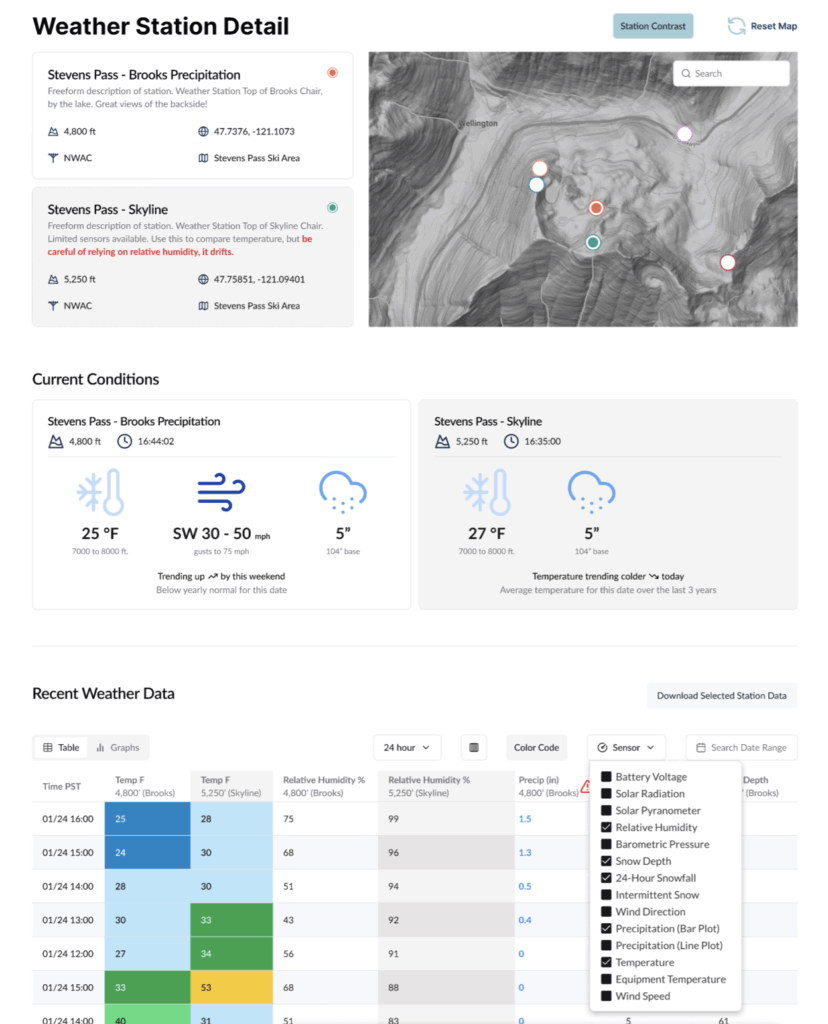
- Integration of Weather Station Data: Direct integration of data from weather stations will offer real-time, hyper-local weather information, complementing existing forecast models and providing a more comprehensive picture of current conditions. Mockups showcase potential visualizations for this data.
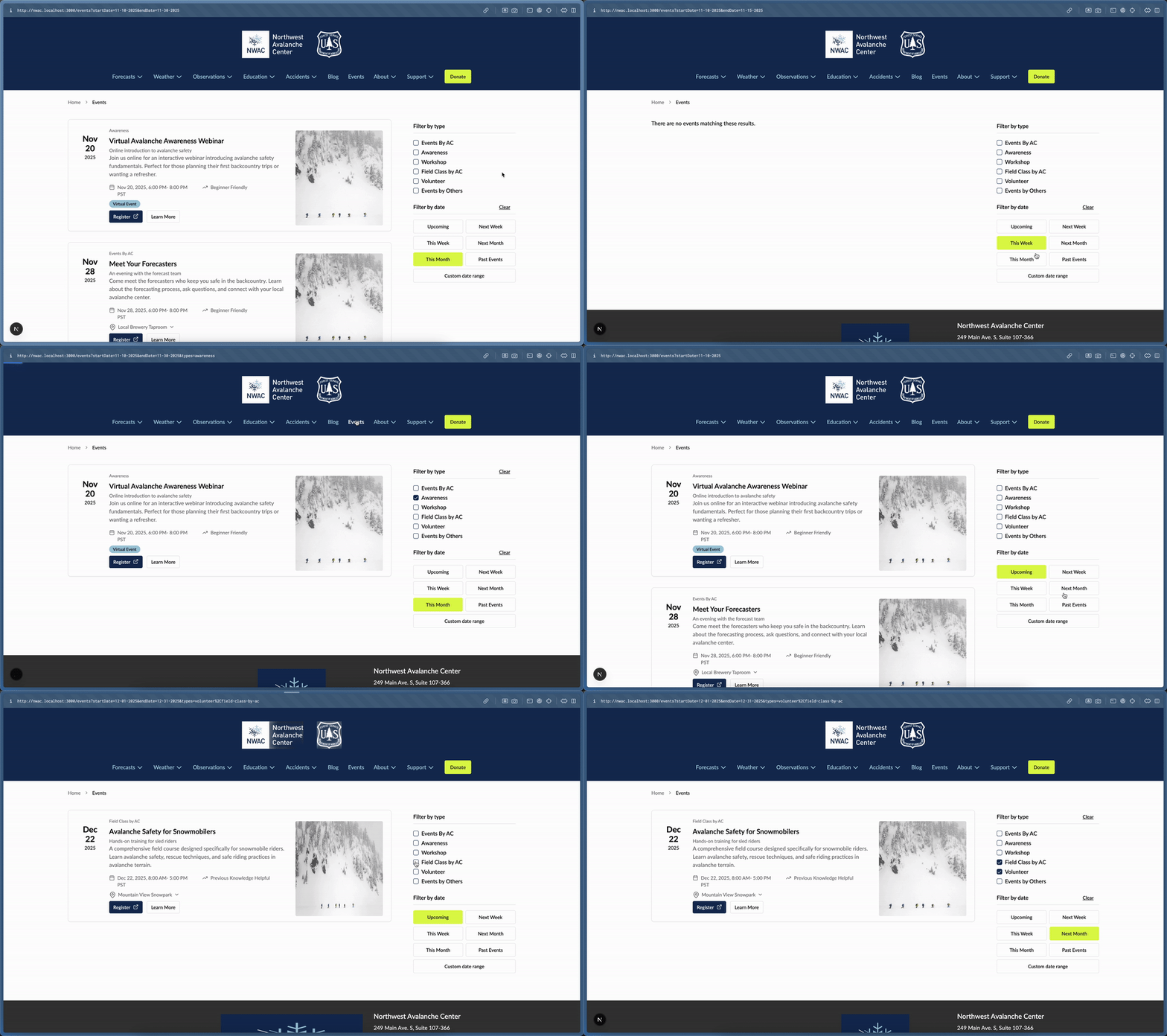
- Comprehensive Event and Course Listings: A centralized and easily searchable database of avalanche safety courses, workshops, and public events will be available, making it simpler for individuals to find and register for educational opportunities. The current course catalog is a precursor to this more integrated system.
- Improved Observation Submission Portal: A more streamlined and user-friendly interface for forecasters and the public to submit detailed observations, complete with enhanced data fields and multimedia support for photos and videos.
- Customizable Dashboards for Centers: Avalanche centers will have the ability to customize their dashboards to highlight specific regional data, operational priorities, and community outreach efforts, allowing for greater regional relevance within the national framework.
Visualizing the Future: Mockups and Work in Progress
The accompanying mockups offer a glimpse into the envisioned user experience and the technological advancements that are either in development or planned for future implementation. These visual representations highlight the commitment to user-friendly design, intuitive navigation, and the integration of complex data into easily digestible formats.
The weather station mockups, for instance, demonstrate how real-time meteorological data could be presented in a visually appealing and informative manner. Interactive elements and clear graphical representations of temperature, wind speed, precipitation, and other critical variables are designed to provide users with an immediate understanding of current mountain conditions.
Similarly, the event mockups illustrate the potential for a dynamic and engaging platform for showcasing avalanche safety courses and other relevant events. The animated nature of some mockups suggests a focus on interactive and visually stimulating content that can capture user attention and facilitate engagement.
The app mockups provide a preview of the mobile interface, emphasizing a clean design, logical organization of information, and the seamless integration of key features such as forecasts, observations, and user-generated content. The focus appears to be on providing essential information quickly and efficiently, catering to the needs of users on the go.
Broader Impact and Implications
The Avy initiative represents a paradigm shift in how avalanche safety information is managed and disseminated in the United States. By fostering a collaborative, technology-driven approach, NWAC and its partner centers are not only modernizing their operations but also enhancing the safety of countless individuals who venture into avalanche-prone terrain.
The implications of this project are far-reaching:
- Enhanced Public Safety: More accessible, consistent, and user-friendly information directly translates to better-informed decisions for backcountry users, potentially reducing avalanche-related incidents and fatalities.
- Increased Efficiency for Avalanche Centers: By sharing technological infrastructure and development costs, smaller centers can offer services comparable to larger, more resource-rich organizations, allowing them to focus on their core mission.
- Standardization of Data and Forecasting: A unified platform promotes consistency in how data is collected, analyzed, and presented, leading to a more cohesive national understanding of avalanche risk.
- Democratization of Technology: Smaller organizations gain access to sophisticated digital tools, leveling the playing field and ensuring that vital safety information is available to a wider audience.
- Foundation for Future Innovation: The established collaborative framework and digital infrastructure provide a robust foundation for future technological advancements in avalanche safety and mountain meteorology.
The successful implementation of AvyWeb and AvyApp signifies a major step forward in avalanche safety, underscoring the power of collaboration and technological innovation in protecting lives and promoting responsible outdoor recreation. As the project continues to evolve, it is poised to set a new standard for the dissemination of critical mountain safety information across the nation.

