
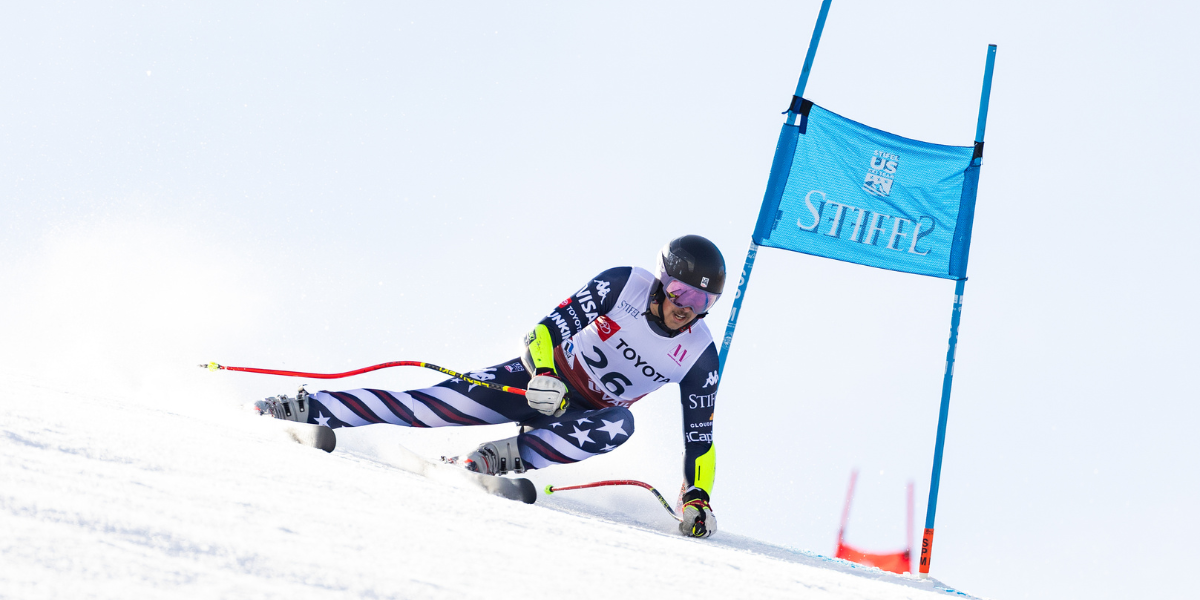
Alex Krupka, a 20-year-old talent from Ski & Snowboard Club Vail, has officially earned his spot on the Stifel U.S. Ski Team C Team, a significant career milestone achieved through a dramatic final race of his season. Facing immense pressure on his home mountain in Vail, Colorado, Krupka delivered a career-best performance, winning the giant slalom outright—his first FIS giant slalom victory—and securing the crucial low giant slalom score required to meet the stringent U.S. Ski Team criteria. This pivotal result culminates a season where Krupka consistently demonstrated his potential, finishing ranked third in the world for his birth year in Super-G, seventh in downhill, and eighth in giant slalom, signaling a robust and earned breakthrough that has been years in the making. His trajectory, long observed by coaches across U.S. skiing, underscores a foundation built on relentless pursuit of speed and an adaptive approach to diverse conditions, setting the stage for his continued ascent in elite alpine racing.
The Decisive Victory at U.S. Nationals and the Path to the C Team
The U.S. Nationals, often a proving ground for emerging talent, served as the ultimate test for Krupka. Arriving at the series of events in Vail, the stakes were unequivocally clear: a single, strong result could redefine his immediate future in the sport. The specific target was a giant slalom score low enough to satisfy the Stifel U.S. Ski Team’s demanding criteria for C Team nomination. Rather than succumbing to the pressure with a cautious approach, Krupka chose aggression, attacking the course with an innate confidence honed over years. His decisive victory in the giant slalom not only marked his inaugural FIS win in the discipline but also officially sealed his nomination to the national squad. This outcome is a testament to the confluence of skill, nerve, and strategic execution required at the highest levels of junior and developmental racing. The C Team, a crucial stepping stone within the U.S. Ski Team structure, is designed to identify and nurture athletes with World Cup potential, providing them with enhanced coaching, training resources, and a more integrated pathway to the sport’s highest echelons. For Krupka, this nomination is not merely an acknowledgment of past achievements but an investment in his future, offering direct access to the specialized support systems essential for international success.
A Foundation Forged in Vermont: East Coast Grit Meets Rocky Mountain Opportunity
Krupka’s journey to the national team is rooted in the challenging terrain of the East Coast. His earliest skiing memories are etched into the icy slopes of Cannon Mountain in New Hampshire and Sugarbush in Vermont, where his parents first introduced him to the sport. From a young age, the thrill of speed was palpable. "I always wanted to ski fast and make big turns," Krupka recalls, reflecting on the initial spark that ignited his passion. "That feeling of speed and flow was what made me fall in love with skiing from the beginning." These formative years in Vermont were instrumental in shaping his distinctive style. The notoriously variable and often unforgiving snow conditions prevalent on the East Coast compelled Krupka to develop an exceptional adaptability and resilience. Mistakes carried immediate consequences, necessitating swift recoveries and a proactive approach to ever-changing surfaces. This environment, far from ideal for consistent training, paradoxically fostered an aggressive yet highly reactive skiing style—a characteristic now prominently visible in his speed events.
The family’s subsequent move westward to Vail, Colorado, marked a pivotal transition, seamlessly blending his East Coast grit with the expansive opportunities of the Rocky Mountains. Here, the comprehensive programs offered by Ski & Snowboard Club Vail (SSCV) and the Vail Ski & Snowboard Academy (VSSA) provided the structured environment necessary to refine his raw talent. SSCV, renowned for its athlete development pipeline, offered access to world-class training facilities, expert coaching, and a competitive peer group. VSSA, an academic institution tailored for elite young athletes, ensured that Krupka could balance his demanding training schedule with his educational pursuits, fostering a holistic development approach. This synergistic combination—the innate toughness cultivated on Eastern ice paired with the advanced infrastructure and expansive terrain of Vail—proved to be a powerful catalyst in his progression from a promising junior to a national team prospect. The move facilitated a more focused specialization in speed disciplines while still maintaining a robust technical foundation.
Super-G: The Natural Affinity and Multidisciplinary Edge
While Krupka competes across all four alpine disciplines—slalom, giant slalom, Super-G, and downhill—his consistent pull towards Super-G highlights a deep connection with the event. This discipline, a delicate balance of timing, patience, instinct, and unwavering commitment, naturally aligns with his skiing personality and strengths. "Super-G feels the most natural to me because it combines technical skiing with speed and decision-making," Krupka explains, articulating the unique appeal. "There’s a rhythm and flow to it that’s hard to describe unless you’ve experienced it." This intrinsic connection manifested clearly throughout the recent season, particularly through strong early NorAm performances at Beaver Creek, which played a critical role in rebuilding his confidence after a challenging previous year. At one point, Krupka openly admitted to questioning whether giant slalom might become his primary focus, only for his Super-G results to increasingly underscore his aptitude for speed, fundamentally altering his competitive trajectory.
Krupka’s multidisciplinary background has served as a significant advantage, sharpening his overall skiing prowess. His involvement in giant slalom, for instance, has honed his timing and discipline, instilling a precision that is crucial even in high-speed events. Conversely, the demands of speed events have expanded his confidence and tactical awareness, allowing him to read terrain and make split-second decisions at blistering speeds. Even slalom, a discipline he readily admits still requires considerable development, continues to challenge him in productive ways, forcing him to refine edge control and quick transitions. This versatility, particularly valuable at his age, provides a comprehensive skill set that many specialists lack. While his long-term ceiling increasingly appears tied to speed disciplines, his ability to perform across the board underscores a well-rounded athletic profile, a characteristic often sought after in emerging talent by national teams. This breadth of experience allows for greater adaptability to varying course conditions and a deeper understanding of fundamental ski mechanics applicable to all events.
The Crucible of Junior Worlds: Gaining Perspective on the Global Stage
This past season also marked Krupka’s debut at the FIS Junior World Ski Championships, held in Narvik, Norway—an experience that proved to be more significant for the perspective it offered than for the immediate results. Narvik presented an array of formidable challenges, from persistently difficult weather conditions to shifting snow quality. The downhill event was regrettably canceled, and multiple other events were complicated by rain and adverse visibility. Krupka himself felt he left significant speed and opportunities uncapitalized on the hill, leading to moments of frustration common in such high-stakes, unpredictable environments.
Despite these competitive setbacks, the week provided an invaluable education. Representing the United States at a world championship event forced Krupka to confront the true international standard—not solely in terms of physical prowess, but equally in mental fortitude and tactical sophistication. "You realize very quickly that everybody there is talented," Krupka observed, highlighting the uniformly high level of competition. "The difference comes from who can stay composed, adapt the fastest, and still attack when conditions get difficult." This insight into the psychological and adaptive demands of elite international racing was a crucial takeaway, reinforcing his belief that he belongs in this challenging environment. With another year of Junior Worlds eligibility remaining, Krupka is poised to leverage this hard-won experience, returning to the global junior stage with a deeper understanding of what it takes to contend for medals. The exposure to different training methods, race day protocols, and the sheer competitive intensity provided a crucial benchmark for his continued development.
A Family Legacy: Ski Racing as a Shared Pursuit
Ski racing has been an integral part of Krupka’s family life long before his national team aspirations materialized. His older brother, Jimmy Krupka, has carved his own path in the sport, competing in multiple World Cup slaloms for the United States. This familial connection offered Alex a unique and invaluable advantage: direct, firsthand exposure to the realities, demands, and triumphs of elite ski racing from a very young age. This influence was profound, providing a tangible example of the dedication and sacrifice required. The brothers frequently engaged in collaborative analysis, watching race videos together, dissecting World Cup skiing techniques, and engaging in constant dialogue about tactics, movement patterns, and the critical racing mentality.
"Watching Jimmy go through everything at the World Cup level made the dream feel real," Krupka reflects, underscoring the motivational impact of his brother’s journey. "It showed me how much work it actually takes, but it also made me want it even more." This direct insight demystified the often-opaque path to professional skiing, transforming an abstract ambition into a concrete, achievable goal. While his parents laid the foundational love for the sport and provided unwavering support, Jimmy offered a living blueprint of what elite ski racing truly entails. This balanced influence empowered Krupka to forge his own distinct path, drawing inspiration and knowledge from his brother’s experience without simply mirroring it, cultivating an independent drive essential for individual success. The familial environment fostered a culture of continuous learning and mutual support, which is often a significant, though unquantifiable, factor in athletic development.
The Regional Team System: Accelerating Development and Building Depth
Krupka’s rapid progression also stands as an early testament to the efficacy of the new Regional National Development Program. He is one of five named athletes—alongside three invitees—from the inaugural regional-team season to successfully advance onto the Stifel U.S. Ski Team this year. This statistic alone provides compelling evidence of the program’s immediate impact in identifying and nurturing high-potential talent. For Krupka, one of the program’s most significant strengths lay in its innovative structure: it successfully brought together promising athletes from disparate parts of the country while simultaneously allowing them to maintain vital connections with their home programs and long-standing coaches. This hybrid model mitigated the potential disruption of fully relocating young athletes, ensuring continuity in their developmental support systems.
While acknowledging its initial successes, Krupka also believes the structure possesses further room for refinement and growth, particularly in fostering greater continuity between its various camps and training environments. Despite these minor areas for improvement, the first season has undoubtedly yielded tangible results, propelling several athletes directly from the regional level into the national team pipeline. This swift transition is an encouraging indicator for the future depth and competitiveness of U.S. alpine skiing, demonstrating the program’s potential to significantly broaden the talent pool and accelerate the development of the next generation of American racers. The program acts as a crucial bridge, providing a structured yet flexible pathway for athletes who are excelling at the regional level but are not yet ready for full national team integration.
The Architects of His Trajectory: Coaching Influences
Krupka is quick to acknowledge the profound impact of two specific coaches he credits with fundamentally altering the trajectory of his career: Matt Underhill and Will Hadden. Underhill, who worked with the Regional National Development Program, and Hadden, Krupka’s coach at Ski & Snowboard Club Vail, formed a powerful coaching alliance. Krupka firmly believes that their combined expertise and guidance were instrumental in pushing his skiing beyond the strong junior level, preparing him to consistently compete and achieve success against some of the best athletes on the NorAm circuit, North America’s premier developmental tour.
"I wouldn’t have made it anywhere past the FIS race or college level without them," Krupka asserts, emphasizing the transformative role these mentors played. "A lot of the NorAm success I had this year is because of Matt and Will." This deep gratitude speaks volumes about Krupka’s character. Even after achieving the prestigious Stifel U.S. Ski Team nomination, he frames his progress not as an individual feat but as a collaborative journey, built alongside the dedicated individuals who provided expert guidance and unwavering support. This collaborative spirit, recognizing the collective effort behind individual triumphs, is a hallmark of successful athletes and teams.
NCAA Skiing: A Strategic Option in a Long-Term Vision
While Krupka’s immediate focus is squarely on continuing his international progression and pushing his skiing to its limits at the professional level, he maintains a pragmatic and open-minded approach to his long-term career path. He remains receptive to the possibility of NCAA skiing, should it ultimately prove to be the most suitable fit for his continued development. Krupka holds a deep respect for the high level of coaching and athlete progression evident within NCAA programs, recognizing their capacity to serve as a robust bridge toward the international level for many athletes.
"NCAA skiing is an incredible opportunity, and there are a lot of great coaches and programs there," Krupka states, acknowledging the value of collegiate athletics. "There are plenty of athletes who’ve used that route really successfully." This balanced perspective underscores Krupka’s blend of ambition and realism. He understands that alpine racing careers rarely follow a singular, identical path, and that flexibility in planning can be a significant asset. The NCAA route offers a unique combination of high-level competition, academic pursuit, and structured athletic development, which has proven effective for numerous U.S. Ski Team members in the past, allowing athletes to mature physically and mentally while gaining valuable race experience.
What Comes Next: Preparing for the Global Stage
With his C Team nomination secured, the challenge for Alex Krupka now shifts, escalating in both intensity and scope. His immediate plans include dedicating significant time to training and development at the U.S. Ski & Snowboard Center of Excellence in Park City, Utah. This elite facility offers unparalleled access to advanced physical conditioning, sports science, and coaching resources, critical for transitioning to the demands of international competition. Physically, Krupka openly identifies strength development as a paramount focus. Describing himself as tall and lean, he recognizes the imperative of building the explosive power necessary to maximize his skiing at ever-increasing speeds, a non-negotiable requirement for success in speed disciplines.
Tactically, his focus is equally precise: achieving greater "depth" in his turns. Krupka believes that when he consciously creates sufficient space and maintains patience through the arc of each turn, his skiing naturally settles into a more powerful and efficient rhythm. This nuanced understanding of his own craft reflects a skier who not only possesses innate talent but also engages in deep, analytical thought about his performance. Despite his significant accomplishments, Krupka continues to approach racing with the mindset of someone striving to prove he belongs among the elite. This enduring drive, this internal fire to validate his presence at the highest levels, may prove to be as crucial to his long-term success as any specific result. Alex Krupka is no longer merely a promising junior hoping to reach the next level; he is an athlete meticulously preparing to establish himself and remain a force on the international stage. His journey exemplifies the fusion of raw talent, strategic development, and unwavering dedication that defines future champions in alpine ski racing.

