
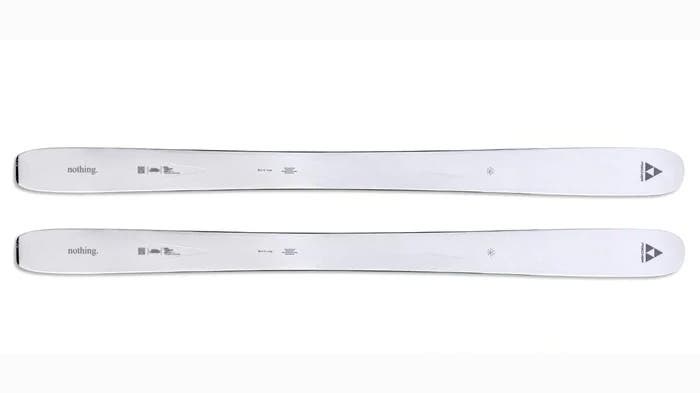
Published May 8, 2026, Fischer Sports, a venerable name in winter sports equipment, has introduced its latest flagship powder ski, provocatively named "The Nothing," challenging conventional industry practices by launching the product with a deliberate absence of technical specifications. This unprecedented marketing strategy aims to shift focus from granular equipment data to the pure, unadulterated experience of skiing, a move that has sparked considerable discussion within the ski community and among industry analysts. The launch, which began with a cryptic teaser video and a steadfast refusal to disclose details, represents a bold departure from decades of marketing that has often prioritized intricate technical figures and material compositions.
The Industry’s Enduring Obsession with Specifications
For decades, the ski industry has cultivated a culture where technical specifications are paramount. Skiers, particularly enthusiasts and those in their formative years in the sport, often immerse themselves in the minutiae of equipment: turn radius, waist width, rocker profiles, flex patterns, and core materials. This fascination is exemplified by conversations frequently overheard in lift lines, such as the incessant query, "What’s the turn radius on those things?" a question that underscores a broader trend of consumers seeking to quantify performance before even setting foot on the snow. Manufacturers have historically catered to this demand, publishing detailed spec sheets, elaborate diagrams, and proprietary technology descriptions, all designed to differentiate products in a highly competitive market.
This emphasis on data, while providing valuable insights for some, can inadvertently "obfuscate the experience of… actually going skiing," as one veteran industry observer noted. It risks fostering a consumer mindset of "analysis paralysis," where potential buyers become so engrossed in comparing numbers that they lose sight of the primary goal: enjoying the sport. Furthermore, pre-conceived notions about how a ski "should" perform, derived solely from its published specs, can limit a skier’s willingness to experiment or adapt to varied conditions. Fischer’s launch of "The Nothing" directly confronts this established paradigm, advocating for a more intuitive, experience-driven interaction between skier and equipment.
Fischer’s Strategic Unveiling: A Masterclass in Subtraction
The timeline of "The Nothing’s" introduction was carefully orchestrated to maximize intrigue. Fischer initially announced the ski early this winter, not with a detailed press release, but with a minimalist teaser video. This short film hinted at the ski’s freeride powder platform capabilities, showcasing fluid movements like butter 3s and hand drags off natural features, all without uttering a single technical term. When pressed for more information, Fischer’s response was consistently laconic and enigmatic: "We have nothing more to say at this time." This deliberate withholding of information served as a powerful marketing tool, generating curiosity and challenging the media and consumers to look beyond the numbers.
The stated philosophy behind this unconventional launch was to deliver a freeride ski that does not dictate how it should be skied. By removing the prescriptive nature of specifications, Fischer aimed to empower skiers to approach "The Nothing" without preconceived notions, allowing them to explore its capabilities across diverse terrains and styles. This approach suggests a belief that true performance is discovered through engagement, not through pre-reading a data sheet. Testers, including this publication, received "The Nothing" on their doorsteps in mid-February, accompanied by this intriguing directive.
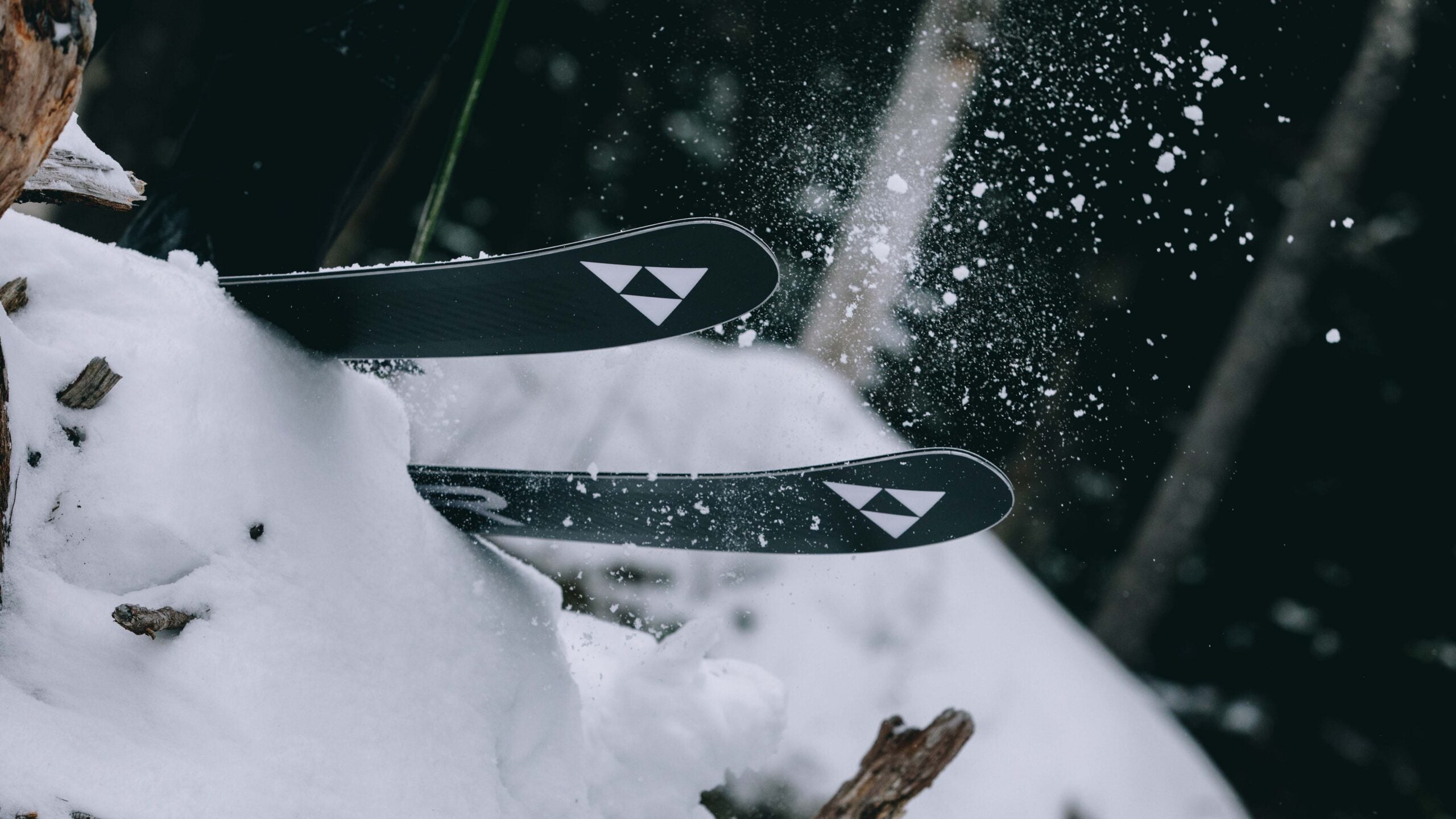
Upon initial inspection, even without explicit specs, certain characteristics of "The Nothing" were discernible. Its construction clearly featured a forked sheet of metal extending from under the bindings into the forebody, indicating structural reinforcement. A flat tail block designed to accommodate skins further hinted at its versatility for both in-bounds freeriding and out-of-bounds touring. These visible design cues suggested a ski engineered to meet the robust demands of a comprehensive freeride experience, adaptable to varying snow conditions and adventurous pursuits.
Unveiling the "Nothing": Beneath the Marketing Veil
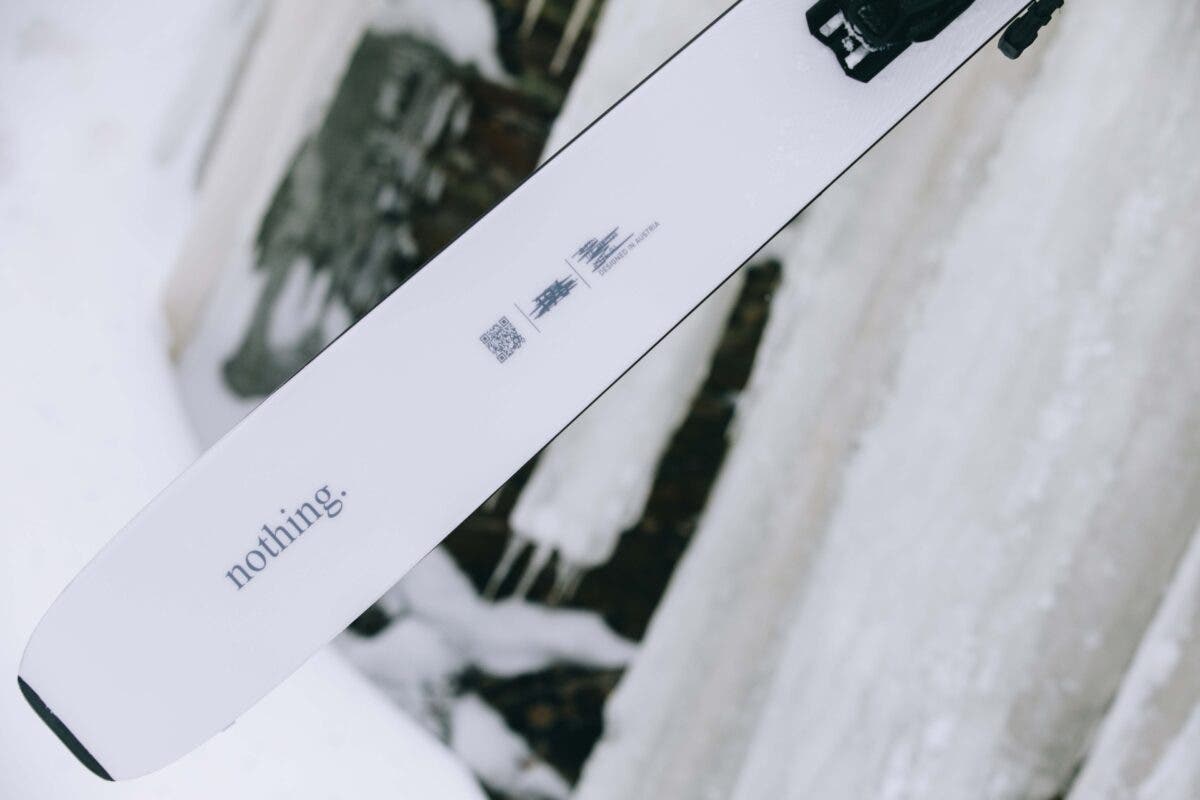
While Fischer’s marketing campaign boldly proclaimed "zero specs," the reality proved to be a nuanced revelation. Upon closer examination, the ski’s topsheet, beneath a lightly scratched-out layer, bore a full spec sheet, still legible. This subtle detail, while undermining the absolute claim of "no specs," served to highlight the tension between industry tradition and Fischer’s experimental marketing. It allowed for a direct, albeit semi-clandestine, confirmation of the ski’s fundamental attributes.
Through this discovery, it was confirmed that "The Nothing" is indeed a dedicated powder ski, boasting a significant 112-millimeter waist underfoot. Further details revealed notably wide shovels, exceptionally soft tips designed for superior floatation in deep snow, and a respectably long sidecut radius of 22 meters, indicative of a ski built for stability at speed and carving powerful, arcing turns. The presence of a Titanal layer underfoot, a common feature in high-performance skis, was also confirmed, signaling a commitment to dampening vibrations and enhancing torsional rigidity for improved control and responsiveness.
Comparing "The Nothing" to Fischer’s well-regarded Ranger series, it becomes clear that this new offering is not merely a numerical insertion between the Ranger 108 and 116 models. Instead, it presents a unique blend of characteristics. Despite sharing a similar weight profile with the Ranger 116, its narrower 112mm waist imbues "The Nothing" with a more planted and stable feel. The combination of a longer radius and slightly stiffer tails contributes to superior stability at high speeds and provides robust support for landing substantial drops, appealing to aggressive freeriders. Interestingly, "The Nothing" exhibits a marginally softer torsional flex compared to its Ranger siblings. This characteristic, coupled with its longer radius, encourages a more "slashy" and "slarvy" turn initiation, allowing for dynamic, surf-like maneuvers in soft snow, distinguishing its playful yet powerful demeanor.
Field Testing: A Comprehensive Evaluation Across Diverse Conditions
The testing phase for "The Nothing" unfolded against a backdrop of highly variable conditions in the Western United States, providing a rigorous assessment of its capabilities. The skis arrived following an "unimaginable storm cycle" in Tahoe that delivered seven feet of snow, only to be followed by an equally dramatic period of heavy rain, resulting in significant snow loss. March 2026 proved to be one of the worst months for snowpack depletion in California’s recent history, leading to initial concerns that "The Nothing," given its wide profile, would be relegated to slush duty rather than its intended purpose as a powder ski.
Mammoth Mountain: Mastering Slush and Groomers
The initial significant test took place at Mammoth Mountain on a sunny March weekend, where deep slush served as a worthy analog for heavy, wet California powder. What truly surprised testers was "The Nothing’s" commendable performance on groomed terrain. The integrated Titanal layer underfoot provided exceptional stability and a snappy responsiveness in the firm morning conditions before the groomers transitioned to corn snow. The ski allowed for confident, railed turns and facilitated poppy transitions between arcs, demonstrating an unexpected versatility. While acknowledging that a 112mm-underfoot powder ski is not designed for aggressive carving on hardpack, "The Nothing" proved to be a viable daily driver for Mountain West skiers who appreciate soft groomers as much as they do off-piste exploration.
As the day progressed and the snow softened, "The Nothing’s" more playful and "swervy" attributes came to the fore. It proved exceptionally fun for throwing sideways in steep terrain and effortlessly gapping between moguls, adapting readily to the exuberance of spring skiing. Even with a mounting position 8.5 centimeters back from true center—a setup affectionately dubbed "God’s Mount" by testers for its optimal balance between directional stability and playful agility—the ski felt balanced in the air and executed switch carving with remarkable ease, indicating a well-distributed flex pattern.
Kirkwood: Thriving in Authentic Powder Conditions
The true test for "The Nothing" arrived in April with a significant storm that blanketed Kirkwood with 30 inches of cold, fresh snow. In its natural habitat, "The Nothing" truly "came alive." The morning was spent exploring Chair 6, delving into hidden stashes above Timber Creek, and navigating the endless steep terrain of Cornice Express. Here, the ski thrived, demonstrating exceptional agility between trees, effortlessly blasting through untouched pockets of snow, and slashing through soft wind drifts with remarkable ease.
A particularly memorable run through Saddle Chute involved launching off the cornice into pristine, wind-buffed snow and utilizing the scattered volcanic pillows for aerial maneuvers. The ski’s tails provided excellent support, even when landing slightly off-centered, instilling confidence in challenging situations. The torsional flex of the tips and tails was precisely tuned to allow for quick release with a flick of the ankles, facilitating nimble adjustments in tight spaces. Simultaneously, the longitudinal flex remained composed and robust, enabling the ski to blast through softer chop without sacrificing stability or control, affirming its design as a powerful and adaptable powder tool.
Performance Nuances and Identified Limits
Despite its impressive performance, "The Nothing" did exhibit certain limits, particularly as conditions deteriorated throughout the day. Once the sun affected the chopped-up snow in the afternoon, the ski’s speed limit became more apparent. Its inherent flex pattern, while encouraging an athletic, dynamic style—popping and turning between bumps and piles—demanded a higher level of physical engagement compared to simply leaning on the shovels and plowing through everything. After numerous laps on Cornice Express, the demands of maintaining this athletic style began to take their toll, highlighting that the ski requires an active input from the rider.
"The Nothing" occupies a distinct niche in the powder ski market. It is neither a dedicated "directional charger" designed for brute force and unwavering stability at extreme speeds, nor is it a overly "loose, swervy noodle" that sacrifices power for extreme playfulness. Its combination of weight and flex positions it as a powerful powder ski, but in less-than-perfect, highly variable conditions, these same characteristics gently encourage the skier to temper their speed and adopt a more finessed approach.
Who Is "The Nothing" For? Broader Impact and Implications
Based on extensive testing, "The Nothing" emerges as a phenomenal powder ski particularly well-suited for the realistic conditions of a West Coast storm day: a scenario where one might enjoy a few pristine, untracked laps before spending the remainder of the day navigating increasingly chopped-up leftovers. It is an ideal choice for skiers who prioritize a dynamic, interactive style—those who prefer to pop, slash, and swivel around soft piles of snow rather than solely relying on a front-of-boot stance to blast through everything in their path.
Furthermore, the presence of tail notches makes "The Nothing" a compelling option for a hybrid setup, catering to skiers who frequently engage in lift-served backcountry terrain and shorter touring excursions. While its weight is certainly a consideration for extended uphill travel, its carefully tuned flex pattern feels exceptionally well-suited to the often wind-affected powder conditions commonly encountered in Western sidecountry zones.
The initial lack of explicit specifications and information accompanying "The Nothing" was undeniably a marketing "gimmick." However, after rigorous testing in a wide array of conditions, the underlying rationale behind Fischer’s approach became remarkably clear. "The Nothing" never felt overly prescriptive about how it demanded to be skied. In an era where many ski brands imbue their products with a clear, almost dictatorial identity that often shapes a skier’s interaction with the gear, "The Nothing" offers a refreshingly open-ended experience. It actively encourages skiers to explore and settle into their own unique style, fostering a deeper, more personal connection with their equipment.
This innovative launch strategy by Fischer could have significant implications for the wider ski industry. It challenges the conventional wisdom that more data inherently equates to better consumer understanding or product differentiation. Should "The Nothing" resonate strongly with consumers, it might inspire other manufacturers to re-evaluate their marketing tactics, potentially leading to a broader shift towards experience-centric product introductions. Fischer’s bold move positions them not only as an innovator in ski design but also as a thought leader in how outdoor sports equipment is presented and perceived, inviting a new conversation about what truly defines performance and enjoyment on the slopes.

