
The end of the ski season doesn’t signal a complete break from ski maintenance. In fact, the preparation for storing your equipment over the summer months is arguably the most crucial maintenance you can perform, directly impacting their performance and longevity for the following winter. As Stein Olav Snesrud, former head of the Norwegian ski waxing team, emphasizes, "The time you invest in maintenance now, at the end of the season, you will get back with interest next winter." This spring tune-up is not merely a suggestion; it’s a strategic investment for future enjoyment on the slopes. Neglecting this crucial step can lead to costly repairs or diminished performance, turning eager anticipation for the next snowfall into frustration.
The process of preparing skis for summer storage is surprisingly straightforward, requiring minimal time and a few essential items. The core of this preparation lies in two fundamental actions: thoroughly cleaning off all residual wax and dirt, and then applying a protective layer of storage wax to the glide zones. This dual approach ensures that the ski bases are not only clean but also protected from the detrimental effects of prolonged exposure to air and potential contaminants.
The Criticality of Spring Cleaning for Ski Equipment
Ski wax, particularly hard waxes and the sticky residues of klister, are designed to interact with snow and ice. When left on the ski base throughout the summer, these residues can become problematic. "If you leave your skis with wax and dirt over the summer, you risk finding them with klister and wax that has seeped into the glide zones, and over time has dried and almost petrified there," explains Snesrud. This hardened residue can be incredibly difficult to remove come autumn, often requiring aggressive scraping or even professional servicing. The potential for this "petrified" wax to permanently stain or damage ski bases is a significant concern, especially if skis are stored carelessly on hard surfaces.
The impact of neglecting this cleaning step extends beyond mere aesthetics. Over time, uncleaned residues can degrade the ski base material, affecting its porosity and its ability to absorb new wax. This phenomenon, known as oxidation, can lead to a noticeable decline in glide performance. Snesrud elaborates, "If the base has oxidized, the only thing that helps is to have it reground." Such regrinding is a costly process and highlights the economic sense in performing proactive maintenance.
A Step-by-Step Guide to Summer Ski Storage
The recommended procedure for preparing skis for summer storage can be broken down into a series of manageable steps, ensuring thoroughness and effectiveness.
Step 1: Removing Old Wax and Grime
The initial and perhaps most labor-intensive part of the process is the removal of old wax and any accumulated dirt. This begins with a physical scraping of the ski base. Specialized plastic scrapers are ideal for this task, designed to lift off wax without damaging the base material. It is crucial to work along the length of the ski, applying consistent pressure. Following the scraping, a dedicated ski cleaner is essential. Products like Swix’s Base Cleaner or Citrus Solvent, or equivalent formulations from other reputable brands, are formulated to break down and lift wax residues. These cleaners are available in various forms, including liquids, sprays, and pre-moistened wipes, offering convenience for different user preferences.
"Clean your skis thoroughly for all wax residues. Then they will be much more pleasant to take out again for the next season," advises Snesrud. Beyond the primary glide zones, it’s important to extend this cleaning process to the entire ski. Klister, in particular, has a tendency to spread beyond its intended application area. Therefore, the bindings, sidewalls, and even the topsheet of the skis should be addressed. These areas can accumulate dirt and wax, which, if left unchecked, can harden and become difficult to remove.
For skiers who utilize classic skis with a kick zone (grip zone), a separate cleaning procedure is necessary. This zone typically employs grip wax or klister for traction. Specialized cleaners designed specifically for grip zones should be used. It is imperative not to use standard base cleaners or solvents intended for glide zones on the kick zone of classic skis. These aggressive cleaners can potentially damage the adhesive that secures the ski’s grip zone material (such as mohair or traditional waxable surfaces), leading to delamination. The use of appropriate, dedicated cleaners ensures the integrity of the grip zone is maintained.
Step 2: Cleaning the Glide Zones with Specific Solvents
Once the bulk of the wax and dirt has been removed, the focus shifts to the glide zones themselves. Here, a specialized glider cleaner or a fluorine remover is recommended. These products are formulated to effectively remove any remaining wax, dirt, and contaminants while also conditioning and protecting the ski’s base structure. The intricate patterns, or "structure," etched into the base of modern skis are crucial for their glide performance, and these specialized cleaners help to preserve this structure.
While some sources suggest that a general ski cleaner can be used on glide zones, Snesrud clarifies, "There are probably none of the manufacturers who recommend using klister cleaner on the glide zones, but strictly speaking, you can also use the same ski cleaner that you use to remove klister and grip wax on the entire ski. The most important thing is that you get the base cleaned of dirt and contamination." The primary objective remains the thorough removal of any foreign substances that could hinder future wax absorption or glide.
Step 3: Inspecting Skis and Bindings for Damage
This stage presents an opportune moment to conduct a thorough inspection of the skis and their bindings. Look for any significant scratches, gouges, or cracks on the ski bases. Minor base damage can often be repaired, but significant issues might necessitate professional servicing or even replacement of the skis. Similarly, bindings should be examined for signs of wear and tear. Check for any broken parts, loose screws, or signs of stress. Note any components that require replacement or repair, such as broken springs, worn boot adapters, or damaged heel pieces. This proactive inspection can prevent unexpected failures during the next ski season.
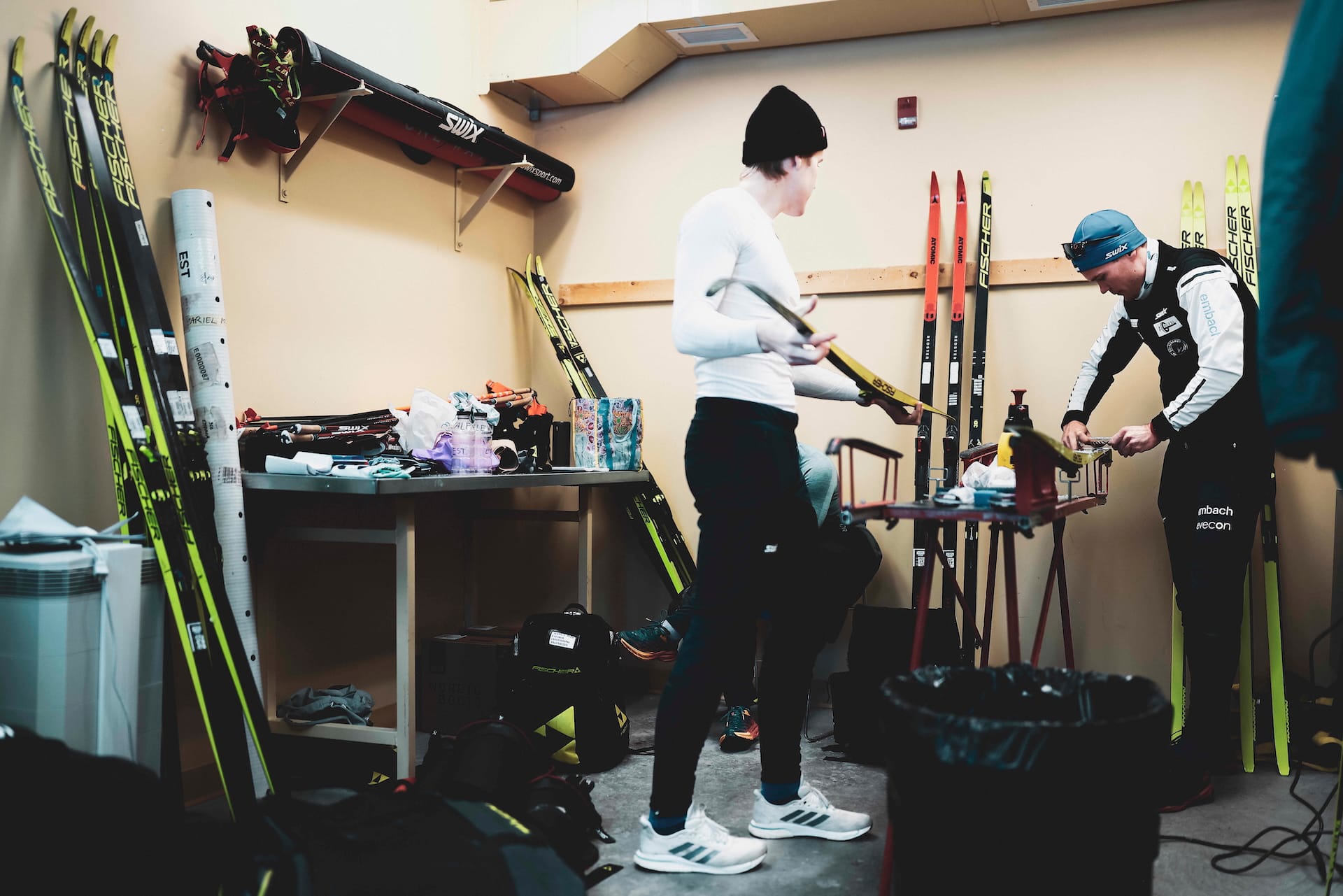
Step 4: Applying Storage Wax (Summer Glide)
The final and arguably most critical step in protecting your skis for the summer is the application of a storage wax, often referred to as "summer glide." Without a protective layer of wax, the base material of the skis can dry out and oxidize over the extended period of non-use. This drying process makes the base less receptive to new wax when the ski season begins again. "If you put your skis away without having done anything with the glide zones, the base will oxidize. It takes a long time, but the base slowly dries out and then the skis will not be as receptive to waxing anymore," Snesrud explains.
The recommended wax for storage is typically a medium-hard paraffin wax. A temperature range of -5°C to -10°C is often suggested, as these waxes offer a good balance of hardness and ease of scraping. Snesrud specifically recommends an affordable wax, such as Swix PS6 (formerly CH6), stating, "Use a cheap glider, such as Swix PS6 (formerly CH6, editor’s note) or similar. It’s not the hardest of the gliders, but not so soft that it becomes sticky and difficult to scrape off in the autumn."
The application process involves heating the wax with a waxing iron and then spreading it evenly across the entire glide zone. After the wax has cooled, it should be scraped off thoroughly, leaving a thin protective layer. This process not only protects the base from drying but also primes it for the upcoming season, meaning a quick scrape and brush might be all that’s needed when the first snow falls.
Step 5: Proper Storage
The final aspect of summer preparation is the storage environment itself. Skis should be stored in a cool, dry place, away from direct sunlight and extreme temperature fluctuations. Direct sunlight can degrade the base material and the wax, while significant temperature swings can cause expansion and contraction, potentially stressing the skis. Ideally, skis should be stored lying flat, or propped up in a way that doesn’t put undue pressure on the camber or rocker profile. Avoid storing them with tightly cinched straps, as this can compromise the ski’s flex and structural integrity over time. Some skiers opt to store their skis in a ski bag for added protection against dust and accidental damage.
The Economic and Performance Implications of Summer Maintenance
The advice provided by Snesrud and other ski experts is not merely about convenience; it has tangible economic and performance implications. Ski bases are made of polyethylene, a porous material that can dry out and become brittle if not properly maintained. This drying process, or oxidation, can fundamentally alter the base’s ability to absorb and hold wax. A dry, oxidized base will not glide as smoothly, even with fresh wax applied, as it cannot achieve the optimal molecular interaction with the wax. This leads to a slower, less enjoyable skiing experience.
Consider the cost of a new pair of high-performance skis, which can range from several hundred to over a thousand dollars. Investing a small amount of time and money in proper maintenance can significantly extend the lifespan of these expensive pieces of equipment. Furthermore, the cost of professional base repair or a full base grind can easily exceed the cost of the materials needed for summer preparation. Therefore, proactive maintenance is a financially prudent decision.
Beyond economics, performance is paramount for serious skiers. The subtle nuances of base structure and wax absorption are critical for achieving optimal glide. A neglected base can feel sluggish and unresponsive, negating the benefits of advanced ski technology and careful waxing. The effort invested in spring cleaning and summer waxing ensures that when the ski season arrives, the skis are in their best possible condition, ready to perform at their peak.
Broader Context and Related Equipment Considerations
The practice of proper ski storage is a cornerstone of equipment care within the broader skiing community. This principle extends to other ski-related gear as well. For instance, ski boots should be thoroughly dried and stored in a place where they are not compressed or deformed. Boot liners can retain moisture, which can lead to unpleasant odors and potentially damage the boot’s materials over time.
Ski poles, too, benefit from attention. Ensure that the baskets are clean and that any cracks or damage to the shafts or grips are noted. If using adjustable poles, consider loosening them to their longest setting to reduce stress on the internal mechanisms. Ski bags, while primarily for transport, can also offer a protective layer for storage, shielding skis from dust and minor impacts.
For skiers who invest in specialized tuning equipment, such as waxing irons, brushes, and scrapers, the end of the season is also a good time to inspect and clean these tools. Ensuring they are in good working order will facilitate the waxing process when the new season begins. Additionally, it’s an opportune moment to take inventory of your waxing supplies. Running low on specific waxes, cleaners, or tuning tools can lead to delays and compromises when the need for preparation arises in the autumn. Creating a checklist of necessary supplies can prevent last-minute rushes and ensure you are well-equipped for the upcoming winter.
Looking Ahead: The Autumn Readiness
The goal of this comprehensive summer preparation is to ensure that when the first snowflakes begin to fall in autumn, your skis are not only clean but also ready to perform. A quick scrape and brush of the storage wax can often reveal a base that is still receptive to new wax, significantly shortening the time required to get your skis race-ready or simply slope-ready. This contrasts sharply with the arduous task of trying to remove hardened, old wax from a neglected base.
The commitment to this simple, yet effective, end-of-season maintenance routine pays dividends season after season. It’s an investment in the longevity of your equipment, the enjoyment of your skiing experience, and ultimately, a testament to the passion that skiers have for their sport. As Snesrud’s advice succinctly puts it, "The time you invest in maintenance now… you will get back with interest next winter." This sentiment underscores the value of proactive care in preserving the performance and extending the life of cherished ski equipment. The seemingly small effort now translates into significant returns when the mountains call again.

