
The North American ski industry is facing a significant legal challenge as a federal antitrust class action lawsuit has been filed against the sector’s two largest entities, Vail Resorts, Inc. and Alterra Mountain Company. The lawsuit, Goloja et al. v. Vail Resorts, Inc. et al., filed in the U.S. District Court for the District of Colorado, alleges that the two companies have utilized their dominant market positions to stifle competition, artificially inflate daily lift ticket prices, and coerce consumers into purchasing expensive multi-mountain season passes. This litigation represents the first major federal antitrust challenge specifically targeting the "mega-pass" business model that has come to define the modern skiing experience over the last two decades.
At the heart of the complaint is the allegation that Vail Resorts and Alterra Mountain Company have engaged in unlawful "tying" and bundling practices. The plaintiffs contend that by controlling access to the vast majority of "marquee" destination resorts in North America, the companies have created a duopoly that leaves skiers and snowboarders with little choice but to subscribe to the Epic Pass or the Ikon Pass. The lawsuit argues that this conduct violates Section 1 of the Sherman Act, which prohibits contracts or conspiracies in restraint of trade, as well as various state antitrust and consumer protection laws.
The Mechanics of the Alleged Antitrust Violations
The plaintiffs’ legal team, led by DiCello Levitt’s Antitrust and Competition Litigation Practice, argues that the defendants have systematically restructured the economics of skiing to eliminate traditional competition. Central to this argument is the strategy of "predatory" pricing regarding single-day lift tickets. In recent years, single-day ticket prices at premier resorts such as Vail, Beaver Creek, Steamboat, and Deer Valley have soared, frequently exceeding $275 or even $300 per day during peak periods.
The lawsuit alleges that these prices are not reflective of market demand or operational costs but are instead "artificially high" figures designed to make the multi-thousand-dollar season passes appear to be the only "economically rational" choice for the average consumer. By making the cost of a three-day ski trip nearly equal to the cost of a full season pass, the companies effectively force consumers into a long-term financial commitment. This "all-or-nothing" approach, the complaint suggests, prevents consumers from purchasing access to individual mountains on a fair-market basis.
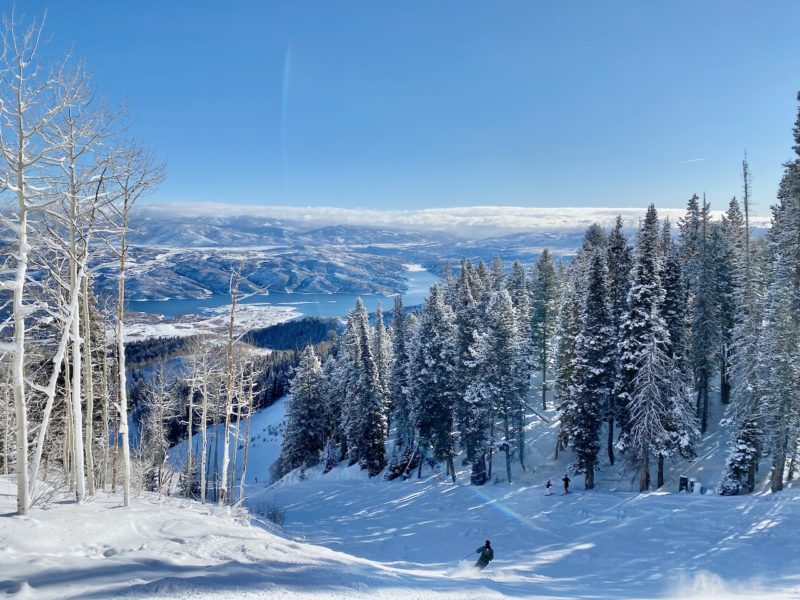
Furthermore, the "tying" allegation focuses on the bundling of high-profile destination resorts with smaller regional ski areas. The plaintiffs argue that consumers who wish to ski at a premier destination like Park City are forced to pay for a bundle that includes dozens of other resorts they may never visit. This practice, the suit claims, forecloses competition from independent ski areas that cannot offer such expansive networks and are subsequently pressured to join one of the two major pass systems or risk financial insolvency due to diverted skier traffic.
A Chronology of Consolidation and the Rise of the Mega-Pass
The current landscape of the ski industry is the result of nearly two decades of rapid consolidation. To understand the context of the lawsuit, it is necessary to trace the evolution of the Epic and Ikon passes.

In 2008, Vail Resorts fundamentally altered the industry by launching the Epic Pass. At the time, season passes for individual major resorts often cost between $1,500 and $2,000. Vail’s decision to offer access to multiple resorts for a fraction of that price—initially under $600—was marketed as a way to make skiing more accessible. However, as Vail continued to acquire independent resorts across the United States, Canada, and Europe, the Epic Pass transformed from a value-add product into a dominant market force.
The response to Vail’s expansion came in 2018 with the formation of Alterra Mountain Company, a joint venture between KSL Capital Partners and the owners of Aspen Skiing Company. Alterra launched the Ikon Pass to compete directly with the Epic Pass, creating a rival network of owned and partner resorts. Since then, the two companies have engaged in an "arms race" of acquisitions. Vail Resorts now owns or operates more than 40 resorts, while Alterra owns 17 and maintains partnerships with dozens of others, including prestigious independent destinations like Jackson Hole and Sun Valley.
The lawsuit claims that this consolidation has reached a tipping point where the "big two" now control nearly every major destination resort in North America. This concentration of power, the plaintiffs argue, has shifted the industry from a collection of competing local businesses into a corporate duopoly that prioritizes pass sales and shareholder returns over consumer choice and local mountain culture.
Supporting Data: The Cost of Participation
Data regarding the pricing trends of the last decade supports the plaintiffs’ claims regarding the rising barrier to entry for casual skiers. According to industry analysts, the "window price" for a single-day lift ticket at top-tier resorts has increased by more than 100% in many cases over the last ten years, far outstripping the rate of inflation.
For example, a peak-day lift ticket at Vail Mountain in Colorado was approximately $120 in 2013; by the 2023-2024 season, that same ticket reached $299. In contrast, the price of the Epic Pass has remained relatively stable or, in some years, has even been reduced. In 2021, Vail Resorts famously cut the price of the Epic Pass by 20% to encourage more skiers to commit to the pass program early in the season.
While the companies frame this as a "value" proposition for the consumer, the lawsuit interprets it as an exclusionary tactic. By depressing the price of the season pass while inflating the price of the daily ticket, the companies ensure that casual or infrequent skiers—who might otherwise support independent mountains—are funneled into the mega-pass ecosystem. This creates a "locked-in" consumer base, making it nearly impossible for independent resorts to attract destination travelers who have already pre-paid for access to the Vail or Alterra networks.
Official Responses and the Defense of the Model
Vail Resorts has been quick to defend its business model, dismissing the claims in the lawsuit as "without merit." In an official statement, the company emphasized its role in democratizing the sport. Vail representatives pointed out that the Epic Pass was specifically designed to lower the barrier to entry for frequent skiers, noting that the 2008 launch reduced the price of a season pass by 60%.
"We’re proud that 18 years later, it’s still one of the best values in the industry," a spokesperson for Vail Resorts stated. The company also highlighted its efforts to provide variety through lower-priced products such as the Epic Day Pass, which allows guests to purchase a specific number of days at a discount if bought in advance. Vail’s defense rests on the argument that their pricing strategy rewards loyalty and advance planning, which in turn provides the company with the capital necessary to invest in resort infrastructure, such as high-speed lifts and snowmaking technology.
Alterra Mountain Company has traditionally maintained a similar stance, arguing that the Ikon Pass provides unprecedented variety and flexibility for the modern traveler. Both companies assert that the industry remains competitive, pointing to the hundreds of smaller, independent ski areas that still operate across North America.
Broader Impact and Industry Implications
The outcome of this class action lawsuit could have profound implications for the future of the outdoor recreation industry. If the court finds that the bundling and pricing strategies of Vail and Alterra constitute a violation of antitrust laws, it could lead to a forced restructuring of how season passes are sold.
One potential outcome is a legal mandate to decouple certain resorts from the mega-pass bundles, allowing consumers to purchase more targeted access. Another possibility is a regulatory cap on the disparity between season pass prices and daily lift ticket prices. Such a change would likely benefit the "casual" skier who only visits the mountains once or twice a year but could lead to higher costs for the "power" skier who currently benefits from the high-volume, low-cost pass model.
Beyond the legal and financial aspects, the lawsuit touches on a growing cultural tension within the skiing community. For years, locals in mountain towns have complained about overcrowding, increased traffic, and the "Disneyfication" of their home resorts—issues often blamed on the influx of pass holders. Greg Asciolla, Chair of DiCello Levitt’s Antitrust Practice, noted that the complaint reflects these frustrations. "For years, skiers have been told that soaring lift-ticket prices, reduced choice, and overcrowding are simply the new reality," Asciolla said. "Our complaint alleges that these outcomes are not the result of healthy competition, but of exclusionary conduct."
Independent ski areas are also watching the case closely. Many small resorts have struggled to survive as the "Epic/Ikon" duopoly captures the lion’s share of marketing spend and travel bookings. If the lawsuit succeeds in curbing the dominance of the mega-passes, it could create a more level playing field for independent operators, potentially revitalizing local ski culture and providing consumers with a wider array of authentic, non-corporate mountain experiences.
As the case of Goloja et al. v. Vail Resorts, Inc. et al. moves through the U.S. District Court for the District of Colorado, the eyes of the global snowsports community will remain fixed on the proceedings. The litigation represents a pivotal moment for an industry at a crossroads, where the pursuit of corporate efficiency and scale is being directly challenged by the principles of fair competition and consumer choice. Regardless of the verdict, the filing of this lawsuit signals that the era of unchallenged mega-pass dominance may be coming to an end.
