
The landscape of professional sports compensation underwent a significant transformation on March 12, 2026, as the MoonPay X Games League (XGL) conducted its inaugural Summer Draft. In a move that signals a deepening integration between decentralized finance and mainstream athletics, MoonPay, the Title Partner of the league, and Exodus Movement, Inc. (NYSE American: EXOD), a leading self-custodial software platform, announced that all 40 drafted athletes received their signing bonuses in XO Cash ($XO). This new USD-backed stablecoin, issued by MoonPay and integrated into the Exodus ecosystem, represents one of the most structured and high-profile implementations of digital asset compensation in the history of professional sports.
Each of the 40 athletes selected during the draft received a $2,500 signing bonus, deposited instantly into their individual Exodus Wallets. While individual crypto-based payouts have occurred in various sports leagues over the last decade, the XGL initiative is notable for its scale and its integration into a formalized league structure. By utilizing a stablecoin rather than a volatile cryptocurrency, the league aims to provide athletes with the speed and borderless utility of blockchain technology while maintaining the price predictability of the U.S. dollar.
The Evolution of the X Games: From Events to a Global League
The MoonPay X Games League represents a fundamental shift in the business model of action sports. For decades, the X Games operated primarily as a series of standalone, invite-only competitions held in summer and winter locations. While these events garnered massive global viewership, they often lacked the seasonal narrative and financial security associated with traditional "big four" sports leagues.
The formation of the XGL changes this dynamic by establishing a global, co-ed, team-based league. Under this new structure, athletes are no longer just competitors vying for a podium spot; they are league members with access to fixed salaries, comprehensive benefits, and a season-long points race. The Summer Draft is the cornerstone of this evolution, providing a mechanism for team selection and the formalization of athlete-employer relationships.
The introduction of the $XO signing bonus is designed to complement this new professionalized environment. By awarding bonuses in a digital format, the XGL is positioning itself as a "digital-first" league, catering to a younger, tech-savvy demographic of both athletes and fans. This transition reflects a broader trend in the sports industry where organizations are seeking to bypass traditional banking inefficiencies in favor of more agile financial rails.
Technical Specifications: XO Cash and the M0 Infrastructure
The signing bonuses are powered by XO Cash ($XO), a fully reserved, USD-backed stablecoin. The asset is managed by MoonPay and built upon the M0 open stablecoin infrastructure. M0 is a decentralized protocol designed to allow for the issuance of highly transparent, institutional-grade digital dollars. By utilizing this infrastructure, MoonPay ensures that every $XO token in circulation is backed by high-quality, liquid assets, providing a level of security and auditability that is often lacking in earlier iterations of digital currencies.
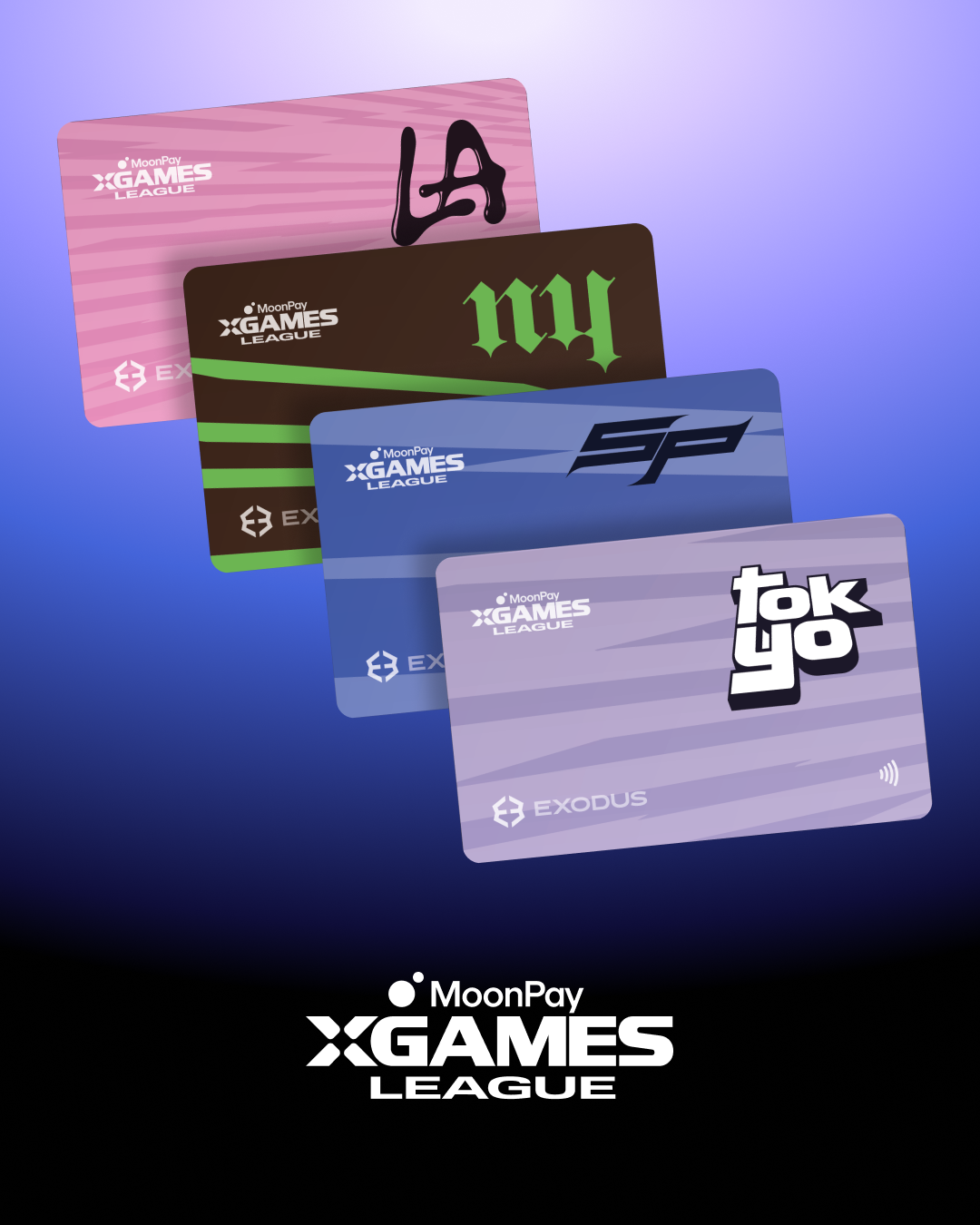
Furthermore, XO Cash is designed to serve as the primary liquidity layer for Exodus Pay. Set to launch in the second quarter of 2026, Exodus Pay is a self-custodial payments platform that allows users to bridge the gap between their digital portfolios and real-world commerce. The drafted athletes are among the first to utilize this ecosystem, receiving custom MoonPay XGL Exodus Cards. These cards are linked directly to their self-custodial wallets, allowing them to spend their $XO signing bonuses at any merchant that accepts traditional debit cards globally.
This "self-custodial" aspect is critical. Unlike traditional bank accounts or exchange-hosted wallets, a self-custodial wallet gives the athlete total control over their private keys. This means the funds cannot be frozen by a centralized intermediary, and the athlete does not need to wait for banking holidays or international wire clearances to access their capital—a significant advantage for professionals who travel frequently for international competitions.
Chronology of Crypto Integration in Action Sports
The March 12 draft is the culmination of a multi-year partnership between the X Games and MoonPay. The timeline of this integration shows a deliberate progression toward the full-scale adoption of digital assets:
- January 2026 (X Games Aspen): MoonPay matched the gold medal winnings of Mark McMorris in the Men’s Slopestyle event with an equivalent payout in cryptocurrency. This marked the first time an X Games athlete received prize money in digital assets, serving as a successful pilot program for larger-scale payouts.
- February 2026 (Title Partnership Announcement): MoonPay was announced as the Title Partner of the newly formed X Games League, signaling a long-term commitment to the league’s financial infrastructure.
- March 12, 2026 (The Summer Draft): The formal launch of the XGL Summer Draft, where 40 athletes across various disciplines (skateboarding, BMX, and Moto X) were officially drafted into teams and issued $XO bonuses.
- Q2 2026 (Projected): The wide-scale launch of Exodus Pay and the distribution of the MoonPay XGL Exodus Card to the broader public, following the initial athlete rollout.
Perspectives from Industry Leadership
The leadership of both Exodus and MoonPay emphasized that this initiative is less about the novelty of "crypto" and more about the practical utility of modern financial tools.
JP Richardson, CEO and Co-Founder of Exodus, highlighted the logistical benefits for the athletes. "Athletes have global careers and they need payments that work across borders just like they do," Richardson stated. He noted that the traditional financial system is often ill-equipped to handle the needs of international competitors who may reside in one country, train in another, and compete in a third. "By awarding signing bonuses in a form athletes can receive instantly and hold in their own wallets, we’re creating a modern approach to compensation built for speed and ownership from day one."
Ivan Soto-Wright, CEO and Founder of MoonPay, framed the partnership as a natural alignment between two industries that prioritize disruption. "We partnered with the X Games because they’re doing to sports what crypto is doing to finance: challenging legacy systems and building something entirely new," Soto-Wright explained. He suggested that the future of all professional compensation would eventually move toward digital assets due to the transparency and efficiency they offer compared to legacy ACH or SWIFT systems.
Supporting Data and Economic Context
The decision to use a stablecoin like XO Cash comes at a time of significant growth in the digital dollar market. As of early 2026, the total market capitalization of USD-backed stablecoins has surpassed $200 billion, with daily settlement volumes frequently exceeding those of major traditional payment processors.
For the X Games League, the financial implications are clear. By using $XO, the league reduces the administrative overhead associated with onboarding 40 athletes into a traditional payroll system, especially those who may be international citizens without U.S. bank accounts.
Comparative Advantage of Stablecoin Bonuses:
- Settlement Speed: Instant (compared to 3-5 business days for international wires).
- Fees: Minimal network gas fees (compared to 3% to 5% for currency conversion and wire fees).
- Accessibility: 24/7/365 (not restricted by banking hours).
- Transparency: All transactions are verifiable on the blockchain ledger, ensuring league-wide accountability for bonus distributions.
Broader Impact and Implications for Professional Sports
The MoonPay XGL Summer Draft sets a precedent that other major sports leagues are likely to monitor closely. While the NFL and NBA have seen individual players—such as Saquon Barkley or Cade Cunningham—opt to convert portions of their salaries into Bitcoin, those were individual choices made through third-party processors. The XGL model is different because the league itself has integrated a specific digital asset into its core financial operations.
This move could influence how "Name, Image, and Likeness" (NIL) deals are structured in collegiate sports, where international student-athletes often face complex hurdles in receiving payments through traditional U.S. banking channels. The use of self-custodial wallets and USD-stablecoins provides a legal and efficient workaround for these global payment frictions.
Furthermore, the integration of the MoonPay XGL Exodus Card suggests a new revenue model for sports leagues: the "fintech-sport" hybrid. By providing athletes—and eventually fans—with branded financial tools, the XGL is not just a content creator but a financial service provider, creating a closed-loop economy where rewards, merchandise, and salaries all circulate within the same digital ecosystem.
As the XGL season progresses, the performance of XO Cash as a reliable compensation medium will likely serve as a case study for the broader adoption of Web3 technologies in the entertainment and sports sectors. For the 40 athletes drafted today, the immediate access to their $2,500 bonuses via their Exodus wallets marks the beginning of a new era where the "signing of the contract" is followed by the instant "ping" of a digital deposit, regardless of where in the world the athlete happens to be standing.

