
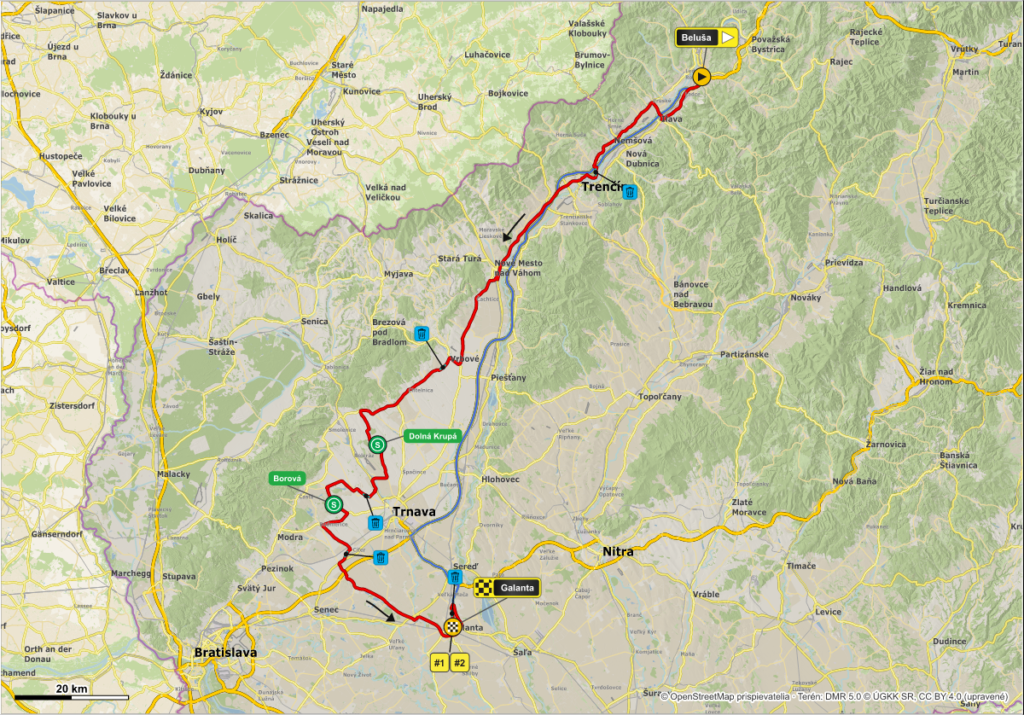
The 197.5-kilometer journey from Beluša to Galanta represents the most straightforward stage of the 70th edition of the Tour of Slovakia. As the peloton winds its way through the picturesque Slovakian landscape, riders and team directors alike view this penultimate stage as a vital transition point. With no categorized climbs to navigate, the terrain offers a rare reprieve from the strenuous vertical gain that has defined the previous stages, allowing the sprinters’ teams to take full control of the race narrative. This stage is not merely a transfer; it is a tactical chess match where positioning, wind management, and the preservation of energy for Sunday’s mountainous finale are of paramount importance.
The Route: A Flatland Challenge
The profile for Stage 4 is notably devoid of vertical intensity. Stretching nearly 200 kilometers, the route features rolling roads that lack the steep gradients required to challenge the pure sprinters. For the general classification (GC) contenders, the objective is simple: stay safe, avoid crashes, and minimize energy expenditure. The race starts in the town of Beluša at 12:40 PM, leading the riders across the heart of the region toward the finish line in Galanta.
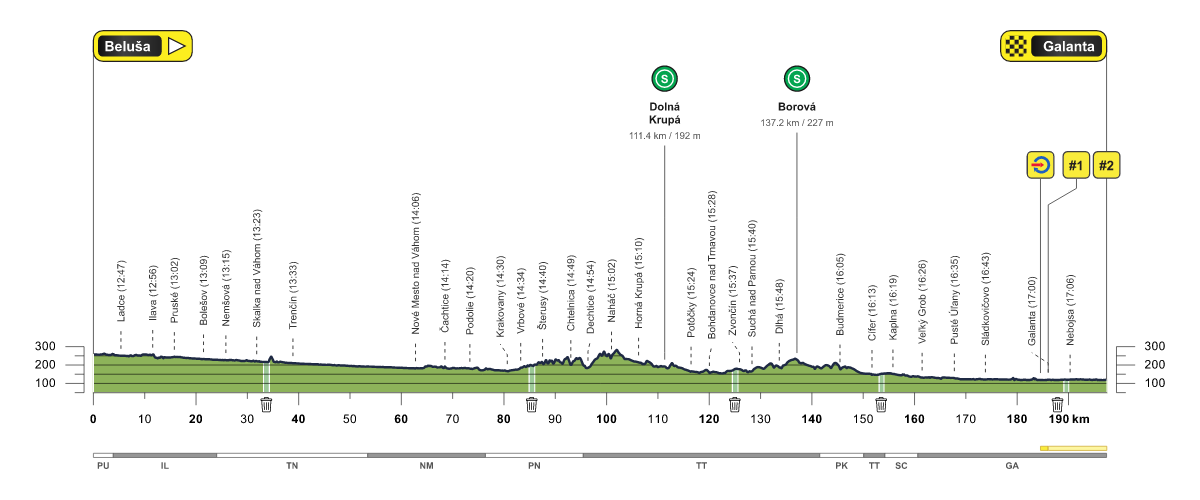
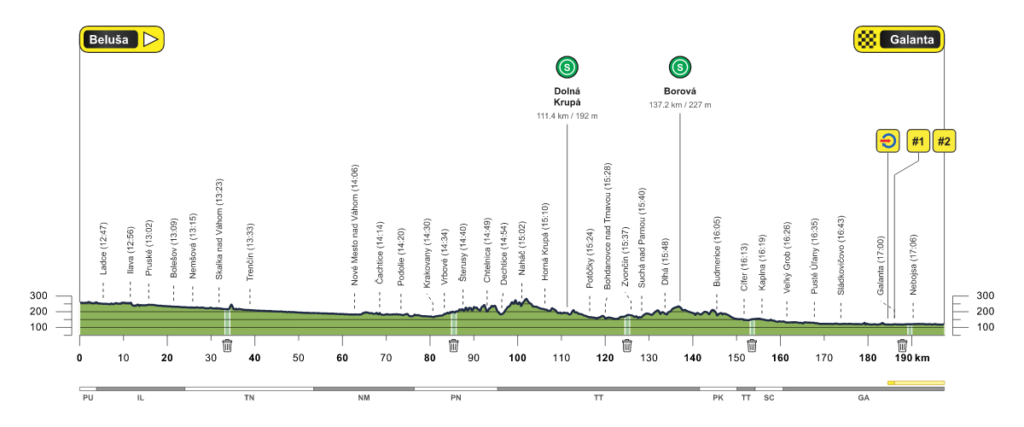
The absence of mountain points—usually a staple in the Tour of Slovakia—means the polka-dot jersey competition remains static for the day. Instead, the drama will unfold during the two intermediate sprints located at the 111.4-kilometer mark in Dolná Krupá and the 137.2-kilometer mark in Borová. These points, along with the significant bonus seconds available at the finish line, provide an incentive for riders to remain vigilant despite the lack of inclines.
Tactical Implications and the Favoritism of Paul Magnier
All signs point toward a high-speed, organized finale in Galanta. Paul Magnier, the French sprinting sensation, enters the day as the clear favorite. Magnier has demonstrated an exceptional ability to navigate the chaotic final kilometers of a race, and the flat, predictable run-in to the finish line plays directly into his strengths. His team, having showcased superior discipline throughout the week, will likely seek to neutralize any early breakaway attempts to ensure a mass finish.
For other teams, the strategy hinges on disrupting the dominance of the WorldTour squads. A breakaway of mid-tier riders is expected to form early, but the lack of terrain to hide from the peloton suggests their chances of staying away are slim. The final 35 kilometers are exceptionally flat, creating an environment where the speed of the chasing pack will almost inevitably swallow any escapees before the final kilometer.
The 70th Edition: Historical Context
The Tour of Slovakia has grown significantly in stature over the last decade, transitioning from a regional race to a significant fixture on the international cycling calendar. Celebrating its 70th edition this year, the event has attracted a high-caliber field, blending emerging talent with established WorldTour stars. The evolution of the race has been marked by a deliberate effort to include both technical mountain stages and high-speed flat stages, testing the versatility of the riders.
Historically, the race has been decided by narrow margins in the final mountain stages. This year, organizers have designed the route to force the GC favorites to defend their jerseys on the final day, making the relative calm of Stage 4 a deceptive lull in the action. The tactical importance of this stage cannot be overstated; riders who expend too much effort chasing intermediate points may find themselves lacking the necessary reserves to compete when the road tilts upward in the final stage.
Weather and Wind: The Unseen Variable
While the topography is flat, the weather remains the only significant variable that could complicate the proceedings. Crosswinds, particularly in the open agricultural sections leading toward Galanta, have the potential to split the peloton. If the winds pick up, the race could transition from a leisurely cruise to a high-stress affair, with teams fighting for position to avoid being caught in the wrong half of a "echelon." To date, however, conditions have been favorable, with no significant weather-related incidents reported in the first three stages.
Chronology of the Day
The timeline for Stage 4 is structured to facilitate a controlled progression:
- 12:40 PM: Official race start in Beluša.
- 111.4 km: Intermediate sprint in Dolná Krupá. Points awarded: 6-4-2-1. Bonus seconds: 3-2-1.
- 137.2 km: Intermediate sprint in Borová. Points awarded: 6-4-2-1. Bonus seconds: 3-2-1.
- 186.1 km: Final circuit entrance in Galanta.
- 197.5 km: Finish line in Galanta. Points awarded: 20-15-12-10-8-6-4-3-2-1. Bonus seconds: 10-6-4.
The General Classification Outlook
While the stage winner will likely be a sprinter, the real battle is happening in the background. The GC leaders are currently holding their positions, waiting for the final day to test one another. The bonus seconds available at the finish line in Galanta are of particular interest to those riders sitting just outside the top three. A strong finish could potentially shift the podium standings, adding a layer of tension to the final sprint that extends beyond just the stage win itself.
Team directors emphasize that Stage 4 is about risk management. "We have seen time and again that the easiest-looking days are the most dangerous," noted one team manager. "A moment of lost concentration on a flat, straight road can lead to a crash that ends a rider’s entire race. Our primary goal is to bring our leader to the finish safely."
Technical Analysis: The Final 35 Kilometers
The final 35 kilometers serve as the ultimate proving ground for the lead-out trains. The road is characterized by long, straight stretches with minimal technical turns, which favors high-cadence power riders. The absence of tight corners or significant elevation changes reduces the possibility of a late-stage tactical move succeeding. Consequently, the team with the most disciplined lead-out train will likely control the pace, slowly suffocating the aspirations of the breakaway and setting the stage for a classic bunch sprint.
Broader Impact and Future Prospects
The inclusion of Galanta as a finish city highlights the Tour of Slovakia’s commitment to reaching a wider audience across the country. The enthusiasm shown by the local crowds has been a recurring theme throughout the week, reinforcing the event’s importance as a national sporting treasure. By showcasing the region’s diverse geography—from the mountainous northern regions to the expansive plains of the south—the race effectively promotes cycling culture and tourism simultaneously.
As the peloton prepares for the final push, the atmosphere is one of focused intensity. The riders are aware that Stage 4 is the calm before the storm. Once the finish line in Galanta is crossed, the focus will immediately shift to the final, grueling mountain ascent. The results of this stage, therefore, act as a reflection of the current team hierarchies. Those who have managed their resources effectively throughout the week will have the advantage on Sunday, while those who have burned their matches too early will face a difficult reckoning.

Official Statements and Expectations
While official press conferences have yet to yield major surprises, the consensus among riders is one of cautious optimism. Many of the sprinters expressed confidence in their respective team structures, noting that the predictability of the route allows for a more "standard" racing plan. Conversely, the climbers are looking to stay anonymous in the pack, hoping that the pace remains high enough to prevent any unpredictable attacks from the field.
The official broadcast, provided through the ScPlay platform, will offer comprehensive coverage of the final kilometers, allowing fans to witness the tactical developments as they unfold. The broadcast will pay close attention to the positioning of the GC leaders during the final ten kilometers, where the risk of a "split" in the peloton is at its highest.
Conclusion: A Critical Transition
As the 70th Tour of Slovakia nears its conclusion, Stage 4 serves as a necessary, if straightforward, component of the race. It provides a platform for the sprinters to display their craft while ensuring that the GC contenders remain poised for the final showdown. Whether it results in a textbook sprint finish or an unexpected tactical upset, the day is certain to be a defining chapter in this year’s competition. As the riders depart from Beluša, they do so with the knowledge that while today is about speed and endurance, it is also about the careful preservation of their ambitions for the challenges that lie ahead. The final kilometers in Galanta will not only determine the winner of the stage but will set the tone for the climactic final act of this historic race.

