
The launch of the Atomic Nexus 130 BOA represents a significant milestone in ski boot evolution, addressing a long-standing challenge for many dedicated skiers: achieving effortless entry without compromising aggressive downhill performance. This flagship model, part of Atomic’s new Nexus series, joins a burgeoning wave of mid-entry designs that are meticulously engineered to prioritize accessibility, reflecting a maturing ski demographic and the industry’s growing commitment to inclusivity. It’s a development that seasoned bootfitters are welcoming, as it simplifies the process of matching advanced skiers with boots that cater to specific physical needs, moving beyond bespoke solutions to offer high-quality, off-the-shelf options.
For decades, the ski boot market presented a dichotomy: either a traditional four-buckle overlap boot that offered unparalleled power transmission and precision but often demanded significant effort and dexterity to put on, or a rear-entry design that prioritized ease but frequently sacrificed critical downhill performance. The Nexus 130 BOA aims to bridge this gap, delivering a robust 130-flex boot with a 101-millimeter last that allows skiers to step in with remarkable ease, much like a rear-entry boot, yet skis with the power and responsiveness expected of a high-performance alpine model. This innovative approach is poised to serve a substantial segment of the skiing population whose passion for hard-charging turns has often been at odds with the physical demands of traditional boot entry and exit.
The Evolution of Easy-Entry Ski Boots: A Historical Context
The quest for easier ski boot entry is not new. The late 1970s and 1980s saw the widespread popularity of rear-entry boots, epitomized by models from Salomon, Nordica, and Koflach. These boots featured a hinged cuff that allowed the rear of the boot to open wide, enabling skiers to slide their foot in effortlessly. For a time, they dominated the market, appealing to a broad audience seeking comfort and convenience. However, their design, often characterized by a softer flex and less precise power transfer due to the inherent compromises of a multi-piece, hinged shell, eventually led to their decline among performance-oriented skiers. As skiing techniques evolved towards more aggressive carving and demanding terrain, the limitations of rear-entry boots became apparent, leading to a resurgence of the more rigid and performance-focused four-buckle overlap designs.
Fast forward to the 21st century, and technological advancements in plastics, shell construction, and liner materials have opened new avenues for designers. The challenge remained: how to reintroduce easy entry without repeating the performance pitfalls of the past. The answer began to emerge in "mid-entry" or "open-shell" concepts, which differ fundamentally from traditional rear-entry designs. Instead of just the rear, these boots often feature a hinged or separating front and rear cuff, or an entirely new shell architecture that allows for a much wider opening. The goal is to provide a "step-in" experience while maintaining the structural integrity and lateral stiffness crucial for modern skiing.
Recent years have seen the introduction of several notable easy-entry innovations. The Nordica HF (Hands-Free) series, for instance, offered a sophisticated rear-entry system with an integrated heating element, targeting an older demographic and those with significant mobility challenges. While exceptionally comfortable and easy to use, its performance profile leans more towards recreational cruising. Similarly, the Rossignol Vizion explored a mid-entry concept, contributing to the industry dialogue around this design paradigm. These innovations set the stage, demonstrating market demand and pushing the boundaries of what’s possible. The Atomic Nexus 130 BOA now enters this landscape, specifically aiming to capture the segment that demands both exceptional ease of use and uncompromising downhill performance, pushing the envelope further than its predecessors.
Atomic Nexus 130 BOA: Design and Engineering
At the heart of the Nexus 130 BOA’s innovation is its sophisticated mid-entry design. Unlike traditional overlap boots, the Nexus features a unique shell architecture where the front and rear sections of the cuff can separate significantly. This mechanism is controlled by a robust spine lever, reminiscent of the walk mode found on high-performance alpine touring (AT) boots. When engaged, this lever allows the upper cuff to pivot forward and away, creating an expansive opening that enables skiers to step straight into the boot, often hands-free. This addresses a critical pain point for skiers who struggle with the contortions and physical effort required to pry open a stiff, cold four-buckle boot, particularly those with arthritis in their fingers, back issues, or general reduced flexibility.
Beyond the entry system, the Nexus 130 BOA incorporates several key technologies to ensure its high-performance pedigree:
- BOA H+1 Closure System: The lower shell utilizes the now-familiar BOA H+1 dial system, a precision closure technology that has gained significant traction in ski boots across the industry. This system uses a strong, lightweight wire to distribute pressure evenly across the forefoot, providing micro-adjustable fit and superior foot wrap compared to traditional buckles. While some bootfitters express reservations about BOA dials for those with compromised fine motor skills or difficulty bending over, Atomic’s design allows the BOA to be pretightened before entry, potentially mitigating these concerns. The precise, consistent closure offered by BOA is instrumental in achieving a secure fit without excessive pressure points, contributing significantly to the boot’s overall performance feel.
- Mimic Platinum Liner: Atomic has equipped the Nexus 130 BOA with its acclaimed Mimic Platinum liner. This heat-moldable liner is designed to mimic the exact shape of the skier’s foot, ankle, and lower leg after being heated and worn. The Mimic technology utilizes specialized materials that adapt and retain their custom shape, providing an exceptionally precise and comfortable fit from the first use. This custom-like fit is crucial for translating subtle skier inputs into ski performance and enhancing comfort throughout long ski days.
- Dual-Pivot Design: A notable engineering feature is the dual-pivot design, which shares conceptual similarities with systems seen in Lange Shadow boots. This innovation involves strategically placed pivot points in the cuff, designed to enhance the boot’s progressive flex and rebound characteristics. Unlike single-pivot designs, the dual-pivot aims to create more leverage, allowing the skier to generate greater power and quicker response out of turns. This is particularly important for a 130-flex boot, ensuring that the Nexus delivers a lively, springy feel that encourages dynamic skiing and powerful carved turns, rather than a dead or unresponsive sensation often associated with overly stiff boots.
- 101mm Last: The 101-millimeter last offers a medium-to-wide fit, accommodating a broader range of foot volumes than traditional low-volume performance boots. This choice reflects Atomic’s intention to cater to a wider audience, balancing comfort with performance. While the reviewer, accustomed to low-volume boots, initially noted a difference, the effective heel hold and overall foot wrap of the Nexus demonstrated its capacity to adapt to various foot shapes once properly engaged.
On-Snow Performance: A Testament to Modern Engineering
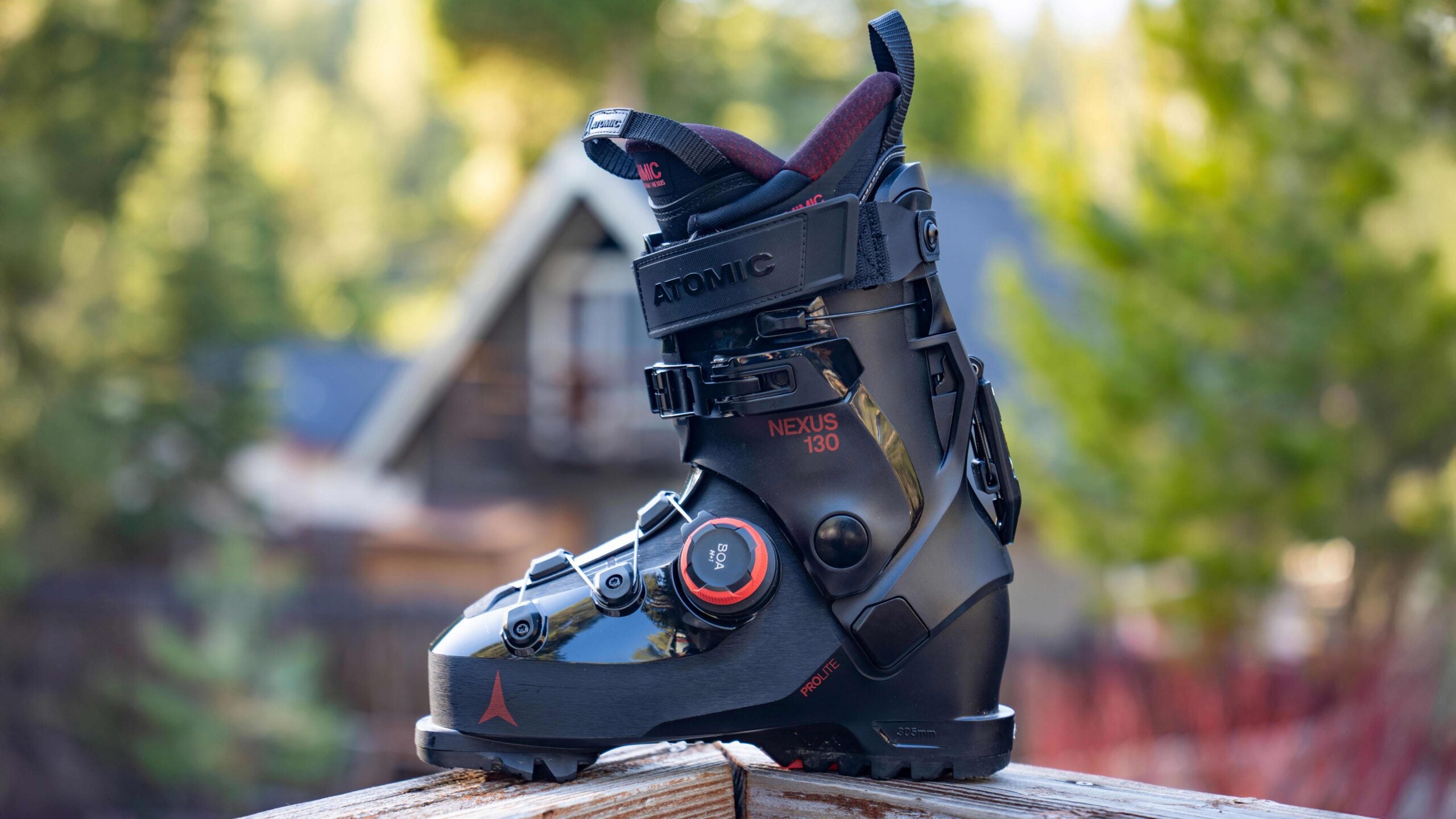
Initial on-snow testing of the Atomic Nexus 130 BOA in variable spring conditions provided compelling evidence of its performance capabilities. Despite its innovative mid-entry design and three-piece construction, the boot proved capable of withstanding aggressive skiing. For a reviewer accustomed to low-volume, race-inspired boots, the transition to a higher-volume boot designed for a balance of comfort and performance was initially noticeable. However, by maintaining an aggressive stance and actively driving the heel into the well-shaped heel pocket, any initial sensation of "slop" quickly dissipated.
The boot’s heel hold, a critical factor for performance, was largely on point, even for those with lower-volume feet. This suggests that skiers with genuinely high-volume feet, the primary target for a 101mm last, will likely find the heel retention excellent. The ankle break was positioned high and slightly forward, an anatomical fit that should particularly benefit skiers with higher insteps, ensuring consistent pressure distribution and effective power transfer.
Crucially, the Nexus skied like a legitimate 130-flex boot. This is a significant achievement for a boot that departs from traditional overlap construction and prioritizes ease of entry. The dual-pivot design appears to play a vital role in this, contributing to a powerful rebound and generating impressive leverage. This translates into a lively, energetic feel between carved turns, allowing skiers to maintain momentum and fluidity even in challenging terrain. It was only in extremely steep and chunky conditions that any meaningful play was detected, a minor compromise considering the significant accessibility benefits offered. This performance profile positions the Nexus 130 BOA firmly in the advanced to expert category, challenging the long-held belief that easy-entry boots inherently compromise downhill capability.
Comparative Analysis and Market Positioning
To fully appreciate the Atomic Nexus 130 BOA, it’s essential to place it within the context of other easy-entry boots currently on the market. While the reviewer had not directly tested the Rossignol Vizion, a conceptually similar mid-entry boot, the Nexus 130 BOA’s performance unequivocally surpasses that of the Nordica HF series in terms of aggressive skiing capability.
The Nordica HF series, while a triumph in hands-free entry and comfort, with its integrated heating elements and exceptionally plush feel, is primarily aimed at older skiers or those with more pronounced mobility limitations whose priority is absolute ease and warmth, with performance being a secondary consideration. It excels in casual cruising and offers an unparalleled level of convenience for those who might otherwise struggle to put on boots.
The Atomic Nexus 130 BOA, conversely, targets a distinct segment: skiers who demand bell-to-bell shredding and serious downhill performance but are frustrated by the physical struggle of traditional boot entry and exit. This could include highly skilled skiers experiencing age-related changes, recovering from injuries, or simply those who value efficiency without sacrificing the ability to charge hard. The Nexus doesn’t just offer easy entry; it offers performance-driven easy entry. Its 130 flex, Mimic liner, and dual-pivot design are all geared towards aggressive skiing, setting it apart as a true high-performance option in the accessible boot category. This differentiation is critical for a market increasingly looking for specialized solutions that cater to nuanced demands.
Broader Impact and Implications for the Ski Industry
The introduction of boots like the Atomic Nexus 130 BOA signifies a pivotal moment for the ski industry. It underscores a shift from a one-size-fits-all approach to boot design towards a more inclusive and user-centric philosophy.
- Addressing an Underserved Demographic: For too long, skiers with mobility issues, injuries, or simply those seeking greater convenience without sacrificing performance, have been an underserved market segment. The Nexus 130 BOA directly addresses this by offering a solution that allows these passionate individuals to continue enjoying the sport they love without the pre-skiing anguish. Data suggests an aging demographic among skiers in many key markets, and products that extend participation for this group are economically vital for resorts and equipment manufacturers alike.
- Empowering Skiers: The ability to put on and take off ski boots independently, hands-free and without stooping, is incredibly empowering. It removes a significant barrier to entry and ongoing participation, especially for those who might otherwise rely on assistance or be discouraged by the sheer physical effort. This can lead to increased frequency of skiing, longer careers on the slopes, and a revitalized passion for the sport.
- The Role of Bootfitters: While innovations like the Nexus are making ski boot selection easier, the role of expert bootfitters remains crucial. Instead of spending time solving fundamental entry issues, bootfitters can now focus on fine-tuning performance, addressing complex biomechanical challenges, and ensuring optimal alignment. The Nexus, by "making the bootfitter’s job easier" for basic fit and entry, allows these specialists to elevate their craft and provide more advanced customization, ultimately benefiting the skier even further.
- Industry Trend Towards Specialization: The Nexus is not an anomaly but rather a strong indicator of a broader industry trend towards greater specialization and segmentation. As core all-mountain and race boot technologies mature, designers are free to explore niche products that cater to specific needs, whether it’s backcountry touring, park and pipe, or, in this case, accessible high performance. This trend fosters innovation and expands the overall market by attracting new participants and retaining existing ones.
- Economic Impact: By making skiing more accessible, boots like the Nexus have the potential to boost equipment sales, lift ticket revenues, and resort visitation. Skiers who might have considered hanging up their skis due to boot frustrations now have a compelling reason to stay engaged. This contributes to the overall health and growth of the winter sports economy.
The Atomic Nexus lineup extends beyond the flagship 130 BOA, offering a comprehensive range of options to suit various flex preferences and foot volumes. The men’s series includes the 120 BOA, 110 BOA, and a 110 model without the BOA system, catering to different performance levels and budgetary considerations. For women, the series features the 105 BOA W, 95 BOA W, and 95 W (no BOA), ensuring that female skiers also have access to this revolutionary design across a spectrum of performance needs. All Atomic Nexus models are slated to arrive in retail shops in the fall of 2026, perfectly timed for the upcoming ski season. This strategic rollout signals Atomic’s confidence in the series’ appeal and its potential to reshape consumer expectations for ski boot design.
In conclusion, the Atomic Nexus 130 BOA is more than just a new ski boot; it’s a paradigm shift. It demonstrates that the long-sought balance between effortless entry and uncompromising downhill performance is not only achievable but can be delivered in a production model. For skiers who have endured the frustrating ritual of wrestling with traditional boots, or those who believed their days of aggressive skiing were numbered due to physical limitations, the Nexus offers a powerful promise: real skiing performance, liberated from the struggles of the parking lot. It saves the pain and anguish for the red snake, ensuring skiers can maximize their time on the slopes, from first chair to last.

