
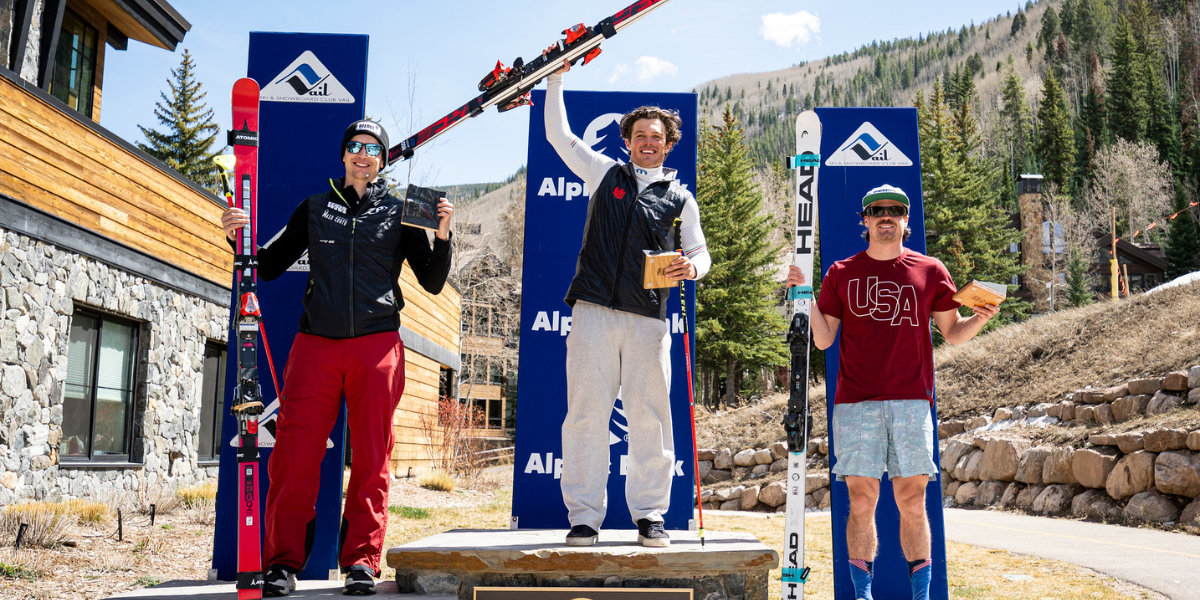
The men’s Giant Slalom event at the U.S. Alpine Nationals presented by Stifel, held amidst the challenging yet picturesque terrain of Vail, Colorado, unfolded as a compelling showcase of alpine skiing’s diverse talent pool. This prestigious event drew an exceptionally deep international field, featuring seasoned World Cup veterans, decorated NCAA champions, and an exciting contingent of rising U.S. ski talent, all vying for national honors on a demanding two-run course. The conditions, which transitioned from aggressive hardpack in the first run to a more "peely" and forgiving surface in the second, tested the adaptability and technical prowess of every competitor. Ultimately, it was Norway’s Johs Braathen Herland, representing the University of Utah, who delivered a masterful performance to claim the coveted Giant Slalom title, cementing his status as one of the sport’s most promising young stars.
The U.S. Alpine Nationals serve as a critical juncture in the domestic ski racing calendar, offering American athletes the opportunity to compete for national championships while also providing a platform for international competitors to test their mettle against a strong field. Stifel’s continued presentation of the event underscores a significant commitment to nurturing alpine talent and elevating the profile of ski racing within North America. Vail, a resort synonymous with world-class skiing and a rich history of hosting major international competitions, provided an ideal backdrop for this high-stakes contest, its renowned slopes offering a fair yet formidable challenge.
Race Dynamics: A Two-Run Battle Against the Clock and Conditions
The Giant Slalom, a discipline that demands a precise blend of power, agility, and tactical acumen, was contested over two runs on a meticulously prepared course. The first run saw athletes attacking a firm, fast surface, where early numbers had a distinct advantage, allowing for aggressive line choices and maximum speed. Braathen Herland capitalized on these prime conditions, laying down an incredibly quick first run that immediately established him as the frontrunner. His aggressive yet controlled approach set a benchmark that few could match.
As the race progressed into the second run, the course conditions began to evolve. The initial aggressive snow began to break down, becoming what skiers often describe as "peely"—a softer, less consistent surface that demands a more nuanced approach. This shift in conditions forced athletes to adapt their strategy, prioritizing finesse and precision over sheer power. The challenge lay in maintaining rhythm and pressure on the skis without getting caught in the deteriorating snow, which could easily lead to a loss of speed or even a critical error. Only those with superior technical skills and race-day experience could navigate these changes effectively, and the results reflected this demanding test of versatility. The combined times of both runs determined the final standings, with every fraction of a second proving crucial in the tightly contested field.
Johs Braathen Herland: NCAA Prowess to National Champion
The day’s undisputed victor was Johs Braathen Herland, a Norwegian athlete who has found remarkable success competing in the U.S. collegiate system with the University of Utah. His performance in Vail was a testament to a season of consistent excellence and rapid development. Herland’s first run was a clinic in aggressive, high-speed Giant Slalom, securing a substantial lead. He then demonstrated remarkable composure in the second run, adapting flawlessly to the tightening surface and preserving his advantage to clinch the title. His winning margin of +1.58 seconds over the second-place finisher underscored the dominance of his performance.
Herland’s journey to the top of the podium at the U.S. Alpine Nationals is deeply intertwined with his collegiate career. A University of Utah All-American, he is a two-time NCAA Giant Slalom champion, having claimed titles in both the 2025 and 2026 seasons. Beyond collegiate racing, he also swept the 2026 NorAm overall and GS championships, a testament to his versatility and competitive drive across different circuits. These achievements highlight the NCAA pathway as a robust developmental system, allowing athletes to hone their skills in a competitive environment while pursuing academic goals.
In his own words, Herland articulated the profound impact of his U.S. experience: "Racing in the U.S. is amazing. You wake up almost every day to weather like this and really good conditions—it’s on a different level." He further emphasized the pivotal role of his university program, stating, "I wouldn’t be here if it weren’t for Utah. It means a lot to me to be able to be here, race for Utah, and go to school as well." His sentiments echo a growing recognition within the international ski community of the NCAA’s value in athlete development, providing a supportive structure that fosters both athletic and personal growth. For Herland, becoming a U.S. national champion, despite his Norwegian nationality, was an "amazing and really hard to describe" milestone, adding another significant accolade to an already stellar season. This victory not only validates his individual talent but also shines a spotlight on the strength of the University of Utah’s ski program.
Erik Read: Canadian Consistency and the Collegiate Advantage
Finishing in a strong second place, 1.58 seconds behind Herland, was Canada’s Erik Read. A true veteran of the World Cup circuit, Read delivered a characteristically composed two-run performance on a hill he knows exceptionally well. His presence on the podium further underscored the international flavor of the event and the high caliber of competition.
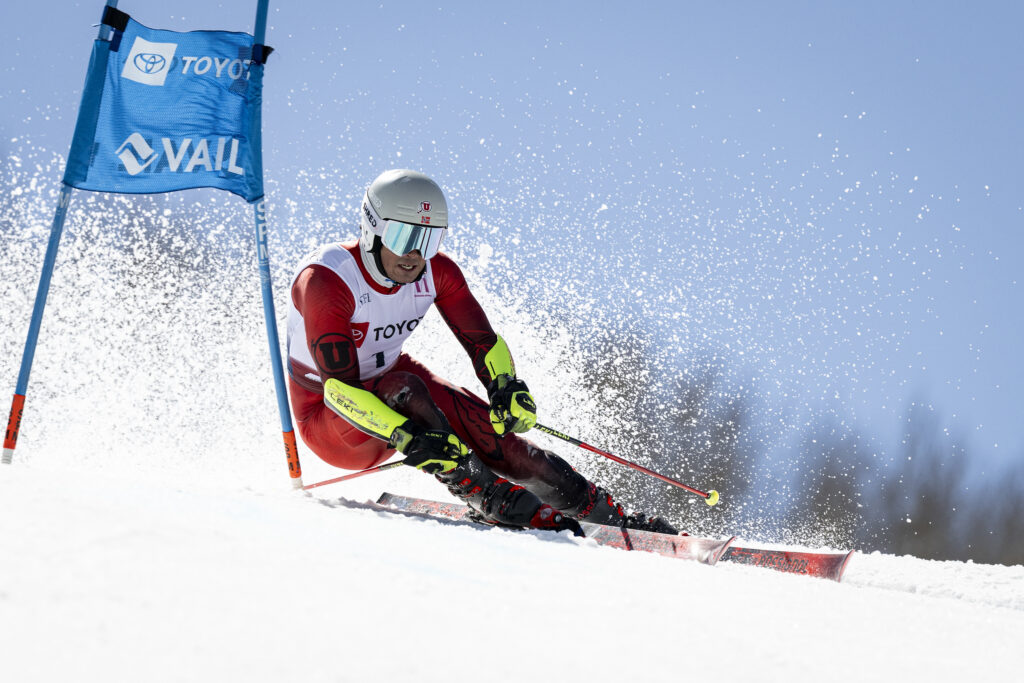
Read’s illustrious career is a testament to sustained excellence in technical skiing. A graduate of the University of Denver, where he earned multiple All-American honors, he stands as one of the most accomplished North American technical skiers of his generation. His remarkable consistency is evidenced by scoring World Cup giant slalom points in an astonishing 11 consecutive seasons. He has also qualified for the prestigious World Cup Finals four times, competing in three of them (with one season impacted by COVID-19 cancellations). This level of longevity and performance at the sport’s highest echelon is rare and speaks volumes about his dedication and skill.
His connection to Denver and the surrounding Colorado ski community is deep. "I have my DU connections, so I have quite a group of friends in the community here," Read remarked, explaining his decision to stay for U.S. Nationals after the NorAm Finals. "I was super stoked to get on the podium." Addressing the challenging second run, he noted, "It was a little tricky on the second run because it was peely. But this is a hill I’ve raced a lot, so I’m familiar with it." This familiarity undoubtedly played a role in his ability to adapt to the deteriorating conditions. Like Herland, Read is a staunch advocate for the collegiate pathway, emphasizing its transformative impact on his career: "Going to school really reset my World Cup career. I think NCAA skiing is a super valuable and valid pathway." His success story serves as a powerful endorsement for aspiring ski racers considering the collegiate route, demonstrating that it can not only sustain but also elevate a World Cup career.
Bridger Gile: Home-Snow Heroics and a Special Farewell
For the host nation, World Cup veteran Bridger Gile led the charge, securing a well-deserved third place, just 1.67 seconds off the pace. His podium finish was particularly meaningful, as Vail is effectively his home turf, providing a distinct advantage on familiar terrain.
Gile, representing the Stifel U.S. Ski Team and Ski & Snowboard Club Vail, grew up skiing in the very mountains where the Nationals were held. Competing on Head skis and Oakley eyewear, he exuded confidence and intimacy with the course, leveraging years of local knowledge. "It’s awesome coming to U.S. Nationals here in Vail—basically my backyard," Gile shared. "I’ve done a lot of runs on this hill and it feels like home every time I come back." For an athlete like Gile, who spends much of his season competing internationally, the opportunity to vie for a national title on home snow carries a unique significance. "To compete here for a national title is really the reason I come back," he stated, adding, "And it’s a fun way to end the season."
Beyond the competition, the race held a poignant personal dimension for Gile. He shared the starting gate with his longtime friend, Jacob Dilling, who was retiring after the series. "He was my first friend in Vail," Gile recounted, his voice tinged with emotion. "We grew up skiing together… to share his last race here is pretty special." This moment underscored the camaraderie and deep personal connections that often form within the close-knit world of ski racing, adding a layer of sentiment to an already competitive event. Gile’s podium finish not only celebrated his own talent but also served as a fitting tribute to a shared journey in the sport.

The Future is Now: Ryder Sarchett and Jack Schrady
Just off the podium, the performances of Ryder Sarchett and Jack Schrady offered compelling glimpses into the promising future of U.S. Alpine Skiing, signaling a vibrant pipeline of emerging talent.
Ryder Sarchett: A Breakout Season Culminates
Ryder Sarchett’s fourth-place finish, 1.89 seconds behind Herland, was a strong culmination to what has been a truly breakout season for the Stifel U.S. Ski Team athlete. Born in 2003, Sarchett spent one season at the University of Colorado, where he earned All-American honors—another example of the NCAA system’s ability to develop elite talent. His impressive resume also includes the FIS Junior World Championship title in Giant Slalom, indicating his potential from a young age. Having grown up attending the Sun Valley Community School, Sarchett is now firmly establishing himself at the highest levels of the sport.
This season marked a significant leap forward in Sarchett’s progression. He scored World Cup points in three Giant Slalom races, a remarkable achievement for a young athlete, highlighted by a career-best 10th place finish in Val d’Isère, France—a notoriously challenging World Cup venue. His consistent performances earned him a coveted selection to the U.S. Olympic Team, a major milestone that underscores his rapid ascent and solidifies his position as a key figure in the next generation of American technical skiers. His ability to translate junior success into World Cup results bodes exceptionally well for the U.S. Ski Team’s prospects in Giant Slalom.
Jack Schrady: A Young Talent Ascends
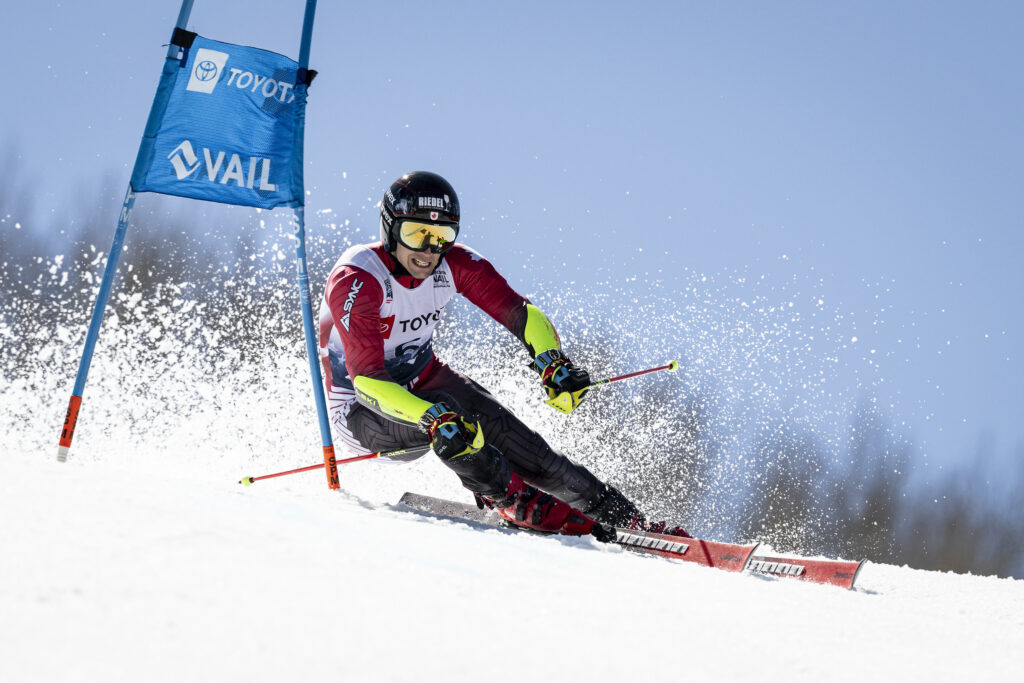
Even more remarkable was the fifth-place finish of Jack Schrady, a 2006-born athlete representing the Sugar Bowl Ski Team & Academy. Schrady’s performance was undeniably one of the standout stories of the day, showcasing prodigious talent and fearlessness beyond his years. He spent much of the season competing in Europe, gaining invaluable experience on the demanding continental circuits, before returning to North America to primarily compete on the NorAm circuit.
Today’s race marked a genuine breakthrough performance for Schrady. To finish among a field containing World Cup veterans and seasoned collegiate champions is a testament to his raw speed and technical potential. His result signals his rapid progression within the U.S. development pipeline and clearly demonstrates his ability to compete with established athletes. Observers and coaches alike will be closely watching Schrady’s trajectory, as he represents the very tip of the spear for future American alpine skiing talent. His strong showing at Nationals suggests that the investment in youth development programs is yielding tangible results.
Broader Implications: The North American Pathway to Global Success
The U.S. Alpine Nationals presented by Stifel continues to serve as a vital indicator of the health and strength of the North American alpine ski racing development pathway. The men’s Giant Slalom in Vail provided compelling evidence of a robust system that effectively integrates collegiate racing, NorAm competition, and the World Cup circuit. The diverse field, comprising NCAA champions like Herland, World Cup veterans like Read and Gile, and rapidly rising young athletes like Sarchett and Schrady, showcases both the depth of talent available and the dynamic progression occurring within the sport.
The event underscored several key trends:
- The Enduring Value of NCAA Skiing: The success of Herland and Read, both of whom credit their collegiate careers with significant developmental benefits, highlights the NCAA as a viable and highly effective alternative or complement to traditional national team pathways. It offers a unique blend of high-level competition, academic pursuit, and a supportive environment that can extend careers and foster holistic athlete development.
- Veteran Consistency and Mentorship: The continued strong performances of World Cup veterans like Erik Read and Bridger Gile provide crucial benchmarks for younger athletes. Their experience in navigating challenging conditions and maintaining consistency over multiple seasons offers invaluable lessons and raises the overall competitive standard of domestic events.
- The Rise of the Next Generation: The breakthrough performances of Ryder Sarchett and Jack Schrady are particularly encouraging for U.S. Skiing. They demonstrate that the talent identification and development programs are effectively nurturing young athletes who are ready to make the leap to international competition. Sarchett’s World Cup points and Olympic selection, coupled with Schrady’s impressive fifth place at such a young age, signal a bright future for American technical skiing.
- International Collaboration: The presence of top international athletes like Herland and Read elevates the competition, providing domestic skiers with opportunities to test themselves against global standards without leaving North America. This cross-pollination of talent ultimately benefits all participants.
In conclusion, the men’s Giant Slalom at the U.S. Alpine Nationals in Vail was more than just a race; it was a powerful affirmation of the multifaceted strengths within North American alpine skiing. While established names continue to set a high pace, the undeniable progress of the next generation signals that they are not just closing the gap, but are poised to make significant impacts on the global stage in the seasons to come. The success stories emerging from events like these are crucial for inspiring future generations and solidifying the region’s standing in the international alpine community.

