
The alpine community is mourning the loss of a 49-year-old snowboarder from Berlin who was killed in a massive avalanche on April 11, 2026, in the Kühtai region near Innsbruck, Austria. This latest tragedy marks a somber milestone in what is rapidly becoming one of the deadliest winters in recent European history. The victim was part of a group of three men snowboarding in the backcountry when the disaster struck, highlighting the persistent dangers of off-piste activities during a season characterized by unstable snowpacks and volatile weather patterns.
The incident occurred during the late morning hours when the group was navigating a slope in the high-altitude terrain of Kühtai, a resort known for its reliable late-season snow and challenging backcountry access. According to local reports and emergency services, the avalanche was triggered as the snowboarders descended. Two members of the group were caught in the fast-moving slide of snow and debris. While one man was only partially buried—trapped with his head and torso above the surface, allowing him to breathe and eventually signal for help—the 49-year-old victim was completely submerged under several meters of compacted snow.
Chronology of the Rescue Operation and Recovery
The timeline of the accident underscores the critical importance of time in avalanche rescue scenarios. The slide was reported shortly after it occurred, but the absence of essential safety equipment significantly hindered the initial search efforts. Neither the victim nor his companions were equipped with avalanche transceivers, probes, or shovels—the "holy trinity" of backcountry safety gear that allows for rapid localization and extraction.
Upon receiving the emergency call from the survivor, the Tyrolean Mountain Rescue (Bergrettung Tirol) dispatched a search team, assisted by an emergency medical helicopter from the Christophorus fleet. Because the victim was not wearing a beacon, rescuers were forced to rely on visual cues and manual probing of the debris field. This labor-intensive process, coupled with the depth of the burial, meant that the man was not located until approximately two and a half hours after the slide had settled.
By the time the rescue team reached the snowboarder, he had succumbed to asphyxiation and the trauma sustained during the slide. Medical personnel on the scene were unable to revive him, and he was pronounced dead at the site. The recovery of his body concluded a harrowing morning for the survivors and the rescue teams involved, who have been stretched thin by an unusually high volume of calls throughout the 2025/2026 season.
A Season of Record-Breaking Fatalities
The death of the Berlin native is the latest in a series of "grim statistics" that have defined this winter across the European Alps. As of mid-April 2026, the number of avalanche-related fatalities in Europe has more than doubled compared to the previous season. During the 2024/2025 winter, the continent recorded 70 deaths, a figure that was slightly below the long-term annual average of approximately 100 fatalities.
However, the current trajectory suggests that the record set during the 2017/2018 season—which saw 147 deaths—could be surpassed before the snow melts. With several weeks of the high-altitude season remaining, safety experts are sounding the alarm. The sharp increase in deaths is not attributed to a single factor but rather a "perfect storm" of meteorological conditions and human behavior.
Data from the European Avalanche Warning Services (EAWS) indicates that the 2025/2026 season began with an early, heavy snowfall followed by a prolonged period of extreme cold. This created a "persistent weak layer" deep within the snowpack, often referred to by experts as "depth hoar" or "sugar snow." This unstable foundation has remained present throughout the winter, meaning that even moderate subsequent snowfalls or temperature spikes can trigger massive slides that propagate across entire mountain faces.
The Technical Reality of the Kühtai Slide
The Kühtai region, located at an altitude of over 2,000 meters, is particularly susceptible to these late-season incidents. In April, the "spring cycle" of avalanches typically involves wet-snow slides caused by solar radiation and warming temperatures. However, the incident involving the German snowboarder appears to have been a dry-slab avalanche, likely triggered by the weight of the riders on a slope where the aforementioned weak layer finally gave way.
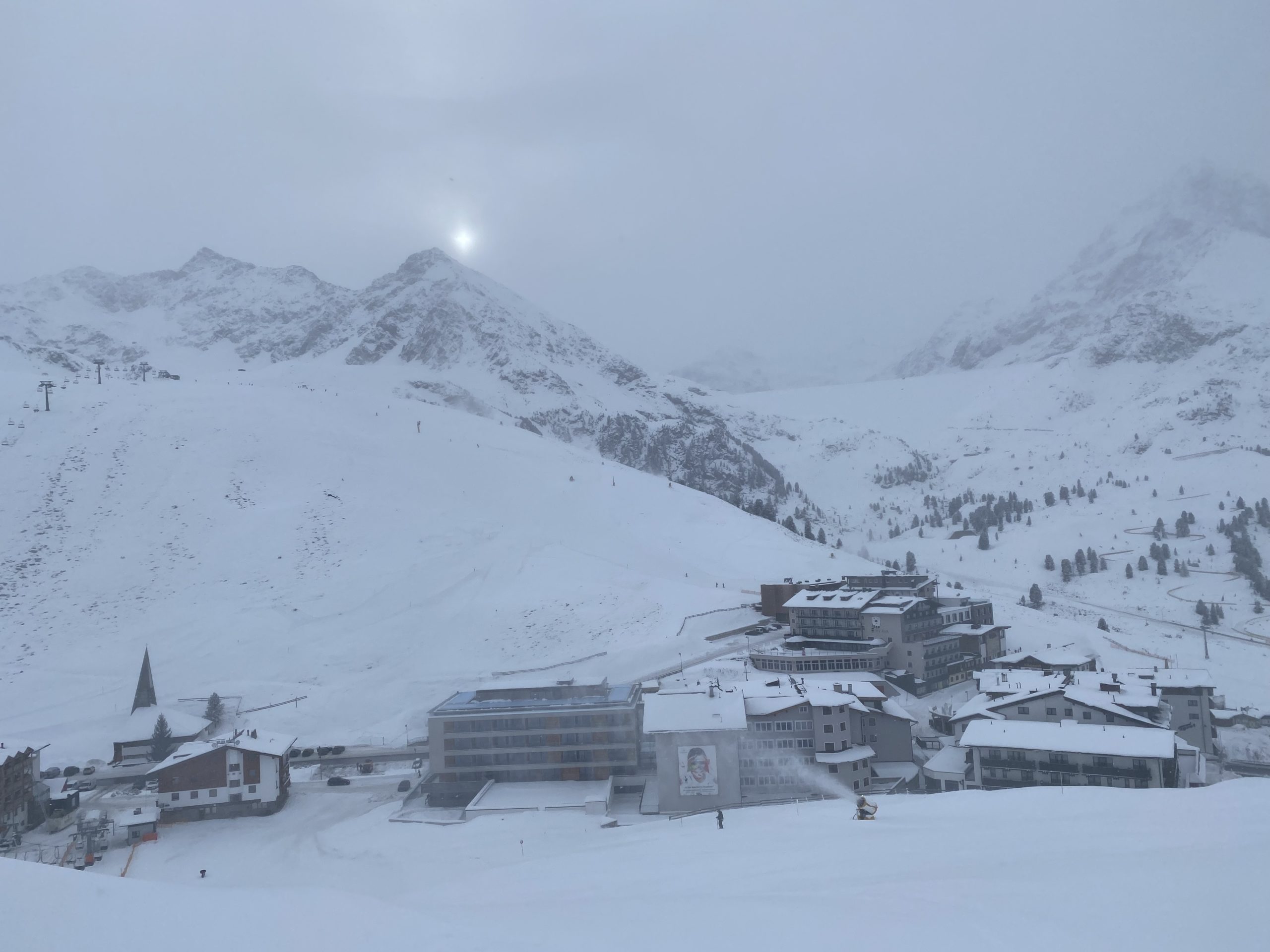
Experts from the Tyrolean Avalanche Warning Service (Lawinenwarndienst Tirol) had recently issued warnings regarding the "old snow problem" (Altschneeproblem). This specific type of danger is notoriously difficult for recreationalists to assess because the surface of the snow often appears stable and inviting, while the structural weakness remains hidden deep beneath. In the case of the Kühtai accident, the snowboarders were operating in open terrain where the angle of the slope was sufficient to facilitate a slide, and the lack of safety gear turned a survivable incident into a fatal one.
Official Responses and the "Equipment Gap"
In the wake of the accident, regional authorities and mountain safety advocates have reiterated the necessity of education and proper equipment. While off-piste skiing and snowboarding have surged in popularity over the last decade, search and rescue officials have noted a concerning "equipment gap" among casual backcountry users.
"The fact that these individuals were in high-risk terrain without beacons or probes is a tragic oversight," stated a spokesperson for the local mountain police (Alpinpolizei). "In an avalanche, the first 15 minutes are the most critical for survival. Without a transceiver, a victim’s chances of being found alive by professional rescuers are statistically very low. We are seeing too many people venturing away from marked runs without the basic tools for survival."
The Tyrolean government has also faced questions regarding whether more stringent regulations or mandatory equipment laws should be implemented for those leaving marked ski boundaries. However, the prevailing sentiment among alpine organizations remains focused on education rather than enforcement, emphasizing the "stop or go" method of risk assessment and the importance of checking daily avalanche bulletins.
Broader Implications for Alpine Tourism
The surge in fatalities has broader implications for the alpine tourism industry, which is a cornerstone of the Austrian economy. While the 2025/2026 season has seen high visitor numbers, the frequency of high-profile accidents can impact the reputation of resorts and the perceived safety of winter sports.
There is also a growing discussion regarding the role of climate change in alpine safety. Meteorologists suggest that the increasing frequency of "extreme weather swings"—such as the rapid transition from record cold to unseasonable warmth observed this season—is making the snowpack more unpredictable. Traditional patterns of snow stability are being disrupted, requiring even experienced mountain guides to recalibrate their understanding of risk.
The financial burden of search and rescue operations is another factor. The two-and-a-half-hour operation in Kühtai involved multiple professionals, a helicopter, and specialized equipment. In cases where negligence is found—such as entering closed areas or lacking basic safety gear—survivors or the estates of the deceased can sometimes be held liable for the substantial costs of the rescue mission.
Conclusion and Outlook for the Remainder of the Season
As the 2025/2026 season enters its final weeks, the tragedy in Kühtai serves as a stark reminder of the mountain’s inherent risks. The 49-year-old snowboarder from Berlin leaves behind a community shocked by the suddenness of the event. For his two companions, the psychological toll of the accident is compounded by the harrowing experience of the slide itself and the agonizing wait for rescuers to locate their friend.
Safety organizations are urging all mountain users to remain vigilant. The "spring transition" often brings a false sense of security as the weather warms, but the deep-seated instabilities of this particular winter remain a threat. The current death toll, already far exceeding the average, stands as a testament to a season where the margin for error has been dangerously thin.
For those planning to visit the Alps in the coming weeks, the advice from professionals is clear: never venture off-piste alone, always carry a transceiver, probe, and shovel, and most importantly, have the training to use them. As the total number of fatalities approaches the 2017/2018 record, the priority for authorities remains preventing further additions to this year’s devastating statistics. The mountains offer unparalleled beauty and recreation, but as the events in Kühtai demonstrate, they demand a level of respect and preparation that can quite literally mean the difference between life and death.

