
On April 10, 2026, a harrowing rescue unfolded in the rugged backcountry near Moab, Utah, when a visitor suffered critical injuries after an approximately 80-foot fall from a cliff edge while hiking to Cummings Arch. The incident, which occurred on a day when many families were enjoying spring break in the popular outdoor recreation area, highlights the inherent dangers of exploring remote and challenging terrain, even for those with recreational vehicles. Grand County Search and Rescue (GCSAR) and EMS, supported by advanced aerial capabilities, executed a complex technical rope rescue to extract the severely injured individual.
The incident began when a family of four, visiting Moab for spring break, arrived at a staging area near Pritchett Arch. They had navigated to this remote location via two motorcycles and a side-by-side vehicle, a journey that, despite being only about five miles from Moab as the crow flies, can take up to three hours to traverse by ground due to the demanding nature of Pritchett Canyon. From their parked vehicles, the group set out on foot to explore Cummings Arch, a smaller natural formation situated high above the canyon floor. During this hike, the group became separated. Tragically, one adult sustained severe injuries after an unobserved fall near the cliff’s edge. The severity of the fall was not witnessed directly, but a child within the group heard the distressed cries and immediately alerted the other parent, initiating the emergency response.
Immediate Call for Aid and Swift Response
The injured adult sustained life-threatening trauma, including multiple open fractures, necessitating urgent medical intervention. A call for emergency assistance was placed using the satellite SOS feature on a smartphone, a crucial piece of technology in areas with limited cellular service. Grand County Search and Rescue and EMS were dispatched to the scene, arriving with remarkable speed. A medical helicopter was also deployed, managing to land approximately 150 yards from the patient’s location within minutes of the distress call.
Upon arrival, rescue teams discovered the victim in extremely steep and technical terrain. Preliminary assessments indicated a fall of an estimated 70 to 80 feet, followed by an additional 50-foot tumble down a slickrock slope. The challenging topography of the area presented significant obstacles for rescuers.
Complex Technical Rope Rescue Operation

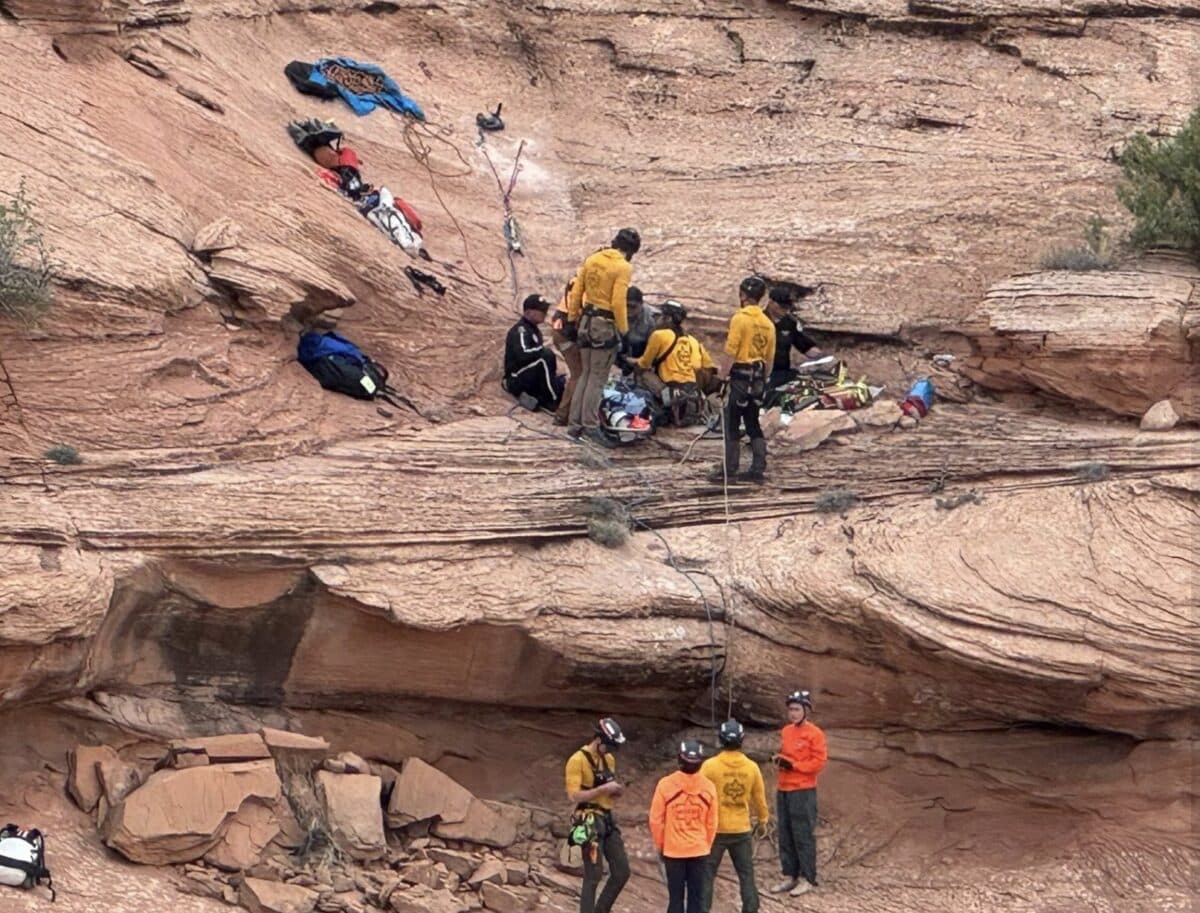
Given the precarious location and the nature of the injuries, GCSAR initiated a highly technical rope rescue operation. This required specialized equipment, which was brought to the site via helicopter. Rescuers meticulously constructed an anchor system into the surrounding rock to ensure the safety of both the patient and the rescue personnel. The injured individual was then stabilized, secured within a specialized rescue litter, and carefully lowered down the treacherous cliff face to a more accessible area. From there, they were carried to the designated landing zone for the awaiting medical helicopter.
The entire rescue operation, from the time of the fall to the patient’s evacuation, was completed in just under three hours. The critically injured individual was airlifted to a trauma center to receive advanced medical care. Additional helicopters were utilized to efficiently transport rescuers and equipment out of the canyon, a testament to the coordinated logistical effort involved.
Grand County Sheriff’s Search and Rescue: Key Takeaways from the Incident
The successful execution of this complex rescue operation provided valuable insights and reinforced the importance of several key factors in wilderness emergency response:
The Critical Role of Aviation in Remote Rescues
The swift deployment and coordinated use of helicopters proved instrumental in this rescue. The ability of aircraft to bypass the time-consuming and difficult ground access to Pritchett Canyon significantly reduced response times. Rescuers estimate that without aviation support, reaching the scene via OHVs could have added an additional 6-8 hours to the operation, potentially exacerbating the patient’s condition. Similarly, the use of helicopters to extract personnel and equipment at the conclusion of the mission saved considerable time and effort. Without these aerial assets, the total operation could have extended to 10-12 hours, a duration that carries increased risk in such demanding environments.
Navigating Communication Challenges
Effective communication is paramount in any search and rescue mission, and this incident highlighted the persistent challenges in remote areas. While line-of-sight radio communications from the helicopters operated effectively at higher altitudes, ground-level communication back to Moab proved to be unreliable and sporadic. The initial scene size-up and request for specialized rope rescue resources were facilitated by an iPhone’s satellite messaging capability, demonstrating the growing importance of satellite communication devices in bridging critical gaps. During a subsequent air sortie, a mobile Starlink unit was deployed, leading to a dramatic improvement in communication connectivity, underscoring the potential of satellite internet for enhancing operational command and control in the field.
The Power of Specialized Teams and Collaboration
The presence of a highly trained and well-practiced technical rope rescue team, coupled with capable medical providers, acted as significant force multipliers. These specialized skill sets enabled the operation to proceed with both speed and a high degree of safety. The collaborative effort involving multiple agencies and organizations was essential. Grand County Search and Rescue expressed profound gratitude to Intermountain Health, the Department of Public Safety, and, most importantly, to its own dedicated and skilled members who all contributed to the successful outcome of this challenging rescue.
Understanding the Risks of Deceptive Terrain
The exact circumstances leading to the fall remain unknown, as no one witnessed the patient’s descent. This underscores a critical safety concern prevalent in many of Moab’s breathtaking natural landscapes: the deceptive nature of cliff edges. In numerous locations, the terrain appears to slope gently from the top, only to quickly transition to sheer vertical drops. This subtle but dangerous transition can easily lead to misjudgment, particularly for those unfamiliar with the area or distracted. While the specific cause of the accident is undetermined, the incident serves as a stark reminder that even seemingly benign paths can harbor hidden dangers.
Broader Implications and Safety Recommendations
The incident near Pritchett Arch serves as a poignant reminder of the delicate balance between the allure of exploring Utah’s spectacular wilderness and the inherent risks involved. While the ubiquitous advice to "Be Careful" is a fundamental tenet of outdoor recreation, its importance cannot be overstated. The events of April 10, 2026, illustrate that even with modern conveniences and preparedness, unexpected and severe accidents can occur.
Grand County Search and Rescue, in acknowledging the family’s ordeal, extended their best wishes for the injured individual’s recovery. Their statement emphasizes the deep appreciation for the collaborative spirit of the rescue effort, highlighting how seamless cooperation among various entities is vital for the effective management of such critical incidents.
For visitors and residents alike, this event reinforces the necessity of:
- Thorough Pre-Trip Planning: Understanding the terrain, expected conditions, and potential hazards is crucial.
- Awareness of Surroundings: Maintaining constant vigilance, especially near cliff edges and drop-offs, is paramount. Recognizing the deceptive nature of some geological formations can prevent accidents.
- Carrying Reliable Communication Devices: Given the spotty cellular coverage in many remote areas, satellite communication devices (like personal locator beacons or satellite messengers with SOS capabilities) are strongly recommended for anyone venturing off established trails or into isolated regions.
- Appropriate Gear and Training: For more adventurous hikes, especially those involving steep or technical terrain, carrying appropriate safety gear and possessing basic knowledge of its use can be life-saving.
- Hiking in Groups and Staying Together: While the family did split up, staying in proximity and maintaining visual or auditory contact can ensure immediate assistance in case of an emergency.
The wilderness surrounding Moab offers unparalleled beauty and recreational opportunities. By prioritizing safety, understanding the risks, and leveraging available technology and expertise, individuals can significantly mitigate the chances of encountering such dire situations. The dedication of GCSAR and its partner agencies in responding to emergencies remains a cornerstone of safety for all who explore these magnificent landscapes.

