
Alaska, often heralded as America’s last untamed wilderness, boasts an extraordinary expanse of public land, with over 90% of its territory dedicated to this status. This vast public domain, comprising approximately 65% federally owned and managed land and an additional 24.5% owned by the State of Alaska, provides a critical sanctuary for an astonishing array of wildlife. The sheer scale of these protected areas underscores why the state is synonymous with abundant and diverse fauna, making it a premier destination for nature enthusiasts and wildlife observers.
Among the iconic species that call Alaska home, the majestic moose stands as the state animal, a testament to its impressive terrestrial inhabitants. However, other creatures vie for recognition as the region’s most famous residents. Notably, Alaska holds the unique distinction of being the only U.S. state where all three species of North American bears—black bears, polar bears, and grizzly bears—thrive. The grizzly bear population in Alaska is particularly significant, with an estimated 30,000 individuals roaming the state. During the spring months, these powerful omnivores are commonly observed in low-elevation, south-facing slopes and riparian forests. Their presence in these areas is driven by the availability of early green vegetation and the opportunity to prey on moose calves. While their primary spring foraging grounds are typically at lower elevations, sightings in mountainous terrain are not uncommon, especially as they expand their search for sustenance.
A recent and compelling instance of this phenomenon occurred on April 14th, when outdoorsman Peter Wadsworth captured striking images of two grizzly bears high on the slopes of Harp Mountain. The sighting, which took place just two days prior to this report, highlights the unpredictable nature of wildlife encounters in Alaska’s rugged landscape. Wadsworth, an avid explorer with a keen eye for wildlife, shared his experience, providing a vivid glimpse into the lives of these apex predators in their natural habitat.
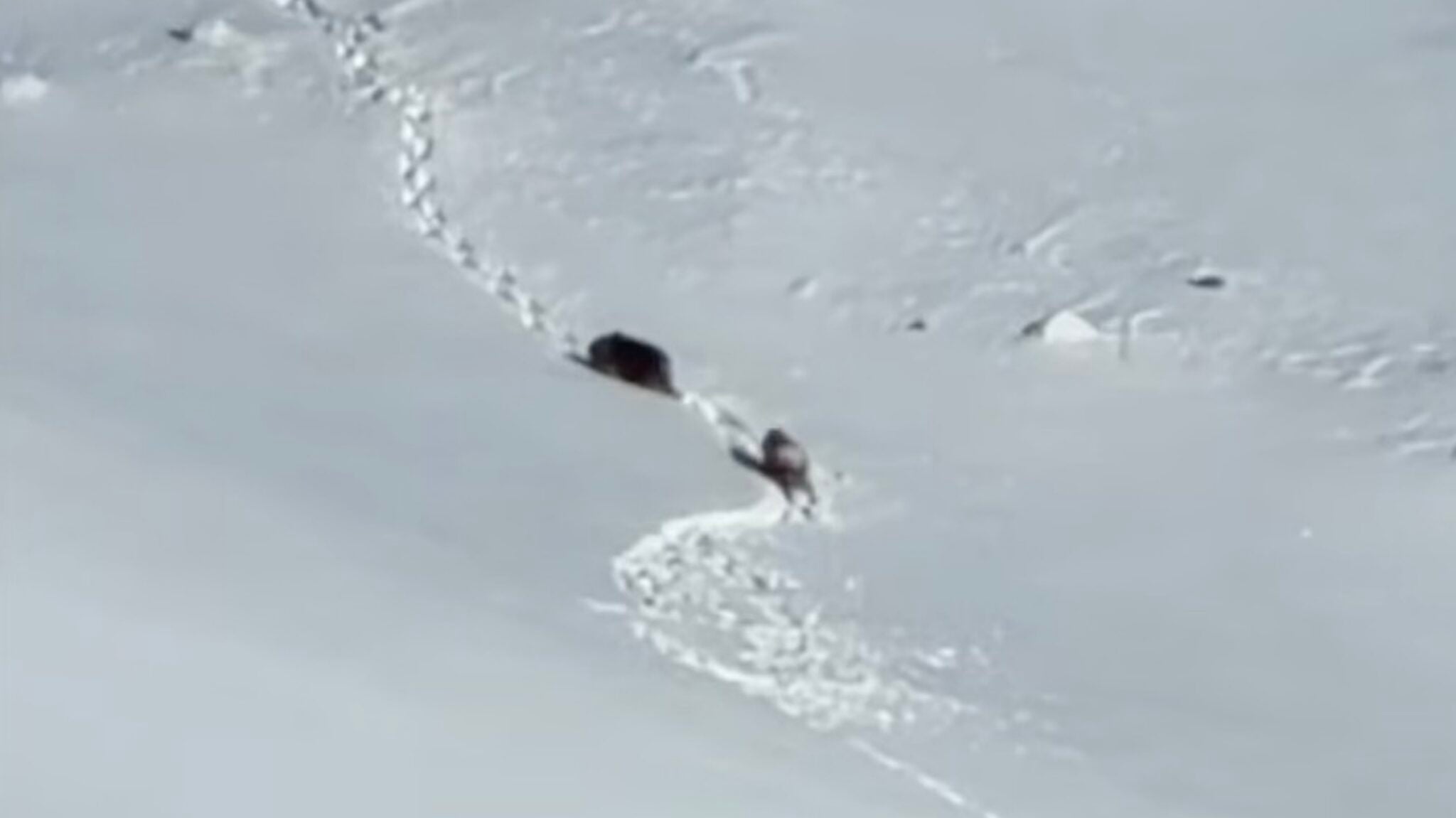
Harp Mountain, situated within the expansive boundaries of Chugach State Park, is a popular destination for hikers and adventurers. The mountain reaches an elevation of 5,001 feet, offering challenging yet rewarding climbs. While it presents a significant elevation gain of approximately 2,500 feet over a 1.5-mile stretch, it is generally considered one of the more accessible 5,000-foot peaks in the region, requiring minimal technical scrambling. The park itself, managed by the Alaska Department of Natural Resources, encompasses over 500,000 acres and serves as a vital ecological corridor, supporting a rich biodiversity that includes not only bears but also Dall sheep, mountain goats, and a variety of bird species.
The Importance of Bear Safety in Alaska
The presence of grizzly bears, and indeed all bear species, in areas frequented by humans necessitates a comprehensive understanding and strict adherence to bear safety protocols. Alaska’s Department of Fish and Game provides extensive guidelines for minimizing human-bear conflict, emphasizing respect for the animals’ space and natural behaviors. The most crucial directive is to always maintain a safe distance from bears, allowing them ample opportunity to retreat. Setting up camps away from known bear travel routes, such as trails and roads, is paramount. Particular vigilance is advised when female bears are accompanied by cubs, as they can be exceptionally protective.
Hikers and outdoor enthusiasts are encouraged to make noise while traversing bear country. Engaging in loud conversations, singing, or carrying bear bells can help alert bears to human presence, thereby preventing surprise encounters. Hiking in groups further enhances safety by presenting a larger, more intimidating presence. It is also advisable to walk with the wind at your back, as this helps carry human scents towards bears ahead, giving them advance warning. Avoiding dense brush and areas with limited visibility can also reduce the likelihood of unexpected meetings.
Crucially, feeding bears, intentionally or unintentionally, is strictly prohibited. Proper food storage is a critical component of bear safety. All food, garbage, and odorous items, including toiletries like toothpaste and even gasoline, must be stored securely in bear-resistant containers or hung at a significant height away from sleeping areas and cooking sites. This prevents bears from becoming habituated to human food sources, which can lead to dangerous confrontations.
Understanding Bear Behavior and Encounters
The Alaska Department of Fish and Game outlines specific actions to take in the event of a bear sighting or encounter. The overarching principle is to remain calm and assess the bear’s behavior. Most bears are not inherently aggressive towards humans and are primarily concerned with protecting their food sources, cubs, or personal space. If a bear is aware of your presence and does not perceive you as a threat, it will likely move away on its own.
If You See a Bear:
- Remain Calm: Sudden movements or panic can provoke a bear.
- Observe: Try to determine if the bear has seen you and what its intentions appear to be.
- Do Not Approach: Never attempt to get closer to a bear for a photograph or any other reason.
- Back Away Slowly: If the bear has not seen you, quietly and slowly retreat in the direction you came from. If the bear has seen you, slowly back away while speaking in a calm, firm voice.
- Make Yourself Look Larger: If the bear appears agitated or curious, stand your ground and make yourself appear larger by raising your arms or opening your jacket.
Surprise Encounters:
- Identify Yourself: Speak in a calm, firm voice so the bear knows you are human and not prey.
- Do Not Run: Running can trigger a bear’s predatory chase instinct.
- Stand Your Ground: Initially, try to stand your ground and avoid direct eye contact, which can be perceived as a challenge.
- Assess the Situation: If the bear continues to approach or shows signs of aggression, be prepared to defend yourself.
Never Run:
The instinct to flee when encountering a large predator like a bear is strong, but it is counterproductive and dangerous. Bears are significantly faster than humans, and running can escalate the situation into a chase. Instead, controlled movements and a calm demeanor are far more effective strategies for de-escalation.
Broader Implications and Conservation Efforts
The sighting of grizzly bears on Harp Mountain, while a testament to Alaska’s thriving wildlife, also serves as a reminder of the ongoing need for responsible land management and public education. Chugach State Park, like much of Alaska’s public land, is a dynamic ecosystem where human activities intersect with the lives of wild animals. The park’s management aims to balance recreational access with the preservation of natural habitats and wildlife populations.
Conservation efforts in Alaska are multifaceted, involving state and federal agencies, as well as numerous non-profit organizations. These initiatives focus on habitat protection, research into wildlife populations, and the implementation of strategies to mitigate human-wildlife conflict. The continued presence of healthy bear populations is an indicator of a robust ecosystem, and their management is crucial for maintaining the ecological integrity of the region. Understanding bear behavior and adhering to safety guidelines not only protects human visitors but also contributes to the long-term survival and well-being of these magnificent animals. The shared landscape of Alaska requires a commitment from all users to coexist peacefully with its wild inhabitants, ensuring that its untamed wilderness continues to thrive for generations to come.

