
The evolution of professional skiing has always been dictated by a delicate balance between explosive physical output and the meticulous management of recovery, a philosophy that 1998 Olympic gold medalist Jonny Moseley has championed for over two decades. While the world remembers Moseley for his revolutionary "360 mute grab" that fundamentally altered the trajectory of freestyle skiing in Nagano, his enduring legacy is increasingly defined by his pioneering approach to sports science and holistic wellness. Today, as the industry pivots toward a more integrated model of health, Moseley has aligned himself with Velvaere, a premier wellness-focused residential community in Deer Valley, Utah, to showcase how cutting-edge technology and traditional discipline intersect to prolong athletic careers.
The 1998 Paradigm Shift: Data-Driven Performance in a Pre-Digital Era
To understand Moseley’s current fitness philosophy, one must look back to the mid-1990s, an era when freestyle skiing was often viewed through the lens of raw talent and "renegade" spirit rather than clinical precision. Moseley, however, broke this mold by adopting a training regimen that was decades ahead of its time. While his peers focused primarily on time on the snow, Moseley began an exhaustive process of self-quantification. He was an early adopter of heart rate monitoring and performance journaling, tools that allowed him to map his physiological responses to the extreme stresses of mogul skiing.
In 1998, the concept of Heart Rate Variability (HRV) and VO2 max was largely confined to high-level endurance laboratories. Moseley, however, utilized these metrics to evaluate his "second-day soreness"—now scientifically recognized as Delayed Onset Muscle Soreness (DOMS)—to determine when his body had reached its supercompensation peak. This data-centric approach allowed him to arrive at the Nagano Winter Olympics not just in peak physical condition, but with a psychological edge born of knowing exactly how his body would respond under the lights of the world stage.
This period was marked by a grueling four-year cycle, a rhythm that Moseley describes as a high-stakes obsession with timing. In the world of elite athletics, the margin between a gold medal and anonymity often comes down to the synchronization of peak physical strain with the body’s recovery window. By winning the first two World Cup events of the 1998 season, Moseley validated his "new-school" training methodology, proving that creativity in the air was best supported by scientific rigor on the ground.
The Velvaere Partnership: Bridging the Gap Between Olympic Facilities and Residential Wellness
Moseley’s transition from a competitive athlete to a wellness ambassador finds its current focal point at Velvaere, a private ski-in/ski-out community located within the expansive Deer Valley Resort area. The facility represents a significant shift in the luxury real estate market, where amenities are moving away from traditional leisure and toward "human performance" infrastructure. As an ambassador for Velvaere, Moseley draws direct parallels between the community’s offerings and the United States Olympic & Paralympic Training Centers (OPTC).
The technological suite at Velvaere includes several modalities that were once the exclusive domain of elite national teams. Central to this is an AI-powered massage robot, a device that utilizes advanced sensors to scan a user’s anatomy and identify areas of myofascial tension before delivering a customized, high-precision treatment. For Moseley, this represents the democratization of elite recovery. Where he once relied on a team of specialists at the Olympic Training Center, he now advocates for the use of automated, data-driven systems that provide consistent results without the need for a full medical staff.
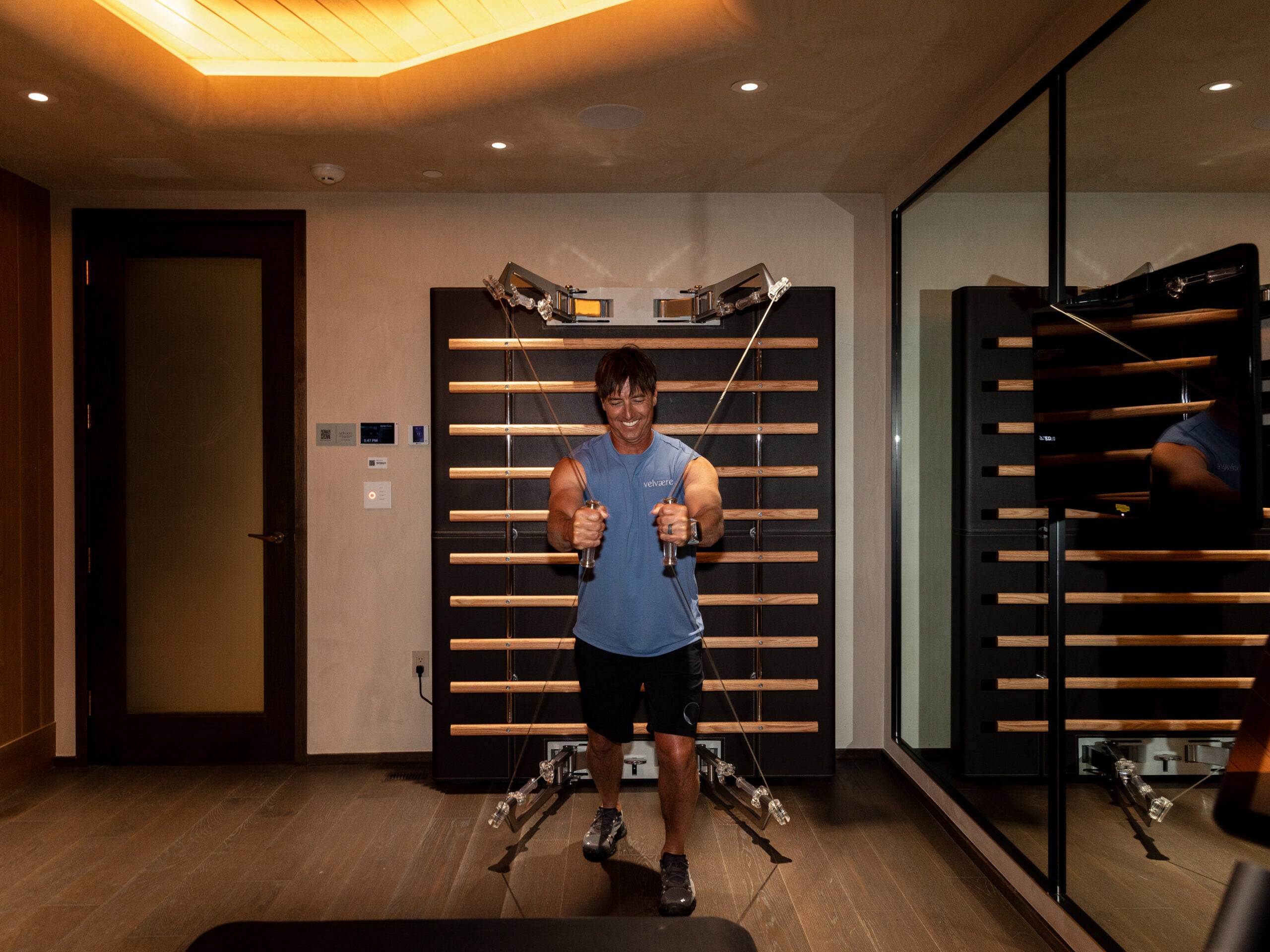
Beyond robotics, the facility integrates a "recovery circuit" consisting of cryotherapy, LightStim LED therapy, and flotation tanks. Cryotherapy, which exposes the body to sub-zero temperatures for short durations, is designed to systemic inflammation and accelerate metabolic recovery. LightStim LED therapy utilizes specific wavelengths of light to stimulate cellular ATP production, aiding in tissue repair. These technologies, paired with TechnoGym’s latest resistance equipment, form a comprehensive ecosystem designed to maintain the "athletic potential" of residents, regardless of their age or competitive status.
Biomechanical Adaptations: The Modern Moseley Training Regimen
Now residing primarily in Northern California with frequent stints in Park City, Moseley has adapted his training to account for the physiological changes that accompany aging in a high-impact sport. His current routine is a sophisticated blend of cardiovascular foundation, seasonal strength building, and an increased emphasis on mobility.
The foundation of his day begins with a strict aerobic window, typically involving 30 to 60 minutes of low-to-moderate intensity steady-state (LISS) cardio. This often takes the form of a brisk walk with his dog or treadmill work, serving to prime his circulatory system and manage baseline inflammation. As the seasons shift, so does his focus:
Summer: The Hypertrophy and Strength Phase
During the warmer months, Moseley focuses on compound lifts to maintain bone density and muscle mass. In his younger years, his training was almost exclusively lower-body centric, focusing on the explosive power required to absorb the impact of mogul fields. Today, he maintains a more balanced "total body" approach, recognizing that core stability and upper-body integrity are essential for overall longevity and injury prevention.
Autumn: The Transition to Specificity and Endurance
As the ski season approaches, the regimen shifts toward "plyometric mode." Moseley identifies box jumps as the "gold standard" for skiers due to their ability to train eccentric loading—the phase where a muscle lengthens under tension, which is exactly what happens when a skier turns or lands a jump. However, he warns against the "couch-to-box-jump" pipeline, recommending a progressive increase in height to allow tendons and ligaments to adapt to the sudden load.
The Integration of "New-School" Mobility
Perhaps the most significant change in Moseley’s routine is his adoption of hot yoga. He acknowledges that while he was once focused solely on power, he is now a "hot yoga guy," prioritizing the maintenance of his range of motion. This shift highlights a broader trend in the fitness industry where mobility is viewed not just as stretching, but as the ability to control one’s body through a full range of motion under tension.
Technical Analysis: The Role of Single-Leg Training and Proprioception
A critical component of Moseley’s pre-season preparation involves mimicry of on-snow lateral movements. To achieve this, he employs slide boards and single-leg stability exercises. Mogul skiing is inherently asymmetrical; the body must constantly adjust to uneven terrain where one leg is often under significantly more load than the other.
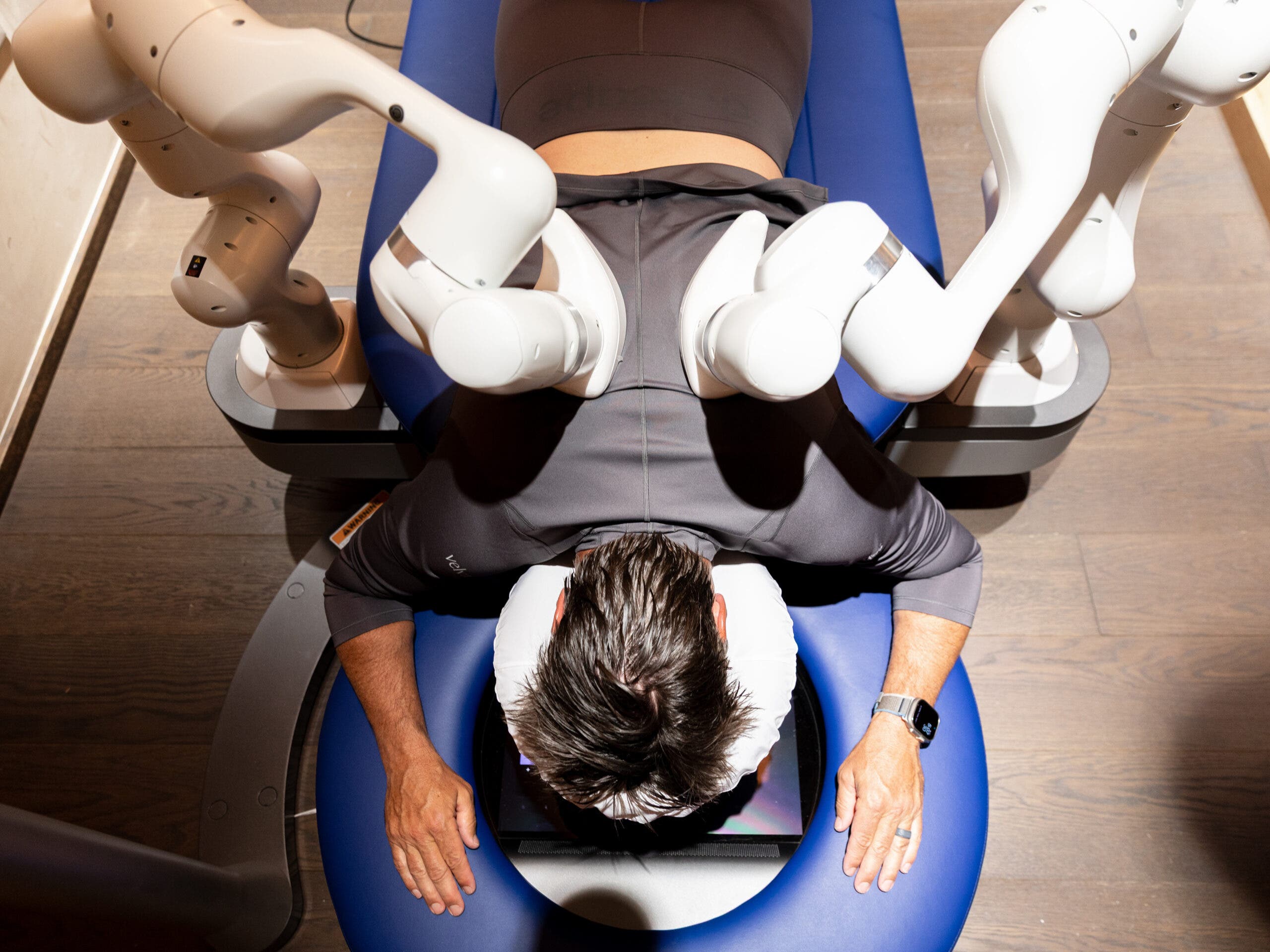
By utilizing slide boards, Moseley trains the adductors and abductors—muscles that are often neglected in traditional sagittal plane exercises like squats or lunges. Single-leg training also enhances proprioception, the body’s ability to sense its position in space. For an athlete who made history by incorporating snowboard-style grabs into ski spins, maintaining this heightened sense of spatial awareness is vital for both performance and safety on the slopes.
The Broader Impact: The Future of Alpine Wellness Communities
The partnership between Jonny Moseley and Velvaere is indicative of a larger transformation within the ski industry. Historically, "après-ski" culture was synonymous with social drinking and relaxation. However, a new demographic of "wellness-conscious" enthusiasts is demanding facilities that prioritize longevity and "bio-hacking."
Market data suggests that luxury homebuyers in mountain destinations are increasingly prioritizing health-centric amenities over traditional luxury features. The inclusion of hyperbaric chambers, cold plunges, and AI-driven diagnostics in residential developments like Velvaere reflects a shift toward "proactive health." Moseley’s endorsement serves as a bridge between the hardcore athletic community and the lifestyle-oriented resident, suggesting that the tools used to win Olympic gold are now accessible—and necessary—for anyone looking to enjoy the mountains well into their later years.
Conclusion: Community and the Psychology of Recovery
Despite the high-tech gadgets and the rigorous schedules, Moseley maintains that the most significant contributor to his current fitness is the community aspect of wellness. He admits that he is not naturally inclined toward "slowing down" or self-care unless forced by injury. However, being part of an environment where recovery is woven into the social and physical fabric of the community makes the process seamless.
As the snow begins to fall in the Wasatch Range, Moseley’s focus remains on the "lifestyle" of wellness. His journey from a data-tracking pioneer in 1998 to a modern-day ambassador for AI-integrated recovery serves as a blueprint for the modern athlete. It suggests that while the intensity of the "one shot every four years" may fade, the commitment to understanding the body’s cycles of strain and recovery remains the ultimate key to a life lived in motion. Through his work with Velvaere, Moseley continues to push the boundaries of what is possible, proving that the "new-school" attitude he brought to Nagano is just as relevant in the world of longevity as it was on the Olympic podium.

