
The ski industry is on the cusp of a significant transformation, driven by innovations that extend beyond incremental performance gains to fundamentally enhance the user experience. Leading this charge is Atomic, with its new Nexus 130 BOA ski boot, a flagship model in a series poised to bridge the long-standing gap between effortless entry and uncompromising downhill power. This groundbreaking mid-entry design, set to arrive in shops in Fall 2026, represents a strategic pivot towards addressing the needs of a substantial demographic of skiers who, despite their passion and skill, have long struggled with the physical demands of traditional four-buckle boots.
A Legacy of Evolution: From Leather to Modern Plastics
The history of ski boot design is a testament to continuous innovation, driven by the relentless pursuit of better control, comfort, and safety. Early ski boots, crafted from leather, offered minimal support, relying heavily on the skier’s own strength and technique. The advent of plastic ski boots in the 1960s revolutionized the sport, providing unprecedented stiffness and power transfer. However, this advancement introduced new challenges, primarily the difficulty of entry and exit. Traditional overlap designs, while excellent for performance, often required significant force to put on and take off, a hurdle that intensified with cold temperatures and diminished mobility.
The 1980s saw the rise of rear-entry boots, a direct response to the accessibility challenge. These boots promised easy entry by allowing the entire rear cuff to hinge open. While they delivered on the promise of convenience, most rear-entry designs of that era notably sacrificed downhill performance. Their inherent design often led to a vague feel, poor heel hold, and inefficient power transmission, ultimately leading to their decline among serious skiers. For decades, the market presented a stark choice: performance with struggle, or comfort with compromise. This binary choice left a significant segment of the skiing population underserved, particularly as the average age of skiers began to trend upwards.
Addressing the Unmet Needs of the Modern Skier
The development of the Atomic Nexus series, spearheaded by the 130 BOA model, is a direct response to this unmet need, representing a sophisticated evolution of the easy-entry concept. As bootfitters across North America can attest, a substantial portion of their clientele comprises experienced, high-performance skiers who contend with various physical limitations. These can range from age-related issues such as arthritis in the fingers, hips, or knees, to past injuries that limit flexibility or range of motion, or even simple difficulties stooping to manipulate buckles. Such skiers often possess the technique and desire to "shred bell-to-bell," yet their enjoyment is frequently marred by the arduous process of donning and doffing their boots in a cold parking lot.
Industry data suggests that the average age of skiers has been steadily increasing, with a significant portion of the active skiing population now over 50. This demographic, often comprising affluent and dedicated individuals, represents a powerful market force demanding solutions that enable them to continue pursuing their passion without physical discomfort or frustration. Manufacturers that have "nailed the basics" of traditional boot design are now strategically venturing into these niche products, not as a compromise, but as a specialized solution. The Nexus models are designed to directly address these "unique problems," effectively making the bootfitter’s job easier by offering a high-performance solution that works "right out of the box." This shift from requiring extensive customization to providing an inherently accommodating design marks a significant step forward in product development.
The Atomic Nexus 130 BOA: A Deep Dive into Design and Technology
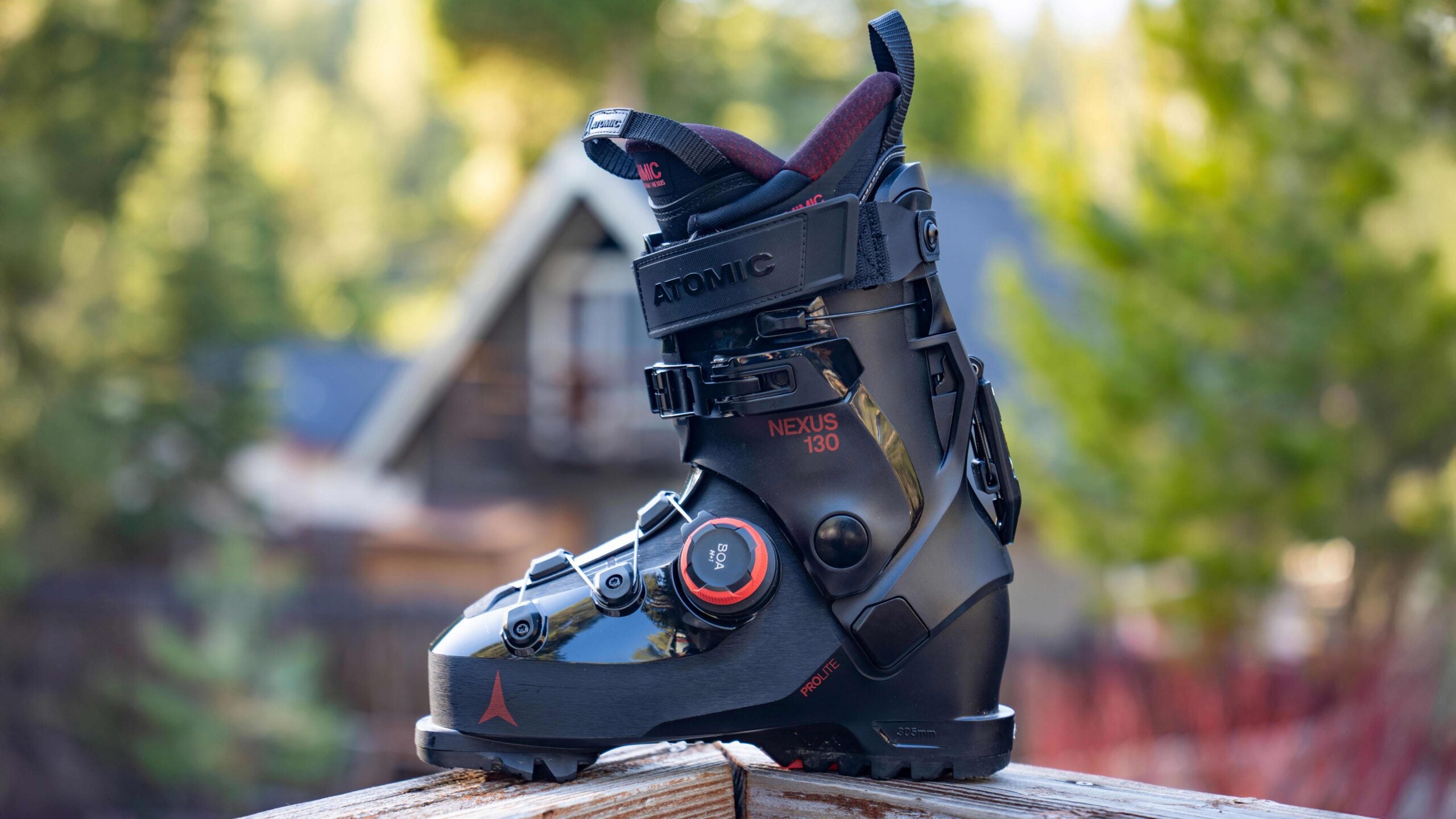
At its core, the Atomic Nexus 130 BOA is a 101-millimeter-lasted boot, signifying a mid-volume fit that aims to balance comfort with precision for a wide range of foot shapes. The "130" flex rating denotes a very stiff boot, engineered for aggressive skiers who demand maximum power transfer and responsiveness. What truly sets it apart is its innovative mid-entry design, a sophisticated mechanism that allows the front and rear sections of the cuff to separate widely. This design facilitates a near hands-free entry, enabling skiers to step straight into the boot with unparalleled ease, much like a rear-entry boot, but without inheriting the performance drawbacks traditionally associated with that architecture.
The boot’s closure system is a meticulously engineered combination of modern and traditional elements:
- Mid-Entry Platform with Rear Lever: This pivotal feature mimics the intuitive operation of an alpine touring (AT) boot’s walk mode lever. When lifted, it allows the cuff to open fully, providing ample space for the foot to slide in. Once the foot is seated, closing the lever locks the cuff into its aggressive downhill stance, ensuring a rigid and responsive connection to the ski. This lever can even be actuated with the other foot, allowing for a truly no-hands, no-stooping entry process.
- BOA H+1 Closure System: The lower shell of the Nexus 130 BOA incorporates the increasingly popular BOA H+1 system. This micro-adjustable dial and cable system distributes pressure evenly across the instep and forefoot, eliminating pressure points and allowing for precise fit adjustments. While some bootfitters express skepticism regarding BOA dials for individuals with compromised fine motor skills or those unable to bend over, the Nexus design mitigates this concern. The BOA can be pre-tightened before entry, allowing skiers to step into an already-adjusted boot and then make minor tweaks if necessary, thus maintaining the hands-free advantage. The precision and consistent hold offered by BOA are significant advantages for performance-oriented boots.
- Set-it-and-Forget-it Top Buckle and Power Strap: The upper cuff is secured by a robust power strap and a single, traditional top buckle. The power strap plays a crucial role in enhancing shin contact and rebound, while the top buckle provides additional security and adjustability. The "set-it-and-forget-it" nature of these elements means that once dialed in for a day’s skiing, they require minimal further manipulation, contributing to the overall ease of use.
Internally, the Nexus 130 BOA boasts Atomic’s renowned Mimic Platinum liner. This advanced liner features heat-moldable materials that conform precisely to the skier’s foot, ankle, and shin. The Mimic technology ensures an exceptionally personalized fit, enhancing comfort, warmth, and power transmission. This adaptive fit is critical for a high-performance boot designed for a wider range of foot anatomies, minimizing the need for extensive aftermarket liner modifications.
Furthermore, the Nexus incorporates a dual-pivot design, a sophisticated engineering choice similar to that found in high-performance boots like the Lange Shadow. This dual-pivot system enhances the boot’s flex and rebound characteristics, creating a more dynamic and "springy" feel between carved turns. It optimizes leverage, allowing skiers to engage the ski with greater precision and power, contributing significantly to the boot’s surprisingly legit on-snow performance despite its innovative entry mechanism.
On-Snow Performance: A Testament to Engineering Ingenuity
Initial on-snow testing of the Atomic Nexus 130 BOA reveals a boot that defies expectations for an easy-entry model. During evaluations in variable spring conditions, the boot demonstrated impressive capabilities for hard-charging skiing. For reviewers accustomed to low-volume, race-oriented boots with custom liners, the Nexus 130 BOA, with its higher volume and focus on balanced comfort and performance, initially felt distinct. However, by maintaining an aggressive stance and actively driving the heel into the boot’s well-shaped pocket, any perceived "slop" around the foot quickly dissipated.
The boot provided excellent heel hold, a critical factor for performance, even for skiers with narrower feet. This suggests that for its intended audience—skiers with genuinely high-volume feet or those seeking more space—the heel retention will feel exceptionally secure. The ankle break was positioned high and slightly forward, an anatomical fit that should particularly benefit skiers with higher insteps, ensuring consistent pressure and control.
Crucially, the Nexus skied like a true 130-flex boot, dispelling any notions that its easy-entry design would compromise stiffness or responsiveness. The innovative "unbolted spine" concept, combined with the dual-pivot design, contributed to remarkable rebound and leverage, fostering a lively and energetic feel that encourages dynamic skiing. While some minor play might become discernible in extremely steep, chunky terrain—a challenge for almost any boot—the overall performance in a wide range of conditions was remarkably solid, enabling aggressive skiing from first chair to last.
Competitive Landscape and Strategic Market Positioning
The Atomic Nexus 130 BOA enters a burgeoning category of easy-entry performance boots, carving out a distinct niche within the market. It positions itself as a significant advancement over earlier attempts at accessibility. For instance, while the Nordica HF series offers unparalleled ease of entry and luxurious comfort, often featuring heated liners, it is primarily aimed at older skiers or those with more significant mobility limitations where ultimate performance is a secondary consideration. The Nexus 130 BOA, by contrast, is engineered for skiers who demand uncompromising downhill performance—the kind of skier who wants to tackle bump runs and rip carved turns all day long, without the pre-skiing struggle.
Another notable competitor is the Rossignol Vizion, which utilizes a similar mid-entry concept. While direct comparative on-snow analysis against the Vizion might require further evaluation, the Nexus 130 BOA’s robust construction, advanced liner, and sophisticated closure system suggest a formidable contender in this emerging segment. The Nexus represents Atomic’s strategic entry into a market segment that values both convenience and high-end performance, a combination that has historically been elusive. This is not merely about creating a "comfortable" boot; it’s about delivering a performance boot that is also comfortable and easy to use.
Broader Implications for the Ski Industry
The introduction of boots like the Atomic Nexus 130 BOA carries profound implications for the ski industry.
- Enhanced Accessibility and Extended Participation: By removing significant barriers to entry and exit, these boots empower a vast segment of the aging but active skiing population to continue enjoying the sport they love for many more years. This contributes directly to skier retention and potentially attracts new participants who might otherwise be intimidated by traditional boot challenges.
- Democratization of Performance: High-performance skiing is no longer exclusively the domain of those with peak physical flexibility. The Nexus 130 BOA demonstrates that top-tier performance can be delivered in a more accessible package, broadening the appeal of advanced ski gear.
- Evolution of Bootfitting: While some bootfitters might initially perceive such "out-of-the-box" solutions as making their job "easier," the reality is that it frees them to focus on even more specialized and intricate fitting challenges. It shifts the emphasis from basic problem-solving for common issues to fine-tuning and optimizing for truly unique requirements, elevating the profession.
- Catalyst for Innovation: The success of the Nexus series is likely to spur further innovation across the industry. Other manufacturers will undoubtedly respond with their own interpretations of accessible performance, leading to a more diverse and user-centric market. This competitive drive will ultimately benefit skiers worldwide.
- Economic Impact: Increased participation and retention directly translate to positive economic impacts for resorts, gear manufacturers, retailers, and associated services. A larger, more engaged skier base is vital for the long-term health and growth of the sport.
The Full Atomic Nexus Lineup and Availability
The Atomic Nexus 130 BOA is the flagship of a comprehensive new series designed to cater to a broad spectrum of skiers within this newly defined category. The full men’s lineup includes the Nexus 120 BOA, 110 BOA, and a 110 model without BOA, offering varying flexes to suit different skill levels and preferences. For women, the series introduces the Nexus 105 BOA W, 95 BOA W, and a 95 W model without BOA, ensuring tailored fit and performance for female anatomies.
This extensive range underscores Atomic’s commitment to making high-performance accessibility available across multiple skier profiles, from aggressive experts to intermediate enthusiasts who still demand comfort and ease of use. All models in the Atomic Nexus lineup are slated to arrive in ski shops in Fall 2026, marking a pivotal moment for the industry and for countless skiers who have been patiently waiting for a boot that truly meets their evolving needs. For those who have known the frustration of wrestling with cold plastic in a parking lot, or whose skiing days felt numbered due to mobility concerns, the Nexus promises a renewed passion for the slopes—delivering real skiing performance, no assistance required.

