
The unexpected collaboration between Perfect Moment, a luxury French ski and surf brand renowned for its high-performance yet stylish apparel, and H&M, the global fast-fashion retail giant, has ignited considerable discussion within both the fashion and outdoor industries, challenging traditional notions of brand identity, accessibility, and sustainability. Announced in late 2025 and launched in early 2026, this partnership, which rapidly sold out its initial offerings, represents a significant strategic maneuver for both entities, aiming to democratize high-end ski aesthetics while simultaneously raising questions about ethical production and brand dilution.
The Genesis of a Luxury Icon: Perfect Moment’s Evolution
Perfect Moment’s journey began in 1984 in the alpine heartland of Chamonix, France. Founded by extreme sports filmmaker and professional skier Thierry Donard, the brand’s initial vision was rooted deeply in performance and the demanding requirements of freeride athletes. Donard designed gear that prioritized functionality, durability, and the freedom of movement essential for high-octane mountain pursuits. This foundation established Perfect Moment as a credible name among serious skiers and adventurers, aligning its early identity more with specialist brands like Teton Gravity Research than with fashion-forward ski houses.
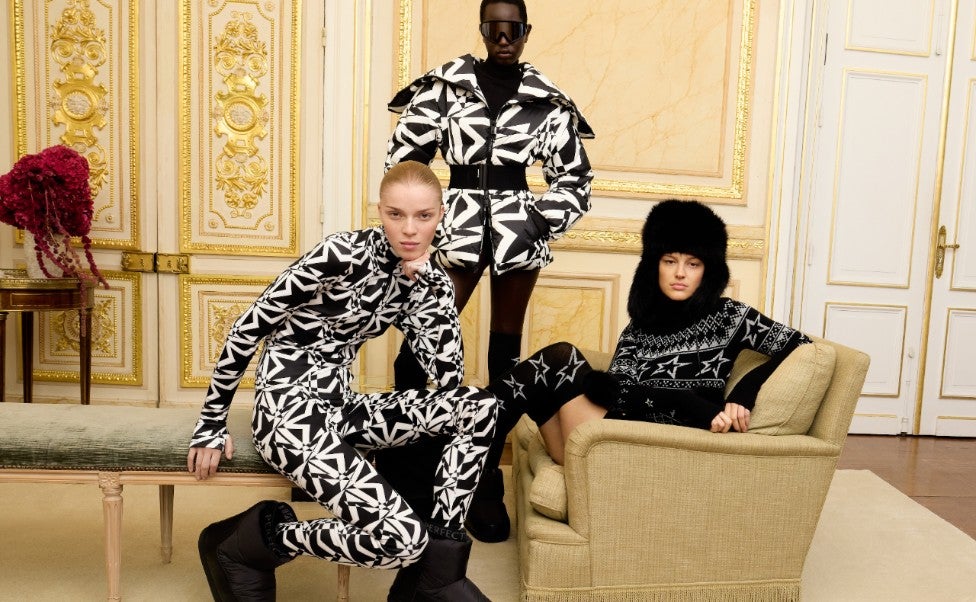
A pivotal transformation occurred in 2010 when Perfect Moment was acquired by European entrepreneurial couple Jane and Max Gottschalk. Under their stewardship, the brand underwent a significant reorientation, pivoting towards a more luxurious aesthetic without entirely abandoning its performance heritage. The Gottschalks recognized the growing appetite for "après-ski" fashion – stylish, high-quality attire suitable for both the slopes and the social scene that follows. This shift cemented Perfect Moment’s current identity, characterized by vibrant patterns, bold star motifs, shimmering metallic finishes, and a distinct blend of retro-chic and contemporary flair. Today, its signature products, such as puffer jackets starting around $800, flared ski pants at approximately $600, and a range of designer knitwear and branded goggles, cater to an affluent clientele seeking both premium performance and unparalleled style on the pistes and in exclusive resorts globally. The brand’s mission statement emphasizes "durability and longevity" and a "responsibility to do so with the smallest impact to nature," positioning itself as a conscientious luxury choice.
H&M: The Global Fast-Fashion Behemoth
In stark contrast stands H&M Hennes & Mauritz AB, a Swedish multinational clothing-retail company that operates over 4,000 stores across more than 60 countries. H&M has built its empire on the principles of fast fashion: rapid production cycles, trend-driven designs, and, critically, affordability. Its business model makes trendy clothing accessible to a global mass market, a strategy that has propelled it to become one of the largest fashion retailers worldwide. The sheer scale of H&M’s operations and its ability to quickly adapt to changing fashion trends are unmatched by most luxury labels.
However, H&M’s success has not been without significant controversy. The brand is frequently cited as a major contributor to the environmental and ethical issues associated with fast fashion, including excessive waste, high carbon emissions, and exploitative labor practices in its supply chain. While H&M has publicly committed to various sustainability initiatives in recent years – including recycling programs, increasing the use of organic and recycled materials, and setting ambitious climate goals – many critics argue that the fundamental, high-volume, low-cost nature of the fast-fashion model inherently contradicts true environmental responsibility. These criticisms underscore a fundamental ideological chasm between H&M’s operational realities and the stated sustainability commitments of a brand like Perfect Moment.
The Unforeseen Convergence: A Strategic Rationale
The announcement of the Perfect Moment x H&M collaboration therefore struck many as a significant juxtaposition. Industry observers immediately questioned the strategic motivations behind such an unlikely pairing. For Perfect Moment, the collaboration offers an unprecedented opportunity for brand visibility and market penetration far beyond its traditional luxury demographic. By partnering with H&M, Perfect Moment can introduce its distinctive aesthetic and brand story to millions of new potential customers who might aspire to luxury ski wear but cannot afford its premium price point. This "masstige" strategy – blending mass-market accessibility with prestige branding – can generate buzz, enhance brand awareness, and potentially cultivate future loyal customers who, after experiencing the H&M collection, might eventually invest in core Perfect Moment pieces. It also allows Perfect Moment to capitalize on the booming "ski chic" and "après-ski" fashion trends by making its iconic styles more widely available, albeit in a more accessible format.
For H&M, the benefits are equally compelling. Collaborations with high-end designers or luxury brands have long been a cornerstone of its strategy to elevate its brand image, drive foot traffic, and generate excitement. These partnerships allow H&M to tap into the prestige and design credibility of luxury labels, offering its customers a taste of high fashion at a fraction of the cost. The Perfect Moment collaboration, specifically, positions H&M within the aspirational realm of luxury sportswear, a segment that resonates strongly with contemporary lifestyle trends. It provides an opportunity to showcase H&M’s design capabilities beyond everyday wear and potentially attract a more fashion-conscious customer base, while also signaling a move towards more specialized, albeit temporary, product lines. Furthermore, by associating with a brand that explicitly champions durability and longevity, H&M might subtly attempt to temper some of the criticism directed at its fast-fashion model, even if the actual production methods for the collaboration remain within its established framework. As H&M’s Creative Advisor and Head of Design for Women’s Wear noted in the press release shared with SKI, the collection was designed to be "unexpected, dynamic, and sure to spark excitement" – a clear acknowledgment of its boundary-pushing nature.
The "Masstige" Phenomenon: A Broader Industry Trend
The Perfect Moment x H&M partnership is not an isolated incident but rather a prominent example of the "masstige" trend that has permeated the fashion industry for decades. Pioneered by collaborations like Target’s designer partnerships or H&M’s own extensive history of working with brands such as Karl Lagerfeld, Versace, and Balmain, these alliances aim to bridge the gap between mass-market affordability and luxury appeal. The goal is to create a limited-edition collection that offers consumers a taste of high-end design at accessible prices, generating immense hype and often selling out within hours.
This strategy serves multiple purposes: it democratizes fashion, allowing a broader audience to engage with designer aesthetics; it provides a financial boost and marketing platform for both parties; and it keeps both brands relevant in a rapidly evolving consumer landscape. The success of these collaborations often lies in their ability to create a sense of exclusivity despite mass production, leveraging the scarcity of limited drops to drive immediate demand. The Perfect Moment x H&M collection, with its rapid sell-out and lack of announced restock plans, perfectly encapsulates this phenomenon, underscoring consumers’ eagerness for luxury-adjacent products at more attainable price points.
On-Snow Evaluation: Performance Meets Style
The critical question for any ski apparel, regardless of its fashion pedigree, is its performance in real-world conditions. A comprehensive review of the Perfect Moment x H&M collection focused on two key items: a puffer jacket priced at $329 and a baselayer top at $60. It is crucial to contextualize this evaluation by acknowledging that the collaboration was primarily conceived with "après-ski" in mind – meaning stylish post-skiing activities – rather than demanding, high-performance skiing. This distinction significantly influences expectations regarding technical features and durability.
Baselayer Analysis: Functionality and Fashion
The baselayer top, while not crafted from traditional Merino wool, performed remarkably well for its intended purpose. Constructed from a performance-oriented material, it effectively wicked away sweat, a crucial function for any athletic garment. Its flattering zippered mockneck design contributed to its aesthetic appeal, making it suitable for both active wear and casual après-ski settings. The sizing, however, was noted as running slightly large, suggesting that for colder conditions, a tighter Merino layer underneath would be advisable, allowing the H&M baselayer to function more as a pseudo-midlayer. Priced at $60, the baselayer offered a reasonable entry point for skiers seeking a chic yet functional item for their winter wardrobe, particularly those interested in blending into an après-ski scene with a touch of designer flair. Its comfort and moisture-wicking properties made it a surprisingly capable piece for casual days on the mountain.

Puffer Jacket Analysis: Style Over Strict Performance
The puffer jacket, at $329, presented a more complex evaluation. Its initial impression was one of intentional oversizing, a design choice that contributes to its fashionable aesthetic but impacts its performance characteristics. The boxy silhouette, while visually appealing and on-trend, resulted in a loose overall fit despite well-fitting sleeves. This design appears to accommodate layering, aligning with the après-ski concept where warmth and style often take precedence over aerodynamic fit.
A significant point of contention for active skiers was the jacket’s pocket situation. It featured only two external pockets, secured with magnetic closures, and a single inner pocket with a top opening. For skiers accustomed to multiple secure, zippered pockets for essentials like lift passes, phones, and small tools, this design was less than ideal. The magnetic closures raised concerns about the security of valuables, particularly a lift pass, which could easily be lost during dynamic movements on the slopes. This design choice clearly prioritizes aesthetics and ease of access for a casual setting over the robust security required for active skiing.
Despite these functional drawbacks for dedicated skiing, the jacket possessed several commendable features. Its unique, flattering fit and the ability of the hood to comfortably accommodate a helmet were significant positives. For warmer, casual days on the slopes or for its primary après-ski purpose, the jacket’s style and warmth made it a compelling option, provided the wearer had alternative secure storage for their belongings. The price point was considered fair for a stylish puffer jacket, especially when style is a primary objective. The standout aesthetic element was undoubtedly the large star design on the back, a signature Perfect Moment motif, which serves purely aesthetic purposes but perfectly encapsulates the fashion-first ethos of the collaboration.
Market Reception and Future Implications
The rapid sell-out of the Perfect Moment x H&M collection underscores the immense market appetite for such collaborations. Consumers demonstrated a clear willingness to embrace a hybrid product that offers luxury aesthetics at an accessible price. This immediate success validates the "unexpected, dynamic" nature of the partnership, proving that brand boundaries can be effectively stretched when the product resonates with consumer desires.
The collaboration has several broader implications for both the ski and fashion industries. It further solidifies the trend of "après-ski" as a distinct and lucrative fashion category, prompting other brands to consider how they can blend performance with high-end style. It also reignites the ongoing debate about sustainability in fashion. While Perfect Moment aims for durability, and H&M makes sustainability pledges, the very nature of a limited-edition, trend-driven collection from a fast-fashion giant raises questions about the true environmental footprint. Critics will undoubtedly scrutinize whether such partnerships genuinely advance sustainable practices or merely leverage a "green" image.
Ultimately, the Perfect Moment x H&M collaboration serves as a potent case study in modern brand strategy. It demonstrates the power of unlikely alliances to generate excitement, expand market reach, and challenge preconceived notions of luxury and accessibility. While not designed for the most demanding alpine conditions, the collection successfully delivered a taste of Perfect Moment’s iconic style to a broader audience, affirming that in the evolving landscape of fashion, the lines between high-end and high-street are increasingly blurred, creating new opportunities and sparking vital conversations about the future of consumer goods.

