
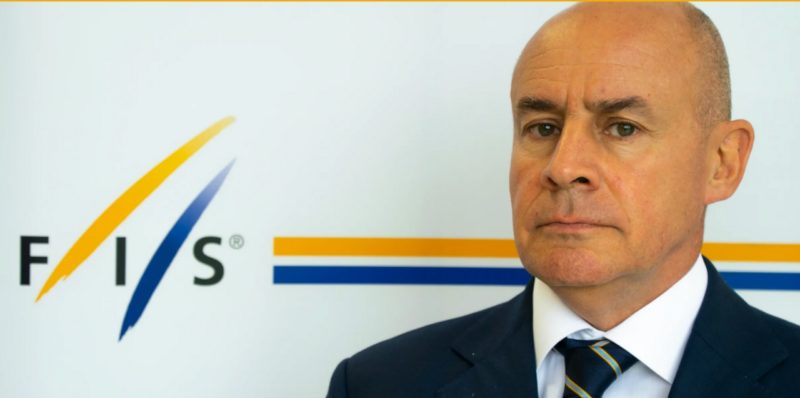
The International Ski and Snowboard Federation (FIS) is entering a period of significant political transition as the organization prepares for its 2026 presidential election, a contest that has become a lightning rod for the future direction of winter sports governance. The incumbent president, Johan Eliasch, who has presided over the organization for five years, faces a robust challenge from four separate candidates, most notably Vikky Gosling, the Chief Executive of GB Snowsport. This election, scheduled to take place during the FIS Congress on June 11, 2026, in Belgrade, Serbia, follows a period of intense internal friction characterized by legal disputes, accusations of autocratic leadership, and a fundamental disagreement over the commercialization of skiing and snowboarding media rights.
As the June deadline approaches, the FIS Nomination and Remuneration Committee is vetting the final list of eligible candidates, with an official announcement expected no later than May 20, 2026. The stakes for the 2026 election are historically high, representing a choice between Eliasch’s vision of a centralized, corporate-style global entity and a more collaborative, federation-led model championed by his detractors.
The Incumbent’s Controversial Tenure
Johan Eliasch, a British-Swedish billionaire and the owner of the sporting goods giant HEAD, assumed the presidency in 2021. He succeeded Gian Franco Kasper, who had led the federation for over two decades. Eliasch entered the role with a mandate for modernization, positioning himself as a "disruptor" who could bring private-sector efficiency and a global perspective to an organization often criticized for being Eurocentric and resistant to change.

During his tenure, Eliasch has prioritized several key pillars: the centralization of broadcast and marketing rights, environmental sustainability, and the expansion of the sport into non-traditional markets. However, his methods have frequently alienated the "Alpine heartland" nations, including Austria, Germany, Switzerland, and Norway. These nations, which host the majority of the World Cup circuit’s most lucrative events, have viewed Eliasch’s push to centralize media rights as a direct threat to their financial autonomy and traditional influence.
Under Eliasch, FIS has attempted to take control of the sale of international television rights, a move that would theoretically allow the federation to package events more effectively for global broadcasters. Opponents argue that this move bypasses the long-standing agreements held by national federations and could lead to a reduction in revenue for local ski associations. This tension culminated in the 2022 election, where a group of 15 national associations led by Austria, Germany, Switzerland, and Croatia staged a walkout. The group protested the election process, claiming it was undemocratic because the ballot did not allow for a "no" vote or an abstention, only a vote for the sole candidate, Eliasch.
The Georgian Nomination and Nationality Questions
One of the most unusual developments in the 2026 election cycle is the source of Eliasch’s nomination. Despite his Swedish birth and British citizenship, neither the Swedish Ski Association nor GB Snowsport has offered him their backing for a third term. Under FIS statutes, a presidential candidate must be nominated by a national federation and must hold a valid passport from that country.
In a move that has surprised many observers, Eliasch is being nominated by the Georgian Ski Association. Reports indicate that he has acquired Georgian nationality to satisfy the FIS eligibility criteria. This maneuver highlights the depth of the rift between Eliasch and the major European federations. In 2021, he was nominated by Great Britain, and as recently as 2025, he was considered a British candidate in a bid for the presidency of the International Olympic Committee (IOC). The shift to Georgia is seen by critics as a "nomination of convenience," while supporters view it as a testament to his commitment to developing skiing in emerging nations.
The Rise of Vikky Gosling and the British Challenge
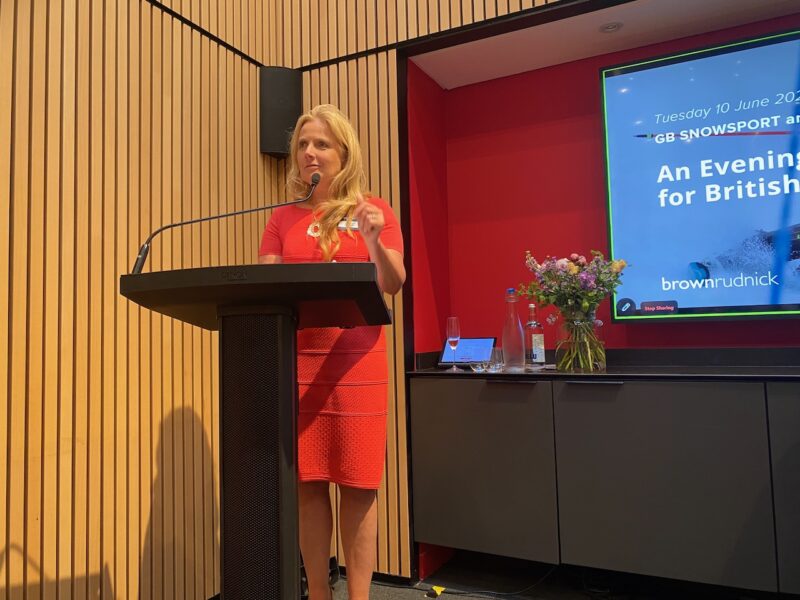
Leading the opposition is Vikky Gosling, OBE, whose candidacy represents a direct challenge from within Eliasch’s own home sporting nation. Gosling, the outgoing CEO of GB Snowsport, has received the unanimous backing of her board. Her candidacy is bolstered by the recent success of Team GB at the Milan-Cortina 2026 Winter Olympics, which took place just months prior to the election cycle. Under her leadership, British snowsports achieved their most successful Olympic cycle on snow, highlighted by a gold medal in Snowboard Cross.
Gosling’s platform focuses on a more inclusive and diplomatic approach to governance. In her nomination statement, she emphasized the need for a "strategic direction" shaped alongside all FIS nations, rather than through top-down mandates. Her background in the Royal Air Force and her success in high-performance sports management have positioned her as a candidate capable of bridging the gap between the commercial requirements of a modern federation and the traditional values of the national associations.
"It would be a privilege to play a greater role in shaping the strategic direction of our sport alongside all other FIS nations," Gosling stated. "I am looking to share the ambition and successes we have brought to British skiing and snowboarding as part of a vision for the next phase of FIS’ future."
Chronology of the FIS Leadership Crisis
To understand the intensity of the current election, one must look at the timeline of events that have led to this fractured state:
- June 2021: Johan Eliasch is elected FIS President at the 52nd International Ski Congress, promising reform and modernization.
- May 2022: At the 53rd Congress in Milan, Eliasch is re-elected. However, 15 nations walk out in protest of the voting format. The Austrian Ski Federation (ÖSV) and others challenge the election’s legitimacy at the Court of Arbitration for Sport (CAS).
- Late 2022 – 2023: FIS enters a period of litigation and mediation. While the CAS case is eventually withdrawn, the underlying issues regarding media rights centralization remain unresolved.
- 2024: Eliasch announces a series of "Green Initiatives," aiming to make FIS carbon-neutral. While praised by environmentalists, some federations criticize the cost and implementation of these programs.
- July 2025: Eliasch’s bid for the IOC Presidency fails to gain traction, with Thomas Bach’s successor being chosen from a different pool of candidates.
- March 2026: GB Snowsport officially nominates Vikky Gosling for the FIS Presidency, signaling a break with the incumbent.
- April 2026: FIS confirms five candidates have entered the race, with Eliasch confirmed as the nominee for Georgia.
Supporting Data and Financial Stakes
The conflict within FIS is driven largely by the economics of winter sports. The Alpine Ski World Cup is the federation’s "crown jewel," generating hundreds of millions of euros in annual broadcast revenue.
- Media Rights Value: Estimates suggest that the combined media rights for the FIS World Cup circuit are worth approximately €200 million to €250 million annually. Currently, these rights are fragmented, with individual federations (like the ÖSV in Austria) selling rights for their home races to broadcasters like ORF, Eurosport, and NBC.
- Centralization Projections: Eliasch has argued that a centralized model could increase total revenue by 20-30% by creating a unified digital platform and eliminating redundant administrative costs.
- National Federation Budgets: For nations like Switzerland and Austria, World Cup revenue accounts for nearly 50% of their annual operating budgets. Any shift in how these rights are managed represents an existential financial risk.
Broader Implications for the International Sporting Landscape
The outcome of the Belgrade election will have implications far beyond the ski slopes. It serves as a case study for the "corporate vs. representative" models of sports governance. If Eliasch secures a third term, it will likely signal a permanent shift toward a centralized, FIS-owned commercial model, potentially leading to further legal challenges or even the threat of a breakaway circuit by the major European powers.
Conversely, a victory for a candidate like Vikky Gosling would likely result in a "reset" of relations between the FIS headquarters in Oberhofen, Switzerland, and the national federations. This could lead to a hybrid model of rights management, where centralization is voluntary or limited to emerging markets, while established nations retain their historical autonomy.
Furthermore, the election will determine the federation’s approach to the escalating climate crisis. With winter seasons shortening and many low-altitude resorts facing uncertain futures, the next FIS president will need to balance the commercial demand for more races in more locations with the logistical and ethical challenges of snow production and global travel.

As the candidates begin their promotional campaigns, the international snowsports community remains deeply divided. The 2026 FIS Congress in Belgrade promises to be one of the most consequential meetings in the organization’s 102-year history, deciding whether the federation will continue on its path of radical reform or return to a model of consensus-based governance.

