
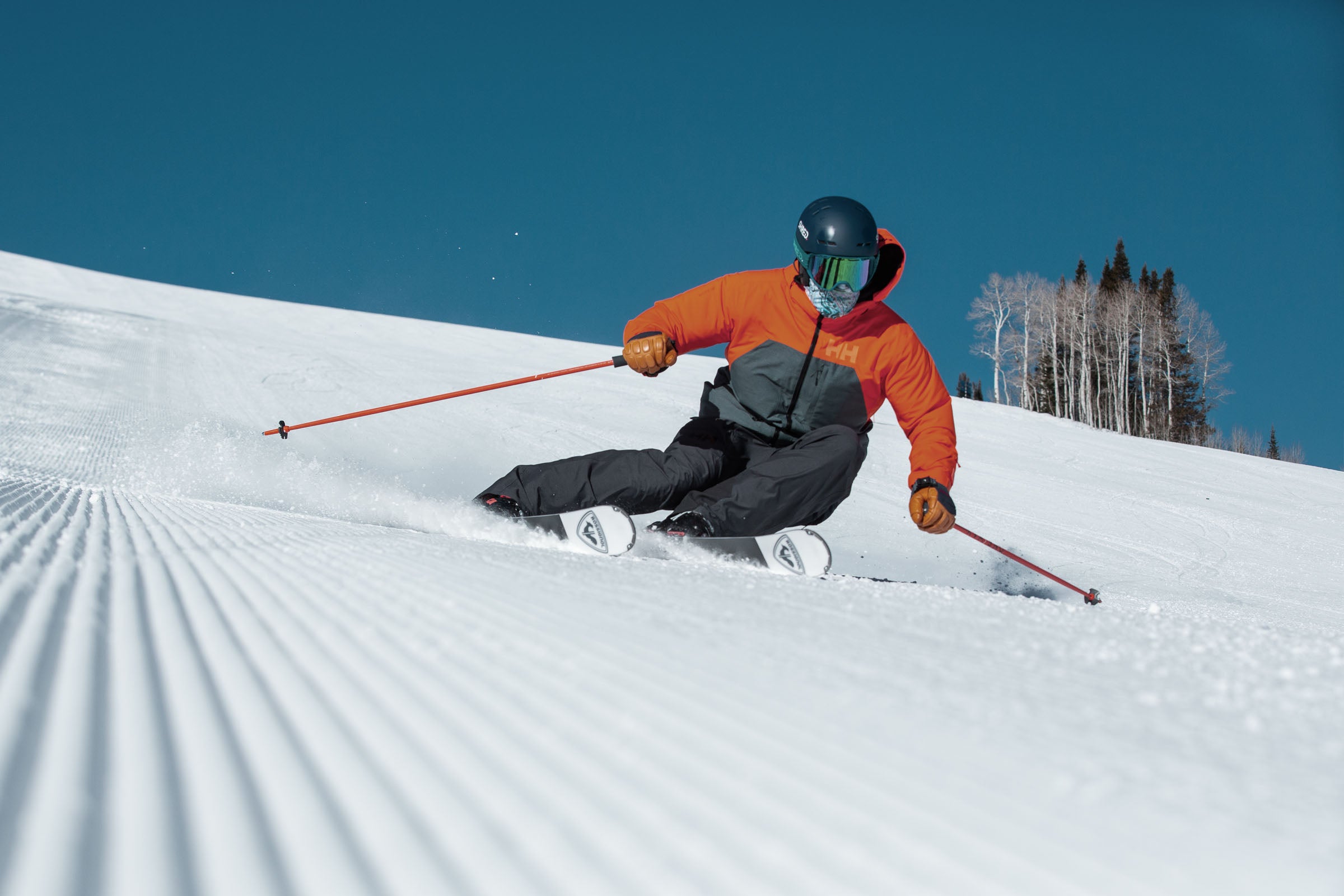
As the 2025-2026 winter season approaches, professional ski coaches and sports physiologists are emphasizing a shift in pre-season preparation, moving away from traditional heavy lifting toward a specialized focus on power endurance. While the recreational perception of skiing often centers on the gravity-assisted nature of the descent, the physiological reality is one of high-intensity muscular demand, complex balance requirements, and sustained cardiovascular strain. For both the competitive athlete and the seasonal enthusiast, the difference between a successful season and one sidelined by injury often comes down to the body’s ability to maintain explosive power under conditions of mounting fatigue.
Coach Chris Miller, a veteran trainer who has conditioned some of the world’s most elite alpine racers, notes that the modern skiing environment—characterized by high-performance carving skis and variable backcountry terrain—demands a specific type of fitness. Power endurance, as defined in a sports science context, is the capacity to sustain high-intensity, explosive efforts over an extended period. In skiing, this translates to the ability to execute precise, forceful turns from the top of a 3,000-foot vertical drop to the base without a degradation in form.
The Physiology of Power Endurance in Alpine Sports
The mechanical demands of skiing are unique in the world of athletics. Unlike running or cycling, which are primarily linear and repetitive, skiing requires multi-planar stability. A skier must manage vertical compression, lateral forces, and rotational torque simultaneously. According to data from the American Journal of Sports Medicine, fatigue is a primary contributing factor in over 30% of non-contact skiing injuries, particularly involving the Anterior Cruciate Ligament (ACL). When the primary movers—the quadriceps, hamstrings, and gluteal muscles—become fatigued, the burden of stabilization shifts to the passive structures of the knee joint, significantly increasing the risk of rupture.
Power endurance training bridges the gap between raw muscular strength (the maximum force a muscle can exert) and aerobic stamina (the ability to perform low-intensity work for a long time). By training the fast-twitch muscle fibers to operate efficiently in an acidic, lactic-heavy environment, skiers can maintain the "snap" in their turns even during the final runs of the day. This training protocol focuses on "eccentric loading," where the muscle lengthens under tension—a direct simulation of the forces felt when a skier resists gravity and centrifugal force in a high-speed carve.
The Chronology of Pre-Season Conditioning
Effective ski conditioning is not an overnight process but a phased progression that should ideally begin eight to twelve weeks before the first anticipated snowfall. Sports scientists generally recommend a three-phase approach:
- The Hypertrophy and Base Phase (Weeks 1-4): Focusing on building foundational muscle mass and improving general aerobic capacity.
- The Strength and Stability Phase (Weeks 5-8): Transitioning to heavier loads and introducing balance-centric movements to strengthen the "trunk" or core.
- The Power Endurance Phase (Weeks 9-12): The final stage, where movements become sport-specific, incorporating plyometrics, lateral hops, and high-intensity intervals that mimic the duration of a standard downhill run.
The workout protocol developed by Chris Miller is designed to be implemented during the final phase of preparation, ensuring that the cardiovascular and muscular systems are synchronized for the specific demands of the mountain.
The Miller Power Endurance Protocol: A Detailed Breakdown
The training regimen is divided into three distinct circuits, each targeting a critical component of the skier’s physical architecture: the kinetic chain, the lower body power centers, and the core stabilizers.
Phase 1: The Quadruped and Dynamic Warmup
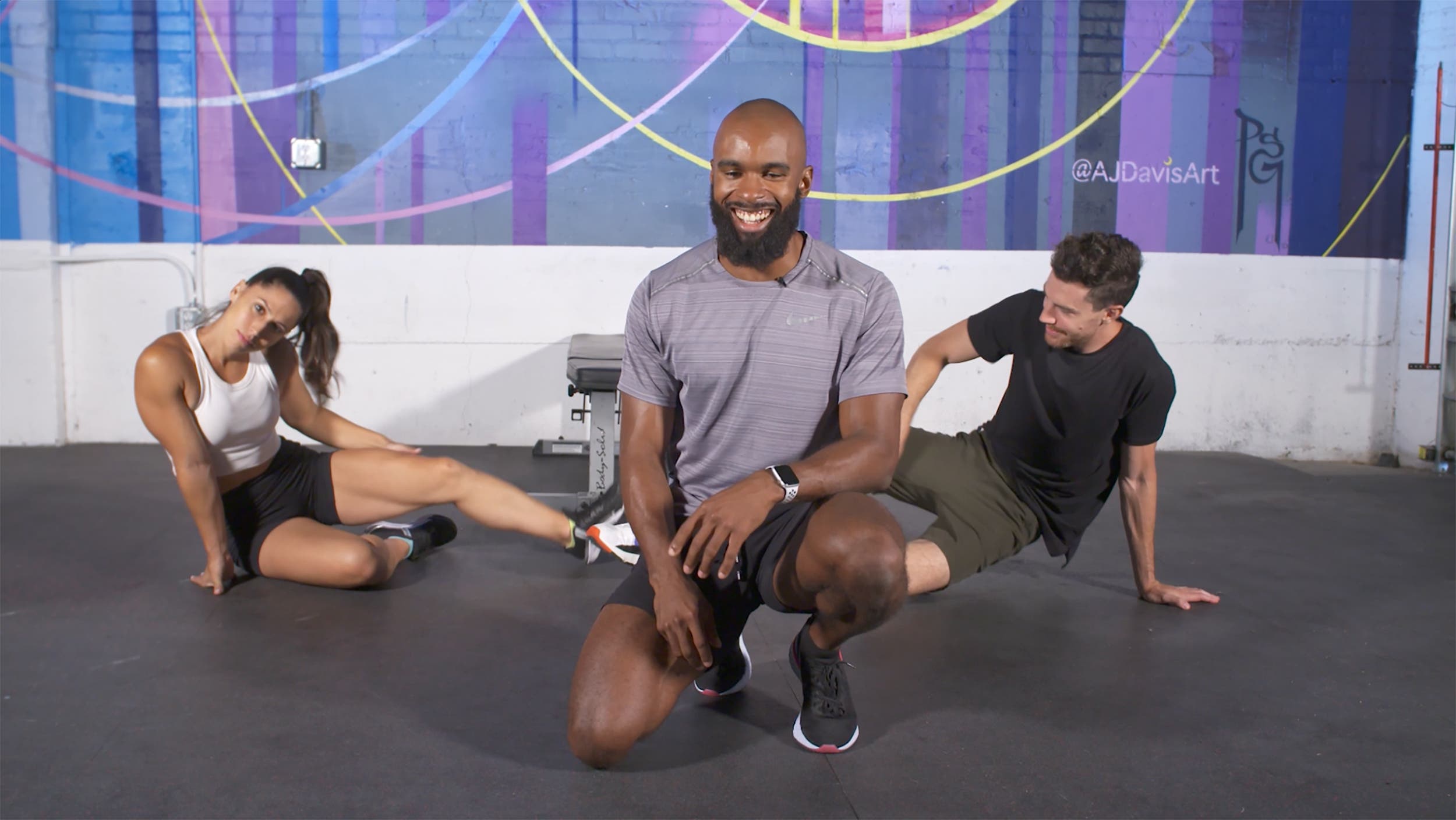
A common mistake among recreational skiers is a static warmup. Miller’s protocol utilizes a "Quadruped Series" to activate the neuromuscular pathways. This series involves movements on all fours that challenge the body’s cross-lateral coordination. By performing six repetitions on each side of bird-dogs and fire hydrants, the athlete engages the multifidus and transverse abdominis—muscles essential for protecting the spine during high-impact mogul skiing.
Following the floor work, the "Lunge Series" and "Dynamic Series" increase the heart rate while lengthening the hip flexors. Tight hip flexors are a frequent cause of "backseat" skiing, a technical error where the skier’s weight shifts too far over the tails of the skis, leading to a loss of control and increased quad fatigue.
Phase 2: The Leg Power Circuit
The core of the workout focuses on the "Sandbag Series," a choice of equipment that reflects the unstable nature of snow. Unlike a fixed barbell, a sandbag shifts during movement, forcing the secondary stabilizer muscles to engage. The circuit includes:
- Weighted Squats: To build the primary force needed for turn initiation.
- Lateral Skater Hops: These are perhaps the most sport-specific movement in the routine. By jumping laterally and landing on one leg, the athlete mimics the pressure transition from the uphill to the downhill ski.
- Rotational Lunges: To prepare the knees for the torque experienced during short-radius turns.
Miller recommends four sets with no rest between individual exercises, but a 45-second recovery between sets. This specific interval is designed to simulate the "work-rest" ratio of a typical ski run followed by a chairlift ride.
Phase 3: The Trunk and Anti-Movement Circuit
In modern ski coaching, the term "core" has been replaced by "trunk," reflecting the need for a 360-degree cylinder of stability. The "Anti-Movement" circuit focuses on the body’s ability to resist unwanted motion. The "Dead Bug" exercise, for instance, requires the athlete to keep their lower back pressed against the floor while limbs move independently, training the core to remain rock-solid while the legs work beneath it—the hallmark of an expert skier.
Supporting Data and Economic Impact of Ski Fitness
The implications of improved physical conditioning extend beyond individual performance. The National Ski Areas Association (NSAA) has noted that "skier fatigue" is a leading cause of mid-afternoon collisions on crowded slopes. By improving the general power endurance of the skiing public, resorts could potentially see a reduction in on-mountain medical evacuations, which currently number in the thousands annually across North America.
Furthermore, the economic investment in high-end equipment—with modern ski setups often exceeding $1,500—is frequently negated by poor physical form. A study by the Verbund der Bayerischen Ski-Akademie found that skiers with higher levels of eccentric leg strength were able to utilize the sidecut of their skis 25% more effectively, leading to better edge grip and safer speeds.

Expert Reactions and Practical Application
Industry experts have reacted positively to the democratization of elite-level training through video tutorials and accessible home workouts. "We see a significant trend in ‘longevity skiing,’" says Dr. Elena Rossi, a sports medicine consultant. "People want to ski into their 70s and 80s. That isn’t possible without a dedicated focus on the types of power endurance circuits Miller is proposing. You have to train the body to handle the ‘micro-impacts’ that occur every millisecond you are on the snow."
The Miller workout is designed to be performed in a relatively small space with minimal equipment—primarily a sandbag or a set of dumbbells—making it viable for the "weekend warrior" who may not have access to a specialized performance center. The emphasis is on quality of movement over quantity of weight, a principle that aligns with the "functional fitness" movement currently dominating the athletic landscape.
Analysis of Implications for the 2025 Season
As climate change continues to affect snow cycles, skiers are often faced with more "firm" or "iced" conditions in the early season, which are physically more demanding than soft powder. The 2025 season update of this training protocol specifically addresses these harder surfaces by emphasizing lateral stability and edge-pressure capacity.
In conclusion, the shift toward power endurance training represents a maturation of the sport. Skiing is no longer viewed merely as a leisure activity but as a high-demand athletic pursuit that requires a scientific approach to preparation. By following the Chris Miller protocol, skiers can ensure that their bodies are as advanced as the equipment they strap into, leading to a season defined by progression, safety, and the ability to take "one more run" with total confidence. Through the integration of strength, stamina, and coordination, the modern skier can transform their mountain experience from a struggle against fatigue into a masterclass of controlled, explosive movement.

