
Franjo von Allmen, the prodigious Swiss alpine skier, has transcended the traditional boundaries of athletic achievement, following a historic performance at the Milano-Cortina 2026 Winter Olympics with a nomination for the prestigious Forbes 30 Under 30 Europe list. This dual recognition solidifies his status not merely as a dominant force on the slopes but as one of the continent’s most impactful young figures, extending his influence across the realms of sport, business, and culture. At just 23 years old, von Allmen’s trajectory marks a significant moment for Swiss alpine skiing and a broader shift in how elite athletic talent is perceived and celebrated on a global stage.
A Historic Olympic Campaign at Milano-Cortina 2026
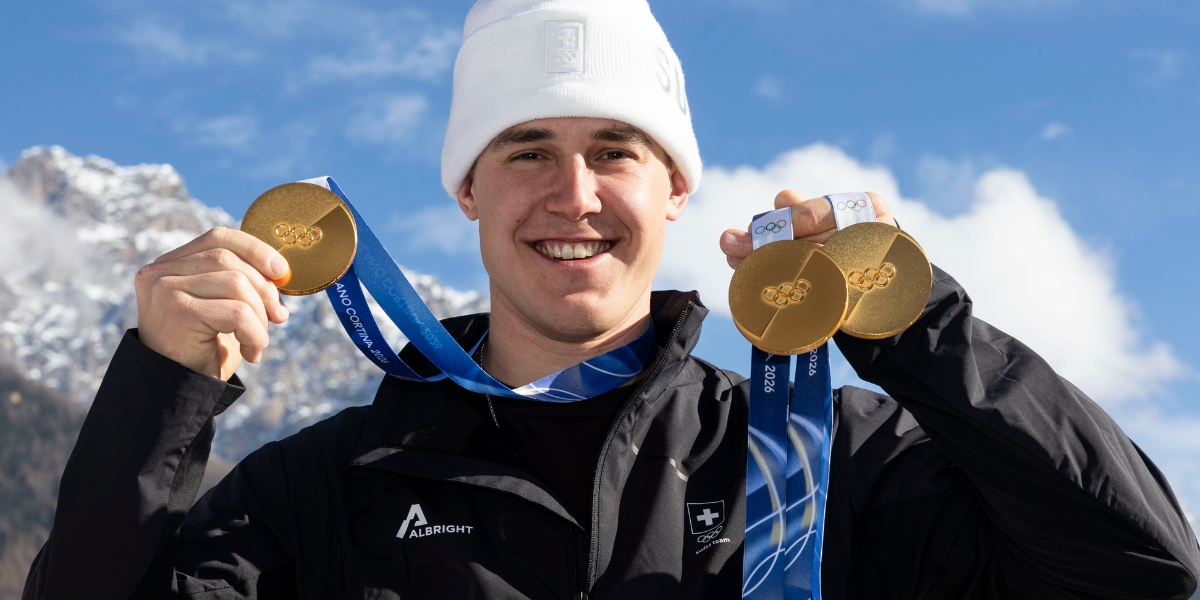
The 2026 Winter Olympics in Milano-Cortina served as the undeniable launchpad for von Allmen’s meteoric rise. In his inaugural Olympic Games, the young Swiss sensation delivered a performance for the ages, securing an astonishing three gold medals. His victories spanned two of alpine skiing’s most challenging individual disciplines—the Downhill and the Super-G—and culminated with a crucial contribution to the Team Combined event, alongside his compatriot Tanguy Nef. This remarkable triple-gold haul established von Allmen as the most successful male alpine skier of the Milano-Cortina Games, etching his name into the annals of Olympic history.
The sheer dominance displayed by von Allmen in Cortina was unparalleled in recent memory. The Downhill, often regarded as the purest test of speed and nerve, saw him navigate the demanding course with a blend of precision and fearless aggression that left competitors trailing. His Super-G victory, a discipline requiring an extraordinary ability to react to an unfamiliar course after a single inspection, further underscored his versatility and mental fortitude. These individual triumphs set the stage for the Team Combined, where his powerful Downhill leg provided the critical foundation for Switzerland’s ultimate gold. This comprehensive display across different facets of speed skiing at such a young age indicates a rare blend of innate talent, meticulous preparation, and competitive composure.
Joining the Pantheon: A Nuanced Comparison to Alpine Legends
Von Allmen’s three gold medals at a single Olympic Games place him in an exceedingly exclusive club, drawing comparisons to two of alpine skiing’s most revered legends: Austria’s Toni Sailer, who achieved the feat at the 1956 Cortina d’Ampezzo Games, and France’s Jean-Claude Killy, who replicated it at Grenoble 1968. Both Sailer and Killy swept the traditional individual disciplines of Downhill, Giant Slalom, and Slalom, a testament to their all-around mastery of the sport in their respective eras.
While von Allmen joins this elite company in terms of medal count, his path reflects the evolution of alpine skiing’s Olympic program. Sailer and Killy’s golds were exclusively from individual events. Von Allmen’s third gold came from the Team Combined, a format that emphasizes collective performance and strategic partnership. This distinction is crucial for historical accuracy, yet it does not diminish the magnitude of his achievement. Instead, it highlights his adaptability and the breadth of his contribution within the contemporary landscape of the sport. The Team Combined, introduced to the Olympic program to enhance dynamism and teamwork, demands not only individual excellence but also seamless collaboration. Von Allmen’s ability to deliver under immense pressure in the Downhill segment, knowing his performance directly impacted his teammate Tanguy Nef, showcased a different dimension of his championship mentality. Nef, a former All-American at Dartmouth College, then demonstrated his own prowess by executing the fastest slalom run, securing the gold and illustrating the strength of the Swiss team dynamic.
The demands of the speed disciplines—Downhill and Super-G—are inherently distinct and profoundly challenging. Downhill racing is a high-speed ballet on snow, where athletes reach speeds exceeding 130 km/h, navigating treacherous terrain, jumps, and turns with minimal room for error. It is a discipline where courage and calculated risk-taking are paramount. Super-G adds another layer of complexity: athletes are only permitted a single course inspection, requiring them to memorize and internalize the intricate layout, subtle undulations, and optimal racing line in a mere few minutes, before executing at full intensity. Von Allmen’s dominance in both these disciplines underscores his exceptional skiing IQ, physical conditioning, and mental resilience.
The Prestigious Forbes 30 Under 30 Europe Nomination
Beyond the roar of the Olympic crowd and the glint of gold medals, von Allmen’s influence has been recognized by the business and cultural world with his nomination for the Forbes 30 Under 30 Europe list. This acknowledgment transcends athletic prowess, placing him among a curated selection of 300 individuals—30 across ten diverse categories—who are under the age of 30 and are actively shaping their respective industries and the future of the continent.
The selection process for the Forbes 30 Under 30 list is renowned for its rigor and comprehensive nature. Each year, Forbes evaluates thousands of candidates, drawing from over 20,000 public nominations and incorporating invaluable insights from a vast network of alumni, industry experts, venture capitalists, and global leaders. Candidates are meticulously assessed against stringent criteria that include demonstrable scale of impact, innovative approaches, measurable success within their field, and significant long-term potential. The list aims to identify not just accomplished individuals, but true pioneers who are driving change, disrupting norms, and influencing the broader societal discourse.
For an athlete like von Allmen to be nominated is a testament to the expanding definition of influence in the 21st century. While the list has traditionally celebrated entrepreneurs, tech innovators, artists, and business leaders, the increasing inclusion of elite athletes reflects a broader understanding of their multi-faceted impact. His Olympic success at Milano-Cortina captured global headlines, significantly elevated the visibility of alpine skiing, and reaffirmed Switzerland’s formidable position as a powerhouse in winter sports. This global spotlight, combined with his youthful appeal and compelling narrative, has positioned him as a figure with influence far beyond the competitive arena.
The Evolving Role of the Elite Athlete in the Modern Era
The nomination of Franjo von Allmen for such a list underscores a fundamental shift in the perception and role of elite athletes. Historically, athletes were primarily celebrated for their sporting achievements. Today, however, performance at the highest level is inextricably linked with broader media visibility, commercial appeal, and cultural relevance. Athletes who succeed on the biggest stages are increasingly expected to shape narratives, attract global audiences, and influence industries connected to sport, lifestyle, and social causes.
This paradigm shift has transformed athletes into powerful brands and influential figures. Modern athletes often leverage their platforms to engage in entrepreneurship, advocacy, and social impact initiatives. Their personal stories, training philosophies, and values resonate deeply with diverse audiences, making them potent forces in consumer markets and cultural conversations. Von Allmen represents this evolution perfectly. His breakthrough season generated not just victories but also a powerful momentum that extends his presence beyond mere start lists and finish times. He now occupies a space where discussions about influence, opportunity, and the future trajectory of sport converge.
The commercial implications are substantial. Endorsement deals, partnerships with global brands, and media engagements become natural extensions of their athletic success. For a rising star like von Allmen, a Forbes nomination signals to potential sponsors and investors that he is not just a temporary sports hero, but a long-term asset with significant marketability and cross-sector appeal. This trend is visible across various sports, where athletes like LeBron James, Serena Williams, and Cristiano Ronaldo have successfully built empires extending far beyond their playing fields. Von Allmen, still in the early stages of his career, is now being recognized for this potential at an unprecedented pace for an alpine skier.
Statements and Reactions: A Nation’s Pride and Industry Recognition
While formal statements regarding von Allmen’s Forbes nomination are anticipated as the final list approaches, the general sentiment from key stakeholders can be logically inferred.
The Swiss Ski Federation would undoubtedly express immense pride in von Allmen’s accomplishments. A spokesperson might highlight how his Olympic performance not only brought glory to the nation but also inspired a new generation of skiers. "Franjo’s performance in Milano-Cortina was nothing short of historic," a hypothetical statement could read. "His three gold medals cemented Switzerland’s legacy in alpine skiing and his subsequent nomination for Forbes 30 Under 30 Europe is a testament to his exceptional talent and burgeoning influence. He is a role model for young athletes, demonstrating that excellence on the slopes can open doors to global recognition in broader fields."
From the perspective of Forbes, a representative might emphasize the evolving criteria for their esteemed list. "The Forbes 30 Under 30 Europe list seeks to identify young leaders who are not just successful, but are also innovative and impactful across various sectors," a Forbes editor might comment. "Franjo von Allmen’s extraordinary Olympic achievement, combined with his compelling story and growing global recognition, perfectly embodies the spirit of our Sports category. Athletes are increasingly becoming cultural icons and business forces, and Franjo stands out as a prime example of this new generation."
Sports marketing experts would likely analyze the significant boost to von Allmen’s commercial value. "A Forbes 30 Under 30 nomination is a powerful signal to the market," states a hypothetical sports marketing analyst. "It elevates an athlete beyond their sport, positioning them as a thought leader and an attractive brand partner. For Franjo, this means enhanced opportunities for endorsements, speaking engagements, and potentially even entrepreneurial ventures. His appeal transcends traditional ski brands, opening doors to luxury goods, technology, and lifestyle sectors."
Even from Tanguy Nef, his Team Combined partner, there would be an acknowledgment of von Allmen’s unique impact. "Racing with Franjo at the Olympics was incredible; his speed and focus are unmatched," Nef might share. "To see him recognized by Forbes speaks volumes about his character and potential beyond skiing. He’s not just a teammate, he’s a trailblazer."
Impact on Swiss Alpine Skiing and National Identity
Switzerland boasts a rich and storied history in alpine skiing, a sport deeply ingrained in the national identity. Figures like Pirmin Zurbriggen, Vreni Schneider, and Didier Cuche are national heroes. Von Allmen’s triple-gold performance at the Olympics, followed by a Forbes nomination, injects fresh vitality into this legacy. It not only boosts national pride but also serves as a powerful inspiration for aspiring young skiers across the Swiss Alps.
The impact extends to the grassroots level. Increased visibility often translates into greater participation in junior ski programs, more funding for development, and sustained interest in winter sports. For a country that prides itself on its alpine heritage, von Allmen’s achievements reinforce Switzerland’s position as a dominant force and a breeding ground for world-class talent. His youth and charisma make him an ideal ambassador for the sport, capable of attracting new audiences and maintaining the sport’s relevance in an increasingly competitive entertainment landscape.
Economically, the success of Swiss athletes in major international competitions can also stimulate winter tourism, with fans eager to visit the pristine slopes where champions are forged. Endorsements and partnerships secured by von Allmen will also contribute to the broader economic ecosystem surrounding Swiss sports.
The Road Ahead: What Comes Next for Franjo von Allmen?
The final Forbes 30 Under 30 Europe list is the culmination of multiple rounds of evaluation and judging by an expert panel. While von Allmen’s nomination is a significant achievement in itself, whether he secures one of the coveted 300 spots remains to be seen. However, regardless of the final outcome, the nomination has already underscored his immense influence and potential.
On the slopes, von Allmen’s Olympic breakthrough will inevitably raise expectations for his performance in subsequent World Cup seasons and future major championships. He will be targeted by competitors and scrutinized by media, a new level of pressure that comes with being an Olympic champion and a Forbes nominee. His continued development, tactical acumen, and ability to manage this heightened profile will be critical to sustaining his athletic dominance.
Off the slopes, the nomination signifies the dawn of a new era for von Allmen. It opens doors to unprecedented opportunities in brand partnerships, entrepreneurial ventures, and philanthropic endeavors. His platform now extends beyond the realm of sport, allowing him to potentially influence conversations on sustainability, youth development, and other causes important to him.
In conclusion, Franjo von Allmen’s journey from Olympic glory at Milano-Cortina 2026 to a nomination for the Forbes 30 Under 30 Europe list is a powerful narrative of modern athletic excellence. His historic performance on the snow has not only placed him in rare historical company within alpine skiing but has also propelled him into a broader arena where the impact of elite achievement extends well beyond the finish line. He stands as a testament to the evolving role of athletes as cultural architects and influential figures, poised to shape both the future of his sport and the discourse around youth leadership in Europe.

