
After a distinguished career spanning 194 World Cup starts, two Olympic appearances, and one of the most hard-fought podium finishes in recent American speed skiing history, Jared Goldberg is officially stepping away from professional alpine ski racing, as announced by the Stifel U.S. Ski Team. The veteran competitor’s retirement marks the close of a career that, while perhaps not defined by a multitude of flashy victories, was undeniably shaped by an unwavering tenacity, remarkable adaptability, and an unyielding commitment to pushing his physical and mental limits across the most formidable race tracks globally. His journey embodies the spirit of resilience inherent in a sport where the margins for error are razor-thin and the pursuit of speed is relentless.
A Career Forged in Speed: Early Days and World Cup Debut
Born in Boston, Massachusetts, in 1991, Jared Goldberg’s formative years were spent honing his skills on the slopes of Snowbird, Utah, a resort renowned for its challenging terrain and deep powder. This early immersion in demanding mountain environments laid the groundwork for a career dedicated to the raw power and precision of alpine speed events. His progression through the junior ranks was marked by consistent development, showcasing the raw talent and competitive drive that would eventually propel him onto the national team. The path from junior racing to the World Cup circuit is arduous, demanding years of sacrifice, intensive training, and a series of successful performances at lower-tier races to gain the necessary qualification points. Goldberg navigated this challenging pipeline with determination, ultimately making his World Cup debut in 2012. This initial foray onto the sport’s highest stage signaled the beginning of a remarkable twelve-season tenure in what is often referred to as the "White Circus" – the demanding, globe-trotting World Cup tour. For American athletes, succeeding in the predominantly European-centric world of alpine ski racing presents unique challenges, including extensive travel, cultural adjustments, and competing against rivals who often have grown up with direct access to these iconic European courses.
The Demands of the White Circus: Navigating the World Cup Circuit
The World Cup circuit is an unforgiving arena, a relentless series of races spanning multiple continents, requiring athletes to be in peak physical and mental condition for months on end. For speed specialists like Goldberg, this means enduring the extreme forces of downhill and Super-G racing, where speeds can exceed 130 kilometers per hour (over 80 mph) and jumps can send skiers soaring for dozens of meters. The season typically kicks off in late autumn and concludes in spring, encompassing a grueling travel schedule from North America to Europe and back, often with only a few days between races to recover, train, and adapt to vastly different snow conditions and time zones. Training runs, reconnaissance of courses, and meticulous equipment preparation consume much of a racer’s time, leaving little room for error or distraction. Goldberg’s longevity, accumulating nearly 200 World Cup starts over more than a decade, speaks volumes about his durability and ability to withstand the immense physical and psychological toll of this high-stakes sport. In an era where injuries are common and careers can be cut short, his consistent presence was a testament to his robust physical conditioning and shrewd approach to managing risk while maximizing performance.
Versatility on the Global Stage: Mastering Diverse Tracks
One of Goldberg’s most defining attributes, as highlighted by the Stifel U.S. Ski Team, was his rare versatility across a spectrum of diverse and challenging terrain profiles. This adaptability set him apart in a discipline where specialists often excel on only one type of course.
-
Val Gardena’s Saslong: This iconic Italian track, often considered one of the more "U.S.-friendly" courses due to its natural terrain and emphasis on gliding and airtime, saw Goldberg excel. He possessed the innate feel for snow and the aerial prowess required to navigate its famous features, such as the "Camel Humps" (three successive jumps that demand perfect timing and absorption) and the undulating "Ciaslat" section, where precise line choice and ski-handling skills are paramount. His ability to carry speed through these flowing, terrain-filled sections was a hallmark of his skiing.
-
Kvitfjell’s Olympiabakken: In stark contrast to Val Gardena, the Norwegian Olympiabakken in Kvitfjell is renowned for its power-driven, long, sweeping turns and technical demands. Success here hinges on flawless turn execution, maintaining a disciplined line, and generating immense pressure through the ski to hold an edge on icy surfaces. Goldberg demonstrated his capacity to switch gears, delivering powerful, precise skiing that translated into competitive times on this demanding track.
-
Kitzbühel’s Streif: Perhaps the ultimate testament to his nerve and skill came on the legendary Streif in Kitzbühel, Austria. Widely regarded as the most dangerous and demanding downhill race in the world, the Streif pushes athletes to their absolute limits, featuring near-vertical pitches, massive jumps, and unforgiving ice. Goldberg executed one of the strongest runs of his career on this hallowed ground in 2023, finishing an astounding fourth place. This performance was not merely a display of speed but a masterclass in composure, risk management, and the ability to perform under unimaginable pressure. For an American skier, achieving a top-five result on the Streif is often considered as significant as, if not more challenging than, an Olympic medal, given the historical dominance of European athletes on this course and its unique perils. It underscores a profound trust in one’s equipment and technique, coupled with immense courage. Across varying snow surfaces, weather conditions, and track profiles, Goldberg consistently found a way to extract speed, proving his mettle as a truly all-round speed specialist.
The Pursuit of the Podium: A Defining Breakthrough
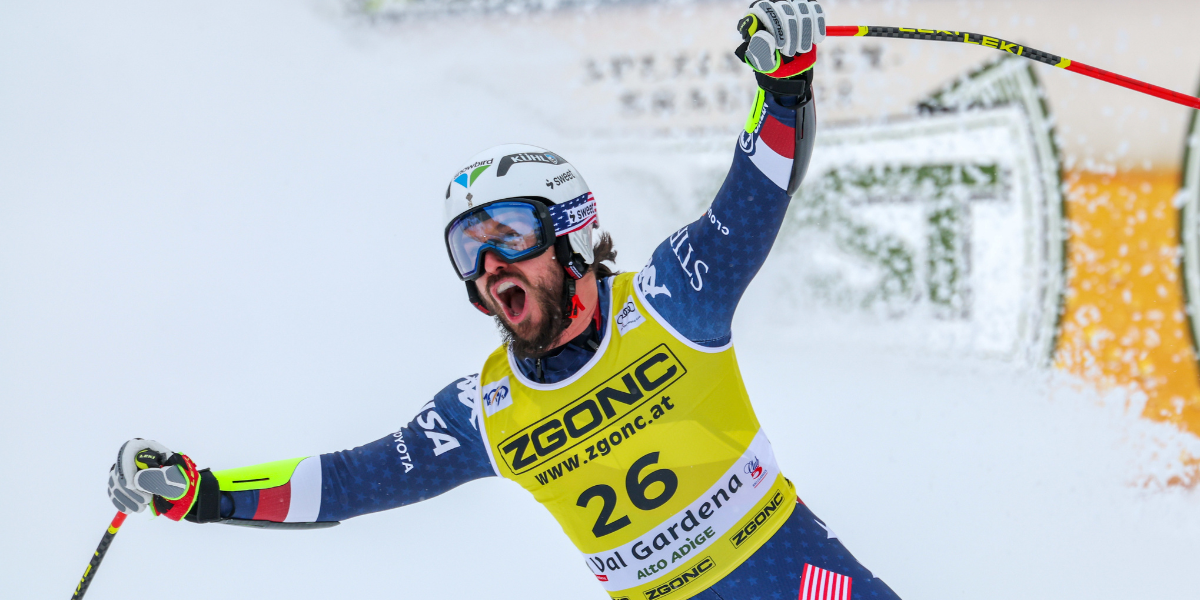
For many years, Jared Goldberg was known as a consistent top-20 contender, often knocking on the door of the top 10. The elusive World Cup podium, however, remained just out of reach, a testament to the incredibly competitive nature of elite alpine racing where hundredths of a second separate triumph from disappointment. His singular World Cup podium came in Val Gardena in 2024, a moment of profound personal and professional significance. He finished an agonizingly close 0.01 seconds shy of victory, securing a second-place finish. This result was not a sudden burst of luck but the culmination of years of relentless refinement – meticulously developing his timing, building strength through countless hours in the gym, and continuously challenging the limits of his skiing. It was a tangible reward for his persistence, demonstrating that even after a decade on the circuit, growth and breakthrough performances were still possible. This podium was not just a personal victory; it was a powerful statement of resilience, underscoring the value of sustained effort in a sport that often demands instant gratification.
Olympic Appearances and World Championship Presence
Goldberg’s career also included representing the United States on the grandest stages of international alpine skiing. He made his Olympic debut at the 2014 Winter Olympics in Sochi, Russia, and followed it up with another appearance at the 2018 Winter Olympics in PyeongChang, South Korea. While Olympic medals eluded him, his consistent qualification for these elite events highlighted his standing as one of the nation’s premier speed skiers during those cycles. Beyond the Olympics, Goldberg was a fixture on the U.S. team for five FIS Alpine World Ski Championships, participating in 2015, 2017, 2021, and 2023. His consistent selection for these biennial championship events, which represent another peak competition outside of the Olympic years, further cemented his reputation as a reliable and experienced competitor on the international circuit. These appearances not only provided invaluable experience but also allowed him to contribute to the team dynamic at the highest levels of the sport.
Mental Fortitude: Goldberg’s Unseen Strength
Perhaps the most critical, yet often unseen, attribute that defined Jared Goldberg’s career was his exceptional mental strength. Speed skiing demands an almost unparalleled level of commitment. At speeds exceeding 80 mph, with obstacles rushing towards you and terrain variations that can launch a skier into the air, the margin for error effectively disappears. Hesitation, even for a fraction of a second, can lead to disaster or, at best, a lost race. Goldberg’s ability to commit fully, to push to both sides of the edge repeatedly over more than a decade on the World Cup, is what truly set him apart. This sustained mental fortitude enabled him to absorb immense pressure, manage fear, and consistently deliver aggressive, high-risk performances required to compete at the elite level. His unwavering self-belief and capacity for focus allowed him to maintain a high level of performance year after year, establishing him as a consistent and reliable presence in both downhill and Super-G.
Impact on the Stifel U.S. Ski Team and Peer Respect
Within the close-knit community of the Stifel U.S. Ski Team, Jared Goldberg was a respected veteran and a significant cultural influence. His long tenure fostered deep bonds, as evidenced by the heartfelt tribute from fellow U.S. Ski Team athlete and two-time World Cup winner Bryce Bennett. "Jared and I spent 13 seasons racing and rooming together, sharing plenty of highs, lows, and some damn fun times," Bennett recounted. "We worked together to figure out this crazy, dynamic sport, which I’ll always appreciate. I’ll miss his humor, competitive spirit, and having one of my best friends on the road." This sentiment highlights Goldberg’s role not just as a competitor but as a mentor, a sounding board, and a source of camaraderie within the U.S. speed group. Veteran athletes like Goldberg play a crucial role in shaping team culture, providing guidance to younger skiers, and maintaining morale during the demanding World Cup season. His presence undoubtedly helped cultivate an environment of perseverance, mutual support, and competitive drive that has been a hallmark of the U.S. men’s speed program for years.
Statistical Overview: A Legacy of Durability and Performance
Goldberg’s career statistics paint a clear picture of a durable and consistent athlete in a discipline known for its unforgiving nature. His 194 World Cup starts place him among the most experienced American speed skiers of his generation. To put this into context, a typical World Cup speed season includes approximately 8-10 downhill and Super-G races. Goldberg’s participation across 12 seasons means he averaged around 16 races per year, a remarkable feat given the physical demands and the need to qualify for each event. His seven top-10 finishes, including the memorable fourth place at Kitzbühel and his single podium, demonstrate his ability to compete with the very best in the world. While perhaps not accumulating the sheer volume of victories of legends like Bode Miller or Daron Rahlves, Goldberg’s consistent presence in the top ranks, his multiple Olympic and World Championship berths, and his ultimate podium finish underscore a career built on sustained effort and genuine talent in a highly competitive global sport.
Transitioning from the Slopes: What Lies Ahead for Jared Goldberg
As he steps away from the demanding life of a professional ski racer, Goldberg plans to embrace a new chapter rooted in his home state of Utah. The Stifel U.S. Ski Team announced that he intends to remain in Utah, focusing on spending quality time with family and adjusting to a slower pace after years of the relentless World Cup circuit schedule. Beyond personal pursuits, Goldberg is also continuing his academic journey, working towards a degree at the University of Utah. This commitment to education reflects a forward-thinking approach to life after sport, ensuring a smooth transition into new intellectual and professional challenges. Reflecting on his career, Goldberg shared, "I’m excited to switch gears. I’ve loved the people I’ve met all over the world and everyone I’ve had the chance to race against on the White Circus." His statement conveys not only excitement for his future but also a deep appreciation for the experiences and connections forged during his extensive career, emphasizing the human element of elite competition.
A Career Beyond Medals: The Enduring Definition of Jared Goldberg’s Impact
Ultimately, Jared Goldberg’s career in alpine ski racing will not be defined by a single gold medal or a specific number of victories, but rather by the indelible way he approached the sport. From navigating the intricate terrain demands of Val Gardena to harnessing the brute strength required on Olympiabakken, and bravely conquering the unforgiving challenges of the Streif, he consistently proved his capacity to find speed across the full, diverse spectrum of downhill racing. Such versatility is a rare and hard-earned trait in a sport that often rewards specialization. More profoundly, it was his unwavering mindset that sustained him throughout his journey. Year after year, he pushed his skiing to the absolute limit of his ability, expertly managing the inherent risks, absorbing immense pressure, and consistently showing up in a discipline where the cost of mistakes is extraordinarily high. In a sport that exposes every weakness, Jared Goldberg built a career based on unwavering resilience, profound trust in his own skiing, and a quiet determination that inspired those around him. That is the enduring legacy he leaves behind, a testament to what is truly lasting in the world of professional sport.

