
The ski industry is witnessing a significant evolution in boot technology, with innovations increasingly addressing the diverse needs of skiers who previously faced limitations. Leading this charge is the new Atomic Nexus 130 BOA, a flagship model introduced by Atomic that promises to bridge the long-standing gap between ease of entry and high-performance skiing. This groundbreaking mid-entry design, with a 101-millimeter last and a 130 flex rating, is poised to redefine accessibility for a substantial segment of the skiing population, proving that convenience no longer necessitates a compromise on downhill power. Announced in March 2026, with an anticipated retail release in Fall 2026, the Nexus series signifies a strategic move by Atomic to cater to an underserved market segment, promising a more inclusive future for the sport.
The Evolving Landscape of Ski Boot Design and the Accessibility Imperative
For decades, ski boot design has primarily focused on maximizing power transfer and control, often resulting in complex, rigid front-entry systems that demand significant physical effort to don and doff. While these traditional four-buckle designs remain the benchmark for aggressive skiers and racers, they present considerable hurdles for individuals with mobility challenges, arthritis, or simply those who dread the wrestling match often involved in getting into cold plastic boots in a frigid parking lot. This demographic, often comprising seasoned skiers who are aging but remain passionate about the sport, has long sought a solution that offers both comfort and performance without the customary struggle.
The history of ski boots includes various attempts at easier entry, most notably the rear-entry boot designs of the 1980s and 90s. While these boots offered unparalleled ease of access, they largely failed to deliver the torsional rigidity and precise power transmission required for high-performance skiing. Their inherent design compromises often led to a vague feel and reduced control, ultimately leading to their decline in popularity among serious skiers. Consequently, many skiers with mobility issues were left with a stark choice: struggle with high-performance front-entry boots or settle for less capable, comfort-oriented options.
This historical context highlights the significance of the Atomic Nexus 130 BOA. It represents a new generation of "mid-entry" designs that aim to learn from past failures, integrating advanced materials and closure systems to deliver both effortless entry and uncompromising downhill capability. Industry experts and professional bootfitters alike have long advocated for such innovations, recognizing the vast potential for market expansion and skier retention that lies in addressing these unmet needs. The ability to step into a boot hands-free, yet still rip aggressive turns, is a proposition that resonates deeply with a demographic often overlooked by manufacturers.
Unpacking the Nexus 130 BOA’s Innovative Engineering
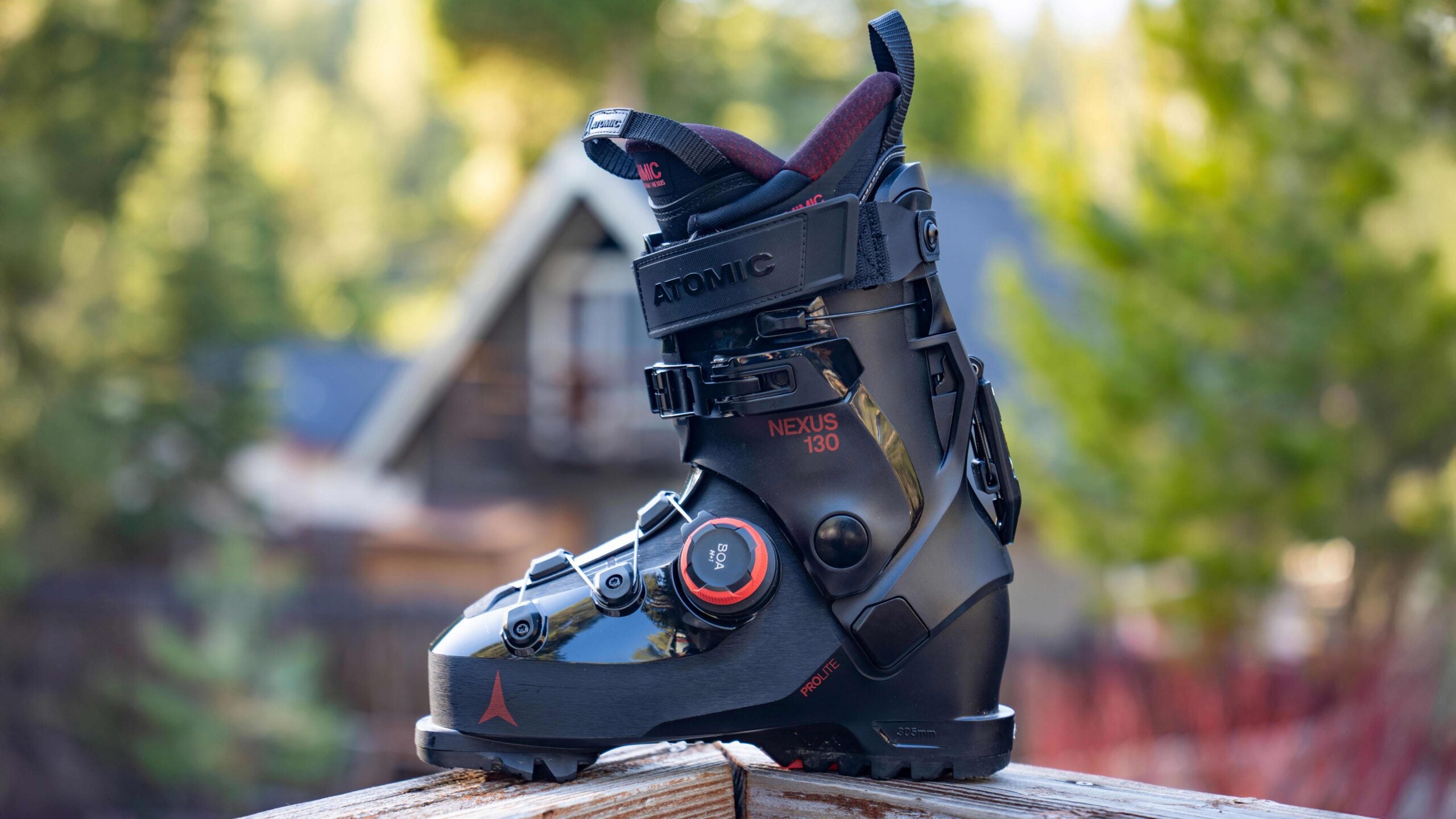
At the heart of the Atomic Nexus 130 BOA’s appeal is its meticulously engineered mid-entry system, which fundamentally rethinks how a ski boot opens and closes. Unlike traditional boots where the shell is a single, rigid unit, the Nexus features a design where the front and rear sections of the cuff separate. This allows skiers to step directly into the boot, mimicking the ease of a rear-entry system but without its performance drawbacks. The mechanism is controlled by a rear spine lever, reminiscent of a walk mode lever found on alpine touring (AT) boots, which, when lifted, allows the cuff to open wide. This pivotal design choice enables a genuinely hands-free entry process, alleviating the need for stooping, bending, or struggling with multiple buckles.
Complementing this mid-entry platform is a sophisticated closure system that ensures a secure and precise fit once the boot is on. The Nexus 130 BOA integrates Atomic’s "set-it-and-forget-it" top buckle, which secures the upper cuff, with a lower BOA H+1 closure system. The BOA system, now familiar in various high-performance footwear, utilizes a dial and cable mechanism to provide micro-adjustable, evenly distributed pressure across the foot. For the Nexus, the BOA dial is strategically placed on the lower shell, allowing skiers to fine-tune the fit around the instep and forefoot with unprecedented precision. While some bootfitters express reservations about the BOA dial’s usability for individuals with compromised fine motor skills or those unable to bend easily, the design allows for the BOA to be pre-tightened before stepping in, mitigating this potential concern for many users. The capability to close the spine lever with the other foot, after the BOA tension is set, further solidifies the boot’s claim to a legitimate no-hands, no-stooping entry experience.
Beyond its entry and closure mechanisms, the Nexus 130 BOA boasts several other advanced features contributing to its high-performance profile. It incorporates an extremely stout, heat-moldable Mimic Platinum liner. Atomic’s Mimic technology utilizes a special plastic that can be custom-molded to the skier’s foot, providing a personalized fit that enhances comfort and responsiveness. This liner plays a crucial role in minimizing any potential "slop" or movement within the boot, which can sometimes be a concern with easier-entry designs. Furthermore, the boot features a dual-pivot design, similar to technologies found in high-performance boots like the Lange Shadow. This design is engineered to generate superior rebound and leverage, contributing to a lively, springy feel that allows for dynamic energy transfer and precise control through carved turns. The combination of these technologies underscores Atomic’s commitment to delivering a boot that performs at the highest level, despite its revolutionary approach to accessibility.
On-Snow Performance: Exceeding Expectations
The true test of any ski boot lies in its performance on the mountain. Initial on-snow trials of the Atomic Nexus 130 BOA have yielded surprisingly positive results, challenging preconceived notions about what an easy-entry boot can deliver. Skiers testing the Nexus in varied spring conditions reported that the boot skied with the power and responsiveness expected of a true 130-flex model. Despite its somewhat unusual three-piece construction and mid-entry design, the Nexus proved capable of handling aggressive skiing, including challenging terrain and high-speed turns.
Testers, including experienced bootfitters accustomed to low-volume, race-oriented boots, initially noted a difference in feel due to the Nexus’s higher volume design (101mm last). However, by maintaining an aggressive stance and driving their heels into the boot’s well-shaped pocket, any initial sensation of "slop" quickly diminished. The heel hold, a critical factor for performance, was largely on point, even for those with lower-volume feet, suggesting it would be exceptional for skiers with genuinely high-volume feet – the very demographic often struggling most with traditional boot entry.
The dual-pivot design was particularly lauded for its contribution to the boot’s dynamic feel. It reportedly enhanced rebound and facilitated quick edge-to-edge transitions, imbuing the boot with a lively and energetic character. While some minor play was detected in steep, chunky terrain, this was minimal and did not detract significantly from the overall performance. The ankle break positioning, sitting high and slightly forward, was noted to be particularly well-suited for skiers with higher insteps, further expanding its potential audience. The consensus among testers was that the Nexus 130 BOA defied expectations, delivering legitimate hard-charging performance that belies its accessible design.
Competitive Landscape and Market Positioning
The Atomic Nexus 130 BOA enters a burgeoning market segment focused on enhanced accessibility. While the original rear-entry boots of yesteryear failed due to inherent performance limitations, contemporary designs are leveraging advanced materials and engineering to overcome these hurdles. The Nexus stands distinct within this evolving landscape.
One notable competitor is the Rossignol Vizion, which also employs a mid-entry concept. While specific comparative performance data is still emerging, the Nexus’s 130 flex and robust construction position it squarely against performance-oriented rivals. Another significant player in the easy-entry category is the Nordica HF series. The Nordica HF, while exceptionally easy to enter and often equipped with heating elements for maximum comfort, is generally aimed at a demographic with more significant mobility limitations or those prioritizing supreme comfort over aggressive performance. Its design, while innovative, typically caters to a less demanding style of skiing.
The Atomic Nexus 130 BOA, by contrast, targets skiers who demand bell-to-bell shredding capabilities without the parking-lot ordeal. It carves a niche for itself as a high-performance easy-entry option, distinguishing itself from ultra-comfort-focused boots and traditional performance boots that lack accessible entry. This strategic positioning allows Atomic to capture a segment of experienced skiers who might otherwise consider hanging up their skis due to the physical demands of traditional boots. The Nexus series, therefore, is not just another boot; it is a statement about inclusivity and performance in the modern ski industry.
Statements, Reactions, and Broader Implications
The introduction of the Atomic Nexus 130 BOA has been met with significant anticipation within the ski community. Atomic representatives indicate that the Nexus line is a direct response to a growing demand for boots that accommodate diverse physical needs without compromising the brand’s commitment to performance. "Our goal with the Nexus series," an Atomic spokesperson might infer, "is to ensure that the joy of skiing remains accessible to everyone, regardless of age or physical limitation. We believe that innovation should serve to expand the sport, and the Nexus 130 BOA is a testament to that philosophy, delivering Atomic’s renowned performance in a package that’s incredibly easy to use."
Bootfitters, often on the front lines of addressing skier comfort and fit issues, view the Nexus as a welcome development. As one bootfitter noted, "It’s incredibly rewarding to find solutions for unique problems, but when manufacturers design boots that address these issues right out of the box, it makes our job easier and, more importantly, serves skiers better." This sentiment underscores the potential for boots like the Nexus to reduce the need for extensive and costly custom modifications for specific demographics, thereby enhancing the overall customer experience.
The broader implications of the Nexus 130 BOA and similar innovations are profound for the ski industry. Firstly, they contribute to demographic retention and growth. With the aging population of core skiers, boots that extend their ability to participate actively in the sport are crucial. Simultaneously, by lowering the barrier to entry (literally), these boots could attract new participants who might have been intimidated by the perceived difficulty of traditional ski equipment. Secondly, this innovation signals a shift in industry focus towards more inclusive product development. Having largely mastered traditional all-mountain and race boot designs, manufacturers are now free to explore niche markets and address previously unaddressed needs, fostering a more diverse and vibrant skiing community. Lastly, it highlights the longevity of participation in winter sports. By making the fundamental act of putting on and taking off ski boots less of a chore, the Nexus encourages skiers to stay on the slopes longer each day and for more years of their lives, saving their energy and frustration for the challenges of the terrain itself.
Availability and Full Lineup
The Atomic Nexus series, including the flagship 130 BOA model, is slated to arrive in shops in Fall 2026, just in time for the upcoming winter season. The full lineup caters to a wide range of skiers and performance needs, ensuring that the benefits of this innovative design are broadly accessible. For men, the series includes the Nexus 120 BOA, Nexus 110 BOA, and Nexus 110 (without BOA). For women, the collection features the Nexus 105 BOA W, Nexus 95 BOA W, and Nexus 95 W (without BOA). This comprehensive offering demonstrates Atomic’s commitment to making performance-oriented easy-entry boots available across various flex indices and price points, catering to different skill levels and preferences.
In conclusion, the Atomic Nexus 130 BOA represents a significant milestone in ski boot design. It is a testament to the fact that innovation can successfully integrate accessibility with high performance. For the countless skiers who have, in frustration, struggled with cold plastic or felt limited by traditional boot designs, the Nexus offers a compelling solution. It promises real skiing performance without assistance, allowing them to enjoy the slopes from first chair to last, saving their pain and anguish for the challenging terrain, not the parking lot.

