
What began as one mother’s dedicated search for off-season ski training for her son in Košice has blossomed into a transformative, year-round facility serving competitive racers, adaptive athletes, and vital rehabilitation programs, revitalizing the alpine spirit in eastern Slovakia amidst challenging environmental and economic shifts.
In the picturesque yet increasingly snow-starved landscape of eastern Slovakia, the once-abundant opportunities for skiing have steadily receded. Young ski racers from cities like Košice, a historical bastion of sporting excellence, frequently face arduous journeys of up to ten hours just to access adequate snow conditions. This stark reality underscores a broader regional crisis for winter sports, where the traditional two-to-three-month training window has dramatically shrunk due to climate change and escalating operational costs for resorts.
Košice, a city renowned for its rich athletic heritage, has long been a crucible for talent. It proudly claims hockey star Juraj Slafkovský, skateboarding sensation Richard Tury, and boasts Europe’s oldest marathon, alongside a legacy of world champions in water skiing. Yet, despite this vibrant sporting culture, the alpine skiing sector has struggled. Nestled within a valley basin, Košice once benefited from numerous surrounding ski areas, a crucial advantage in a nation where skiing is a foundational component of physical education. However, the inexorable march of global warming, coupled with soaring energy prices and an increasing reliance on costly artificial snowmaking, has gradually pushed skiing out of reach for many families in eastern Slovakia.
Today, the local skiing landscape is starkly diminished. Only Jahodná, a small suburban resort offering less than a kilometer of slopes, remains operational for a city of 250,000 inhabitants. The once-prominent Plejsy resort, situated just 50 kilometers away and a former host of prestigious European Cup races, has regrettably been closed for several years, leaving a void in regional ski infrastructure. Despite these formidable obstacles, Košice has tenaciously preserved its strong alpine ski racing tradition among its youth. The city continues to nurture several dedicated ski clubs and is home to current Slovak slalom champion Jozef Školec, demonstrating an enduring passion for the sport that refused to be extinguished by dwindling snow. It is against this backdrop of challenge and resilience that the story of Eva Širillová and her groundbreaking initiative begins.
A Mother’s Vision: The Genesis of an Indoor Skiing Revolution
Eva Širillová’s personal journey mirrors the broader struggles of eastern Slovakian ski families. For years, she, her son Ladislav, and his ski club embarked on what she describes as "chasing snow" across distant slopes in Austria and Italy. "The training season in Slovakia keeps getting shorter because of changing weather conditions and now lasts only two to three months," Širillová explains. "That’s why we had to travel huge distances to find snow. From Košice, almost everything is at least a 10-hour drive away." This relentless pursuit highlighted the critical need for alternative training methods, particularly during the lengthy off-season, to help young athletes maintain essential skiing movement patterns and physical conditioning.
Her quest led her to an online discovery: the SkyTechSport ski simulator. "Eventually, I discovered a ski simulator from SkyTechSport online, and the nearest one was in Munich," she recounts. The concept of replicating skiing technique and muscle activation "almost from the living room" deeply resonated with her. She envisioned a solution that would allow her son to "maintain fitness and activate the same muscle groups used in real skiing, which is difficult for us to access for most of the year." While Košice already offered a robust array of complementary training facilities – including excellent gyms, athletics tracks, and various indoor sports complexes – access to a specialized indoor skiing platform was perceived as a game-changer. "But having access to this type of indoor skiing platform would be ideal not only for my son, but for other children in the ski club as well," she mused.
A family trip to Legoland ultimately became the unexpected catalyst for her ambitious project. During this trip, they included a visit to the Munich simulator. "We booked all of us onto the machine, and the children immediately wanted to return again the next day," Širillová recalls. The experience was immersive: starting with skiing facing a mirror for immediate feedback, then progressing to a larger setup with a projected course and gates. The potential was clear. "I immediately started thinking about how to finance something like this and bring it to Košice," she said, marking the pivotal moment her personal quest transformed into a community-focused mission.
Overcoming Hurdles: Establishing a Year-Round Training Hub
The path to establishing the Košice ski hub was not without its challenges. Not long after her Munich experience, a similar simulator appeared in Bratislava. Initially, Eva feared her opportunity had been lost. However, Bratislava, Slovakia’s capital, remained a five-hour drive from Košice, and the protracted completion of the motorway connection continued to limit accessibility for ski clubs in eastern Slovakia. This geographic barrier reinforced the necessity of a local solution.
Driven by an unwavering belief in the project, Širillová pressed forward. "I managed to secure the funding, and at a New Year’s Eve party my husband and I looked at each other and said – it’s now or never," she recollects, highlighting the decisive moment of commitment. The initial phase of the project was arduous. Many people struggled to grasp the simulator’s potential, often believing the technology was suitable only for elite professional athletes. This misconception necessitated extensive outreach and education to demonstrate its broader utility. "We started trying different campaigns. The year 2024 was probably our most successful one," she notes, indicating gradual public acceptance and increasing demand. However, just as momentum built, an unforeseen setback occurred: the building owner sold the space, forcing a sudden relocation of the entire facility. Despite this disruptive event, Širillová’s conviction remained unshaken. "Whenever I went skiing and watched random people or children on the slopes, I kept thinking: ahhh, this person would really benefit from a session indoors to fix this or that," she affirmed, a testament to her persistent vision for improving skiing technique and accessibility.
The Science of Skiing: Precision Training with Coaches Richard Lacko and Vladimír Hrehor
The project truly began to flourish with the involvement of experienced ski professionals. "We approached local ski clubs and found former skiers and coaches Richard Lacko and Vladimír Hrehor," explains Širillová. Their expertise proved instrumental in integrating the simulator into a structured training regimen. Richard Lacko, a former ski racer himself, immediately recognized the innovative potential. "As a former ski racer, I immediately saw an opportunity to learn something new," he stated. "Step by step, we tried to transfer skiing technique from the slopes into an indoor environment."
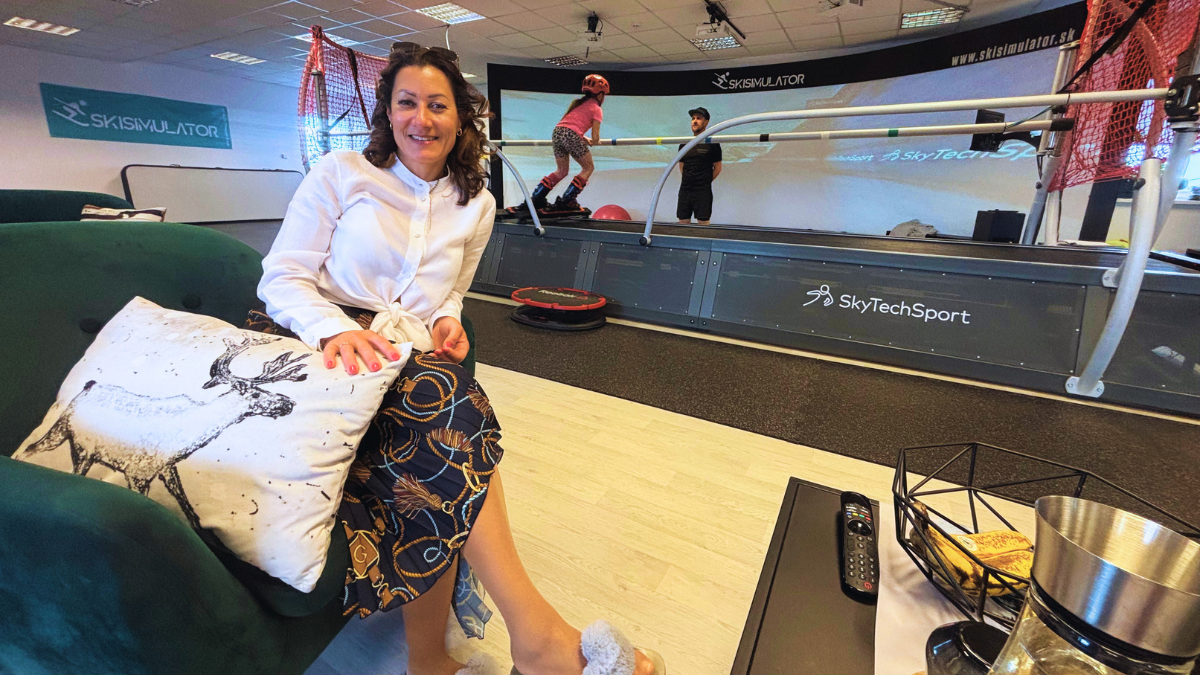
This transition required a meticulous understanding of the simulator’s capabilities and limitations. Over time, the coaches developed a sophisticated methodology, learning how to isolate individual technical details, train them repeatedly in a controlled environment, and then effectively transfer these refined skills back onto snow. "We needed to analyse each movement carefully and understand the differences and similarities between real skiing and what could be replicated on the machine," Lacko elaborates. While acknowledging that "the simulator is not a perfect copy of skiing on snow," he emphasizes its profound benefits: "But when it comes to technical details like stance, leg separation, balance, and movement patterns, it works extremely well and offers enormous benefits."
The simulator’s advanced analytics are a cornerstone of its effectiveness. Vladimír Hrehor highlights this crucial aspect: "One particularly interesting feature is the performance analysis. The machine gives us precise force measurements, angles, and detailed data that create a clear foundation for improvement." This data-driven approach allows coaches to pinpoint weaknesses and track progress with unprecedented accuracy, moving beyond subjective observation to objective measurement.
The facility also offers a unique advantage for competitive athletes: the ability to virtually study downhill and Super-G courses before encountering them on actual snow. "In some ways, it reminds me of Formula 1 drivers and their preparation," Hrehor notes, drawing a compelling parallel to elite motorsports where virtual simulations are standard practice for course familiarization and strategic planning. Lacko has utilized the simulator to coach prominent athletes, including Czech racer Martina Dubovská and Slovak Paralympian Alexandra Rexová. For professional athletes, the process typically involves initial video analysis to identify specific technical elements requiring improvement. For recreational skiers, the simulator often works in reverse: "The machine quickly exposes weaknesses, and some of them can be corrected almost immediately," Lacko explains, making it an invaluable diagnostic and corrective tool for all skill levels.
The immersive experience has also transformed Lacko’s perspective on elite skiing. "I don’t really have one specific favorite when it comes to technique," he admits. "What fascinates me is how skiing continues evolving and how top athletes approach turns differently." He particularly enjoys observing Marco Odermatt in giant slalom, admiring his "unique" lines. The Koice training center fosters a vibrant community, with World Cup races closely followed, sometimes even pausing sessions for collective cheering.
A Holistic Approach: Supporting Ski Clubs and Inspiring the Next Generation
Beyond individual clients and a more informed public, the Košice center has become a vital resource for ski clubs throughout the region. "The biggest interest comes from ski clubs in the surrounding regions," Širillová proudly states. "I honestly had no idea how many ski clubs there are in Slovakia." Recognizing Košice’s diverse sporting infrastructure, clubs now organize week-long training camps at the facility. While only one skier can utilize the simulator at a time, the center offers a comprehensive suite of complementary training options, including a fully equipped gym, spacious changing rooms, a comfortable lounge, and a relaxation area. "This allows clubs to provide their young athletes with fairly comprehensive preparation," Širillová explains, making it a one-stop destination for holistic athletic development.
Eva Širillová’s keen eye for interior design is evident throughout the space, which is intentionally crafted to motivate young skiers. The walls are adorned with race bibs, signed posters, and vibrant fan banners, creating an atmosphere imbued with the spirit of international competition. Her family’s extensive travels to World Cup races worldwide – including Levi, Jasná, Flachau, Kranjska Gora, and Špindlerův Mlýn – have fueled this inspirational environment. "The energy around a World Cup finish area is difficult to describe until you experience it yourself," she shares. The signed memorabilia serves a dual purpose: to celebrate skiing heroes and to ignite the aspirations of budding racers. "With the signed posters, we want to motivate young racers and show them that one day they could also be up there on that wall," she emphasizes, fostering a tangible connection between local dreams and global achievements.
Breaking Barriers: Inclusion, Adaptive Sports, and Rehabilitation
The project’s evolution has extended far beyond the realm of competitive ski racing technique, embracing a profound commitment to inclusion and rehabilitation. Over time, individuals with physical and intellectual disabilities began visiting the center for specialized training. "I had an almost hour-long phone call with a friend whose son with Down syndrome had an amazing session with us," Širillová recounts, deeply moved by the positive impact. "They simply couldn’t stop talking about the experience." This interaction underscored the severe limitations in sporting opportunities for many children with disabilities. "Practice showed us that we could provide many of the safe conditions these children need," she realized, identifying a critical unmet need.
The indoor skiing platform is uniquely suited to accommodate a diverse range of adaptive athletes. It offers possibilities for seated skiers utilizing mono-skis and provides adaptive platforms designed specifically for rehabilitation and movement training for individuals with reduced mobility. The center also developed programs for children with autism, requiring a high degree of empathy and patience from the coaches. "That required a great deal of empathy and patience because every child reacted differently to the environment and stimulation," Širillová notes. "The safe environment played a huge role in helping them progress." The center has organically evolved into a vital meeting place for families with special-needs children, particularly during adverse weather, fostering a supportive community where shared experiences and progress are celebrated.
The therapeutic potential of the simulator became even more apparent through specific cases. One experience profoundly impacted Širillová: "We worked with a woman recovering from a stroke who had partial paralysis on one side of her body. At first she could only make turns to one side and couldn’t return back properly. But after several sessions she gradually regained movement, and today she is skiing again." This remarkable recovery exemplifies the simulator’s capacity to facilitate neurological rehabilitation and restore functional movement. For Vladimír Hrehor, the technology also unlocks crucial possibilities for visually impaired skiers. "In addition to not needing a guide in this environment, visually impaired athletes can safely develop movement patterns and sensations that later transfer onto snow," he explains. "Without sharp vision, they rely heavily on their other senses, so developing that feeling for movement becomes incredibly important." The controlled, predictable environment allows these athletes to build proprioception and muscle memory without the inherent risks of open slopes.
A Beacon of Success and a Vision for Research
The tangible success of the Košice center is perhaps best encapsulated by the story of Adam Kalafut, a skier with Down syndrome from Košice, who achieved a gold medal at the 2025 Special Olympics in Turin. His mother, Mrs. Kalafutová, speaks effusively about the profound impact of the center on Adam’s life. "Adam has Down syndrome, and training here has become an important part of his life," she shares. "It’s not only about skiing preparation, but about building self-confidence, independence, and joy through movement." The family observed significant improvements in Adam’s motor skills, balance, coordination, and overall physical condition. "What means even more to us is that he isn’t separated from others. He trains in an environment where he receives individual attention while still feeling part of a wider sporting community," Mrs. Kalafutová adds, highlighting the invaluable social integration fostered by the center. The transition to actual snow skiing also became remarkably smoother for Adam. "He feels more confident and stable on the slopes now, and he enjoys skiing much more," she affirms.
Looking ahead, Eva Širillová envisions an even broader future for the project. Given Košice’s status as a hub for universities and medical research facilities, she believes the indoor skiing platform holds immense potential to contribute to rehabilitation research. This could extend beyond injured ski racers returning to snow, encompassing patients recovering from a wide array of serious health complications. The precise data collection capabilities of the simulator, combined with the controlled environment, offer an ideal setting for studying movement patterns, muscle activation, and recovery trajectories. What commenced as a mother’s personal quest for summer ski training has transcended its initial scope, evolving into a multifaceted institution: a unique nexus where sport, movement, rehabilitation, and inclusion converge, offering hope and opportunity in a region facing the complex challenges of a changing world. The Košice ski hub stands as a testament to the power of individual initiative to create profound, lasting community impact.

