
Lindsey Vonn’s deliberate steps towards the podium at the University of Southern California’s Annenberg School for Communication and Journalism ceremony on a Friday morning carried a profound weight, immediately recognized by the graduating class. Just months prior, the celebrated alpine skier, widely acknowledged as the most successful female speed discipline racer in history, had been dramatically airlifted from the Olympic downhill course in Cortina d’Ampezzo. That violent crash, a brutal end to her improbable comeback bid at the 2026 Winter Games, was still fresh in the collective memory of the sporting world and, evidently, the audience gathered.
Vonn, with characteristic candor, acknowledged the moment’s irony from the outset. "Whoa! I think this is the first time that the accomplishment is just walking up to the podium instead of stepping onto one," she quipped, her words eliciting a wave of applause and a collective sigh of relief that broke the palpable tension. What followed was far more than a conventional celebrity commencement address. Vonn leveraged the platform to deliver a deeply personal and universally resonant reflection on the nature of failure, the necessity of risk, the arduous journey of resilience, and why, despite the devastating injuries sustained in Cortina at 41 years old, she harbored no regrets about her return to elite ski racing.
The Audacious Comeback: A Quest for Unfinished Business
Vonn’s decision to return to the competitive slopes for the Milan-Cortina 2026 Olympics was never conceived as a ceremonial farewell tour. Her retirement in 2019 had been prompted by years of relentless injuries, including multiple ACL tears, a fractured tibia plateau, and a humerus fracture, which had taken an immense toll on her body. Yet, the allure of one more Olympic medal, particularly on a course as iconic as Cortina, proved irresistible. After undergoing a partial knee replacement – an extraordinary measure for an elite athlete – Vonn embarked on a grueling rehabilitation and training regimen, meticulously rebuilding her strength and skill.
Her dedication paid dividends. During the 2025-26 World Cup season, she defied expectations, re-establishing herself as one of the fastest speed skiers globally. USC Annenberg highlighted her remarkable pre-ceremony record: seven podium finishes in just eight World Cup races during her comeback campaign. This exceptional form not only silenced doubters but also positioned her as a legitimate downhill medal contender for the impending Milan-Cortina Games, a testament to her unparalleled drive and physical prowess.
"I had crawled my way back to No. 1 in the world. And I knew I had a legitimate chance to win," Vonn recounted to the graduates, as reported by Deseret News. "The happy ending to finish my career was just two minutes away down the mountain. But then, I crashed." The abruptness of her statement underscored the fragility of even the most meticulously planned triumphs in high-stakes sports.
The Cortina Catastrophe and Its Aftermath
The crash itself was brutal, occurring early in the Olympic downhill. Vonn explained that her arm clipped a gate at high speed, leading to an immediate loss of control and a violent, tumbling descent down the icy slope. The incident resulted in multiple fractures and necessitated several surgeries, including an emergency vascular procedure that was critical in saving her leg. Compounding her woes, an ACL injury sustained earlier in the season remained unrepaired, adding another layer of physical challenge to her recovery.
The severity of these injuries would understandably dominate the narrative for most athletes. Yet, Vonn, in her address, deliberately shifted the focus. For her, the physical pain, while immense, was secondary to the profound lessons that emerged from the crucible of setback. This perspective, honed over a career marked by both stratospheric highs and devastating lows, became the bedrock of her message.
"I’m Not Up Here to Tell You How to Win": The Philosophy of Persistence
Throughout her speech, Vonn repeatedly articulated a philosophy that placed setbacks, rather than victories, at the core of personal growth and definition. "I’m not up here to tell you how to win," she declared, challenging conventional notions of success. "I’m up here to tell you how to keep going when you fall and why, if you do, the winning will come." This counter-intuitive approach resonated deeply, particularly coming from an individual whose career epitomized both relentless pursuit of victory and repeated confrontation with adversity.
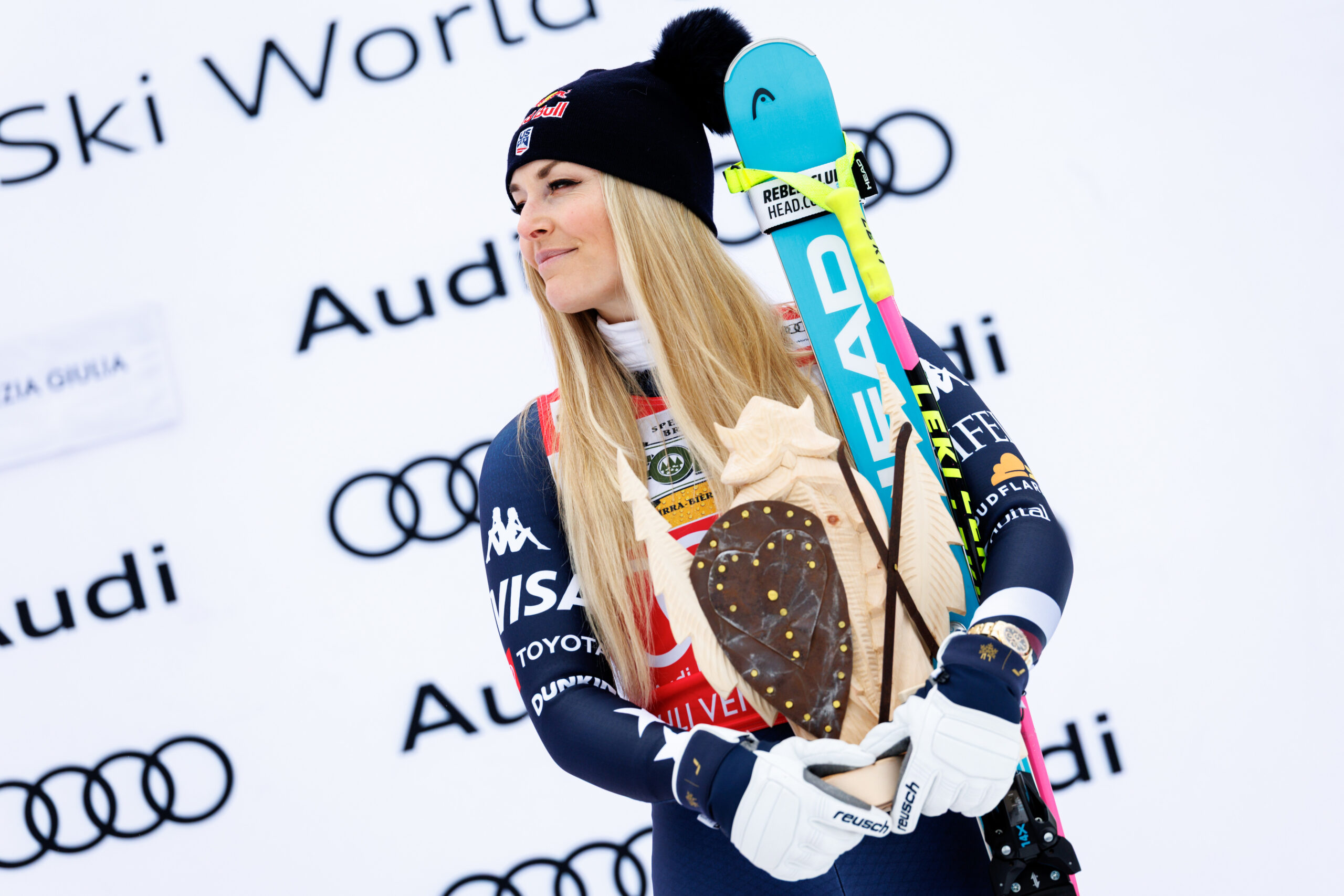
Few athletes in the annals of modern ski racing have endured and overcome more physical setbacks than Lindsey Vonn. Her illustrious career, spanning five Olympic Games, saw her become a defining figure in alpine skiing history. She claimed Olympic downhill gold in Vancouver in 2010, secured four overall World Cup titles, and established herself as the most dominant speed skier the sport has ever witnessed, accumulating a record 82 World Cup victories – more than any other female skier. This glittering resume, however, is inseparable from a litany of major injuries, each requiring grueling rehabilitation and immense mental fortitude, injuries that would have irrevocably ended the careers of lesser individuals.
Vonn’s candor extended beyond the physical realm. She openly discussed her struggles with depression, anxiety, body image issues, and personal setbacks away from the slopes, illustrating that the battle for resilience is fought on multiple fronts. This holistic perspective underscored her central tenet: "One of the few guarantees in life is that you’re going to fall and it’s going to hurt. In that moment, how you respond will matter more than anything else." This statement carried particular gravitas from a skier whose entire professional life was predicated on pushing the absolute limits in one of the Winter Olympics’ most inherently dangerous and unforgiving sports. The thin margin between triumph and tragedy, between glory and grievous injury, was a daily reality for Vonn.
The Unconventional Triumph: Why the Comeback Was Worth It
From an external viewpoint, Vonn’s Olympic ending in Cortina appeared nothing short of cruel. After years of surgical interventions, painstaking rehabilitation, and battling self-doubt, she fought her way back to the pinnacle of ski racing, only for her Olympic dream to shatter before she even reached the first timed interval of the downhill race. Yet, Vonn unequivocally stated on Friday that she does not perceive her comeback as a failure.
Lying in her hospital bed post-crash, grappling with the immediate aftermath of her shattered Olympic aspirations, she experienced a profound realization. While her Olympic story hadn’t unfolded as envisioned, the experience, she conveyed to the graduates, powerfully reinforced her core beliefs about life and competition. "We take risks," Vonn affirmed, her voice resonating with conviction. "And sometimes we fall. Sometimes our hearts break. Sometimes we don’t achieve the things we know we could have. But we can try. And that, the trying, is the whole point. I have no regrets."
This declaration may ultimately define the enduring legacy of Vonn’s final comeback. Not because it yielded another Olympic medal – it did not. Not because it delivered a storybook ending – it decidedly did not. But because Lindsey Vonn returned anyway, fully cognizant of the immense physical danger, the intense public scrutiny, and the very real possibility that the conclusion could be painful rather than triumphant. At 41 years old, an age where most alpine skiers are long retired, she earned her way back into an Olympic downhill start gate with a legitimate, data-supported chance to contend for gold. In Vonn’s own mind, that monumental achievement was the victory itself.
"Standing in the starting gate at my fifth Olympics, knowing I had earned the right to be there, knowing I had a real chance to win, that was already a victory," Vonn articulated, her words conveying a deep sense of accomplishment independent of the outcome. "That crash didn’t take that from me. Nothing could." This perspective offers a powerful redefinition of success, moving beyond tangible outcomes to embrace the inherent value of the effort, the courage to pursue, and the resilience to endure.
A Voice for the Next Generation: Why USC Chose Vonn
The decision by the University of Southern California to invite Lindsey Vonn to address its Annenberg School graduates was a deliberate one, rooted in her unique ability to embody and articulate the challenges and triumphs inherent in navigating a public career. USC officials emphasized that Vonn represented precisely the kind of voice they wanted students entering the dynamic and often unforgiving fields of media and communications to hear.
In a university release preceding the ceremony, USC Annenberg Dean Willow Bay lauded Vonn as "a pioneer in how athletes communicate and shape their own stories." This influence now extends far beyond the confines of ski racing. Since her initial retirement, Vonn has meticulously cultivated a multifaceted career, establishing herself as a published author, a shrewd businesswoman with various brand ventures and investments, a successful producer, and a dedicated philanthropist through the Lindsey Vonn Foundation. She has also emerged as a prominent figure connected to future Olympic projects in the United States, lending her expertise and advocacy to efforts like Utah’s bid for the 2034 Winter Games.
However, the power of Friday’s speech lay not in its polished perfection, but in its raw authenticity. Vonn did not present herself as an individual immune to failure or hardship. Instead, she spoke with disarming honesty about her struggles, her fears, her disappointments, and the arduous process of rebuilding after devastating losses – both physical and emotional. For a cohort of graduates poised to enter an increasingly uncertain and competitive professional world, this profound honesty likely resonated more deeply than any saccharine motivational slogan could have.
The central message of her address remained strikingly simple, yet profoundly impactful: You will fall. You will suffer setbacks. What truly matters is not the fall itself, but whether you possess the courage, conviction, and resilience to get back up and try again. It was a message delivered by someone who had lived it, repeatedly, on the world’s biggest stages, offering an invaluable lesson to those embarking on their own journeys.

