
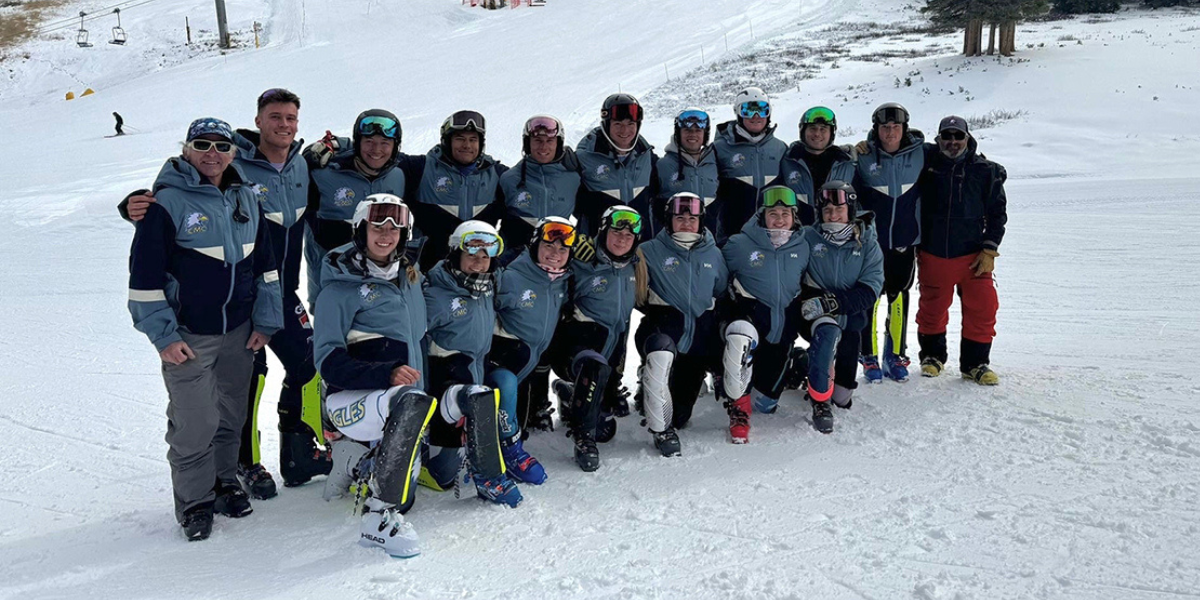
A year ago, the future of the Colorado Mountain College (CMC) Alpine Ski Team, affectionately known as the Skigles, hung precariously in the balance, threatened by potential program cuts. Today, the narrative has dramatically shifted, marking one of the most remarkable turnarounds in collegiate sports. Buoyed by an urgent, community-driven fundraising campaign, the CMC Skigles have not only defied expectations but have achieved their most successful season in history, demonstrating an unparalleled competitive spirit and skill that has seen them challenge—and often defeat—rivals boasting World Cup-level experience. This extraordinary resurgence, however, is tempered by a looming financial deadline, underscoring the critical need for continued support to solidify the program’s hard-won momentum.
The Precipice: A Program Facing Extinction
The journey from near-extinction to unprecedented triumph began in a meeting held twelve months prior, where Coach Scott Tanner received the stark news: the beloved Alpine Ski Team was under review for potential discontinuation. The threat was a grim reality for many smaller collegiate athletic programs, often caught in the crosshairs of budget reallocations and institutional priorities. While specific reasons for the proposed cuts were not publicly detailed, such decisions typically stem from a complex interplay of factors including fluctuating enrollment figures, rising operational costs, and a broader strategic re-evaluation of resource allocation within the college’s athletic department. For the Skigles, named in homage to CMC’s Eagles mascot, this meant not just the potential loss of a competitive outlet but the dismantling of a close-knit community and a significant pathway for aspiring ski racers.
The news sent ripples of concern through the team, its alumni network, and the local communities that had long supported CMC’s athletic endeavors. Collegiate ski racing, while perhaps not as high-profile as football or basketball, holds a unique and vital place in the Colorado landscape, providing a crucial bridge for athletes transitioning from junior racing to professional careers, or simply allowing them to pursue their passion while earning an education. The thought of losing such a program, especially one that represented the spirit of Colorado’s mountain culture, was unacceptable to many stakeholders who recognized its intrinsic value. The potential void would extend beyond the athletic department, impacting student recruitment, community engagement, and the institution’s overall identity.
A Community Rallies: The "Save the Skigles" Campaign
In the wake of the potential cuts, a powerful grassroots movement rapidly coalesced. The college administration, while facing difficult financial decisions, expressed an openness to solutions, particularly if the program could demonstrate a viable path to self-sustainability. This opened the door for an ambitious fundraising initiative, spearheaded by Coach Tanner, dedicated alumni, parents of current and former athletes, and passionate community members. The "Save the Skigles" campaign was born, setting an initial goal to raise a substantial endowment that would secure the team’s future independent of immediate college budget fluctuations.
The campaign quickly gained traction, tapping into the deep loyalty and pride associated with CMC’s athletic legacy. Alumni from various graduating classes contributed, recalling their own formative experiences on the slopes and the invaluable life lessons learned through collegiate competition. "This team gave me so much more than just race wins; it taught me resilience and teamwork," commented a prominent alumnus, reflecting the sentiment of many donors. Local businesses, recognizing the team’s positive impact on the community and its role in attracting talent to the region, also stepped forward with donations and pledges, seeing it as an investment in local youth development and regional prestige. Parents, witnessing the transformative effect of the program on their children, became vocal advocates and active fundraisers, organizing events and spreading awareness. This collective effort highlighted the profound value that a sports program can hold beyond mere competition, fostering leadership, discipline, and community engagement.
As of the latest reports, the "Save the Skigles" campaign has successfully amassed over $600,000. This remarkable achievement, accomplished in less than a year, is a testament to the dedication of all involved. However, the fight is not over. To ensure the program’s long-term viability and to meet the college’s stipulated requirements for continued operation, the campaign faces an urgent deadline: a total of $1 million must be raised by June 30. This remaining $400,000 represents the final, critical push to transform a temporary reprieve into a permanent solution, safeguarding the dreams of current and future Skigles. The implications of not reaching this goal are dire, potentially reversing all the progress made and once again placing the program’s existence in jeopardy, despite its stellar performance.
On the Slopes: A Season of Unprecedented Dominance
While the financial battle raged off the slopes, the CMC Skigles athletes channelled their energy and determination into their performances, delivering a season that transcended all previous records. Coach Tanner, reflecting on the season in April, articulated the profound shift: "It’s been quite the turnaround. I feel great about that. It’s been really rewarding, not only results-wise, but the experience these kids have here." This sentiment underscores the dual victory: not just competitive success, but the enrichment of the student-athlete experience, even under immense pressure. The team’s ability to compartmentalize the financial stress and focus on their sport speaks volumes about their mental toughness and the leadership provided by Tanner.
Lucas Ellis: A Force on the Men’s Circuit
At the forefront of the men’s team’s astonishing achievements was 21-year-old sophomore Lucas Ellis. In February, Ellis delivered a performance that sent shockwaves through the Rocky Mountain Intercollegiate Ski Association (RMISA), earning CMC’s first men’s victory in the conference. His triumph in the RMISA Nevada slalom was nothing short of dominant, winning by a significant margin. The sheer scale of his victory was underscored by the fact that only University of Utah sensation Johs Braathen Herland, a Norwegian athlete with a formidable reputation, managed to finish within two seconds of Ellis. This was not a minor feat; Herland is a widely recognized talent, having gone on to win the U.S. national Giant Slalom (GS) title this year, notably surpassing World Cup-level racers such as Erik Read, River Radamus, and Ryder Sarchett. Ellis’s victory over such a high-caliber field immediately established him as a national contender and brought significant recognition to the Skigles program.
Ellis’s performance was no isolated incident. He swiftly followed his initial victory with a strong second-place finish in the very next day’s slalom, once again with Herland being the sole competitor to best him. This consistency cemented his status as a legitimate contender. The momentum carried forward to the RMISA Utah series at the end of February, where Ellis once again ascended to the top step of the podium. "That sort of sealed the deal," Tanner remarked, affirming the undeniable skill on display. "It’s very clear this isn’t a fluke. Our athletes are real contenders." The coach’s pride was palpable: "To know one of our kids is competing against Johs and can beat him is pretty special." Ellis’s ability to consistently challenge and outperform athletes of Herland’s caliber not only elevated his personal profile but also dramatically raised the visibility and credibility of the entire CMC Skigles program within the highly competitive collegiate ski racing circuit. His success serves as a powerful testament to the coaching, training, and talent cultivated within the CMC program, proving that smaller institutions can indeed produce world-class athletes.
Maddie Welling: A Mental Game Mastered on the Women’s Side
The CMC women’s team also experienced a significant surge in performance, developing both depth and consistency, punctuated by breakthrough individual achievements. Leading this charge was 21-year-old sophomore Maddie Welling. Welling’s journey to this pinnacle of success was marked by a period of introspection and strategic recalibration. After high school in Salt Lake City, she took a couple of gap years to pursue ski racing intensively in Park City and Europe, an experience common among elite junior racers aiming for the next level. However, upon arriving at CMC, Welling admitted to struggling with her mental approach. "Coming to CMC, I had a hard mindset. I was way too focused on results and performing," she confessed. This self-awareness points to a common challenge in high-stakes sports, where the pressure to perform can often overshadow the joy of competition and hinder peak performance.
Recognizing the intricate balance between physical prowess and mental fortitude, Welling diligently worked with Coach Tanner to cultivate a more "level-headed mindset." She noted, "Ski racing is 50% physical and 50% mental. I had the physical strength, but was too much in my head." This collaborative effort began to yield results, culminating in a significant breakthrough in February. "It wasn’t until February of this year that I finally found something that worked for me," Welling explained, highlighting the personalized coaching and supportive environment at CMC. This mental shift, often a critical turning point for athletes, allowed her to unlock her full potential on the racecourse.
Her improved mental game translated directly into tangible results. At the end of January, Welling achieved her best RMISA result to date, securing a remarkable 10th place in the Nevada slalom against a formidable international field. More importantly, this performance marked the beginning of a newfound consistency, as she began scoring points in the majority of her subsequent races, building crucial momentum as the collegiate season progressed towards its climax. This consistency is often more valued than isolated victories, indicating a sustained high level of performance.
Postseason Triumphs: From Collegiate to Pro Circuits
Welling’s upward trajectory continued even after the conclusion of the official college season, signaling a profound and lasting shift in her competitive approach. Her post-collegiate streak commenced with a spectacular victory and a substantial $10,000 prize purse at the World Pro Ski Tour in Aspen in March. This event, known for its high-pressure, head-to-head format, served as a crucial proving ground. Notably, her Skigles teammate, freshman Viveka Deck Stang, also showcased her immense talent by finishing runner-up in that race and in the overall tour standings, underscoring the strength and depth of the CMC women’s program. This 1-2 finish by Skigles athletes on a professional circuit was an emphatic statement of their capabilities.
Welling viewed the World Pro Ski Tour as a liberating experience: "It was this outside event, a fun escape. I convinced a bunch of my teammates to do it. I was like, if I can compete in this high-pressure race with 10K on the line, I’m sure I can compete in a normal FIS race." This mental reframing proved incredibly effective. True to her newfound confidence, Welling secured a decisive win in a FIS Giant Slalom (GS) race at Copper Mountain just days later. Her dominant run continued near the end of March with another FIS slalom victory, this time by an impressive margin of more than two seconds. She capped off her exceptional spring with yet another triumph in a Loveland FIS slalom in April, where Viveka Deck Stang once again demonstrated her consistent excellence by finishing runner-up, the only racer within a second of Welling’s pace. These subsequent victories reinforced the notion that her Aspen win was not an anomaly but a reflection of her sustained peak performance.
Welling attributed her sustained success to dedicated mental preparation. "I’ve done a lot of work in what I tell myself before races, a lot of self-correcting," she elaborated. "Once you break through to the other side, you can rely on your past experiences more." This profound insight into sports psychology highlights the critical role of self-belief and positive reinforcement in achieving and maintaining elite performance. She also emphasized the pivotal role of the team environment: "CMC has been instrumental in turning around athletes. The biggest thing I remember from my ski racing experiences are who I’m with, the people surrounding me. We’ve had so many fun experiences and good times, the team has had a lot more success this year." This speaks to the powerful impact of a supportive team culture, especially when navigating the pressures of competitive sports.

Broader Implications: A Program Reborn and Respected
The Skigles’ remarkable season has generated far-reaching implications, extending beyond the racecourse and into the very fabric of Colorado Mountain College. The most immediate and tangible effect is the surge in interest from aspiring ski racers. Coach Tanner confirms this, noting, "The list of people interested for next year is lengthy. It’s definitely a reflection on what we’re doing, the success we’re having, the team, culture and dynamics." This increased applicant pool not only validates the program’s success but also offers Tanner the opportunity to be highly selective, further strengthening the team’s talent pipeline for future seasons. It positions CMC as an attractive destination for top-tier student-athletes seeking both academic rigor and elite athletic development, potentially drawing students from across the nation and even internationally.
The success story of the CMC Skigles also provides a compelling case study for other collegiate athletic programs, particularly those in niche sports that often struggle for institutional funding. It demonstrates that with passionate leadership, dedicated athletes, and robust community support, even programs on the brink can achieve extraordinary results and prove their inherent value. The Skigles’ narrative underscores the idea that success isn’t merely about winning races, but about building a resilient culture, fostering individual growth, and creating a lasting legacy. As Tanner proudly stated, "The most rewarding part is that we all built this. We didn’t inherit it." This sense of collective ownership and accomplishment further solidifies the team’s foundation, creating a model for sustainable athletic programs.
Furthermore, the achievements of athletes like Lucas Ellis and Maddie Welling have brought significant positive attention to Colorado Mountain College itself. Their ability to compete with, and often surpass, athletes from larger, more established programs, including those with direct ties to World Cup circuits, elevates CMC’s athletic reputation on a national scale. This visibility can translate into broader benefits for the college, enhancing its brand, attracting a more diverse student body, and reinforcing its commitment to excellence across all domains, potentially boosting enrollment across all departments. The Skigles have become powerful ambassadors for the institution.
The Final Ascent: Securing a Permanent Future
Despite the celebratory tone surrounding their historic season, the CMC Skigles remain acutely aware of the urgent financial challenge that persists. The momentum generated by their athletic triumphs has been instrumental in galvanizing fundraising efforts, propelling the "Save the Skigles" campaign to its current total of over $600,000. This figure is a testament to the belief in the program’s value and potential. However, the critical target of $1 million by June 30 is not merely an arbitrary number; it represents the threshold for long-term financial stability and the assurance that the program can continue to operate without the annual threat of cuts.
Reaching this goal would provide the necessary endowment to cover operational expenses, coaching salaries, equipment costs, travel, and training facilities, allowing the team to focus entirely on athletic and academic development rather than constantly battling for survival. It would secure a future where the current success is not an anomaly but a sustainable standard, inspiring generations of student-athletes to come. The continued existence of the CMC Skigles Alpine Ski Team is not just about keeping a sports program alive; it’s about preserving a pathway for athletic excellence, nurturing young talent, and upholding a cherished tradition within the Colorado mountain community. The success of this fundraising effort will send a clear message about the value placed on collegiate sports and the determination of a community to support its student-athletes.
The story of the CMC Skigles is a powerful narrative of resilience, determination, and community spirit. From the brink of dissolution, they have carved a path to unprecedented success, demonstrating that even in the face of adversity, passion and collective effort can lead to extraordinary outcomes. As the June 30 deadline approaches, the call to action remains clear and urgent. Supporters, alumni, and anyone who believes in the transformative power of collegiate sports are encouraged to contribute to this vital cause.
Learn more or donate at Save the Skigles (coloradomtn.edu/foundation/ski-team-fund/). The legacy of this remarkable season, and the future of the CMC Skigles, now rests on this final push.

