
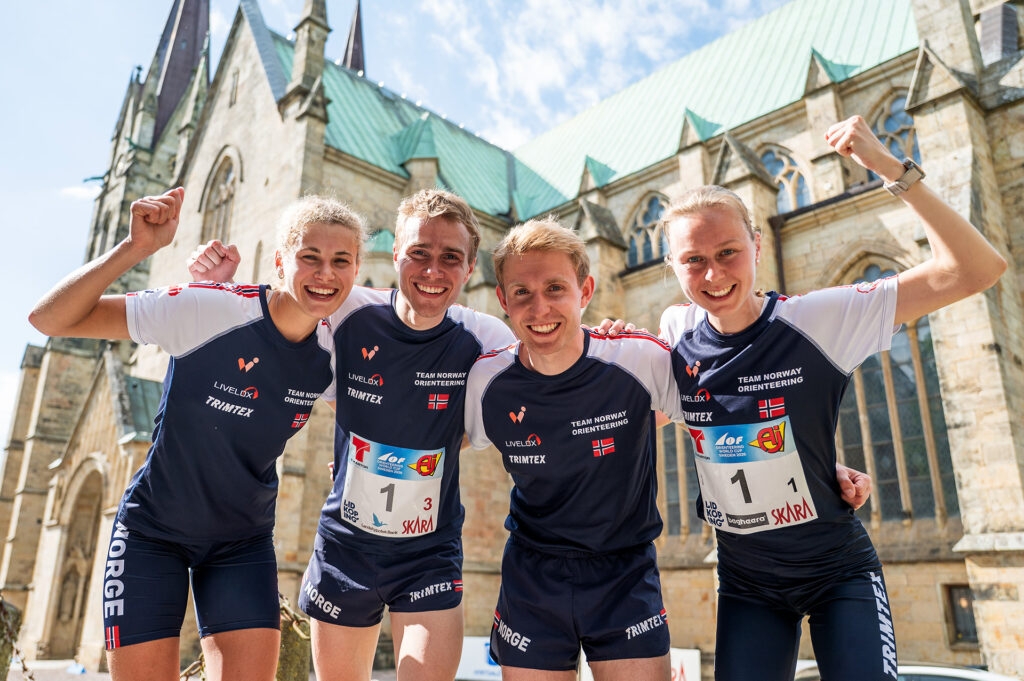
Norway has firmly established itself as the nation to beat in sprint relay competitions within the orienteering World Cup circuit, adding another decisive victory to its impressive streak. The Norwegian quartet triumphed in Sunday’s sprint relay event held in Skara, Sweden, a testament to their sustained excellence and tactical prowess. This latest win mirrors their commanding performances earlier in the season, including a victory at the first World Cup round in Locarno, Switzerland, and their triumph at the European Championships held in Belgium during the autumn. The team’s consistent ability to deliver under pressure underscores their status as frontrunners in this dynamic discipline of orienteering.
The composition of the winning team for the Skara event saw a strategic change, with Victoria Hørstad Bjørnstad stepping in for Andrine Benjaminsen. Bjørnstad demonstrated immediate impact, delivering a strong opening leg that kept Norway in contention, trailing by mere seconds. Eirik Langedal Breivik then maintained this competitive position on the second leg, setting the stage for Kasper Fosser. Fosser, a key figure in Norway’s recent successes, delivered a stellar performance on the third leg. He engaged in a closely fought battle with Tomas Krivda of the Czech Republic, ultimately breaking away to secure a crucial lead for the Norwegian team. By the end of his leg, Norway held a significant 41-second advantage over the nearest competitor, Finland, which had secured third place.
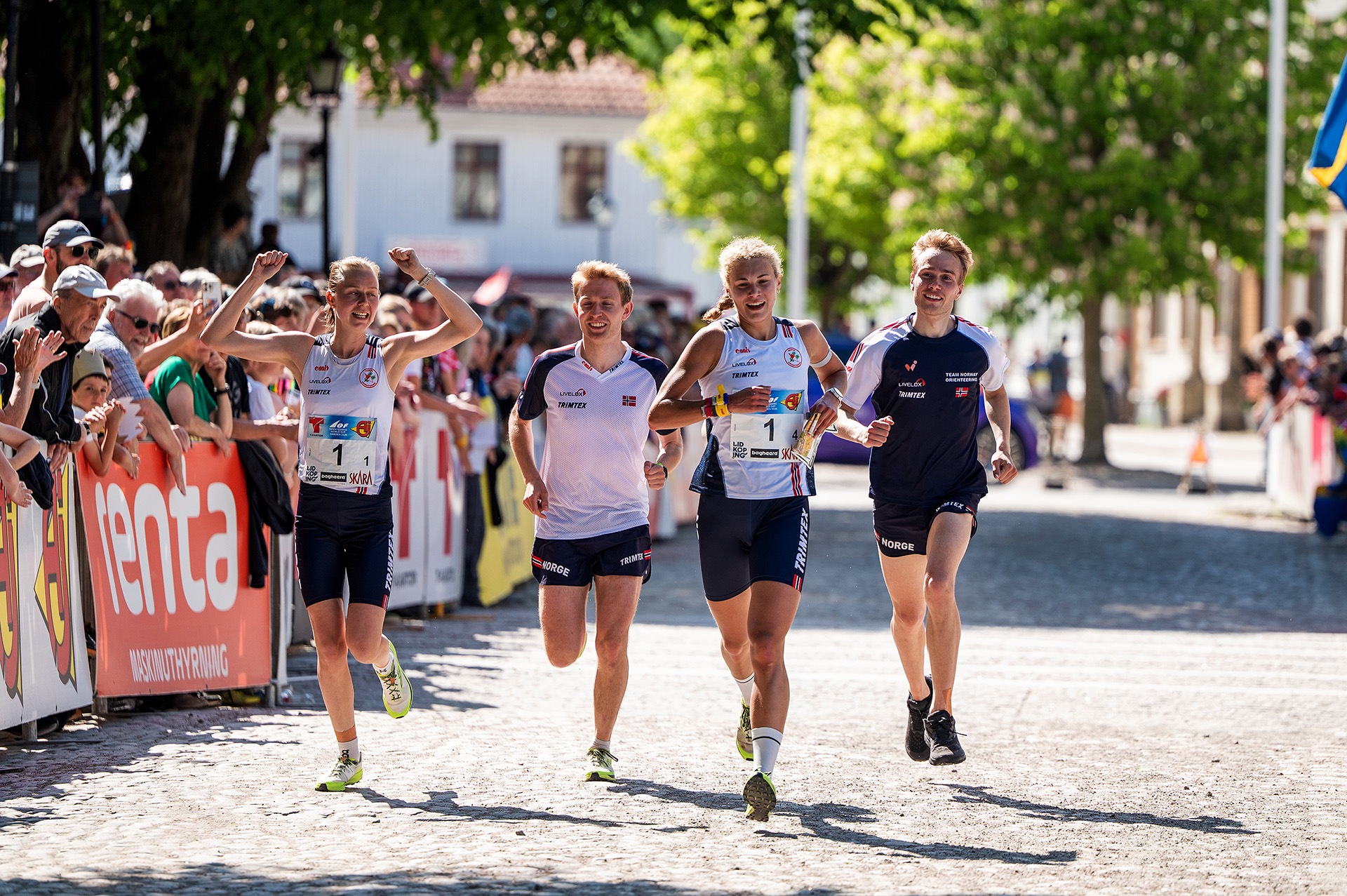
The anchor leg saw Pia Young Vik solidify Norway’s victory. She faced the Czech junior world champion, Lucie Dittrichova, and efficiently extended the lead, crossing the finish line with a commanding 25-second margin. This decisive finish capped off a remarkable team effort, highlighting the depth of talent within the Norwegian squad.
Following the race, Pia Young Vik shared her thoughts on the performance. "It was wonderful to meet the teammates on the course," she stated. "I set a good pace from the start on my leg, aiming to maintain the gap to the others. Then I made a small mistake, and I got a little stressed, which meant I wasn’t close to the best stage time like Simona Aebersold had for Switzerland." Despite her self-critique, Vik’s leg was more than sufficient to secure the win, underscoring the high standards the Norwegian team sets for itself.
A Season of Unprecedented Success
The Norwegian sprint relay team’s journey this season has been nothing short of remarkable. Their victory in Skara marks the third consecutive major international sprint relay win for the nation. The first World Cup event of the season, held in Locarno, Switzerland, saw Norway claim the top spot, setting an early precedent for their dominance. This was followed by an impressive performance at the European Championships in Belgium, where the Norwegian team again proved unbeatable in the sprint relay. These consistent victories demonstrate a well-executed strategy, strong individual performances, and excellent team cohesion.
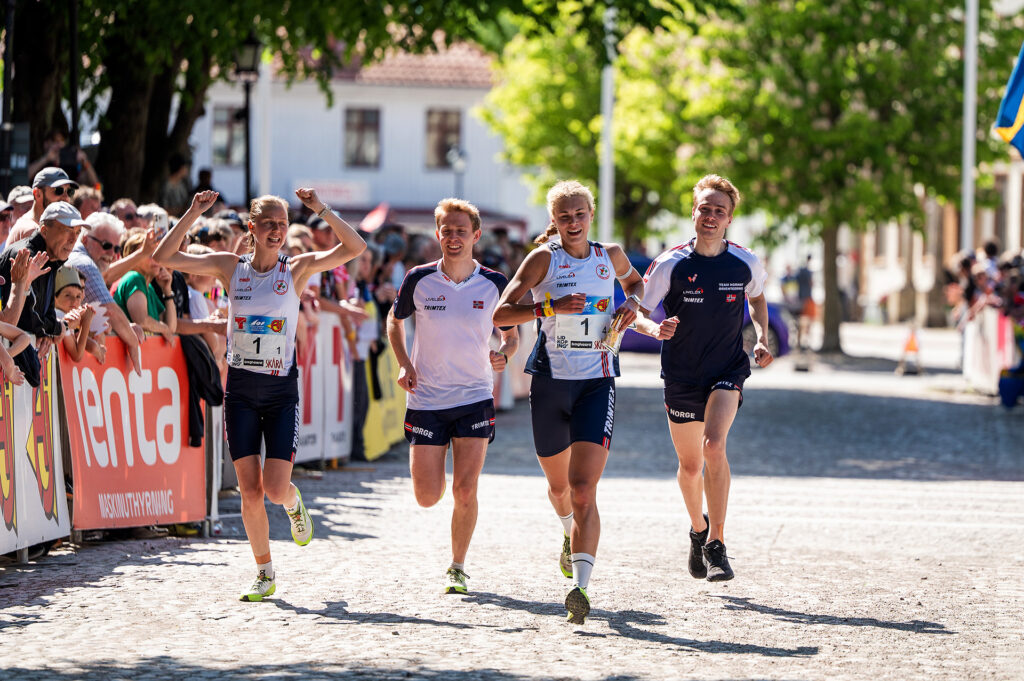
The Skara event, a World Cup fixture, typically attracts top orienteering talent from around the globe. The challenging terrain and intricate course design in Skara demanded precision, speed, and strategic navigation. The sprint relay format, with its fast-paced, continuous action over four legs, requires each team member to perform at their peak, with transitions and handovers being critical moments. The Norwegian team’s ability to navigate these complexities flawlessly, while also adapting to different course styles and competitor strengths, speaks volumes about their preparation and adaptability.
Looking Ahead to the World Championships
The consistent success in the sprint relay has naturally positioned Norway as strong contenders for the upcoming World Championships. Landslagstrener Janne Salmi expressed his confidence in the team’s prospects, stating that Norway is now considered a favorite for the World Championship sprint relay. "We are big favorites heading into the World Championships, and the terrain there suits us much better than what we had to navigate both in Switzerland and here in Sweden," Salmi commented. "So, it’s important for us to deliver there as well when we get to the World Championships."
Kasper Fosser echoed this sentiment, emphasizing the team’s ambition. "We are big favorites heading into the World Championships, and the terrain there suits us much better than what we had to navigate both in Switzerland and here in Sweden," Fosser stated. "So, it’s important for us to deliver there as well when we get to the World Championships." This forward-looking perspective highlights the team’s focus on their ultimate goal, with each race serving as a stepping stone towards championship success. The terrain at the World Championships is anticipated to play to Norway’s strengths, offering further opportunities for them to showcase their capabilities.
Depth of Talent and Future Prospects
Beyond the first-place finish, the Norwegian delegation showcased its impressive depth of talent with multiple teams competing. Norway 3, comprising Kristin Melby Jacobsen, Alfred Bjørnerød, Cormelius Bjørk, and Mathea Gløersen, achieved a commendable 12th place. This performance indicates a strong pipeline of developing athletes who can compete effectively at the international level.
The Norwegian second team, with Marie Olaussen, Lukas Liland, Oskar Spets Storhov, and Ane Dyrkorn, finished in 14th place. While not reaching the podium, their participation and performance contribute to valuable race experience and team development.
However, the Norwegian fourth team, consisting of Elisa Götsch Iversen, Håvard Sandstad Eidsmo, Jørgen Baklid, and Andrine Benjaminsen, unfortunately did not finish the race. This outcome, while disappointing for the team, is a reminder of the challenging nature of orienteering, where even minor errors or unforeseen circumstances can impact a race’s conclusion. Andrine Benjaminsen, who was part of the winning team in previous events, will likely be looking to bounce back strongly.
Strategic Considerations and Team Dynamics
The sprint relay in orienteering is a discipline that demands a unique blend of speed, technical skill, and strategic decision-making. Unlike individual races, the success of a sprint relay hinges on the collective performance of the team. The rapid succession of legs, often with short recovery times between them, requires athletes to manage their energy and focus effectively. The handovers between team members are critical junctures where small gains or losses can have a significant impact on the overall outcome.
Norway’s success can be attributed to several factors. Firstly, their consistent selection of athletes who excel in sprint orienteering, demonstrating both raw speed and precise navigation. Secondly, their ability to adapt their team composition based on individual form and the specific demands of each course. The inclusion of Victoria Hørstad Bjørnstad in the Skara event, for instance, demonstrates this adaptability. Thirdly, the strong coaching and support staff, led by Janne Salmi, play a crucial role in strategizing and preparing the athletes.
The team’s performance also reflects a broader trend in Norwegian orienteering, which has consistently produced world-class athletes across various disciplines. The investment in junior development programs and a strong national competition structure likely contribute to this sustained success. The sprint relay, being a high-visibility and exciting format, also serves as an excellent platform for showcasing the sport to a wider audience, potentially inspiring the next generation of Norwegian orienteers.
The Competitive Landscape
While Norway has been dominant, the international competition remains fierce. Teams from Finland, Sweden, Switzerland, and the Czech Republic consistently pose significant challenges. The performances of Finland in achieving third place in Skara, and the Czech Republic’s strong presence, underscore the high level of competition. Switzerland, with athletes like Simona Aebersold, is a perennial threat, and their performance, even if not winning, is always closely watched.
The strategic nuances of sprint relay orienteering mean that any team can emerge victorious on a given day if they execute their race plan perfectly. Factors such as course design, weather conditions, and the individual form of the athletes on the day can all play a decisive role. Norway’s ability to consistently overcome these variables and deliver winning performances speaks to their meticulous preparation and mental fortitude.
Broader Implications for the Sport
The continued success of the Norwegian sprint relay team has significant implications for the sport of orienteering. It raises the bar for other nations and encourages them to innovate and improve their training and development programs. The visibility generated by such consistent victories can also attract more attention to the sport, potentially leading to increased sponsorship, media coverage, and participation.
Furthermore, the Norwegian team’s consistent performance highlights the evolving nature of sprint relay orienteering. The sport is becoming increasingly professionalized, with athletes dedicating more time and resources to training and preparation. The tactical element of team selection, race strategy, and efficient transitions is becoming as crucial as individual orienteering skills. As the sport continues to grow, the Norwegian sprint relay team is likely to remain at the forefront, setting new benchmarks for excellence and inspiring a new era of competition. The upcoming World Championships will undoubtedly be a key event to watch, as Norway aims to solidify its dominance on the global stage.

