
Mari Renick, a 17-year-old phenom from Crested Butte, Colorado, has secured a coveted spot on the Stifel U.S. Ski Team, capping an extraordinary first FIS season that saw her rise through the ranks with remarkable speed and an unconventional trajectory. Renick’s journey into elite ski racing defies the typical progression, rooted not in the precise gates of a slalom course, but in the raw, untamed terrain of her hometown mountain, where she initially harbored dreams of becoming "the coolest big-mountain skier ever." This foundational passion for aggressive, free-form skiing has unexpectedly forged a formidable speed specialist, whose comfort with challenging conditions and high velocity now positions her as one of America’s brightest young prospects in downhill and super-G.
Renick’s rapid ascent is underscored by her stellar performance on the NorAm circuit, North America’s premier developmental series for alpine ski racing. She concluded her debut FIS season by finishing second in the NorAm downhill standings and an impressive fifth in the NorAm super-G standings. This strong showing not only earned her a place on the national team but also secured a personal start position in a World Cup downhill race for the 2026-27 season, a testament to her undeniable potential at the highest level of the sport. For many athletes, the path to the national team is a meticulously planned, multi-year endeavor starting in early childhood with gate training. Renick’s story, however, began with the simple, yet profound, act of chasing her older brother, Mason, down the formidable slopes of Mount Crested Butte.
A Childhood Forged on Crested Butte’s Steep Terrain
Born and raised in Crested Butte, Mari Renick learned to ski at the tender age of two. Her family’s proximity to the mountain meant skiing was an integral part of daily life. By elementary school, winter weekends and weekday afternoons were habitually spent on the slopes, often accessed by a short five-minute drive or bus ride. This immersion in a ski-centric culture, coupled with the influence of her older brother, Mason, provided Renick with an unparalleled foundation. "I would go skiing pretty much every weekend and during the weekdays after school, we’d just drive five minutes up the mountain or take the bus and go skiing with all my friends and family," Renick recounted to Ski Racing Media. Mason’s adventurous spirit proved particularly formative, as Mari consistently pushed herself to keep pace with him.
Mount Crested Butte itself served as Renick’s most impactful early mentor. Known internationally for its exceptionally steep, challenging terrain, and a ski culture that champions hard, aggressive skiing, the mountain offered a natural training ground. Long before she considered competitive racing, Renick honed her skills by free skiing diverse terrain, navigating bumps, launching off cliffs, and utilizing natural features. This environment instilled not just technical proficiency but also an immense sense of self-assurance. "I feel like I built so much of my confidence just free skiing around Crested Butte," Renick stated. This early development of confidence and comfort in high-speed, demanding environments would later become her signature asset in the inherently risky disciplines of downhill and super-G. While she began ski racing at around six years old, her primary identity remained that of a big-mountain enthusiast rather than a future speed racer. This perspective would undergo a significant transformation with a pivotal family decision.
The Strategic Move to Vail and Accelerated Development
The turning point in Renick’s burgeoning career came when her family relocated to Vail, Colorado. This move was driven, in large part, by Mason’s burgeoning ski racing ambitions. Mari joined Ski & Snowboard Club Vail (SSCV) as a second-year U10 athlete, a decision that immediately shifted the focus of her skiing life. While Crested Butte emphasized free skiing, Vail, with its renowned SSCV program, was firmly centered on competitive racing and structured training. "It definitely made me a better ski racer," Renick acknowledged. "Everyone was so much more serious about it in Vail."
SSCV is widely regarded as one of the premier ski racing clubs in the United States, known for producing numerous national team athletes and Olympians. Its comprehensive programs, state-of-the-art facilities, and rigorous coaching staff provided Renick with the disciplined environment necessary to channel her raw talent into race-specific skills. The move also profoundly impacted her development off the hill. Renick credits SSCV and the affiliated Vail Ski & Snowboard Academy (VSSA) with fostering greater discipline, organization, and commitment. VSSA, a public charter school designed to accommodate elite student-athletes, integrates academic schedules with extensive training regimens. "It helped me with my time management in school," she explained, detailing the demanding routine of morning training, afternoon classes, and evening homework.
This fall, Renick will enter her senior year at VSSA while simultaneously embarking on her inaugural season as a Stifel U.S. Ski Team athlete. Balancing the rigorous academic demands of VSSA with the intense travel and training schedule of an elite international ski racer will be a significant challenge. Renick is already planning strategically, aiming to complete the majority of her coursework during the first semester, leaving only one class for the second semester when she anticipates spending much of the winter competing in Europe. This proactive approach highlights her maturity and commitment to both her athletic and academic pursuits, a characteristic often seen in successful student-athletes.
A Breakthrough Season: Whiteface and Junior Worlds
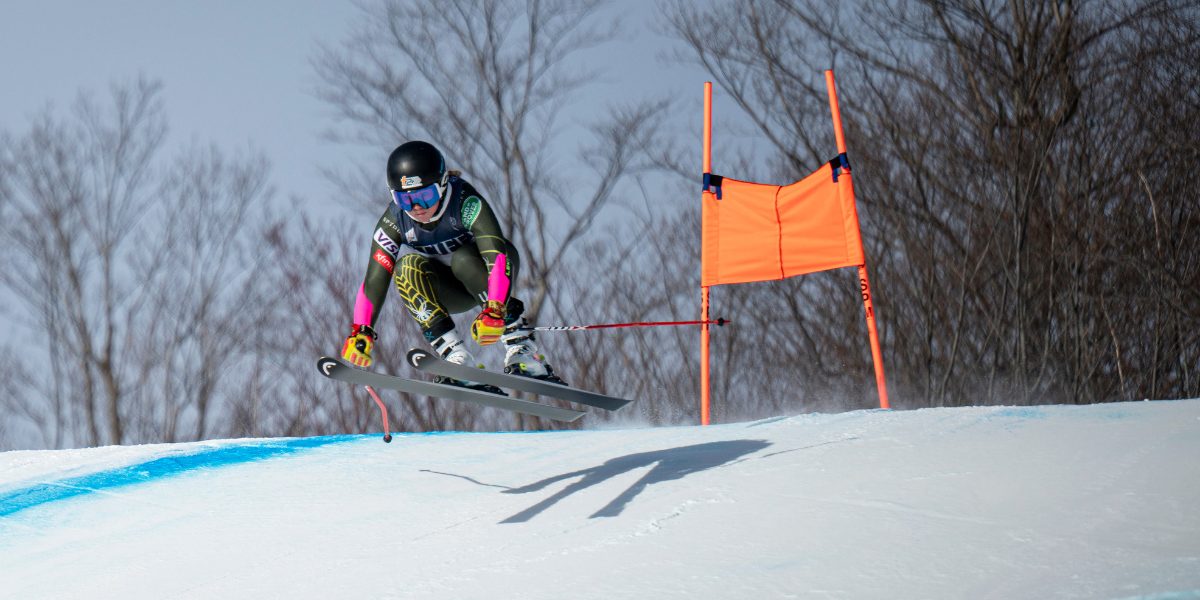
Renick’s first FIS season was nothing short of a revelation, marked by a pivotal breakthrough at Whiteface, New York. Competing in a NorAm downhill event, she secured her career’s first NorAm victory. Starting near the very end of the field, her winning run announced her arrival as a top young speed prospect in the nation. The significance of this victory extended beyond the podium; it helped secure her first trip to the FIS Junior World Ski Championships, providing an invaluable opportunity to represent the United States on a major international junior stage. This win also produced one of the most emotionally resonant moments of her season. "I had never felt so supported," Renick recalled, describing how her coach, Pat Duran, known for his stoicism, was visibly moved to tears.
The Whiteface triumph significantly boosted her confidence and validated years of hard work. Yet, even after this success, the Stifel U.S. Ski Team still felt like a distant aspiration. Junior Worlds, held in Narvik, Norway, provided further critical experience against a global field of top junior talent, but the immediate path to the national team remained unclear in Renick’s mind. The FIS Junior World Ski Championships are a crucial stepping stone for aspiring World Cup athletes, offering exposure to international competition and serving as a key scouting ground for national teams. Renick’s participation there, even without a podium finish, was instrumental in her overall development and in positioning her for the final push.
The Crucial Call: Mason’s Vision and Aspen’s Triumph
Following Junior Worlds, Renick believed her chances of qualifying for the Stifel U.S. Ski Team were slim. It was a phone call from her older brother, Mason, that irrevocably altered her perspective and ignited a new surge of determination. Mason, who had been meticulously tracking the complex qualification scenarios, saw an opportunity his sister hadn’t. He conveyed that if she could deliver a few more strong results at the season-ending NorAm races in Aspen, a path to the national team still existed. "He was very emotional on the phone," Renick shared. "He was like, ‘Mari, Mari, you still have a chance. You’re going to make the ski team if you do this, this, and this in Aspen.’" This conversation was a powerful catalyst, imbuing Renick with renewed drive and focus.
A few weeks later, Renick delivered precisely the performances her brother had envisioned. In the first NorAm downhill at Aspen, she finished third, competing against a field that included established Stifel U.S. Ski Team World Cup athletes such as Isabella Wright and Tricia Mangan. For a first-year FIS racer, this result was one of the strongest of her season, demonstrating her ability to contend with seasoned professionals. The very next day, Renick secured another podium finish, placing second behind fellow U.S. Ski Team rookie Beatrice May. While Wright and Mangan did not start the second downhill, the back-to-back podiums cemented an already impressive body of work.
Aspen became the proving ground where Renick "closed the deal." When the final calculations were complete, Mason called again. This time, there were no more scenarios to discuss, only confirmation. "He told me that I qualified," Renick exclaimed, describing her feeling of disbelief and elation. The achievement held extra significance given her modest expectations at the season’s outset. Months earlier, her primary goal was simply to prove herself among the best junior racers in the country. Now, she had earned a coveted spot on the Stifel U.S. Ski Team, marking an extraordinary leap in her career.
Embracing the Adrenaline: The Allure of Speed Skiing
Renick’s Crested Butte roots are most evident when she articulates her profound love for downhill and super-G. For her, the appeal of speed skiing lies in the exhilarating sensation of pushing beyond her comfort zone. She vividly recalls a particular jump at Whiteface from last season, where she committed to a straighter, faster line than her competitors, caught a tailwind, and launched into an unforgettable flight. "It was incredible," she reminisced, "I still think about it to this day."
When asked to describe the feeling of approaching the very edge of her comfort zone, Renick articulated it without hesitation: "It’s so unreal to feel this adrenaline rush in my body when you’re about to make just the gnarliest turn and you know it’s going to be good because you’re pushing far past what you’re comfortable with." Her philosophy on speed skiing is encapsulated in a candid statement that perhaps best explains her future in the sport: "Terrifying is the reason I keep doing it. You’ve got to be a little crazy to do speed." This response perfectly captures the athlete who emerged from Mount Crested Butte’s steep terrain, where fear is not an impediment but an integral part of the attraction, a challenge to be embraced and conquered. This inherent daredevil spirit, tempered by growing technical prowess, positions her uniquely for the demands of elite speed disciplines.

Joining an Elite Legacy: The Stifel U.S. Ski Team Women’s Speed Group
Mari Renick now joins a formidable Stifel U.S. Ski Team women’s speed group, a roster boasting Olympic champions, multiple World Cup winners, and a deep pool of talent in downhill and super-G. The caliber of her new teammates is not lost on her. "It’s for sure a bit intimidating being such a young athlete with the speed girls," Renick admitted, but quickly added, "But they’re all such great people." She recently trained with members of the team in Mammoth, California, and came away deeply impressed by the supportive team culture. "They support each other and always bring each other up," she observed, adding, "I think that’s why the women have been so strong the last few years." This camaraderie and mutual encouragement are critical factors in sustaining a high-performance environment, especially in the individualistic and high-pressure world of alpine racing.
Renick will continue her development this season under the guidance of Pat Duran, who has been named Europa Cup coach. Duran has been a pivotal figure in her journey, coaching her at Ski & Snowboard Club Vail and later at the regional level. "He’s pretty much taught me speed – all the speed event things I know," Renick affirmed, highlighting his instrumental role in shaping her as a speed skier. She has also benefited from the invaluable mentorship of Duran’s wife, Alice McKennis Duran, one of the most accomplished American speed skiers of her generation. A two-time Olympian and World Cup winner, McKennis Duran’s victory in a World Cup downhill in St. Anton, Austria, in 2013, cemented her place in U.S. ski history. Her subsequent coaching roles, including with the U.S. Ski & Snowboard Regional Team, mean Renick has had access to a rare depth of downhill knowledge and experience, learning from both a top-tier coach and a decorated former athlete.
Looking Ahead: World Cup Dreams and Strategic Development
Renick’s exceptional NorAm downhill season has earned her a personal World Cup downhill start position for the 2026-27 season. While the possibility of an earlier World Cup debut exists, she is approaching the decision with measured consideration. Her summer training in Ushuaia, Argentina, will be crucial in determining her readiness for an early-season World Cup start. A debut at Beaver Creek, Colorado, a renowned World Cup venue and essentially a home race, would be a dream scenario. However, Renick is realistic about the demanding nature of such an event. "That would be the most incredible experience ever, obviously, being at home," she said, "I’m not sure I’ll do that one since it is the first World Cup of the year and it’s a pretty intense World Cup track." She has slipped the course multiple times and may forerun it before potentially racing there.
A mid-season World Cup start might be a more likely option, depending on her schedule and performance. For the upcoming season, Renick anticipates focusing primarily on Europa Cups, with select NorAm races integrated into her calendar. Europa Cup is the second-highest level of alpine ski racing, serving as a crucial proving ground for athletes aspiring to the World Cup. Her preparation is already intensely focused: she aims to become physically stronger, generate more energy out of her skis, and continue pushing her limits. At a recent camp at Copper Mountain in June, she concentrated on achieving higher edge angles, executing stronger turns, and aggressively testing her boundaries with line and depth. Beyond the physical, her mental objective is equally clear: to keep learning how to commit fully when the course, speed, and pressure demand everything.
The Pillars of Support: Community and Balance
Despite her incredibly rapid ascent, Renick remains grounded, attributing much of her success and well-being to her robust support network. Her teammates, coaches, and school friends have become an indispensable "second family." "The people I’ve met and my teammates in ski racing have become a whole new family to me," she emphasized. This strong community is vital in a sport characterized by extreme highs, challenging lows, and relentless pressure.
Maintaining connections outside the high-stakes world of ski racing is also crucial for Renick. She values her relationships at Vail Ski & Snowboard Academy, particularly during her senior year, even as her schedule intensifies. "School is a place where I can talk to people who are not ski racers; it just clears my mind a little bit," she shared. This balance, while potentially more difficult to maintain as her career expands, will likely become even more important for her mental and emotional well-being.
The little girl who once fearlessly chased her brother down the slopes of Crested Butte now stands on the threshold of the World Cup stage. There is a demanding senior year of high school to complete, physical strength to build, and invaluable experience to gain on the challenging circuits of Europe. She faces the immense demands of integrating into one of the sport’s strongest women’s speed programs. Yet, the foundation for her success is already firmly in place, forged on the steep, unforgiving terrain of Mount Crested Butte, meticulously refined at Ski & Snowboard Club Vail, bolstered by the unwavering support of family and expert coaches, and dramatically revealed during a breakthrough season that exceeded even her own expectations. Mari Renick may not have grown up dreaming of ski racing, but she has undeniably evolved into the quintessential athlete who thrives when the hill steepens, the speed escalates, and the comfort zone vanishes, ready to embrace the terrifying beauty of elite alpine competition.

