
The inaugural Red Bull Features Cup concluded in a dramatic and unprecedented three-way tie, ultimately broken by a sudden-death hip session, which saw the Asia-Pacific team emerge victorious. This groundbreaking event, held on a meticulously crafted course designed to challenge and inspire, has instantly set a new benchmark for competitive snowboarding, prioritizing creativity, teamwork, and adaptive skill over traditional power-based metrics. The competition brought together three formidable regional teams – Europe, North America, and Asia-Pacific – each comprising four of the sport’s most dynamic athletes, showcasing distinct strengths across four innovative zones.
The Genesis of Innovation: Red Bull Features Cup Background
Red Bull, a long-standing patron and innovator in the world of action sports, conceived the Features Cup as a radical departure from conventional snowboarding competitions. For years, the sport has seen an evolution from pure racing and halfpipe dominance to the intricate slopestyle courses and colossal big air jumps that characterize events like the X Games and Olympic disciplines. However, organizers observed a growing desire within the rider community for formats that emphasized raw creativity, session-style camaraderie, and a broader spectrum of snowboarding skills. The Red Bull Features Cup was engineered precisely to meet this demand, moving away from subjective judging of individual tricks to a more objective, zone-based scoring system infused with unique, unpredictable challenges.
The event’s philosophy was rooted in fostering a collaborative yet competitive environment where riders could feed off each other’s energy, pushing boundaries in a less high-pressure, more organic setting. This vision aimed to re-center the "fun" aspect of snowboarding while still demanding elite-level performance and strategic thinking from its participants. By focusing on diverse features and multi-faceted challenges, the Features Cup sought to highlight the all-around talent of snowboarders, rewarding adaptability and team cohesion as much as individual brilliance. This innovative approach positioned the event not just as another competition, but as a potential blueprint for the future direction of competitive snowboarding.
Assembling the Elite: Regional Teams and Rosters
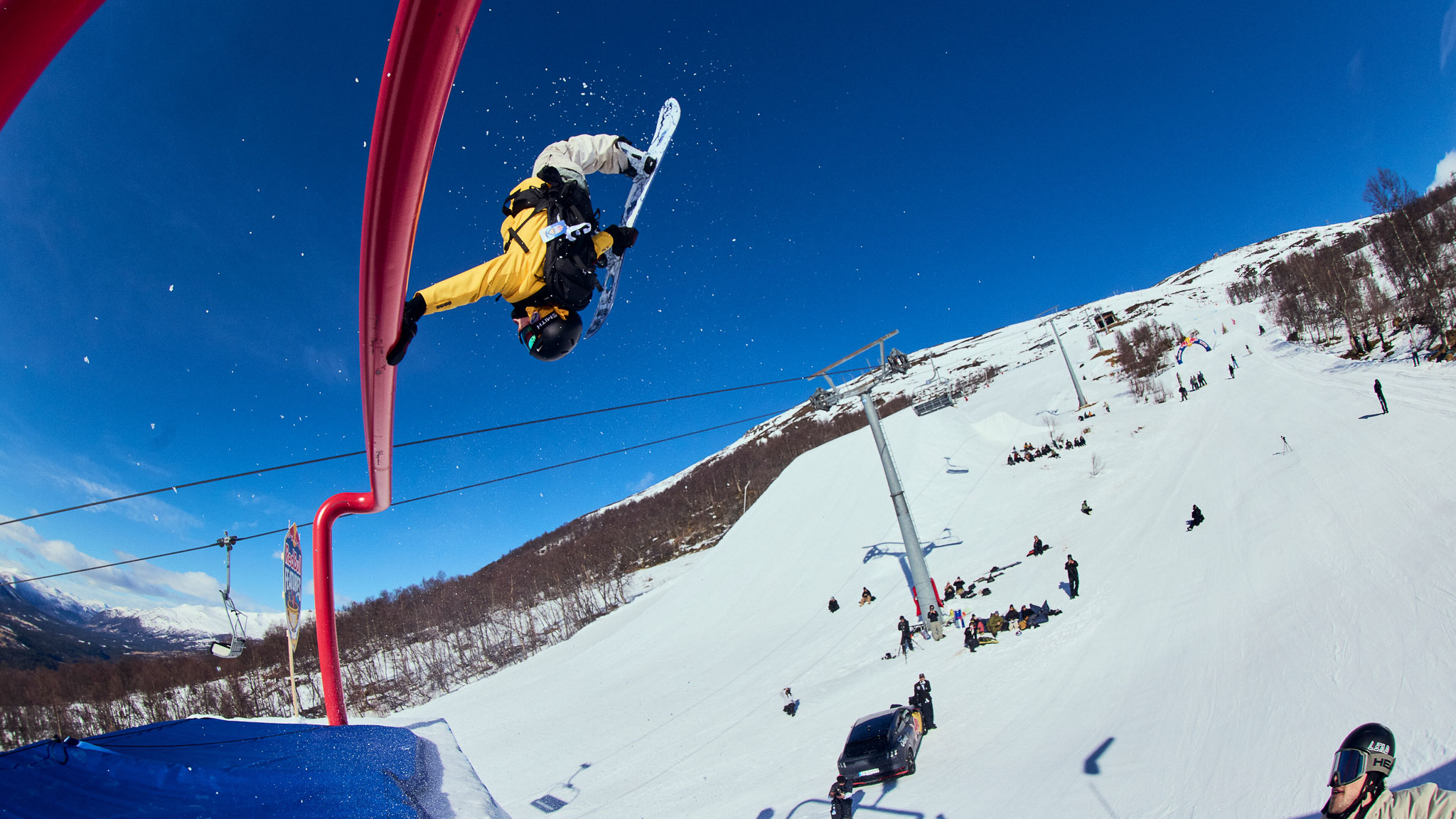
The success of such a format hinged on attracting a caliber of athletes capable of excelling across a diverse range of disciplines. Red Bull assembled three powerhouse regional teams, each a carefully curated blend of veterans and rising stars, known for their unique styles and technical proficiencies.
-
Team Europe presented a formidable lineup, featuring the legendary Norwegian phenom Marcus Kleveland, renowned for his unparalleled air game and technical mastery. He was joined by fellow Norwegian Fridtjof Tischendorf, affectionately known as "Fridge," a rider celebrated for his incredible flow and versatility across all terrains. Completing the European contingent were Isak Ulstein and Celia Petrig, both highly respected for their technical prowess and creative approach to features. Europe arrived with a reputation for precision and aggressive riding.
-
Team North America showcased a roster known for its street-inspired style and technical rail wizardry. Luke Winkelmann, a standout known for his butter-smooth style and innovative rail tricks, led the charge. He was supported by Denver Orr, Egan Wint, and Lane Weaver, a trio recognized for their deep technical bags, particularly in jibbing and creative park riding. North America’s strength was anticipated to lie in their ability to dissect and dominate the more technical feature zones.
-
Team Asia-Pacific brought an exciting mix of rising talents and established names, embodying a dynamic and often unpredictable approach. Cool Wakushima, a Japanese sensation known for her powerful riding and unique trick selection, anchored the team. She was joined by Zephyr Lovelock, Rocco Jamieson, and Miyabi Onitsuka, a diverse group whose collective skills spanned from powerful jumps to intricate feature work. Asia-Pacific’s strength was projected to be their collective air awareness and fearless approach to new challenges.
Each team was designed not just for individual talent, but for complementary skill sets, understanding that the team-based format would require a collective strategy and mutual support.
A Course Like No Other: The Four Dynamic Zones
The Red Bull Features Cup course was a marvel of snowpark engineering, sprawling across multiple distinct zones, each presenting a unique set of challenges. It wasn’t merely a collection of obstacles but a narrative landscape that demanded riders to constantly adapt their approach. The overarching theme of creativity and unpredictability was further amplified by the "Mischief Multiplier" – creative challenges layered throughout the competition, offering bonus points for unconventional tricks, teamwork, or spontaneous acts of brilliance. This multiplier element ensured that riders were always thinking outside the box, keeping the competition fresh and exciting for both participants and spectators.
The four designated competition zones were:
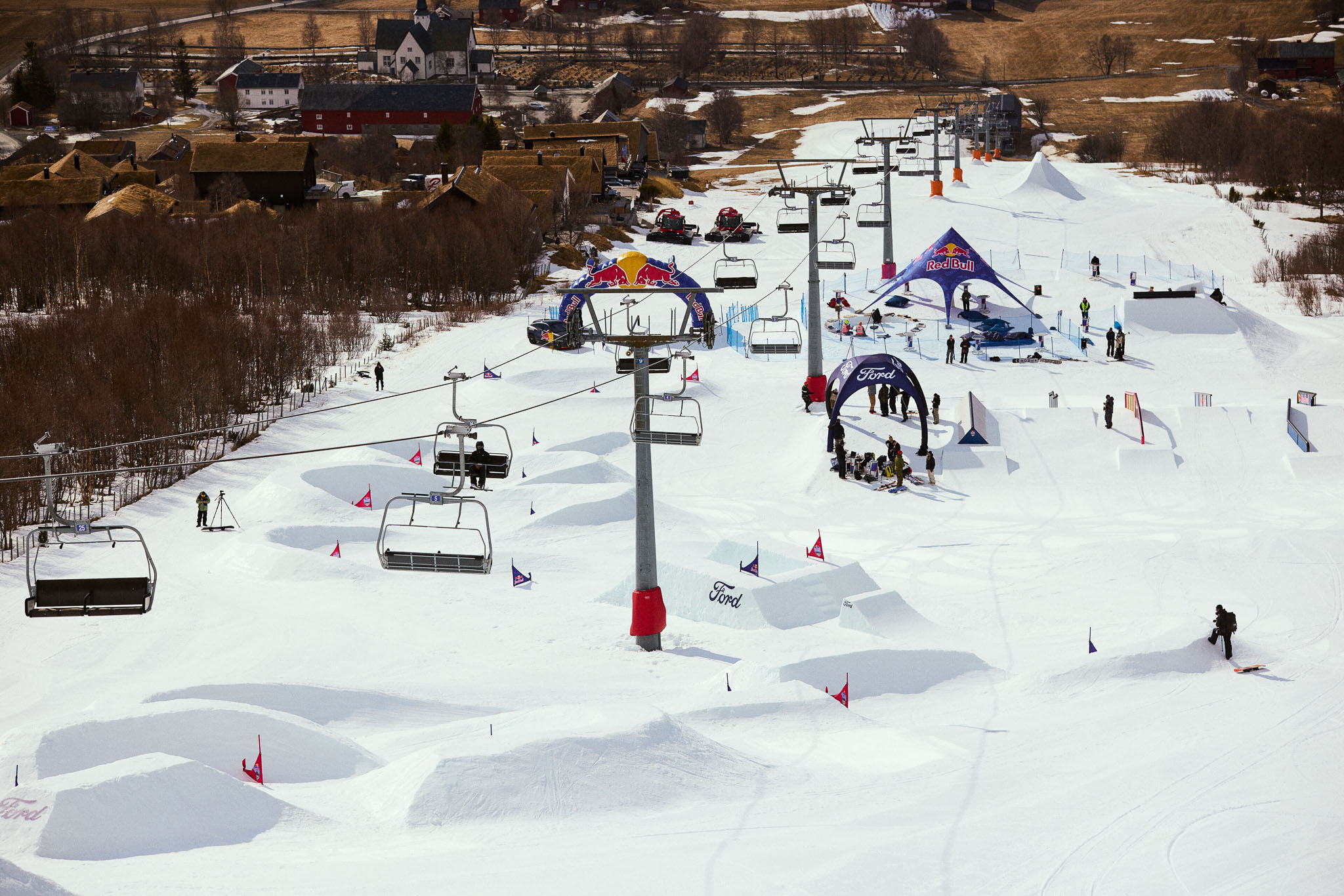
- Banked Slalom: A test of speed, agility, and unique board control.
- Rail Jam: A showcase of technical jibbing and on-the-fly adaptation.
- Quarterpipe: A canvas for amplitude, style, and synchronized aerials.
- Jump Session: A controlled progression of air tricks, emphasizing execution and flow.
Points were awarded in a 5-3-1 format for first, second, and third place in each zone, making every zone crucial for overall standings.
Chronology of Competition: Zone by Zone Breakdown
The competition unfolded over two intense days, each zone revealing new leaders and surprising performances.
Zone 1: The High-Speed Banked Slalom with a Twist
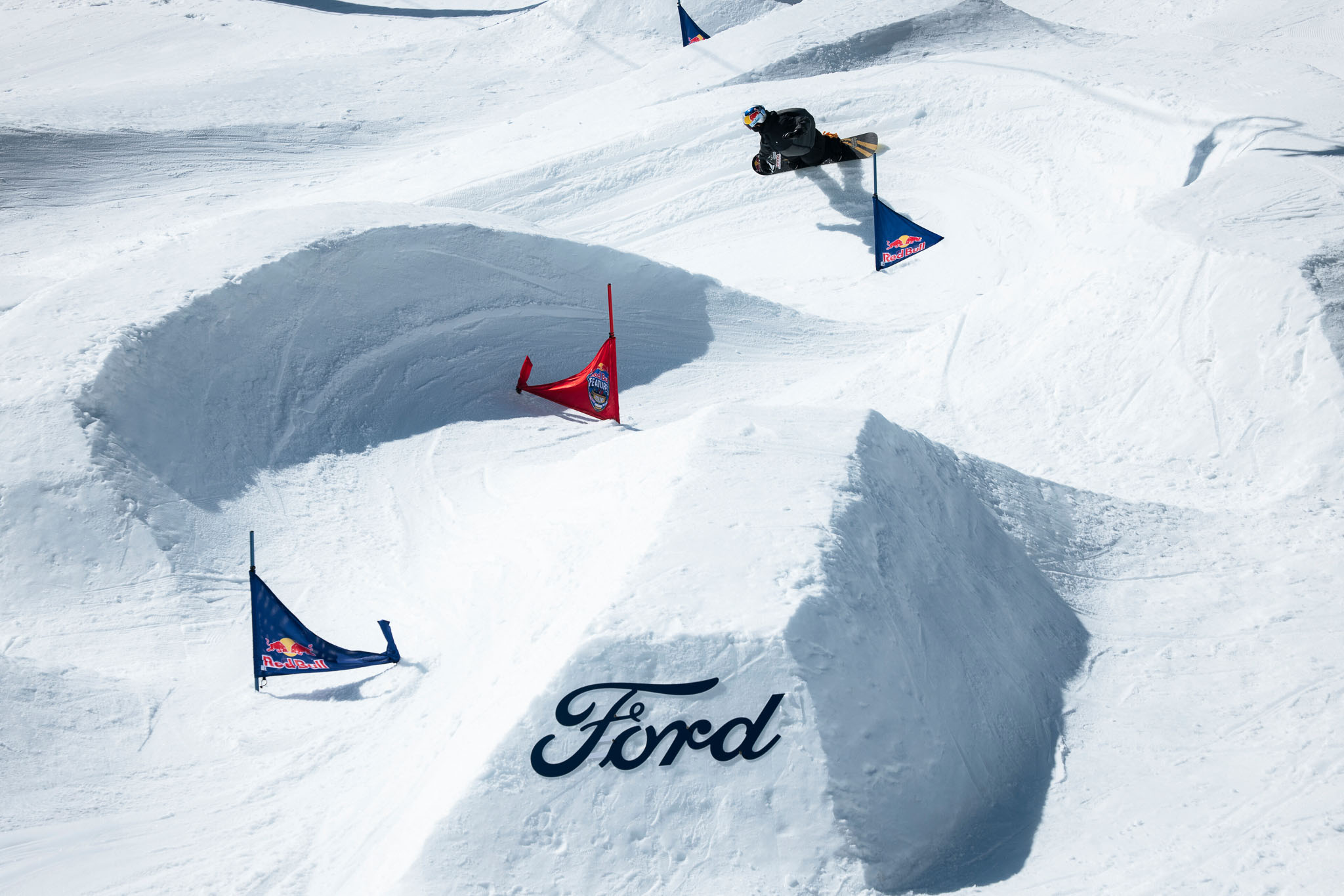
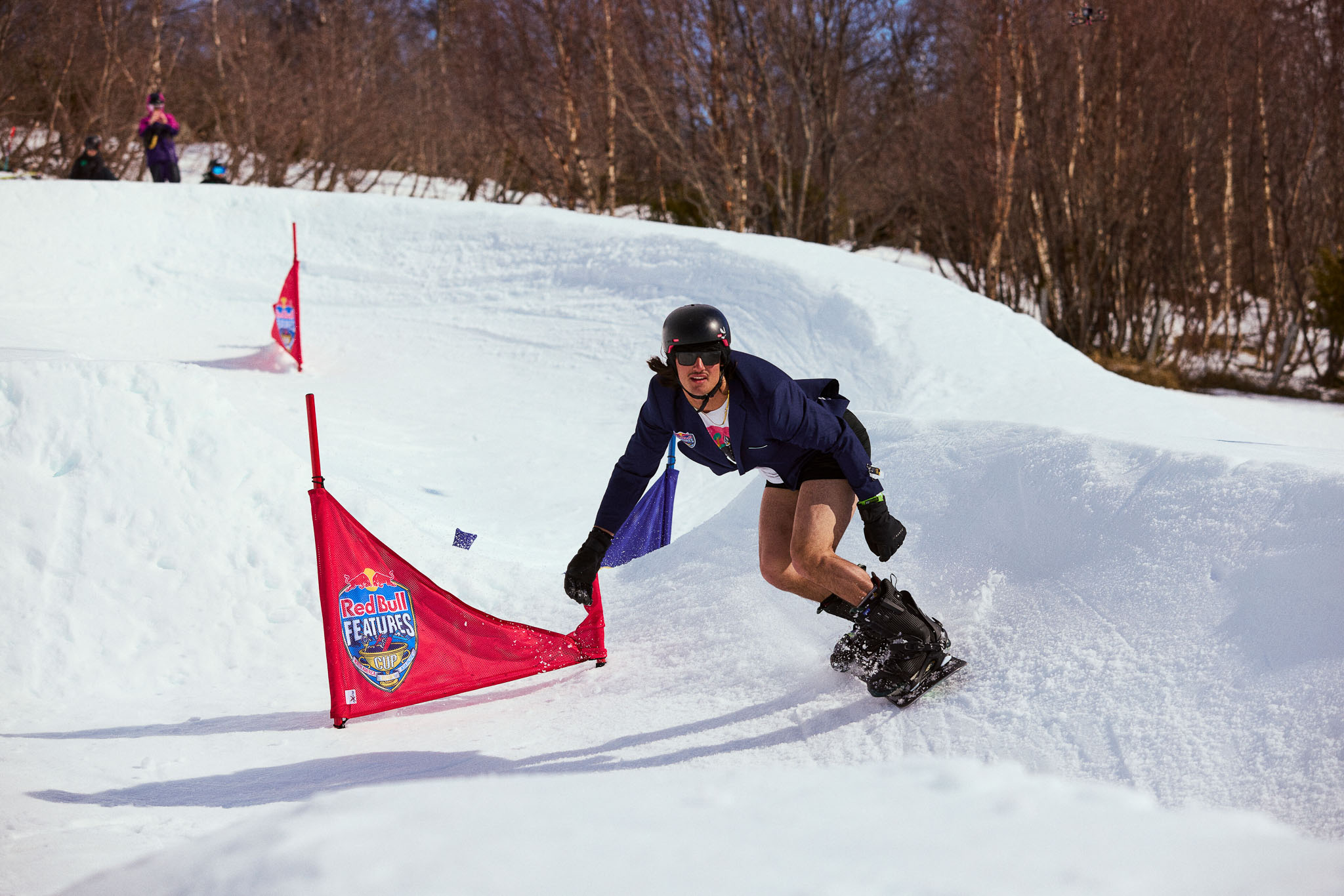
The Red Bull Features Cup kicked off with the banked slalom, a discipline that traditionally tests raw speed and precision. However, true to the event’s innovative spirit, this was no ordinary slalom. Teams were required to log cumulative times across two runs: one on standard boards, emphasizing traditional technique and power, and a second, more whimsical run on mini boards. The mini boards, significantly shorter and harder to control, injected an immediate element of unpredictability and demanded exceptional board control, challenging even the most seasoned riders.
Adding further layers of complexity, penalties were assessed for missed gates, while bonus points (in the form of time deductions) were awarded for creative risk-taking, including daring tricks like flips performed mid-course. This mechanic cleverly incentivized style and flair within a speed-focused discipline. North America’s Luke Winkelmann quickly made his mark on the standard board, setting a blistering pace that showcased his team’s explosive speed and precision. His clean lines and powerful turns put North America in a strong early position. However, the unique challenges posed by the mini boards and the creative bonus opportunities meant that standings remained incredibly tight, with Europe and Asia-Pacific close on their heels, demonstrating their own strategic approaches to balancing speed with style. Riders later commented on the exhilarating chaos of the mini-board run, with Europe’s Fridtjof Tischendorf reportedly stating, "Riding those mini boards felt like learning to snowboard all over again, but that’s what made it so much fun and so challenging."
Zone 2: Rail Jam – Adaptability Under Pressure
The rail jam proved to be one of the most dynamic and spectator-friendly zones, perfectly embodying the "Mischief Multiplier" ethos. It began as a traditional open session, allowing riders to showcase their technical rail mastery and creative lines. But the true test came with the introduction of a randomizer element: a spin wheel. This wheel dictated specific tricks and features that riders had to incorporate into their runs on the fly, forcing rapid adaptation and rewarding exceptional creativity under intense pressure. One spin might demand a specific grind on a particular rail, while another could require a manual through a kinked box, challenging riders to integrate complex maneuvers instantly.
North America, with its deep roster of street and jib specialists, quickly leaned into its technical rail depth. Luke Winkelmann, Denver Orr, and Egan Wint demonstrated an almost uncanny ability to execute intricate combinations and adapt to the random directives, making this zone a clear strength for their team. However, Europe’s Fridtjof Tischendorf "Fridge" emerged as a surprising standout, consistently delivering under both open and randomized conditions. His fluid style and seemingly effortless execution of complex rail tricks, even when faced with unexpected demands, solidified his reputation as one of the most versatile riders in the competition. "The spin wheel was wild," commented Denver Orr, "It pushed us out of our comfort zones, but that’s where the real progression happens. Our team thrives on that kind of spontaneity."
Zone 3: Quarterpipe – Amplitude, Artistry, and Aerial Acrobatics
The third zone shifted focus to amplitude, style, and team coordination on a meticulously sculpted quarterpipe. The feature was enhanced with additional creative elements like a wall ride and a hitching post, expanding the range of trick options beyond standard airs. Bonus points were strategically offered for synchronized "doubles" runs, a visually spectacular maneuver where one rider would hit low on the coping while a teammate aired directly over them in perfect unison. This demanded not only individual aerial mastery but also impeccable timing and trust between teammates, adding a profound collaborative energy to the event.
Remarkably, all three teams successfully pulled off doubles runs, much to the delight of the crowd and fellow competitors, highlighting the high level of camaraderie and skill present. Fridtjof Tischendorf once again anchored Europe’s strong performance, showcasing massive airs with impeccable style and contributing significantly to their synchronized efforts. Asia-Pacific, despite demonstrating strong individual air awareness across its roster, including impressive height and grabs from Cool Wakushima and Zephyr Lovelock, fell just short in the zone standings. Their individual brilliance was undeniable, but Europe’s seamless coordination and Tischendorf’s consistency gave them the edge in this critical zone. "Executing the doubles run was a highlight," reflected Celia Petrig of Team Europe. "It wasn’t just about personal skill; it was about trusting your teammate completely. That’s what this event is all about."
Zone 4: Jump Session – Precision Over Power
The final zone before the ultimate reckoning was the jump session, a segment designed with a unique progression format that diverged significantly from typical big air competitions. Instead of simply rewarding the largest rotation or most difficult trick, riders were required to build their trick selection from 180s up to a maximum of 900-degree rotations. This capped rotation level deliberately shifted the focus away from sheer difficulty and towards flawless execution, consistent landings, impeccable style, and varied trick sets. It created a session unlike anything seen in traditional competition, emphasizing control, creativity within limits, and the ability to link a sequence of stylish maneuvers.
Europe, spearheaded by the formidable Marcus Kleveland, came into this zone as a powerhouse. Kleveland, known globally for his technical air game and unparalleled consistency, delivered a masterclass in controlled progression, executing clean 180s, stylish 360s, precise 540s, and perfectly stomped 720s and 900s. His performance, characterized by effortless style and solid landings, underscored Europe’s dominance in the air. However, all three teams rose to the challenge, showcasing incredible consistency and style. North America’s Egan Wint and Lane Weaver impressed with their technical approach to the progression, while Asia-Pacific’s Cool Wakushima and Miyabi Onitsuka demonstrated a powerful and fluid style that kept them firmly in contention. The session became a tightly contested finale, with every rider’s performance crucial to their team’s overall standing.
An Unprecedented Climax: The Three-Way Tie
In a testament to how incredibly evenly matched the field was, the Red Bull Features Cup culminated in a truly rare and mathematically improbable event: a three-way tie after all four zones. Each team — Europe, North America, and Asia-Pacific — finished with precisely 12 points. Europe had secured two zone wins, demonstrating their ability to peak in specific disciplines. Asia-Pacific combined one zone win with multiple strong second-place finishes, showcasing consistent high performance. North America’s strength lay in its remarkable consistency across all zones, preventing any significant drops in their overall score.
The collective score of 12 points for each team after such a diverse and challenging format was a stunning reflection of the balanced skill sets and strategic depth present in every roster. This unforeseen outcome created an electrifying atmosphere, forcing an immediate and high-stakes sudden-death scenario, pushing the boundaries of competitive drama. The tension was palpable as riders, organizers, and fans alike grappled with the unprecedented nature of the tie.
Sudden Death: Asia-Pacific Seizes Victory in Hip Session
With the scoreboard deadlocked, the organizers quickly conferred and announced an unplanned fifth zone to break the tie: a sudden-death hip session. The hip, a classic snowboard feature, demands creativity, amplitude, and precise landings, allowing riders to launch off a transitional take-off and land back on the same feature or a different part of the landing. This format was a perfect crucible for the event’s spirit, emphasizing spontaneous creativity and clutch performance under immense pressure.
Each team nominated one rider for the sudden-death showdown. The atmosphere was electric, with all eyes fixed on the hip. As the session unfolded, Asia-Pacific, fueled by momentum and a deep roster that had shown consistent adaptability, capitalized on the high-stakes moment. While specific details of the individual runs were not immediately released, the Asia-Pacific rider delivered a performance characterized by exceptional amplitude, innovative trick selection, and a flawless landing that sealed their fate. Their ability to deliver under the most intense pressure highlighted the team’s mental fortitude and comprehensive skill set, securing them the overall victory in a truly unforgettable climax.
Final Standings and Beyond:
1st Asia-Pacific
2nd North America
3rd Europe
The Red Bull Features Cup, while culminating in a nail-biting finish, transcended mere podium placements. The defining takeaway from its successful debut was the palpable "vibe" it fostered: a session-driven environment where riders genuinely fed off each other’s energy, pushing creativity and progression without the often-stifling pressure of traditional contests. Athletes were seen high-fiving after challenging runs, offering encouragement, and celebrating each other’s successes, underscoring the collaborative spirit.
Official Reactions & Rider Perspectives
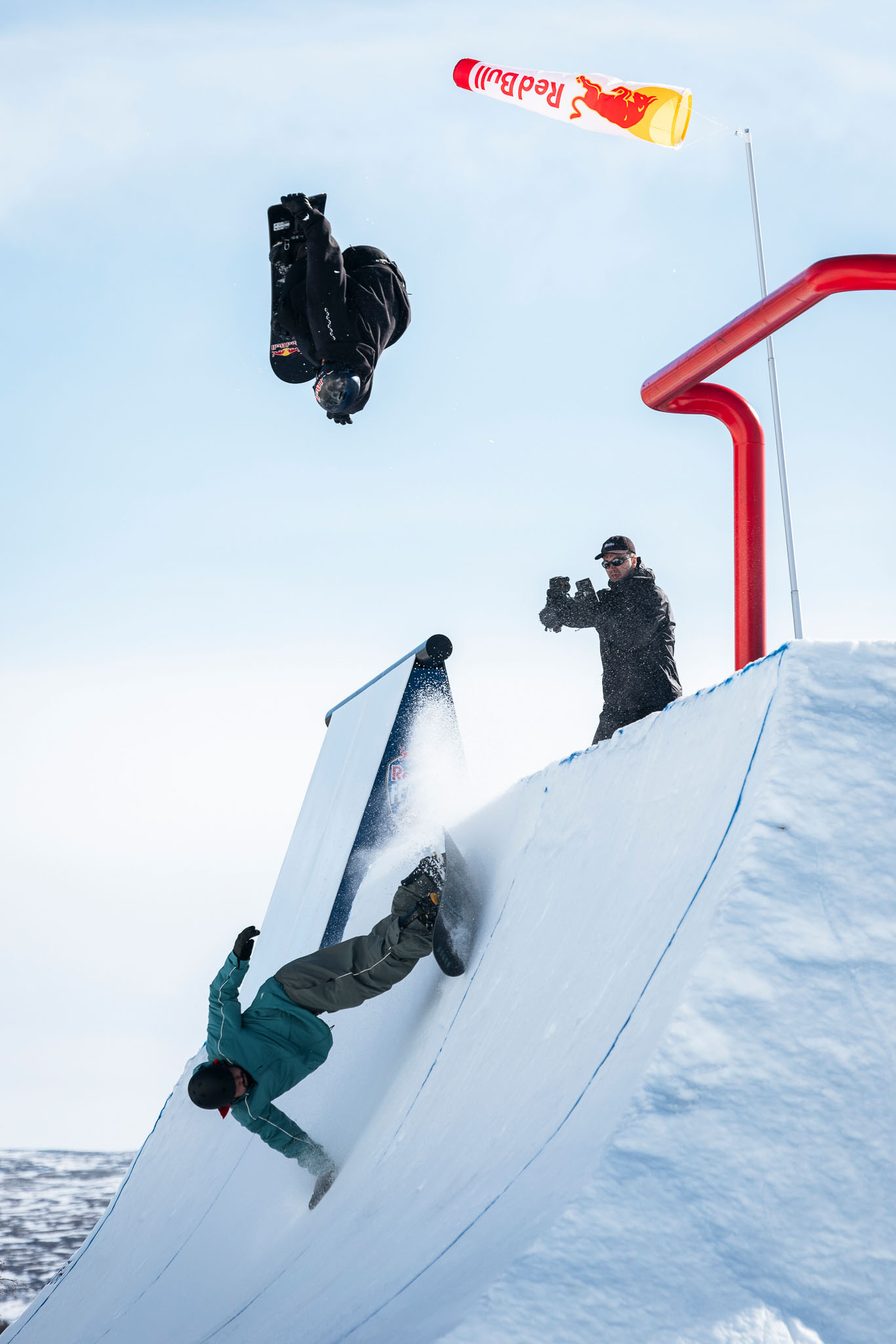
Post-event, there was a universal sense of excitement and satisfaction among participants and organizers. Red Bull officials lauded the event as a resounding success, with a spokesperson stating, "The Red Bull Features Cup has exceeded all expectations. Our goal was to innovate competitive snowboarding, to highlight creativity and teamwork, and the riders delivered that and more. The three-way tie was a testament to the incredible talent and balance across the teams, and the sudden-death hip session was a truly epic conclusion."
Riders echoed this sentiment. Cool Wakushima, celebrating with her Asia-Pacific teammates, reportedly expressed, "This win feels incredible, especially after such an intense tie-breaker. But more than the win, it was the format itself – every zone was unique, and we were constantly challenged to think differently. It truly felt like snowboarding with friends, even though we were competing at the highest level." Luke Winkelmann of North America reflected, "The creativity required, especially with the ‘Mischief Multiplier’ and the spin wheel, made every moment exciting. It pushes you to be a more complete rider." Even Marcus Kleveland, despite Europe’s third-place finish, praised the format: "It was a breath of fresh air. The jump session, with its progression rule, really made you focus on consistency and style, not just bigger rotations. It’s what snowboarding should be about." Fridtjof Tischendorf, a standout in multiple zones, added, "The camaraderie was incredible. We were competing hard, but also celebrating each other’s tricks. That’s the vibe we all love."
Implications for Competitive Snowboarding
The Red Bull Features Cup’s successful debut carries significant implications for the future of competitive snowboarding. It offers a compelling blueprint for events that seek to move beyond the traditional paradigms of slopestyle and big air, which, while spectacular, can sometimes become formulaic.
Firstly, the emphasis on diverse skill sets and all-around riding rather than hyper-specialization encourages athletes to develop a broader range of talents. This could influence rider training and development pathways, fostering more versatile and adaptable snowboarders.
Secondly, the team format injects a fresh dynamic into an inherently individual sport. It promotes strategic planning, communication, and mutual support, adding layers of complexity and engagement for both participants and audiences. Spectators can follow a team’s journey, understand their strengths and weaknesses, and appreciate the collective effort.
Thirdly, the "Mischief Multiplier" and zone-specific twists like mini boards and spin wheels demonstrate how unpredictability and creative challenges can elevate a competition. These elements keep riders on their toes, force spontaneous innovation, and make for more exciting, less predictable viewing. This approach could significantly enhance audience engagement, appealing to those who appreciate creativity and authentic snowboarding culture.
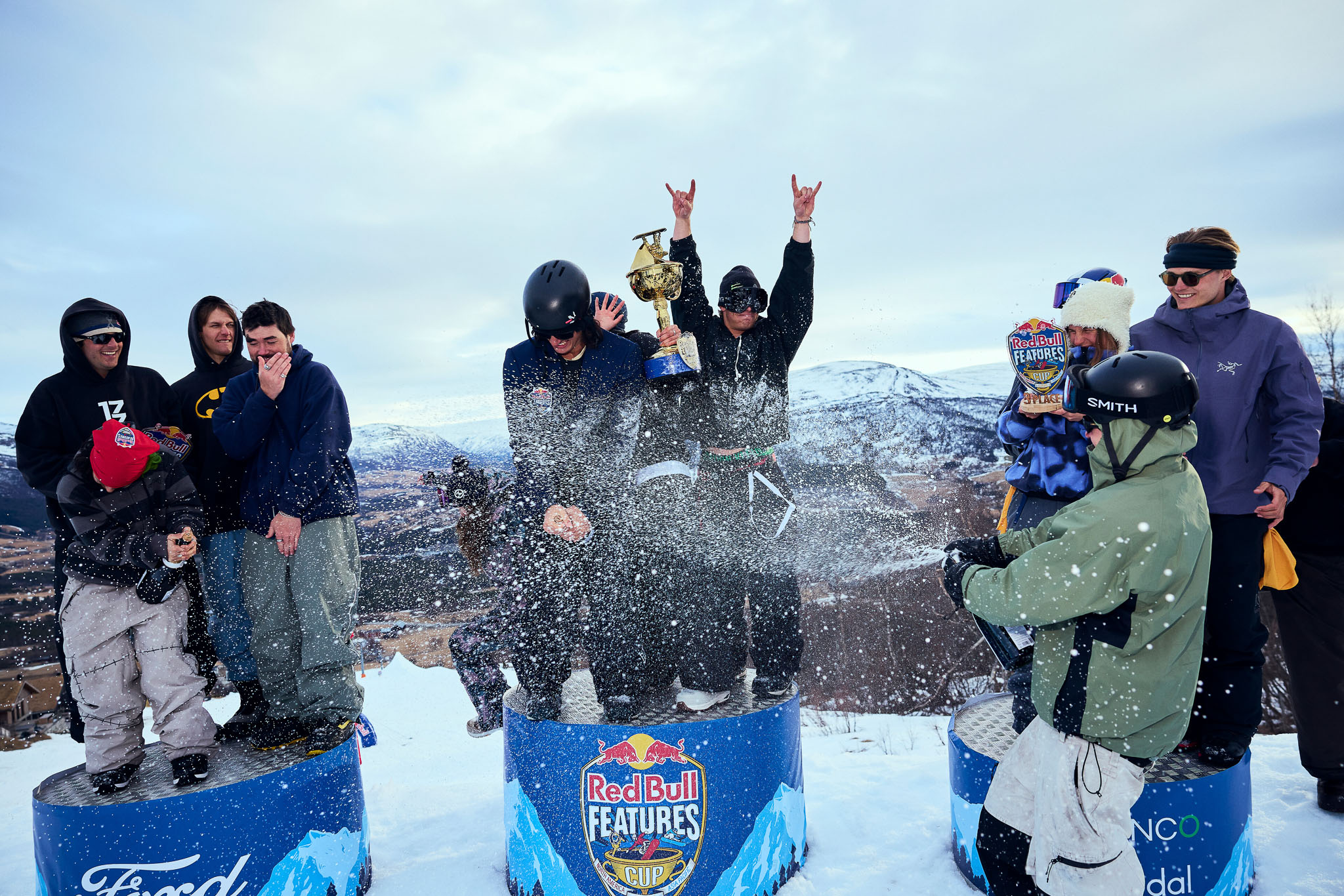
Finally, the focus on a "session-driven environment" where "fun remains at the core" challenges the high-pressure, often corporate atmosphere of some major sporting events. By prioritizing rider enjoyment and creative expression, the Features Cup positions itself as a more authentic representation of snowboarding’s roots, potentially attracting a new generation of riders and fans.
With its innovative structure, dramatic conclusion, and overwhelmingly positive reception, the Red Bull Features Cup has not merely concluded; it has ignited a conversation about what competitive snowboarding can and should be, setting a new benchmark for events where creativity leads, teamwork matters, and the pure joy of riding remains paramount.

