
In a dramatic and largely unforeseen shift in her nascent athletic career, Dartmouth College freshman Beatrice May has met the criteria for the 2026-27 Stifel U.S. Ski Team, a remarkable achievement stemming from a consistent and impressive performance in downhill events during the recent NorAm Cup season. This qualification marks a significant pivot for May, who began her collegiate year with her sights set primarily on technical disciplines, NCAA racing, and the FIS Junior World Ski Championships. Her journey highlights the unpredictable nature of elite sports and the emergence of new talent from unexpected avenues.
May’s breakthrough came as a surprise even to herself. "I didn’t really, to be honest, at all until I did," May admitted, reflecting on the moment she realized U.S. Ski Team criteria was within reach. "I hadn’t really looked at the criteria because I thought it didn’t apply to me." This sentiment underscores the organic evolution of her speed skiing prowess, which blossomed seemingly out of nowhere to become the defining narrative of her winter. By March, the Burke Mountain Academy alumna had not only made her mark but had solidified her place among the nation’s most promising ski racers.
A Season Defined by Speed: The NorAm Cup Performance
The NorAm Cup circuit, a critical stepping stone for North American ski racers aspiring to the World Cup, became the unexpected舞台 for May’s talent. Throughout the season, she demonstrated a remarkable aptitude for downhill, a discipline she had not prioritized in her training or competitive focus. May concluded the NorAm season ranked third in the downhill standings, a testament to her consistent high-level performances. This impressive ranking was built on a foundation of five top-10 finishes, including a pivotal victory in the final downhill race of the season. Her performance at Whiteface Mountain in February, where she secured a podium finish, further underscored her burgeoning potential in speed events.
Despite this meteoric rise, May narrowly missed securing a coveted NorAm World Cup start position by a mere 30 points. This close call, however, does little to diminish the significance of her overall achievement. The NorAm Cup serves as the continental tour for North America, providing a crucial bridge between national-level racing and the global FIS World Cup circuit. Athletes who excel here not only earn valuable FIS points but also gain essential experience on diverse terrains and in competitive international fields. For a freshman skier whose pre-season expectations revolved around the technical gates of slalom and giant slalom, her dominance in downhill represented an entirely new chapter.
Early Tracks: From Cranmore to Competitive Dreams
Beatrice May’s skiing odyssey began in a manner familiar to many New England enthusiasts: joyful family weekends spent on the slopes of local mountains. She first clicked into skis at the tender age of two, laying the foundation for a lifelong passion. Her early years were spent carving turns at Cranmore Mountain in New Hampshire, a period she remembers fondly for its emphasis on fun and family bonding. The family’s eventual relocation to East Burke, Vermont, a region steeped in ski racing culture, further cemented her connection to the sport.
May’s earliest recollections of skiing are far removed from the pressures of competition or the pursuit of results. Instead, they are filled with the warmth of shared laughter with her older brother and father. "My favorite trail is called Easy Street, and we would just ski it all day on the weekends," May recounted, painting a picture of carefree days where the joy of movement superseded structured training. It was not uncommon for her to ski with a stuffed animal, a poignant symbol of the playful spirit that characterized her introduction to the sport. "It was a lot of fun," she affirmed.
Her transition to competitive skiing began at age eight when she joined Cranmore’s U10 race program. Initially, the racing environment still felt more like an extension of play than a serious endeavor. However, by the U12 category, a shift occurred. May recognized a deeper desire to pursue skiing seriously, and it rapidly became a central and indispensable part of her identity. Her older brother, who had himself raced and attended Burke Mountain Academy, served as an early inspiration, introducing her to the world of high-level ski racing that she would eventually aspire to join.
The Formative Years at Burke Mountain Academy
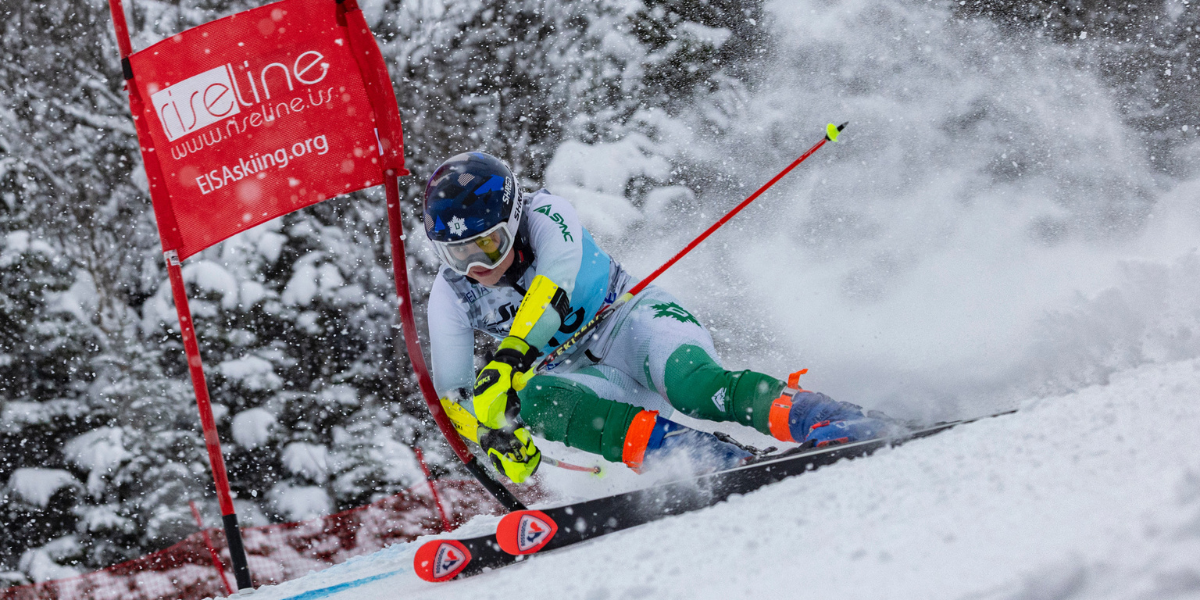
For aspiring ski racers in the Eastern United States, Burke Mountain Academy (BMA) stands as an institution of unparalleled prestige and a proven incubator of talent. Established in 1970, BMA is renowned for its rigorous academic curriculum combined with an intensive ski racing program, a model that has produced numerous Olympians and World Cup champions, including legendary figures like Mikaela Shiffrin and Daron Rahlves. For Beatrice May, the connection to Burke was a natural progression.
Her initial exposure to Burke’s coaching philosophy came during training camps at Mount Hood and Loveland while she was still racing in New Hampshire. The impact was immediate and profound. "They were just so great to me, and I felt like I learned so much and improved so quickly," May recalled, highlighting the effectiveness of the academy’s coaching methodologies. Among her most influential mentors was Ashley Davenport, a coach whose guidance extended beyond the slopes. Before her family’s full relocation to Vermont, May even resided with Davenport’s family for a period during middle school, allowing her to continue training with Burke. "She supported me through all that," May gratefully acknowledged.
Ultimately, her entire family moved to East Burke, allowing May to attend the academy as a day student, living just a short distance from the campus. Looking back, May attributes a significant portion of her holistic development, both as an athlete and an individual, to her time at Burke. "The community is so strong and the coaches and all the staff care so much about you," she emphasized. The environment fostered independence and self-discovery, pushing students to define their goals and cultivate effective habits. "It just really forces you to figure out what you want and how you can find success and what habits work for you." These foundational lessons, instilled during her academy years, would prove invaluable as she navigated the challenges of collegiate and international racing.
Navigating Collegiate Athletics: The Dartmouth Experience
May arrived at Dartmouth College with a clear set of self-imposed expectations for her freshman ski racing season. However, the transition to NCAA skiing proved to be more complex than she had initially anticipated. While she was familiar with many of the Eastern hills and had competed against many of her collegiate rivals for years, the mental landscape of NCAA racing presented a distinct challenge.
"It’s like turning ski racing into a team sport," May explained, succinctly capturing the essence of the collegiate experience. Unlike individual junior racing where personal results are paramount, NCAA events emphasize team scoring. Every run, every gate, every finish — or DNF — carries collective weight. "If you DNF, it’s kind of also on everyone," she noted, highlighting the added layer of pressure. This team-centric environment, while providing a powerful sense of camaraderie and shared purpose, also introduced a new dimension of mental fortitude that required time and adaptation to master.
May openly acknowledged that her freshman season at Dartmouth did not yield the individual results she had initially hoped for. Nevertheless, she viewed the experience as an accelerator for her personal and athletic growth. "I certainly learned a lot," she stated, expressing optimism for future seasons and her ability to adjust. The opportunity to attend Dartmouth and compete at the collegiate level remained immensely significant to her. She vividly remembers the moment of her acceptance, which arrived while she was competing at NorAm races in Panorama, British Columbia. "It was such a great feeling," she reminisced, underscoring the value she places on the balance of academic and athletic pursuits.
A Career Highlight: Junior Worlds in Narvik
Amidst the unfolding drama of her NorAm Cup season, May achieved another significant milestone: her participation in the FIS Junior World Ski Championships in Narvik, Norway, this past winter. Qualifying for the U.S. team had been a primary objective from the outset of the season, a long-held ambition finally realized. "That was my biggest goal for this season," she confirmed. "It was something that I’ve wanted to do for many years."
The Junior World Championships represent a prestigious platform for young athletes, showcasing the next generation of ski racing talent on a global stage. Located above the Arctic Circle, amidst breathtaking Norwegian fjords, Narvik provided an unforgettable backdrop for May’s international debut. Representing the United States at such a high level held immense personal meaning, especially as she competed in every contested event: Team Combined, Super-G, Giant Slalom, and Slalom. (The downhill event, regrettably, was canceled due to adverse weather conditions). "I’ve never really been able to represent the U.S. on that scale," May reflected. "So to be able to do it also in all events – it was just a super cool experience all around."
Beyond the competition, the unique geographical setting of Narvik left a lasting impression. Having never traveled so far north, May experienced the mesmerizing spectacle of the Northern Lights for the first time during a training session above the Arctic Circle preceding the championships. "It was so pretty," she recalled, adding it was a "bucket list" moment, further enriching her inaugural Junior Worlds experience.

The Downhill Revelation: A Technical and Mental Fit
Despite her foundational training and initial competitive focus on technical disciplines, it was downhill racing that ultimately redefined Beatrice May’s trajectory. The remarkable consistency she displayed in NorAm downhill events was particularly striking. Excluding a single DNF on Copper Mountain, May finished within the top 15 in every NorAm downhill race she completed, with five of those performances placing her squarely within the top 10.
What makes this achievement even more compelling is that these results were garnered with minimal prior speed-specific preparation. "It had been almost like 10 months since I last skied speed," she revealed, highlighting the raw talent and adaptability that underpin her success. This unexpected proficiency in downhill, a discipline demanding a unique blend of courage, precision, and aerodynamic finesse, stemmed from a surprising cross-application of technical skills.
May credits her focus on refining her giant slalom technique for inadvertently bolstering her downhill performance. "I think the things I was working on were patience and gradual rolling onto the new ski," May explained. These fundamental principles, crucial for maintaining speed and control through giant slalom gates, translated seamlessly into the demands of downhill. The ability to patiently absorb terrain and smoothly transition between edges is paramount in speed events, allowing a skier to maintain optimal line and velocity.
She also lauded the support and guidance received from coaches within the regional development system, including former World Cup winner Alice McKennis Duran, who played a significant role in her continued progression in speed events throughout the winter. More than just technical adjustments, May discovered a profound connection to the discipline itself. "I enjoy it so much and I love going fast," she declared, articulating the intrinsic motivation that often separates good athletes from great ones. This genuine passion for speed, combined with a newfound technical alignment, created the perfect storm for her downhill breakthrough.
Balancing Academia and Elite Sport: The Path Ahead
Beatrice May now stands at a pivotal juncture in her burgeoning career. With a freshman year of NCAA racing under her belt, invaluable Junior World Championship experience, and the criteria for the 2026-27 Stifel U.S. Ski Team secured, she faces a complex decision regarding her future path. The challenge of balancing the rigorous academic demands of Dartmouth College with the intense training and competition schedule of a national team athlete is formidable, one that many talented student-athletes must navigate.
The exact framework for how she will integrate her collegiate commitments with the opportunities now presenting themselves through the national team system remains fluid. "I’m going to try to do both to some degree," May stated, acknowledging the desire to pursue both passions while also recognizing the inherent difficulties. "But I’m not sure." This uncertainty is common among athletes who find themselves on the cusp of elite professional sport while still deeply invested in their academic pursuits. Some athletes opt for "gap years" or flexible academic schedules, while others endeavor to juggle both simultaneously, a feat requiring exceptional discipline and support.
The U.S. Ski & Snowboard organization, which oversees the Stifel U.S. Ski Team, has a long history of working with athletes to accommodate their educational goals. Development programs often feature flexible training blocks and competition schedules to allow for such integration, recognizing the long-term benefits of a well-rounded individual. However, the demands of World Cup-level preparation and competition are relentless, often requiring extensive travel and dedicated training periods that can conflict with traditional collegiate semesters.
What is unequivocally clear, however, is the significant shift in May’s career trajectory. Her unexpected success in downhill has opened doors that were not even on her radar just months ago. This unforeseen downhill season has not only showcased her versatility and raw talent but has also fundamentally reshaped the conversation around her future in ski racing. Beatrice May’s journey is a compelling narrative of discovery, adaptation, and the exhilarating potential that lies in embracing the unexpected turns of a competitive path. The ski racing world will be keenly watching to see how this promising young athlete balances her collegiate dreams with her newfound national team aspirations.

