
Bruno Debertolis, Pro Team Director for Team Slavia Pojišťovna Robinson Trentino and acclaimed Best Pro Team Director of Season XVII, has offered his seasoned perspective on the newly unveiled calendar for the Ski Classics World Championship Season XVIII. Spanning from the season opener in Bad Gastein to the Grand Finale Summit 2 Senja, Debertolis’s analysis delves into the strategic implications of the schedule, highlighting key race weekends and the overall flow of the demanding long-distance skiing season. His insights provide a valuable roadmap for teams, athletes, and fans alike as they prepare for the upcoming season.
A Well-Considered Schedule: Debertolis Approves the 2026-27 Calendar
Debertolis expresses significant satisfaction with the proposed schedule for the 2026-27 season. He particularly commends the thoughtful distribution of events throughout the winter months, noting the inclusion of crucial rest weekends that will allow athletes and support staff to recover and strategize between intense competition periods. This strategic spacing is seen as a key factor in maintaining athlete performance and preventing burnout over a long and arduous season.
"Honestly, I really like the calendar for Season XVIII," Debertolis stated. "There are numerous races, but they are thoughtfully spread out across the winter. I’ve always been a proponent of consecutive race weekends, and next winter will feature several weekends with two events. It’s a solid approval from me," he added, underscoring his experience and trust in the planning committee. The inclusion of back-to-back race weekends, while demanding, offers opportunities for athletes to gain momentum and for teams to optimize travel and logistics. This approach, he believes, allows for a more dynamic and engaging competition flow, preventing extended lulls and keeping the excitement high.
The Ski Classics series has consistently evolved its calendar to balance tradition with innovation. For Season XVIII, the schedule reflects a commitment to geographic diversity, taking competitors from the heart of the Alps to the dramatic landscapes of the Arctic. This global footprint not only showcases the sport’s international appeal but also presents unique challenges and opportunities for athletes accustomed to specific terrain and conditions. The inclusion of new venues and the return of established classics are carefully orchestrated to provide a comprehensive test of endurance, skill, and adaptability.
Bad Gastein: Setting the Stage for a Strong Season Start
The season’s inauguration with a quartet of events in Bad Gastein, Austria, is viewed by Debertolis as an exceptional chance to establish an early lead and accumulate vital points before the Christmas break. This concentrated block of racing provides an immediate high-stakes environment, allowing teams to gauge their form and strategy right out of the gate.
"It would be fantastic to start strongly in December," Debertolis explained. "With four events in Bad Gastein, you can truly achieve a spectacular season opening if your form is on point. We will intensify our preparation leading up to the season opener in the high mountains to arrive in the best possible condition. It’s a superb opportunity to secure a significant point tally, both for individual athletes and for the team," he emphasized. This strategic focus on the early season races acknowledges the psychological and competitive advantage of a strong start. The early point accumulation can alleviate pressure later in the season and provide a buffer against unexpected setbacks.
The Bad Gastein cluster includes a Prologue, a Criterium, an Individual Time Trial (ITT), and another Criterium. This varied format within a single location tests different aspects of an athlete’s capabilities – from pure speed and power in the shorter events to endurance and tactical prowess in the longer races. The ITT, in particular, offers a stark, individual challenge where every second counts, adding another layer of excitement to the early season. For teams like Debertolis’s, this initial phase is critical for solidifying their position in the Pro Team rankings and setting the tone for the entire campaign.
The Grand Classics: Where Season Fortunes Are Decided
When questioned about the most pivotal segments of the calendar for the overall standings, Debertolis unequivocally points to the two clusters of Grand Classics races. These critical periods, running from late January to mid-February and again from early to mid-March, are identified as the moments where the season’s champions are truly forged. The higher point allocation for these marquee events amplifies their significance, making them decisive battlegrounds for overall victory.
"Every season is different, but I believe the two clusters of the four Grand Classics events, from late January to mid-February, and from early to mid-March, will determine the overall standings – as they do every year," Debertolis stated. "They award significantly more points than other races, and are therefore emotionally charged. When you try to give 101 percent, you can make great strides forward, but also make costly mistakes," he elaborated. This acknowledgement of the psychological pressure associated with the Grand Classics highlights the mental fortitude required from elite skiers. The risk-reward dynamic becomes even more pronounced, pushing athletes to their absolute limits.
Among these prestigious events, the Marcialonga holds a particularly revered position in Debertolis’s estimation. "The Marcialonga weekend is sacred; it is also the only Italian event on the calendar," he affirmed. This sentiment underscores the deep cultural and historical significance of the race, especially for Italian teams and athletes. The connection to the sport’s heritage and national pride imbues Marcialonga with an unparalleled atmosphere.
Furthermore, he acknowledges the importance of Jizerská50, a race that resonates personally due to its connection with his main sponsor, Slavia. "The same applies to Jizerská50, where our main sponsor Slavia comes from. Then there is Vasaloppet and Birkebeinerrennet, the essence of our sport," he added. The inclusion of these races highlights the strategic importance of sponsor relationships and the deep roots of long-distance skiing in Scandinavia and Central Europe. Vasaloppet and Birkebeinerrennet, in particular, are not just races but cultural institutions, representing the pinnacle of the sport and drawing massive crowds and media attention.
The Grand Classics—Marcialonga (Italy, 70km), Jizerská50 (Czech Republic, 50km), Vasaloppet (Sweden, 90km), and Birkebeinerrennet (Norway, 53km)—form the backbone of the Ski Classics season. Their considerable distances and historical prestige make them the ultimate tests of endurance and willpower. The strategic importance of these races is further amplified by their placement within the calendar, often serving as critical turning points in the season’s narrative.
Navigating a Diverse and Demanding Season
With nine weekends spread across six countries from December to April, the upcoming season presents considerable logistical challenges for every Pro Team. Debertolis, however, views the calendar’s structure as an advantage in managing these complexities. The deliberate spacing between race weekends allows for a more relaxed approach to travel and recovery.
"As I said, I like the calendar primarily because there aren’t many consecutive race weekends," Debertolis reiterated. "This allows us to travel in a much more relaxed manner. We will often go home between races, and this will give everyone, both athletes and support staff, the opportunity to recharge, especially after weekends with double events," he noted. This emphasis on returning home and recharging is crucial for maintaining team morale and individual well-being. The ability to decompress and reconnect with familiar surroundings can significantly boost performance and foster a more cohesive team environment.
The international scope of the Ski Classics circuit is a testament to its global reach and appeal. From the snow-covered mountains of Austria and Switzerland to the vast plains of Sweden and the rugged landscapes of Norway, the season offers a breathtaking tour of some of the world’s most iconic cross-country skiing destinations. Each location brings its own unique challenges, from altitude and weather conditions to specific course profiles, demanding adaptability and versatility from the athletes.
Sweden: A Strategic Gauntlet of Three Events in Two Weekends
The Swedish segment of the calendar, commencing with the Oxberg–Mora Sprint for women (Tjejvassan) and men, and culminating with the iconic Vasaloppet the following weekend, will undoubtedly test athletes’ resource management and recovery capabilities. This concentrated period in Sweden demands meticulous planning and execution.
"It will definitely be a period where we will be in Sweden for at least 10 to 12 days," Debertolis predicted. "Athletes must conserve their energy, especially after the Oxberg weekend, to optimize preparations and get ready for Vasaloppet in the best possible way," he advised. The proximity of the Sprint races and Vasaloppet necessitates a careful balancing act, where athletes must perform at their peak in the shorter, more intense events without compromising their readiness for the season’s longest and most demanding race. The strategic decisions made during this period—regarding training intensity, rest, and nutrition—can have a profound impact on an athlete’s success in Vasaloppet.
Vasaloppet, the world’s largest cross-country ski race, is a legendary event with a rich history dating back to 1922. Its 90-kilometer course, tracing the path of King Gustav Vasa’s march in the 16th century, is a pilgrimage for skiers worldwide. The sheer scale of the event, with tens of thousands of participants, creates an unparalleled atmosphere. For the Pro Teams, Vasaloppet represents not just a race but a significant cultural and sporting milestone.
Ambitions for Season XVIII: Building on Past Success
Despite receiving the Pro Team Director of the Season award for Season XVII, Debertolis remains driven and focused on future achievements. He readily attributes his success to his dedicated team, emphasizing a collective effort in striving for excellence. His ambitions for the upcoming season are high, aiming to continue the team’s strong performance and build upon their established reputation.
"The Pro Team Director of the Season award means a great deal. It was the culmination of nearly ten years of hard work, dedication, and passion for this fantastic sport, from my service personnel and myself," Debertolis shared. "It’s an award given to the team leader who has been fortunate enough to have a fantastic group by their side. Could there be an award for the best service team? My people would deserve to win it in the first edition," he said with a smile, before adding his forward-looking statement:
"The ambitions and expectations for Season XVIII are high. We will have a strong squad with a lot of potential, and I am confident that we will have a great season. You will soon find out who our skiers will be; in the meantime, follow us and cheer for us." This humble yet confident outlook reflects Debertolis’s leadership style—one that values teamwork, recognizes the contributions of every member, and sets ambitious goals for continued success. The anticipation surrounding the team’s roster for Season XVIII further fuels the excitement for the upcoming season.
The commitment to building a strong, competitive squad is paramount for any Pro Team aiming for overall success. The selection and development of talented skiers, coupled with a robust support system, are the cornerstones of long-term achievement in the demanding world of Ski Classics. Debertolis’s proactive approach to team building and his clear vision for the future suggest that Team Slavia Pojišťovna Robinson Trentino will once again be a formidable force in Season XVIII.
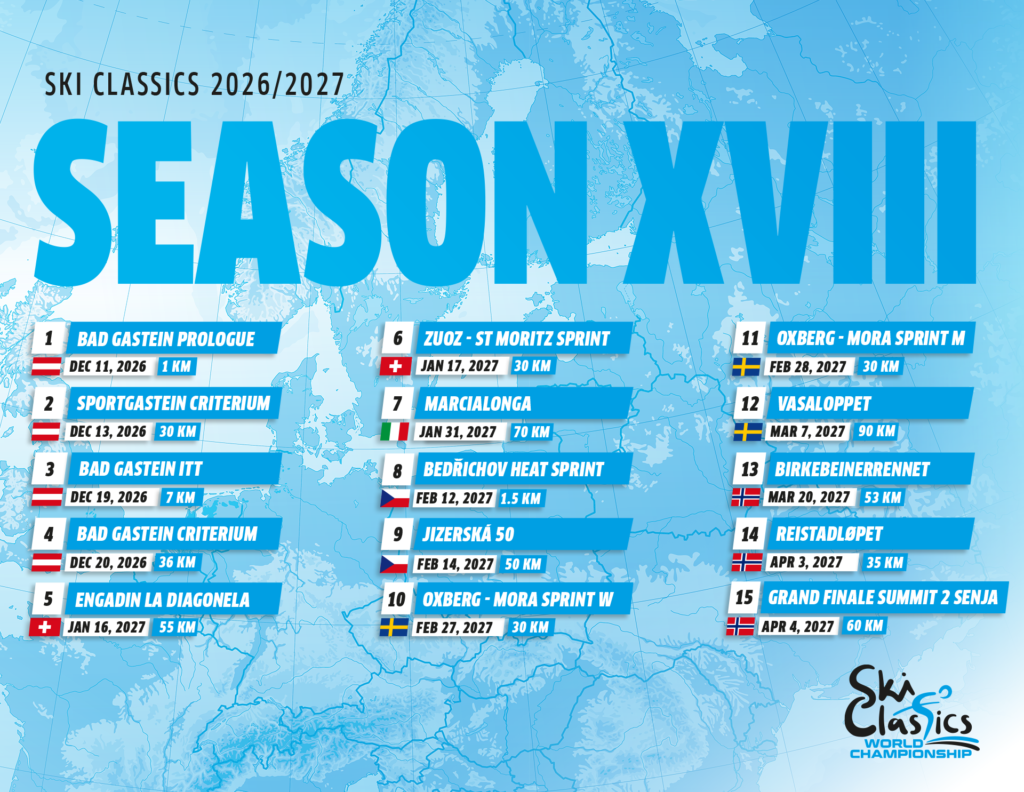
Ski Classics World Championships Season XVIII (2026/2027) – The Full Calendar
The complete schedule for the Ski Classics World Championship Season XVIII is as follows:
- Event 1: December 11, 2026 – Bad Gastein Prologue – Austria – 1km
- Event 2: December 13, 2026 – Sportgastein Criterium – Austria – 30km
- Event 3: December 19, 2026 – Bad Gastein ITT – Austria – 7km
- Event 4: December 20, 2026 – Bad Gastein Criterium – Austria – 36km
- Event 5: January 16, 2027 – Engadin La Diagonela – Switzerland – 55km
- Event 6: January 17, 2027 – Zuoz-St. Moritz Sprint – Switzerland – 30km
- Event 7: January 31, 2027 – Marcialonga – Italy – 70km
- Event 8: February 12, 2027 – Bedřichov Heat Sprint – Czech Republic – 1.5km
- Event 9: February 14, 2027 – Jizerská50 – Czech Republic – 50km
- Event 10: February 27, 2027 – Oxberg-Mora Sprint women – Sweden – 30km
- Event 11: February 28, 2027 – Oxberg-Mora Sprint men – Sweden – 30km
- Event 12: March 7, 2027 – Vasaloppet – Sweden – 90km
- Event 13: March 20, 2027 – Birkebeinerrennet – Norway – 53km
- Event 14: April 3, 2027 – Reistadløpet – Norway – 35km
- Event 15: April 4, 2027 – Grand Finale Summit 2 Senja – Norway – 60km
For further updates and detailed information on the Ski Classics World Championships, interested parties are directed to the official website at skiclassics.com. The comprehensive schedule, featuring a diverse array of challenges and iconic destinations, promises an exhilarating season for all involved in the thrilling world of long-distance cross-country skiing.

