
The nuances of endurance training are often found not in the intensity of the effort itself, but in the precision of the recovery periods that follow. For professional cross-country skier Mattis Stenshagen, who enjoyed a career-defining breakthrough at the age of 30 this past winter, the difference between a productive session and a wasted one often comes down to the stopwatch during rest intervals. Having transitioned from a fringe athlete to a World Cup winner and an Olympic team member, Stenshagen’s rise to the elite national team serves as a case study in the meticulous application of training physiology.
The Evolution of a Career: From Setback to Success
Stenshagen’s journey to the pinnacle of international cross-country skiing has been far from linear. Emerging as a junior and U23 talent, he was long viewed as one of Norway’s most promising prospects. However, his trajectory was abruptly stalled by a persistent physical breakdown that threatened to end his career prematurely.
The timeline of his resurgence is defined by resilience. After years of struggling to regain his competitive edge, the Gausdal native faced significant adversity as recently as last year, when he missed the opportunity to represent his country at the World Championships in Trondheim. Many athletes in his position might have opted for retirement; instead, Stenshagen intensified his commitment to the granular details of his training program. His winter breakthrough—marked by two World Cup victories and a place on the elite national team—stands as a testament to his adaptability. The transformation was not merely a result of increased volume, but of a fundamental shift in how he manages the "micro-cycles" within his individual training sessions.
The Physiology of the Rest Interval
At the heart of Stenshagen’s current methodology is a critique of how many amateur and developing athletes handle interval sessions. According to the skier, the common mistake is treating the rest period as a passive necessity rather than an active component of the training design.
Physiologically, the duration of a recovery interval dictates the metabolic pathway utilized during the subsequent work interval. When intervals are performed with very short recovery periods—such as 30 seconds—the body does not fully clear metabolic byproducts like lactate, nor does the heart rate drop significantly. This forces the athlete to maintain technical proficiency under a state of cumulative fatigue. Conversely, extending the rest period to two minutes or more allows for a more complete restoration of phosphocreatine stores and a lower heart rate, enabling the athlete to perform the work intervals at a higher absolute velocity.
Stenshagen’s signature session—10 repetitions of 3 minutes in Zone 4—illustrates this dichotomy. By manipulating the pause, the athlete essentially dictates whether the session is intended for "technical reinforcement" or "speed endurance."
Strategic Implementation: The Stenshagen Protocol
For those looking to emulate his success, the structure of the session is critical. Stenshagen advocates for a standardized, repeatable course, which allows for objective measurement of progress over time.
The Stenshagen Session Breakdown:
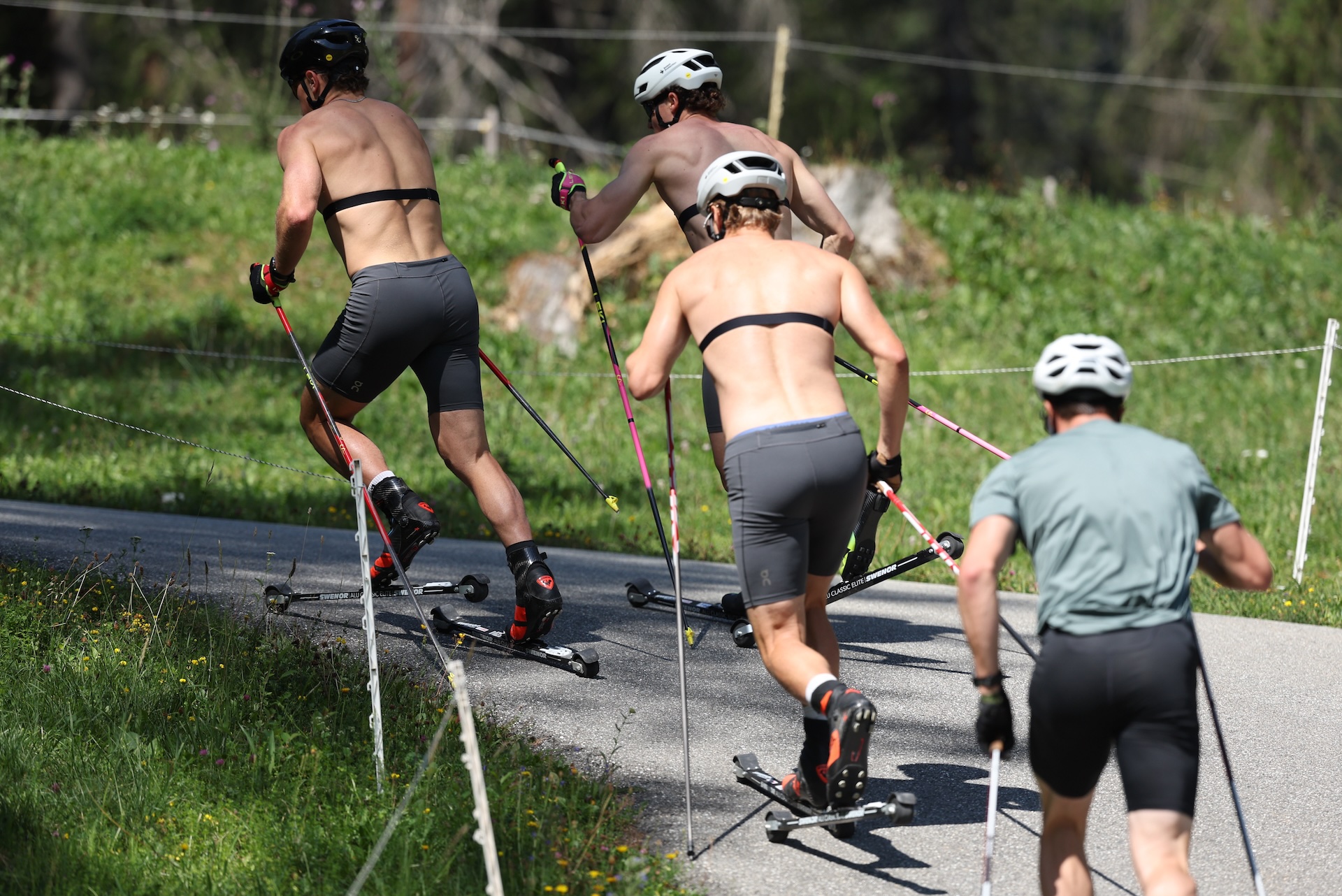
- Warm-up: A comprehensive aerobic warm-up is mandatory. Stenshagen often utilizes the first two intervals as an extension of this process, allowing the body to acclimate to the intensity before reaching full output.
- The Main Set: 10 x 3 minutes in Zone 4 (as defined by the Olympiatoppen intensity scale).
- For Technical Focus: 30-second recovery. This keeps the heart rate elevated and limits speed, forcing the athlete to focus on efficient movement patterns despite physical distress.
- For Speed Focus: 2-minute recovery, with a 4–5 minute "series break" after the fifth interval. This extended rest facilitates higher speeds, mimicking the demands of a high-paced race finish.
- Progression: Stenshagen emphasizes the importance of a "progressive" approach, where each subsequent interval is performed slightly faster than the previous one, teaching the body to maintain power output even as fatigue accumulates.
Analytical Context: Why Precision Matters
The broader implication of Stenshagen’s approach is the rejection of "junk miles." In elite sports science, there is a growing consensus that quality-over-quantity training is the key to longevity. By diversifying the purpose of a single interval structure, athletes can achieve multiple training stimuli without the need for additional, potentially overtraining-inducing sessions.
Experts in exercise physiology have noted that the "Zone 4" intensity, which sits just below the anaerobic threshold, is perhaps the most critical zone for cross-country skiers. It is here that the body learns to manage lactate effectively while maintaining high-level technique. Stenshagen’s emphasis on the pause allows him to target two different facets of this zone: the cardiovascular capacity (via longer rest) and the neuromuscular technical efficiency (via shorter rest).
Broader Impact on the Training Landscape
The success of athletes like Stenshagen has influenced a broader trend in Norwegian skiing, where data-driven training has become the standard. The ability to articulate the "why" behind every second of a session has become as important as the physical exertion itself.
While the general public may view interval training as simply "going hard," the elite level is characterized by a chess-like approach to physiological adaptation. The feedback loop between training intensity, recovery duration, and competition results has created a system where nothing is left to chance. For the 30-year-old, this methodical approach has transformed him from an outsider fighting for his professional life into a pillar of the Norwegian national team.
Implications for the Amateur Athlete
For the recreational skier or endurance athlete, the lesson is clear: consistency is vital, but intent is paramount. By simply logging the same workout repeatedly without adjusting the variables—such as recovery time—the athlete may reach a plateau. Integrating Stenshagen’s method of alternating between technical focus and speed focus can provide a fresh stimulus for adaptation.
Furthermore, the story of his recovery from a potential career-ending slump provides a psychological roadmap for others. His ability to strip his training down to its basic components and rebuild them with extreme care highlights that elite performance is often a result of patience. It suggests that when a plateau is reached, the solution is not always to train harder, but to train more intelligently.
Looking Toward the Future
As Stenshagen prepares for the upcoming season, his training continues to be monitored by the national team’s coaching staff. His success serves as a reminder that the "hidden" parts of training—the recovery, the rest, and the specific timing of those breaks—are where the margins of victory are found.
The integration of these techniques into his routine has not only improved his physical performance but has also provided him with a deeper understanding of his own physiological capabilities. As he continues to compete at the highest level, the industry will likely look to his specific, measured approach as a blueprint for the modern endurance athlete. In a sport where races are often decided by fractions of a second, the ability to control the "in-between" moments of a workout is, perhaps, the ultimate competitive advantage.

