
As the summer season intensifies, a critical need arises to refresh public awareness regarding the identification and avoidance of rip currents, as well as the crucial steps to take if one finds themselves caught in their powerful grip. The allure of the ocean beckons millions to its shores, yet beneath the inviting surface lies a persistent threat that can overwhelm even the strongest swimmers. Rip currents are not mere nuisances; they are fast-moving, concentrated channels of water that flow away from the shore, capable of exceeding the speed of an Olympic swimmer, making them a danger to individuals of all aquatic abilities. Meteorologist Caitlin Kaiser has provided a concise public service announcement emphasizing rip current safety, underscoring the urgency of this message as beachgoers flock to coastal areas.
Understanding the Threat: The Science of Rip Currents
Rip currents are a ubiquitous phenomenon along coastlines worldwide, driven by a complex interplay of wave action, tides, and the seafloor’s topography. They are not to be confused with undertows, which pull swimmers directly out to sea. Instead, rip currents are lateral movements of water that flow perpendicular to the shore, extending beyond the breaking waves. Their strength and speed can vary significantly, influenced by factors such as wave height, tidal phase, and the presence of underwater sandbars or structures.
According to the National Oceanic and Atmospheric Administration (NOAA), rip currents are responsible for a significant number of coastal rescues and are a leading cause of drowning deaths at beaches. In the United States, it is estimated that rip currents account for tens of thousands of rescues annually, and tragically, dozens of fatalities. These figures highlight the pervasive nature of the threat and the importance of understanding how to recognize and respond to them.
Visual Cues: How Experts Identify Rip Currents
While the danger of rip currents may not always be immediately apparent, experienced observers, including lifeguards and meteorologists, have developed keen skills in identifying their tell-tale signs. These visual indicators are vital for beachgoers to heed, allowing them to avoid hazardous areas and ensure their safety.
Key visual indicators of rip currents include:
- A Channel of Churning, Turbulent Water: Rip currents often appear as a break in the incoming wave pattern, characterized by a narrow, turbulent strip of agitated water. This turbulence is caused by the strong outward flow of water.
- A Line of Ropy, Discolored Water: The outward flow of a rip current can carry sediment, foam, and debris with it, creating a visible line of discolored water extending away from the shore. This discoloration can range from murky brown to a foamy white.
- A Difference in Water Appearance: The water within a rip current may appear calmer or smoother than the surrounding surf due to the lack of breaking waves. However, this apparent calm can be deceptive, masking the powerful outward flow.
- A Gap in the Incoming Wave Pattern: Observe the pattern of incoming waves. Rip currents often create a noticeable gap where waves are not breaking or are significantly smaller as they are pulled seaward by the current.
- Swirling Water or Debris Moving Outward: Any visible signs of water or debris, such as seaweed or foam, moving consistently away from the shore indicate the presence of an outgoing current.
Expert Insights: Educational Resources and Awareness Campaigns
Recognizing the critical need for public education, various governmental agencies and organizations are collaborating to disseminate vital information about rip current safety. The National Weather Service and the National Sea Grant Program, in partnership with the United States Lifesaving Association (USLA), are at the forefront of these awareness efforts.
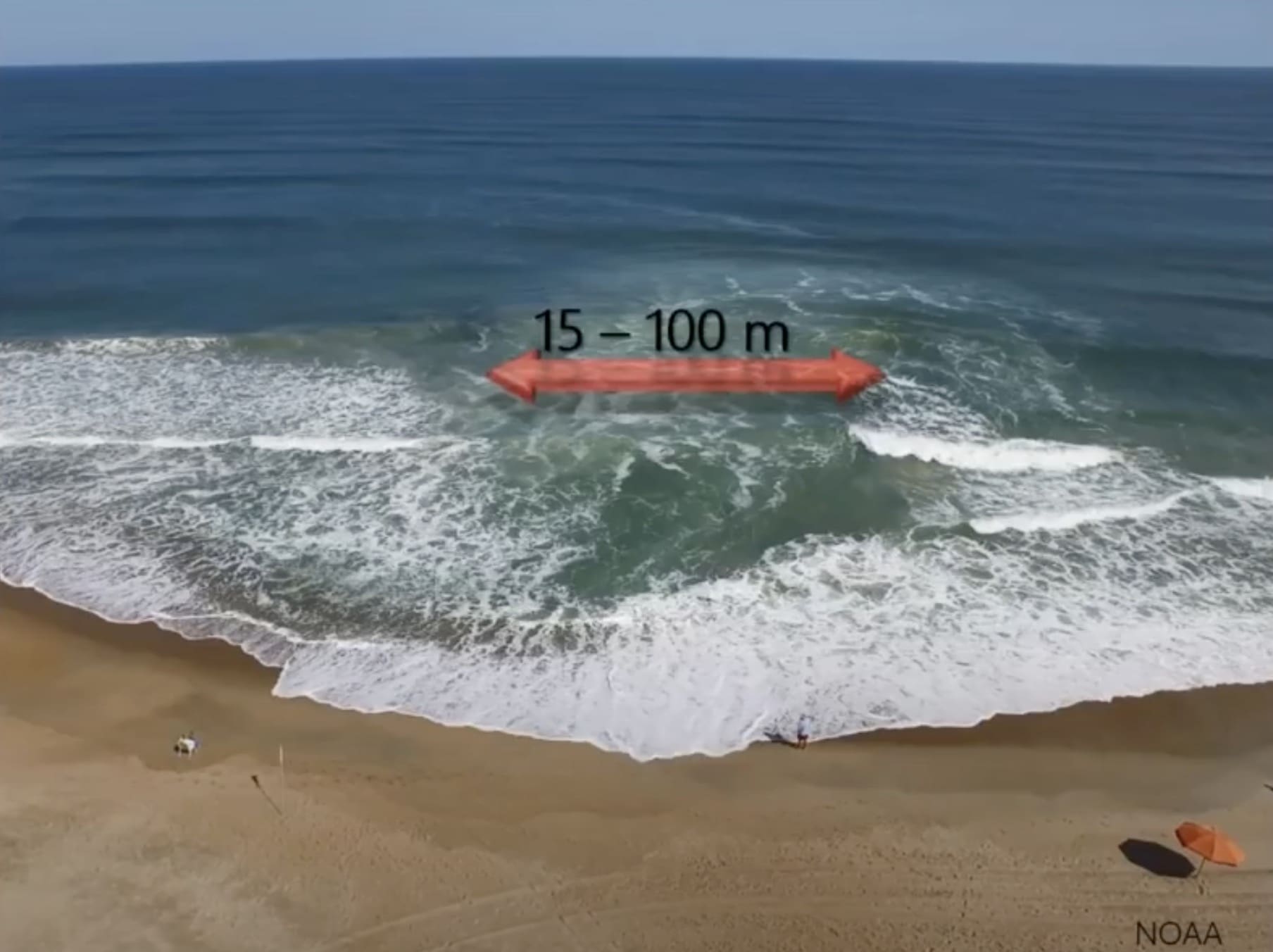
A public-friendly webinar presented by Dr. Greg Dusek, a Senior Scientist at NOAA’s National Ocean Service, offers concise safety messages tailored for holiday beachgoers. Dr. Dusek’s expertise provides valuable insights into understanding rip current dynamics and practical advice for staying safe. These resources are crucial for empowering individuals with the knowledge needed to make informed decisions at the beach.
The following educational videos offer further depth into rip current safety:
- Meteorologist Caitlin Kaiser’s PSA: This short video offers a quick overview of rip current dangers and essential safety tips.
- Dr. Greg Dusek’s Webinar: This comprehensive presentation delves deeper into rip current phenomena, providing detailed guidance for beach safety.
Pre-Beach Preparation: Essential Steps Before Hitting the Sand
Proactive preparation is paramount for a safe beach experience. Before even heading to the coast, understanding the potential hazards and taking necessary precautions can significantly mitigate risks.
Before you go to the beach:
- Check the Weather and Surf Forecast: Always consult reliable weather and surf reports for the specific beach you plan to visit. Look for information regarding wave height, wind conditions, and any rip current advisories issued by local authorities.
- Understand Local Conditions: Familiarize yourself with the general characteristics of the beach. Are there known rip current hotspots? Are there designated swimming areas monitored by lifeguards?
- Assess Personal Swimming Ability: Be honest about your swimming capabilities. If you are not a strong swimmer, it is advisable to stay in shallow water or refrain from swimming altogether.
Beachside Vigilance: Actions Upon Arrival
Once at the beach, continued observation and adherence to safety guidelines are crucial for maintaining a secure environment.
When you get to the beach:
- Locate and Observe Lifeguards: Identify the nearest lifeguard station and note their presence. Lifeguards are trained professionals equipped to handle beach emergencies and can provide valuable safety information.
- Heed Warning Signs and Flags: Pay close attention to any posted warning signs or colored flags that indicate specific beach conditions. Red flags, for instance, often signify dangerous surf conditions and the presence of rip currents.
- Scan the Water for Rip Current Indicators: Actively look for the visual cues of rip currents discussed earlier: churning water, discolored channels, and gaps in wave patterns.
- Swim Near Lifeguards: If you choose to swim, do so in areas designated by lifeguards. These areas are typically monitored for safety and are often the safest places to enter the water.
- Never Swim Alone: Always swim with a buddy or group. This ensures that someone is aware of your presence and can offer assistance if needed.
- Establish a Meeting Point: Designate a clear meeting point on the beach for your group in case of separation.
- Consider Wearing a Life Jacket: For individuals with limited swimming abilities or when engaging in water activities, wearing a U.S. Coast Guard-approved life jacket can provide an essential layer of safety.
If Caught in a Rip Current: Immediate Actions for Survival
The most critical aspect of rip current safety is knowing how to react if you find yourself caught in one. Panic can exacerbate the situation, making rational action difficult.

If caught in a rip current, know your options:
- Stay Calm: The most important immediate action is to remain calm. Panicking will exhaust your energy and hinder your ability to think clearly.
- Don’t Fight the Current: Do not attempt to swim directly against the rip current. This is a futile effort, as the current’s speed will likely be greater than your swimming ability.
- Swim Parallel to the Shore: The most effective strategy is to swim parallel to the shoreline. Rip currents are typically narrow, and by swimming sideways, you will eventually break free from the current’s pull and be able to swim back to shore.
- Float or Tread Water: If you are unable to swim parallel to the shore, float or tread water to conserve energy until the current weakens or you can signal for help.
- Signal for Help: If you are unable to escape the current, wave your arms and yell for assistance from lifeguards or other beachgoers.
Responding to Distress: Helping Others Safely
Witnessing someone in distress in the water can trigger an instinctive desire to help. However, it is crucial to prioritize your own safety to avoid becoming another victim.
If you see someone in trouble:
- Don’t Become a Victim While Trying to Help: Many people have tragically lost their lives attempting to rescue rip current victims. It is vital to assess the situation and your own capabilities before entering the water.
- Alert a Lifeguard Immediately: If lifeguards are present, alert them to the situation as quickly as possible. They are trained and equipped to perform rescues.
- Throw, Don’t Go: If you are on shore and cannot reach a lifeguard, look for something that floats to throw to the person in distress. This could include a life jacket, a cooler, or a boogie board.
- Provide Verbal Instructions: From a safe distance, offer calm verbal instructions, encouraging them to swim parallel to the shore.
Broader Implications and Official Collaboration
The persistent threat of rip currents necessitates ongoing collaboration between various agencies to enhance public safety. The National Weather Service and the National Sea Grant Program’s partnership with the USLA exemplifies this commitment. By pooling resources and expertise, these organizations aim to create comprehensive safety campaigns that reach a wide audience.
The implications of effective rip current education are far-reaching. Reduced drowning incidents, fewer emergency rescues, and increased confidence for beachgoers all contribute to a safer and more enjoyable coastal experience for everyone. Continued investment in public awareness initiatives, coupled with vigilant beach monitoring and well-trained lifeguards, forms the bedrock of effective rip current safety strategies.
For more detailed information and resources on rip current safety, visit the official NOAA website at www.ripcurrents.noaa.gov.

