
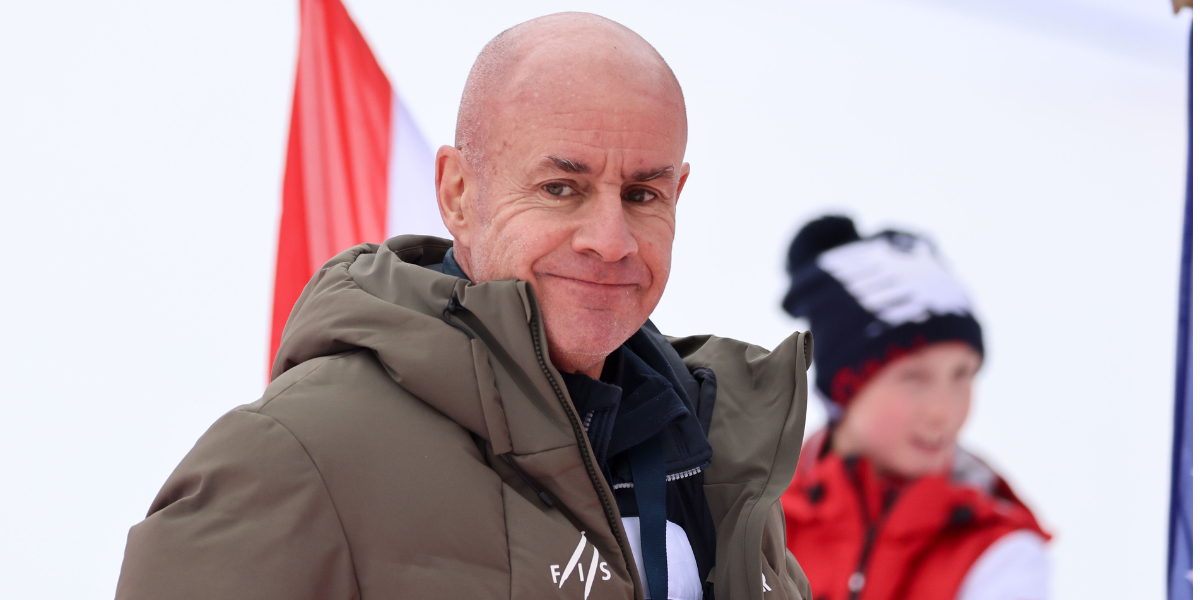
Johan Eliasch, the current president of the International Ski and Snowboard Federation (FIS), has officially announced his intention to seek re-election, signaling his commitment to completing a reform agenda that has profoundly reshaped the landscape of international snow sports. Nearly five years into a tenure marked by both ambitious modernization and considerable debate, Eliasch views his work as far from finished, a conviction that underpins his decision to pursue another term at the helm of the sport’s global governing body. "I want to finish off what I’ve started," Eliasch stated in an exclusive interview with Ski Racing Media. "We still have work to do. Once done, then it’ll be time for somebody else to take over." This declaration sets the stage for a crucial election in June, which will not only determine the leadership of FIS for the next four years but also the pace and direction of its ongoing transformation.
A Presidency Defined by Radical Change and Centralization
Since his election in 2021, Eliasch’s presidency has been synonymous with a bold push for modernization across all facets of FIS operations. His vision has encompassed a sweeping array of initiatives, including the centralization of media rights, a significant expansion of digital operations, the introduction of new competition formats, enhanced athlete representation within governance structures, and ambitious international growth initiatives aimed at diversifying snow sports’ global footprint beyond its traditional European strongholds. These reforms, while lauded by many as necessary for the sport’s long-term viability, have not been without their critics, who have questioned both the rapid pace of change and the more centralized approach to the commercialization of media assets.
Eliasch, however, remains resolute in his conviction that modernization is no longer an option but a strategic imperative. He articulates a clear understanding of the competitive landscape, where snow sports vie for relevance, visibility, and commercial value against global entertainment behemoths like soccer, basketball, and American football. "The biggest priority is to improve the product, improve the rights packages, improve everything to do with the sport and everything for the athletes, to make the sport safer and at the same time make it more exciting," he emphasized. This holistic approach, he argues, necessitates continuous innovation, leveraging technology to enhance safety, excitement, and overall athlete and viewer experience.
The Strategic Imperative of Centralized Media Rights
Perhaps no initiative better encapsulates Eliasch’s presidency than the controversial yet ultimately transformative centralization of FIS media rights. This project, which aimed to consolidate control over broadcasting arrangements under the federation’s direct purview, initially encountered significant resistance from various national federations and event organizers. These stakeholders, accustomed to long-established local broadcasting deals, expressed concerns about potential loss of autonomy and revenue.
Eliasch now points to the measurable financial outcomes as compelling evidence of the strategy’s efficacy and the necessity of a unified commercial approach. "We have significantly increased revenues," he reported. "If we look at what we’ve done with the media rights centralization, that over the eight-year cycle should bring in more than 250 million in additional revenue in very challenging market conditions." This substantial financial uplift, achieved amidst a volatile global media landscape, underscores the commercial benefits of a streamlined, centralized sales model. Eliasch maintains that this approach provides FIS with greater long-term control over how snow sports are packaged, distributed, and promoted globally, thereby creating stronger, more consistent value propositions for sponsors, event organizers, and broadcast partners. "It’s much easier to sell if you have a centralized package," he added, highlighting the efficiency and market appeal of a consolidated offering.
Furthermore, this financial growth strategy is not solely focused on top-tier events. A core component of Eliasch’s vision is to strengthen member national ski associations, particularly those smaller and medium-sized federations that are crucial for expanding the sport’s global reach. By channeling increased revenues strategically, FIS aims to provide essential resources and support to these developing nations, fostering grassroots participation and elite athlete development in regions where snow sports traditionally have a limited presence.
Expanding Horizons: Global Reach and Digital Engagement
The commercial restructuring has been paralleled by a significant expansion of FIS’s digital footprint and global fan engagement. Under Eliasch’s leadership, social media engagement and worldwide fan interaction have reportedly multiplied, demonstrating a concerted effort to connect with a younger, digitally native audience. This digital acceleration is crucial in a fragmented media environment where sports organizations must actively cultivate direct relationships with their fan bases.
Beyond digital metrics, the growth in Olympic participation serves as a tangible indicator of increasing global interest. The Beijing Winter Olympics featured athletes from 78 nations competing in snow sports, a number that subsequently grew to 88 nations for the upcoming Milano-Cortina Games. These figures are vital to Eliasch’s overarching vision: to transform snow sports from a collection of predominantly European regional events into a truly global sports property with diverse geographical representation and broad appeal.
Asia and China: The Future Growth Engine
Eliasch frequently emphasizes international expansion as one of FIS’s most critical long-term priorities, with a particular focus on Asia. While alpine skiing retains its stronghold in Europe and North America, he identifies Asia—and China specifically—as presenting the most significant future opportunities across multiple snow sports disciplines. "We see great growth in Asia and we see lots of potential opportunity with China," Eliasch observed, while acknowledging that this expansion is a gradual, ongoing process rather than an overnight transformation.
Since the Beijing Olympics, FIS has actively collaborated with Chinese sports authorities, resort developers, and athlete development programs to cultivate both participation and fan engagement. Freestyle skiing, with its dynamic and visually spectacular nature, has been pinpointed as a discipline with particularly strong growth potential in Asia. Alpine expansion, while also a priority, is viewed as a longer-term endeavor, contingent on strengthening continental cup competitions and increasing the sport’s visibility within the region. The burgeoning interest is already evident in media consumption trends; during the 2025-26 season, China remarkably emerged as Ski Racing Media’s second-largest audience base, trailing only the United States, a clear reflection of the rapidly expanding international appetite for winter sports content.
Transforming a Century-Old Institution
Eliasch often frames his tenure as a period of unprecedented evolution for FIS. Founded in 1924, the federation has a rich, century-long history, yet Eliasch asserts that the organization has achieved more significant growth and transformation in the last five years than in its preceding hundred. This bold characterization underscores the depth and breadth of the reforms implemented under his leadership.
The expansion of FIS’s mandate has extended well beyond its traditional focus on alpine skiing. During Eliasch’s presidency, FIS has integrated parasports and freeride into its official federation structure, reflecting a commitment to inclusivity and the diversification of its sporting portfolio. Digital and marketing operations have been significantly upgraded, and an athlete health unit has been established to prioritize athlete well-being. Furthermore, a major reorganization of leadership saw the introduction of a CEO model, designed to modernize management practices and optimize commercial operations. This shift, Eliasch explained, was necessary to move beyond an "old model" that was no longer suitable for a rapidly growing and ambitious organization, enabling a more business-like approach, particularly concerning revenue generation.
Crucially, athlete involvement has been elevated to a major priority. Eliasch proudly notes that athletes are now actively integrated into the committee structure and hold positions on the FIS Council, ensuring their voices are heard and their perspectives considered in key decision-making processes. This enhanced representation is a cornerstone of his commitment to making the federation more athlete-centric.
Navigating the Complexities of International Sports Politics
Despite the significant progress Eliasch describes, he readily acknowledges the inherent difficulties of leading a federation comprising over 140 national members. "The big challenge has been to get people to come together and work together," he conceded, highlighting the complex political landscape within FIS. He once described FIS politics as operating "on a different level" compared to conventional national politics, underscoring the unique challenges of maintaining unity amidst diverse national interests, varying financial realities, and competing priorities.
For Eliasch, the challenge is not simply disagreement—which he sees as a healthy component of democracy—but rather ensuring that the collective moves forward even when individual stakeholders may have preferred alternative paths. "In a healthy democracy, you have different opinions," he stated. "If the majority is heading in a direction that may not be your first choice, you follow that." He believes the eventual acceptance and demonstrable success of media rights centralization serve as a powerful testament to this principle, showing that initial skepticism can evolve into widespread adoption once tangible positive results become evident. "Now that this is working very well; people are incorporating," he said, citing it as a "good showcase of people finally coming together and working together."
Innovation and Technology: The Future of Snow Sports Presentation
Innovation remains a central and recurring theme throughout Eliasch’s presidency. He has championed the integration of cutting-edge technologies aimed at enhancing the spectator experience while simultaneously streamlining operational costs for event organizers and broadcasters. These innovations include advanced drone coverage, sophisticated television graphics, real-time GPS tracking systems for athletes, cloud-based production tools, and even AI-assisted content creation. Furthermore, new competition formats, such as the team-combined event successfully introduced in Saalbach and slated for Milano-Cortina, reflect a willingness to experiment and evolve the sport itself.
Eliasch is particularly enthusiastic about the potential of technologies like drone coverage and remote production to revolutionize how snow sports are presented. These tools, he suggests, can not only dramatically improve the visual spectacle for viewers but also significantly reduce the substantial production costs traditionally associated with World Cup events. He envisions a future where newer technologies could standardize broadcast quality across various venues, making it more feasible for smaller organizers to host high-profile competitions by alleviating the financial burden of extensive on-site infrastructure. Despite the ongoing evolution of production methods, Eliasch notes that demand for hosting World Cup events remains robust across the sport. "We’re fortunate because we have a great deal of interest," he confirmed. "Everybody wants to host World Cup events."
Passion and Purpose: The Driving Force
Eliasch’s leadership role within international sport was further solidified in 2024 with his appointment as an International Olympic Committee (IOC) member. While he views the IOC and FIS as distinct entities, he acknowledges that winter sports, like all major sporting disciplines, face increasing pressure to maintain commercial relevance and audience engagement within an intensely competitive global entertainment market. "We have a lot of competition from soccer, from basketball, from the NFL," Eliasch articulated, emphasizing the need for snow sports to remain "attractive" to compete effectively for viewership and sponsorship.
Beyond the strategic boardrooms and commercial negotiations, Eliasch draws profound personal satisfaction from the human element of snow sports. He described the Paralympics in Cortina as one of the most meaningful highlights of his presidency, expressing awe at the courage and skill of para-athletes. "The bravery sitting in a chair like that, going downhill at 120 kilometers per hour and jumping 30 or 40 meters," he marveled, underscoring the extraordinary athletic feats witnessed in adaptive sports.
Ultimately, despite the political challenges, the complexities of governance, and the relentless demands of modernization, Eliasch returns to a fundamental, deeply personal motivation for continuing his leadership: "I am very passionate about snow sports," he affirmed. "I love them." This personal conviction fuels his drive to see his ambitious reforms through to completion.
Regardless of the outcome of the upcoming June election, Johan Eliasch’s presidency has undeniably left an indelible mark on the direction and ambition of international snow sports. His tenure has catalyzed a shift towards a more global, digitally integrated, and commercially assertive future for the federation. The impending election will therefore be a pivotal moment, determining not only who guides FIS over the next four years but also the extent to which this transformative journey towards a modernized, globally relevant snow sports landscape will continue to accelerate.

