
Ramon Zenhäusern, the towering Swiss slalom specialist, could easily have concluded his illustrious career with an enviable list of achievements, a legacy solidified over nearly two decades of elite competition. At 34 years old, after representing Switzerland at three Olympic Games and five World Championships, and boasting an Olympic silver in slalom alongside a gold in the team parallel event from the 2018 PyeongChang Games, his résumé speaks volumes. With 14 World Cup podium finishes, seven World Cup race victories, and an astonishing record of scoring World Cup points in 14 consecutive seasons, most athletes would consider their mission accomplished. Yet, for Zenhäusern, this remarkable compilation of accolades is not the final chapter. Instead, driven by an unyielding passion and an enduring belief in his abilities, he is embarking on an unprecedented independent journey, marked by a significant equipment change and a singular focus on the 2027 World Championships in Crans-Montana.
A Career Defined by Milestones and Resilience
Zenhäusern’s career trajectory has been a testament to both raw talent and persistent dedication. Born in Bürchen, Switzerland, his physical stature – standing at an imposing 2.00 meters (6 feet 7 inches) – has always made him a distinctive figure on the slalom circuit, forcing him to adapt a unique style to navigate the tightly spaced gates. His journey through the junior ranks quickly identified him as a prodigious talent within the competitive Swiss alpine system.
His ascent to the global stage saw him consistently challenging the sport’s giants. While World Cup podiums and victories eventually became a regular occurrence, it was his performance at the 2018 PyeongChang Olympics that truly etched his name into Swiss skiing folklore. In a sport where Switzerland boasts a rich history, the men’s slalom Olympic medal had eluded the nation for 34 years. Zenhäusern shattered this drought, claiming a silver medal in a thrilling race. This achievement was particularly remarkable given that he had yet to secure a World Cup slalom podium finish prior to his Olympic success, demonstrating an uncanny ability to perform under immense pressure on the sport’s grandest stage. He further cemented his Olympic legacy by contributing to Switzerland’s gold medal triumph in the inaugural team parallel event, showcasing his versatility and team spirit.
Beyond the Olympics, his World Cup career is punctuated by memorable victories. His triumph in January 2020 at Kranjska Gora stands out, where he dominated the field, winning by more than a second over legendary competitors like Henrik Kristoffersen and Marcel Hirscher. Such performances underscored his capacity to not only win but to do so decisively against the era’s best. These successes, however, tell only part of the story. Zenhäusern’s journey has also been characterized by an ability to find meaning and motivation not just in victory, but also in overcoming adversity, particularly during periods of intense challenge.
Navigating the Labyrinth of Recent Seasons
The past three winters have presented Zenhäusern with a different kind of test, one that questioned his place at the pinnacle of the sport and his future within the traditional national team structure. Unlike the euphoric highs of his Olympic years, these seasons were marked by a struggle for consistent results, a dip in confidence, and a narrowing of opportunities. For any athlete operating at the elite level, maintaining peak performance well into their thirties is a formidable task, often requiring significant physical and mental fortitude to counter the relentless emergence of younger talent and the cumulative toll of years of competition.
The challenges culminated in the loss of his coveted Swiss-Ski team status, a significant development for any athlete in a highly structured national program. This status typically provides comprehensive support, including coaching, medical care, travel logistics, and financial backing, allowing athletes to focus solely on their performance. Losing it could be perceived as a career-ending setback for many. However, for Zenhäusern, it became an unexpected catalyst for reinvention.
Instead of retreating, he leaned into the struggle, demonstrating a profound commitment to the sport. Last season, he took the unconventional step of competing in both Europa Cup and NorAm events – circuits typically serving as developmental grounds for emerging talents or rehabilitation platforms for injured athletes. Competing with higher bib numbers, which often translate to less favorable course conditions, he fought his way back into contention, even securing a Europa Cup victory in Schladming. While these results might not grab mainstream headlines compared to his World Cup triumphs, their significance for Zenhäusern was immense. "They show I can still ski fast," he asserted, reaffirming his enduring capability and, more crucially, validating that his deep-seated love for the sport remained undimmed. "It doesn’t matter if it’s World Cup or Europa Cup or NorAm," he stated, "I can ski." This unwavering passion, he explains, is the fundamental force driving his decision to continue.
The Bold Leap: An Independent Program and a New Partnership
The decision to continue his career independently at 34, after three difficult seasons and without national team backing, is a profound statement of self-belief. Building an independent program in alpine skiing is a complex undertaking, shifting the burden of numerous responsibilities from the national federation to the athlete. Zenhäusern now finds himself overseeing training camps, managing intricate logistics, coordinating travel, meticulously budgeting, and actively seeking sponsorships – tasks that national team athletes typically take for granted. This increased administrative and financial burden is a significant challenge, but one he embraces as an integral part of his renewed journey.
A key element of this new chapter involves a return to his roots: working closely with his father, Peter, who played a crucial coaching role during his formative years. This familial collaboration not only provides a trusted support system but also allows for a highly personalized training approach, tailored precisely to Zenhäusern’s specific needs and goals. Summer training, for instance, is likely to take place in Saas-Fee, close to his home, offering familiarity and convenience, though other options are being explored based on conditions and resources. This personalized, self-directed path, while undoubtedly more demanding, is also deeply personal and empowering.
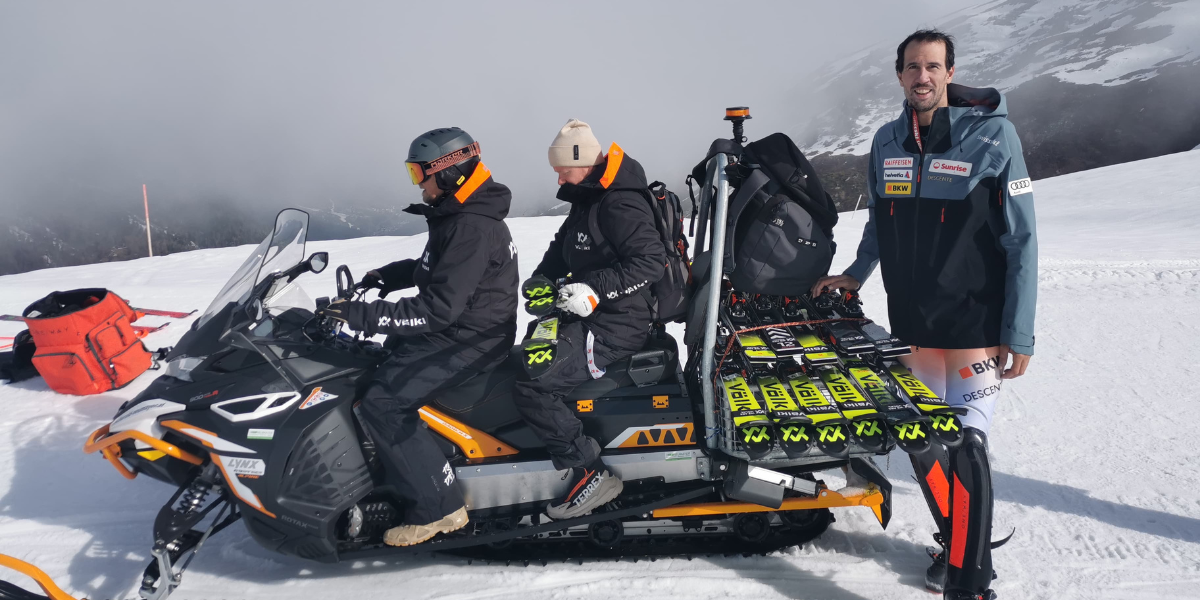
Perhaps the most striking development in Zenhäusern’s independent venture is his groundbreaking equipment change. For the entirety of his career, stretching back to his childhood, he had skied exclusively on Rossignol equipment, a brand synonymous with alpine skiing excellence and a long-standing partner in his numerous successes. "I never thought about leaving Rossignol because I was always happy," he admitted, highlighting the depth of his loyalty and the strength of the relationship. This made his unexpected transition to Völkl Marker all the more significant.
The move was not initiated by Zenhäusern actively seeking a new brand. Initially, he was skeptical, having never tested any other ski equipment in his professional life. However, with nothing to lose, he agreed to a test session in Gurgl, Austria. The results were immediate and transformative. "The skis were turning so easily from the first turn on," Zenhäusern recounted, describing a sensation that allowed for a "shorter turn, a shorter radius." For an athlete whose career is built on the nuanced interaction between skier and snow, such an immediate and positive feedback loop on new equipment is exceptionally compelling.
Beyond the technical performance of the Völkl skis, Zenhäusern was equally impressed by the human element behind the brand. Völkl Marker strategically paired him with veteran serviceman Marian Bires, a highly respected figure in the ski racing world with years of experience working alongside some of the sport’s most successful athletes. The synergy between the new equipment and the expertise of Bires provided Zenhäusern with something invaluable: a fresh surge of motivation. "For me, it’s a new motivation, something new," he stated, "It’s exciting." This partnership with Völkl Marker, a brand with its own rich history of innovation and success in alpine racing, represents not just an equipment change but a comprehensive strategic alignment that offers renewed energy and confidence.
The Beacon: Crans-Montana 2027
Central to Zenhäusern’s renewed commitment and independent program is a singular, powerful objective: competing at the 2027 FIS Alpine World Ski Championships in Crans-Montana, Switzerland. For any Swiss athlete, a home World Championships represents the pinnacle of national pride and athletic ambition. For Zenhäusern, it embodies both a profound personal dream and a tangible goal that provides a clear roadmap for his efforts. "That was always a big dream for me," he confirmed, "That’s also one of the reasons I continue my career."
The prospect of competing on home soil, amidst the roar of Swiss fans, offers a unique opportunity to conclude his career on the grandest possible stage. However, qualifying for a World Championships, particularly for a host nation with a deep pool of talent, is no small feat. Zenhäusern fully acknowledges that he must earn his place, navigating the rigorous qualification process against younger, national team-supported competitors.
Despite the challenges of training independently, he maintains a competitive starting bib number, a crucial advantage in slalom where early starts often benefit from pristine course conditions. This allows him to realistically contend for qualification spots. "If I had to start with bib 60 or 70, maybe I would have made another decision," he reflected, highlighting the practical considerations that underpin his decision to continue. Instead, he sees a viable path forward, fueled by his personal motto: "Everything is open and everything is possible. Nothing is impossible." The allure of Crans-Montana 2027 is not merely about participation; it is about the opportunity to once again compete at the highest level, representing his country in front of his compatriots, and potentially adding a final, golden chapter to his storied career.
The Pursuit of the "Flow State"
Beneath the layers of medals, victories, equipment changes, and logistical challenges lies the purest explanation for Ramon Zenhäusern’s unwavering commitment to ski racing: the ceaseless pursuit of the "perfect run." In a sport where absolute perfection is an elusive ideal, the quest itself becomes the ultimate motivator. "In ski racing, there is almost never a perfect run," he mused, articulating the profound fascination that keeps him returning to the start gate.
Skiing, at its core, is a dynamic interplay of gravity, balance, coordination, timing, and raw instinct. The search for that ephemeral "flow state," where all these elements coalesce effortlessly, is what truly drives Zenhäusern. He describes it as a moment when everything feels seamless, almost involuntary. "You reach the finish and almost can’t explain why you were fast," he said, "It just happened." This sensation, often described by athletes as being "in the zone," is where performance transcends conscious effort, becoming an intuitive dance with the mountain.
For Zenhäusern, chasing this flow is "the best feeling." It is a testament to the intrinsic joy and profound satisfaction derived from mastering a craft, pushing boundaries, and connecting with the very essence of the sport. The medals and victories are external markers of success, part of his indelible legacy. But the "inner fire" that he speaks of, the passion that burns too brightly to extinguish, is fueled by this ongoing, deeply personal search for that moment of perfect synchronicity on the snow.
Now, with the innovative support of Völkl Marker beneath his feet, the renewed guidance of his father, and the tantalizing prospect of a home World Championships in Crans-Montana on the horizon, Ramon Zenhäusern is not merely extending his career. He is actively scripting a new, independent chapter, one defined by resilience, reinvention, and an enduring love for the sport that transcends all external expectations. His journey is a powerful reminder that for true champions, the desire to chase that elusive, perfect run can burn brighter than any past accomplishment. He continues, not out of obligation, but because the fire still rages within.

