
A groundbreaking study from the Swiss Institute for Snow and Avalanche Research (SLF) has fundamentally challenged a decades-old assumption in mountain safety and snow science, revealing that increased pressure on a snowpack does not, as previously debated, enhance its stability. Instead, the research demonstrates that additional weight—whether from new snowfall or the passage of a skier—actually makes weak layers within the snowpack significantly more susceptible to collapse. This discovery, published in the prestigious scientific journal Geophysical Research Letters, provides a definitive answer to a scientific dispute that has divided experts since the 1970s and carries profound implications for avalanche forecasting, backcountry safety, and the engineering of mountain infrastructure.
The Evolution of Avalanche Mechanics: A Fifty-Year Scientific Debate
The quest to understand why and how slab avalanches occur has long focused on the behavior of "weak layers"—thin, fragile strata of snow crystals buried beneath more cohesive layers of snow. When these weak layers fail, the overlying "slab" loses its support and slides down the mountain, often with catastrophic results. However, the exact physics governing the failure of these layers has been a subject of intense academic friction for over half a century.
Since the mid-1970s, the international snow research community has been split between two primary schools of thought regarding the impact of vertical pressure, known in physics as "normal force."
The first theory posited that additional pressure from above acted as a stabilizing agent. Proponents argued that as more snow accumulated or as a heavy load was applied to the surface, the vertical force would compress the weak layer, increasing the friction between snow crystals and effectively "locking" the layer in place. According to this model, a higher degree of "shear force"—the force pulling the snow parallel to the slope—would be required to overcome this increased friction and trigger a slide.
The second theory suggested a more volatile relationship. This perspective argued that the fragile structure of crystals in a weak layer, such as surface hoar or depth hoar, is inherently brittle. In this view, the vertical pressure does not stabilize the layer but rather brings it closer to its breaking point. Consequently, when a weak layer is already under significant vertical stress, it requires much less shear force to trigger a complete structural failure.
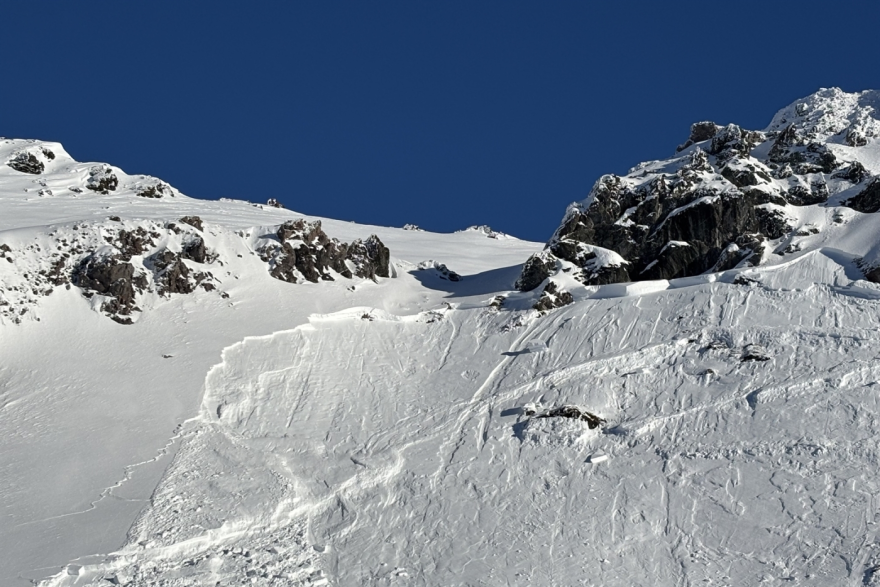
The recent experiments conducted by the SLF in Davos have finally provided the empirical evidence needed to settle this debate, firmly supporting the second theory.
Methodology: Replicating Mountain Conditions in the Cold Laboratory
To resolve the dispute, SLF researchers, led by PhD student Jakob Schöttner, moved beyond theoretical modeling and into the controlled environment of a high-tech cold laboratory. The study utilized 63 natural snow samples collected from the Davos region in the Graubünden canton of the Swiss Alps. These samples were specifically selected because they contained "surface frost"—a particularly dangerous type of weak layer consisting of large, feathery crystals that form on the surface during cold, clear nights and are subsequently buried by later snowfall.
The researchers utilized a "specially developed test apparatus" designed to simulate the complex interplay of forces acting on a snowpack on a steep mountain slope. On a natural incline, the snowpack experiences two primary forces: the vertical normal force (the weight of the snow and anything on top of it) and the parallel shear force (the pull of gravity dragging the snow down the mountain).
In the lab, the samples were subjected to varying combinations of these forces. To ensure the highest level of accuracy, the team employed high-speed cameras capable of capturing thousands of frames per second. This allowed the researchers to observe the exact micro-second when the weak layer transitioned from a stable state to a total structural collapse.
Key Findings: The Synergistic Effect of Compression and Shear
The results of the laboratory analysis were conclusive. The data indicated that vertical pressure and shear stress work in tandem to destabilize the snowpack. Jakob Schöttner summarized the findings by stating that pressure does not make the snowpack more stable; rather, both forces together lead to the failure of the weak layer.
The high-speed footage revealed that as vertical pressure increased, the fragile crystals within the surface frost layer began to buckle and snap under much lower shear loads than previously predicted by the stabilization theory. This suggests that the structural integrity of a weak layer is far more sensitive to weight than many experts had assumed.
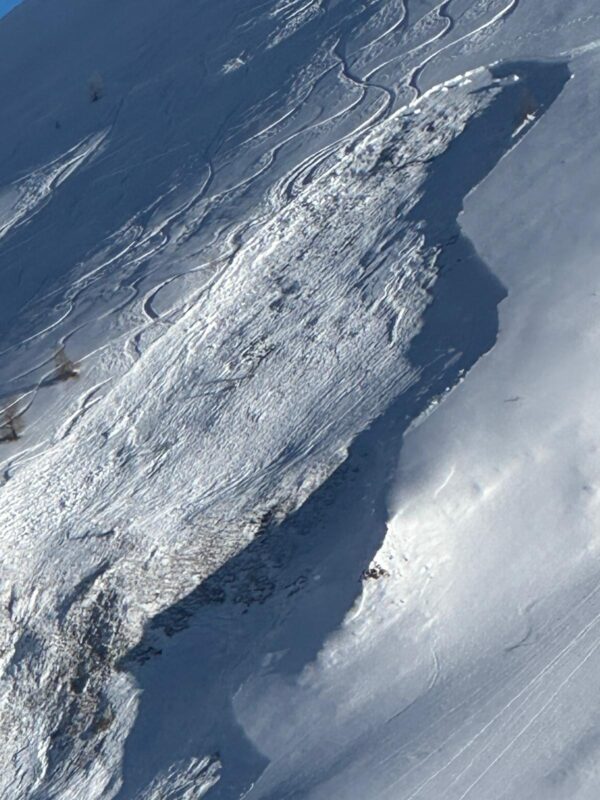
This "combined loading" effect means that the traditional understanding of a "safety margin" in the snowpack may be overestimating stability in certain conditions. For instance, after a heavy snowfall, the added weight of the new snow might be perceived as eventually "settling" and stabilizing the layers beneath through compaction. However, the SLF findings suggest that during the period of loading, the risk of a deep-seated slab avalanche remains extremely high because the vertical weight is actively pushing the buried weak layer toward its failure threshold.
Implications for Avalanche Forecasting and Public Safety
The practical applications of this research are immediate and far-reaching. Avalanche forecasters rely on complex models to predict the likelihood of slides across different terrains and weather patterns. By integrating this new understanding of how vertical pressure interacts with weak layers, these models can be refined to provide more accurate assessments of "human-triggered" avalanches.
In the context of winter sports, this data explains why a single skier or snowboarder can trigger a massive slab avalanche even on a day when the snowpack appears "settled." The concentrated vertical pressure applied by a person can be the "tipping point" for a weak layer already strained by the weight of the overlying slab.
Furthermore, the study highlights the dangers of "rapid loading." When heavy snow falls quickly or when wind-drifting accumulates snow on a particular lee slope, the rapid increase in vertical pressure significantly reduces the amount of additional shear force needed to cause a collapse. This reinforces the long-standing safety advice to avoid steep slopes during and immediately after heavy precipitation or high wind events.
Chronology of Snow Science Milestones
The SLF study represents a pivotal moment in a timeline of snow science that has evolved over the last century:
- 1936: The founding of the Swiss Federal Institute for Snow and Avalanche Research (SLF) on the Weissfluhjoch above Davos, marking the beginning of systematic snow research.
- 1950s-1960s: Early development of shear strength tests to evaluate avalanche risk.
- 1970s: The emergence of the debate regarding the role of normal force (vertical pressure) versus shear force.
- 1990s: Introduction of the "Compression Test" and "Extended Column Test," which became standard field tools for skiers to check for weak layers.
- 2003: The development of the "Anticrack" theory, which suggested that collapse (vertical failure) is as important as shear (horizontal failure) in avalanche release.
- 2026: The SLF publishes the definitive laboratory evidence proving that vertical pressure destabilizes weak layers, ending the 50-year debate.
Technical Analysis: Why Surface Frost is the "Silent Killer"
The focus on surface frost (surface hoar) in this study is particularly relevant for alpine safety. Surface hoar is often referred to as the "silent killer" by mountain guides because it creates a persistent weak layer that can remain dangerous for weeks or even months after being buried.
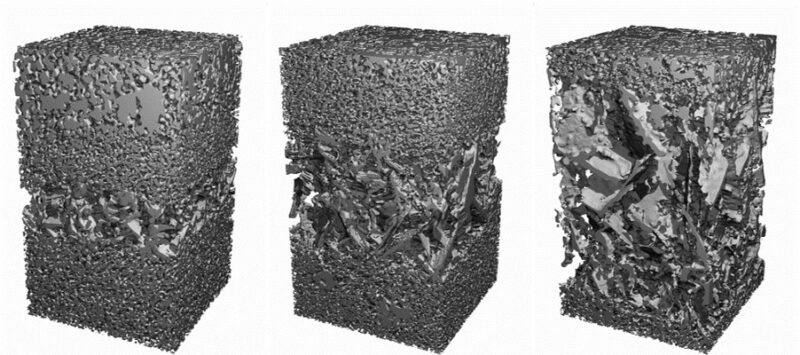
Unlike other types of snow crystals that might bond together over time (a process known as sintering), surface hoar crystals are exceptionally large and stand upright like a house of cards. The SLF research proves that these crystals are particularly vulnerable to "compressive failure." When the vertical load becomes too great, the crystals don’t just slide; they crush. This crushing action creates a vacuum or a gap that allows the crack to propagate across an entire slope at lightning speed, leading to the release of a slab.
By proving that vertical pressure accelerates this crushing process, the SLF has provided a microscopic explanation for a macroscopic disaster.
Global Impact and Future Research Directions
While the study was conducted in Switzerland, the physics of snow is universal. Agencies such as the Colorado Avalanche Information Center (CAIC) in the United States and Avalanche Canada are expected to review these findings to update their educational materials and forecasting algorithms. The research is especially pertinent in continental climates (like the Rocky Mountains), where persistent weak layers are more common than in maritime climates.
Looking ahead, the SLF plans to expand this research to other types of weak layers, such as faceted snow (often called "sugar snow") and depth hoar. Researchers also aim to investigate how temperature fluctuations affect the "pressure-sensitivity" of these layers. If a weak layer becomes even more susceptible to pressure as it warms, the risks associated with "spring-time" avalanches or climate-change-induced temperature spikes could be higher than currently estimated.
Conclusion
The findings from Jakob Schöttner and the team at the SLF represent a significant leap forward in the field of snow mechanics. By debunking the myth that pressure equals stability, the study provides a clearer, more dangerous, but ultimately more accurate picture of mountain snowpack dynamics. For the thousands of professionals who manage mountain safety and the millions of tourists who visit the Alps and other ranges annually, this data is a vital tool in the ongoing effort to reduce the toll of avalanche-related fatalities. The message from the cold labs of Davos is clear: respect the weight of the snow, for it is a catalyst for collapse, not a guarantor of stability.

