
The fitness landscape in major metropolitan hubs continues to diversify as specialized, sport-mimicking modalities move from elite training facilities into the mainstream boutique market. NRTHRN Strong, a Danish-born fitness concept, has recently established a significant presence in New York City’s Flatiron District, signaling a shift toward low-impact, high-intensity interval training (HIIT) inspired by Nordic cross-country skiing. This expansion brings a specialized form of athletic conditioning—once reserved for professional skiers or those with access to snowy climates—to an urban audience seeking efficient, full-body metabolic conditioning. By utilizing a proprietary training machine and a structured circuit-based methodology, the studio aims to solve the historical barrier of accessibility associated with cross-country skiing, a sport widely regarded by exercise physiologists as one of the most effective forms of cardiovascular and muscular exercise.
The Physiological Advantage of Cross-Country Skiing
Cross-country skiing is frequently cited in sports science literature as a "gold standard" for aerobic capacity. Unlike sports that isolate specific muscle groups, the mechanics of skiing require the simultaneous synchronization of the cardiovascular system, upper body, lower body, and core. Data from various kinesiological studies, including research published in the National Library of Medicine, indicate that the energy expenditure of cross-country skiing significantly outpaces that of alpine (downhill) skiing. Specifically, it takes approximately two and a half hours of downhill skiing to equal the caloric burn achieved in just one hour of cross-country skiing.
At a moderate pace, an individual can expect to burn between 400 and 700 calories per hour, depending on intensity and body composition. This efficiency stems from the "total body" nature of the movement; the "poling" action engages the latissimus dorsi, triceps, and deltoids, while the "striding" or "skating" motion targets the glutes, quadriceps, and hamstrings. Furthermore, the requirement for balance on narrow surfaces forces constant engagement of the transverse abdominis and oblique muscles. NRTHRN Strong seeks to replicate these metabolic demands within a controlled studio environment, removing the variables of weather, terrain, and specialized outdoor equipment.
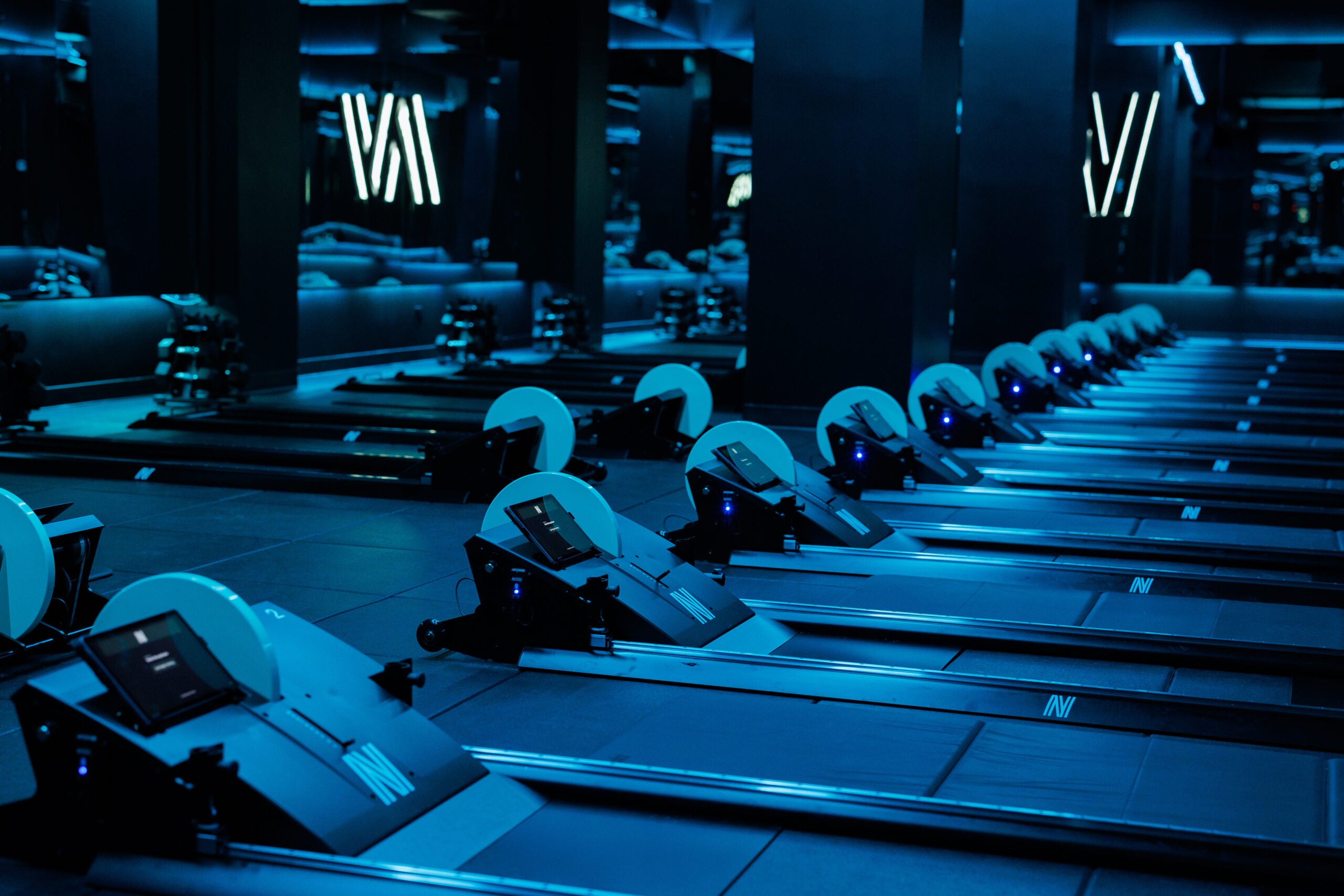
Engineering the Indoor Skiing Experience: The NRTHRN Trainer
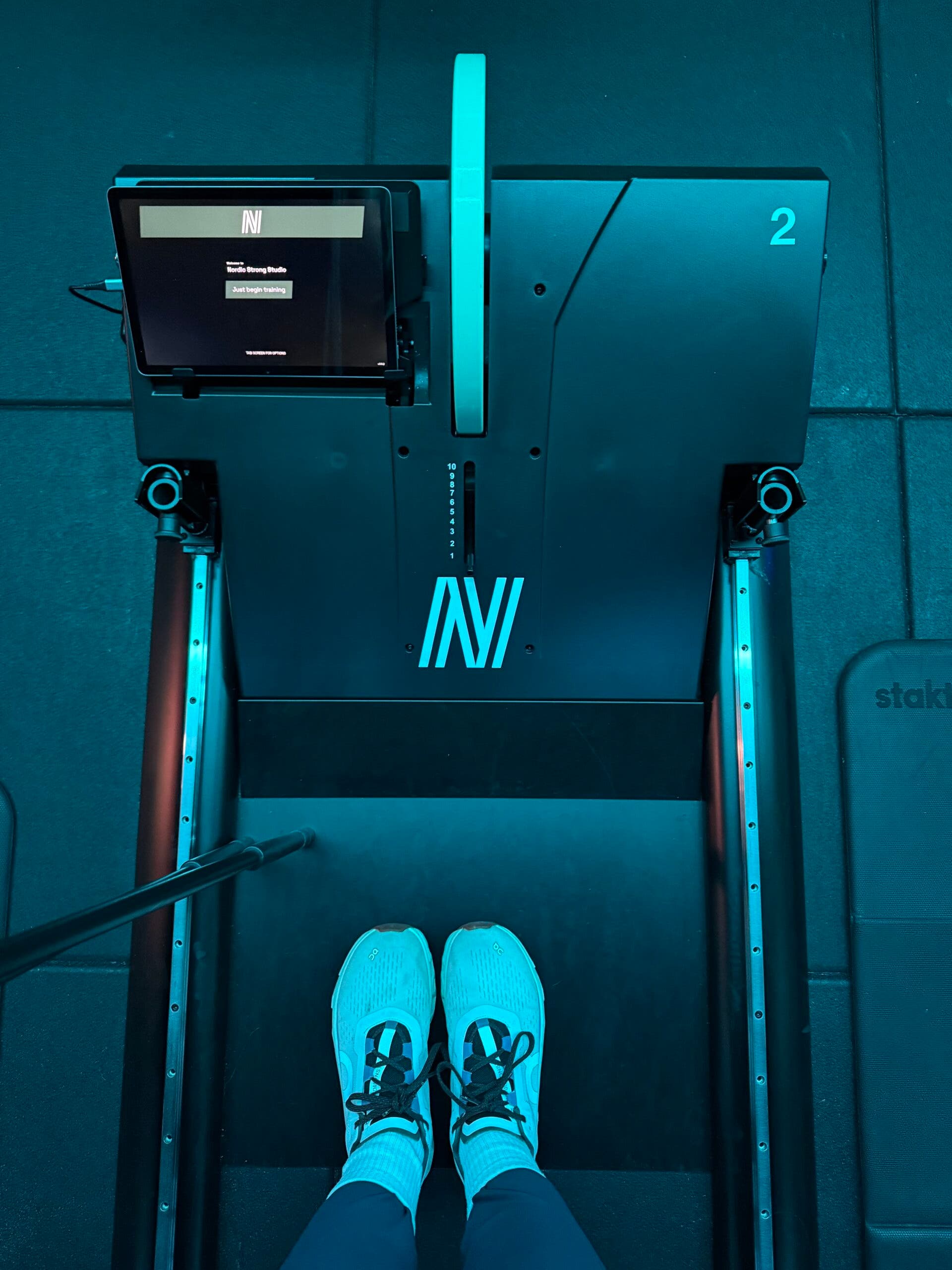
The centerpiece of the NRTHRN Strong methodology is the NRTHRN Trainer, a proprietary piece of equipment designed to bridge the gap between traditional gym "ergs" and the actual mechanics of snow-based skiing. While rowing machines (indoor rowers) and vertical ski ergs have existed for decades, the NRTHRN Trainer introduces a unique horizontal and sliding component. The machine resembles a hybrid between a rowing ergometer and a shuffleboard or Pilates reformer carriage.
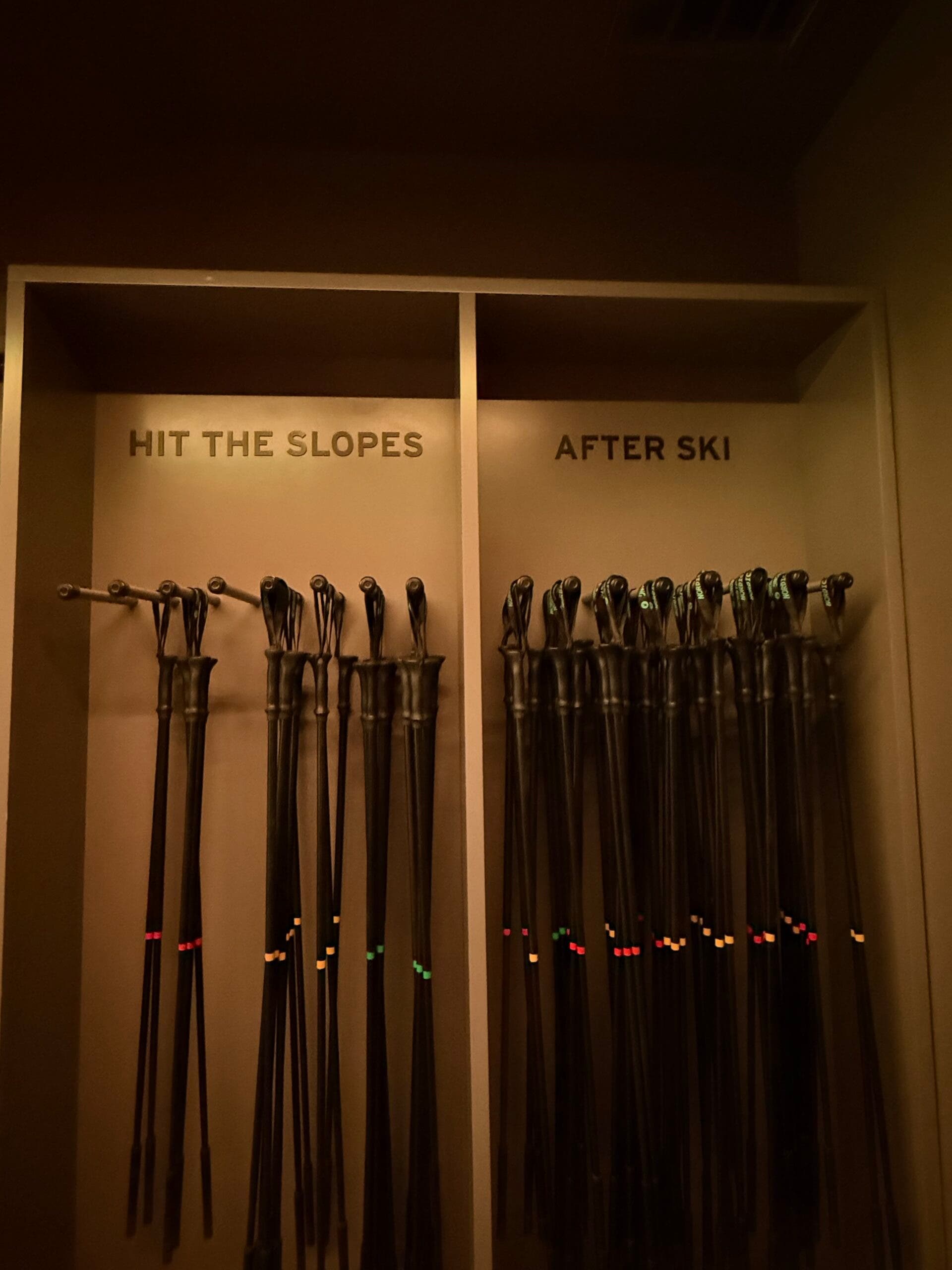
The trainer features two sockets designed to house specialized ski poles of varying lengths, catering to the height and reach of different users. Unlike vertical ski machines that focus primarily on the downward "double-pole" pull, this trainer allows for a more authentic sliding motion. The poles slip into the sockets and slide back against resistance, mimicking the propulsion required to move across flat or uphill snowy terrain.
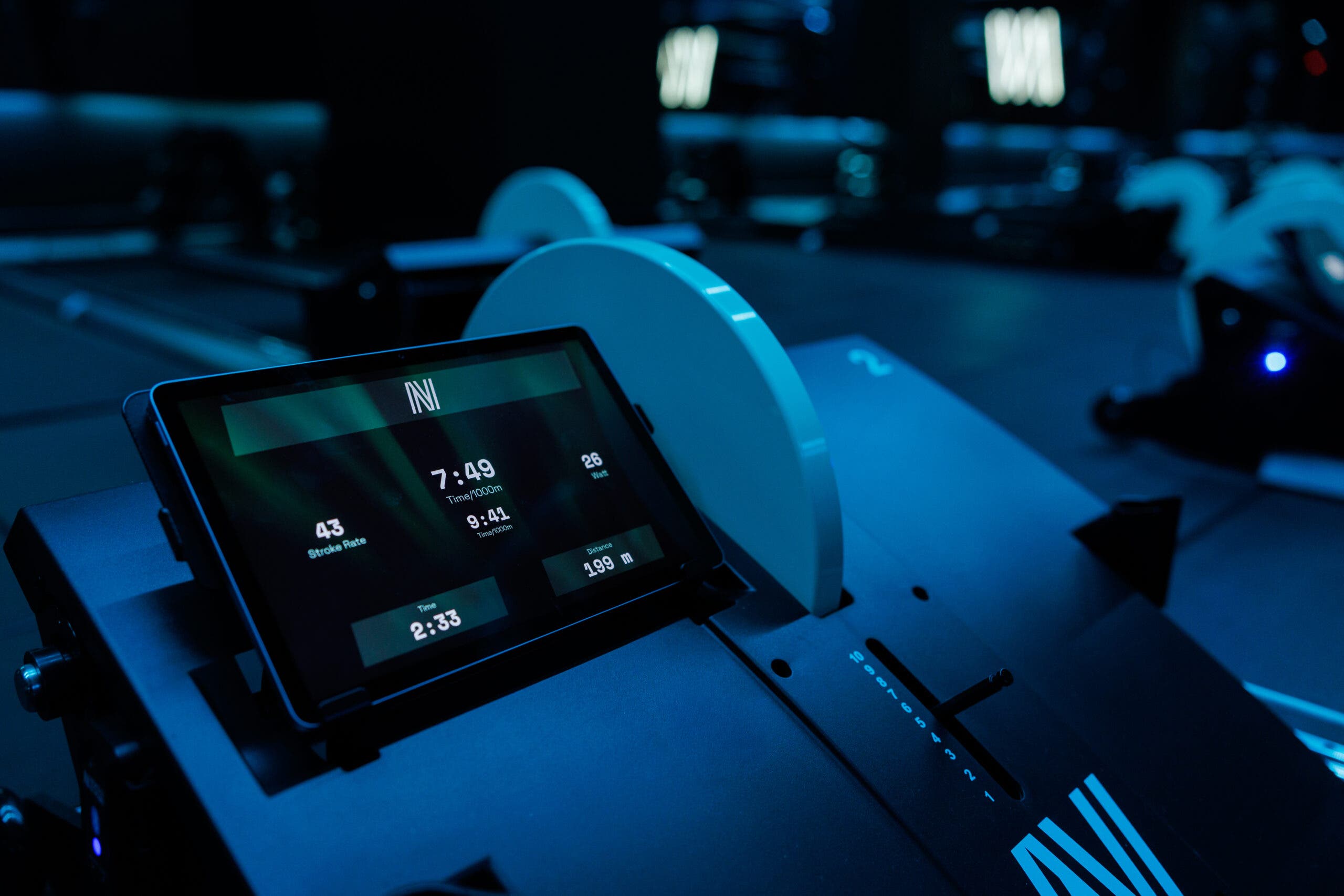
Integrated technology plays a crucial role in the user experience. Each trainer is equipped with a digital monitor that provides real-time feedback on performance metrics, including:
- Stroke Rate: The frequency of movements per minute.
- Pace per 1,000 Meters: A standard metric for measuring endurance and speed in ergometer-based sports.
- Total Distance: Cumulative output over the course of the session.
- Time Elapsed: Precise tracking for interval-based training.
This data-driven approach allows participants to track their progress over time, a feature that has become a staple in modern boutique fitness to encourage retention and "gamify" the workout experience.
The HIIT Methodology and Class Structure
The NRTHRN Strong curriculum is built on a High-Intensity Interval Training (HIIT) framework, a method proven to increase post-exercise oxygen consumption (EPOC), commonly known as the "afterburn" effect. The standard 50-minute session is designed to maximize time under tension while preventing overtraining through strategic rotation.
A typical class is divided into distinct phases:
- The Machine Intervals: Participants spend approximately ten minutes on the NRTHRN Trainer, focusing on explosive, plyometric movements. These intervals are designed to elevate the heart rate rapidly and challenge the user’s cardiovascular ceiling.
- The Floor Circuit: Following the machine work, participants move to a dedicated mat area for ten minutes of functional strength and core conditioning. This portion of the class often utilizes bodyweight exercises or small props to target the stabilizing muscles required for skiing.
- The Rotation: This circuit—machine to mat—is repeated multiple times throughout the 50-minute duration. The transitions are kept brief to maintain a high heart rate and ensure that the workout remains primarily aerobic while building muscular endurance.
Instructors, such as those at the NYC flagship, guide the class through specific "target zones." While the resistance is largely user-controlled—meaning the harder a participant pulls, the more resistance they encounter—instructors call out specific stroke rates and intensities to ensure participants are working within the intended metabolic zones.
Low-Impact Benefits and Accessibility in Urban Markets
One of the primary drivers of the "Nordic fitness" trend is the low-impact nature of the movement. As the fitness-conscious population ages, there has been a documented shift away from high-impact activities like road running, which can be taxing on the knees, hips, and ankles. The NRTHRN Trainer operates on a sliding mechanism that eliminates the jarring impact associated with foot-to-pavement contact.
Exercise science experts and kinesiology professionals have noted that this type of movement is particularly beneficial for individuals with limited mobility or those recovering from lower-extremity injuries. Because the user controls the tempo and the force of the slide, the risk of injury is significantly lower than in traditional weightlifting or high-impact aerobics. This makes the workout accessible to a broad demographic, from elite athletes looking for cross-training to older adults seeking to maintain bone density and cardiovascular health without joint strain.
Furthermore, the "barrier to entry" for cross-country skiing has traditionally been high. It requires specific geographic conditions, expensive gear (skis, boots, bindings, poles), and a degree of technical skill. By distilling the movement into a studio format, NRTHRN Strong democratizes the sport. The studio provides the poles and the environment, requiring only standard gym attire from the participant.
Market Context: From Copenhagen to the Global Stage
The expansion of NRTHRN Strong into New York City’s Flatiron neighborhood—a district often referred to as "Fitness Row" due to its high density of boutique studios—is a strategic move. The brand follows a lineage of Scandinavian fitness philosophies that emphasize functional movement, "friluftsliv" (the concept of outdoor living), and efficient design.
The NYC studio’s aesthetic reflects these roots, utilizing "moody" lighting inspired by the Aurora Borealis (Northern Lights) to create an immersive atmosphere. This branding strategy aligns with the broader trend in the $96 billion global fitness industry, where consumers are increasingly looking for "experiential" workouts rather than just a place to lift weights.
Market analysts suggest that the success of NRTHRN Strong in Copenhagen provided the necessary proof-of-concept for international scaling. The New York City market serves as a litmus test for the brand’s viability in the United States. If the Flatiron location maintains high occupancy rates, industry insiders expect a broader rollout to other major metropolitan areas like Chicago, Denver, and Boston, where there is an existing cultural affinity for winter sports.
Broader Implications for the Fitness Industry
The introduction of NRTHRN Strong highlights several key trends currently shaping the fitness industry. First is the "sport-specific" trend, where workouts are modeled after professional athletic disciplines (e.g., boxing, rowing, and now skiing). Second is the integration of technology with mechanical movement, providing users with the "quantified self" data they have come to expect from wearable devices and smart gym equipment.
Finally, the rise of such studios underscores a growing interest in "functional longevity." Rather than focusing solely on aesthetic outcomes, modern consumers are prioritizing workouts that improve their ability to perform daily tasks and enjoy outdoor activities. As noted by participants who have transitioned from the studio back to the slopes, the strength and balance gained on the NRTHRN Trainer translate directly to improved performance in the real-world sport.
As of January 2026, NRTHRN Strong operates seven days a week, offering a variety of class types including "Strength," "Sculpt," and "Endurance." As the brand continues to establish its footprint, it represents a significant step in the evolution of indoor training, proving that the benefits of the Nordic wilderness can be successfully replicated in the heart of the world’s busiest cities.

