
Some athletes step straight into the international circuit, learning through experience and figuring things out as they go. Others take a longer route, building through college, stepping away from the spotlight before returning more complete and more certain of what they want. This season, two American teammates, Maxi Hoder and Bradshaw Underhill, reflect just how different those journeys can be. Both have found themselves in the same environment at Apex Academy, a group built around athletes chasing the next level and pushing each other daily. But the way they arrived there could not be more different. In that contrast sits a bigger question that continues to surface in U.S. men’s ski racing: Not just how talent is identified, but what happens after. Their stories illuminate the evolving landscape of alpine ski development, challenging traditional notions of progression and highlighting the resilience and strategic decision-making required to reach the sport’s highest echelons.
Divergent Journeys: Hoder and Underhill’s Paths to Prominence
The recent NorAm Finals served as a poignant backdrop for the achievements of Maxi Hoder and Bradshaw Underhill, two American ski racers whose 2023-2024 season culminates in shared success, despite vastly different developmental trajectories. The event, a critical proving ground for North American talent, showcased their readiness for the next level, drawing attention to the increasingly diverse pathways available to aspiring professional skiers. While both now train under the demanding yet supportive umbrella of Apex Academy, a program specifically designed to propel athletes to elite international competition, their individual stories offer a compelling study in contrasts concerning talent identification, strategic patience, and the profound impact of collegiate athletics.
The traditional American ski racing pipeline has historically favored early identification and rapid progression through national team structures. However, Hoder and Underhill defy this singular model, presenting two compelling arguments for alternative approaches. Hoder’s calculated, self-directed ascent prioritized foundational development over premature exposure, while Underhill’s journey through the collegiate system, marked by significant setbacks and profound personal growth, underscores the value of extended development outside the immediate glare of the professional circuit. This dual narrative not only celebrates their individual accomplishments but also sparks a broader conversation within U.S. Ski & Snowboard regarding the optimal nurturing of talent and the systemic support required for athletes at various stages of their careers.
Maxi Hoder: A Deliberate Ascent Through Strategic Patience
Maxi Hoder’s trajectory in ski racing has been characterized by a deliberate, almost counter-intuitive approach to progression, consciously opting out of the traditional race to the top. Growing up within Vermont’s storied Mount Mansfield system, a breeding ground for many top American skiers, Hoder was immersed in the competitive culture from a young age. Yet, when faced with the critical decision of stepping onto the NorAm circuit – a vital stepping stone to World Cup racing – he chose a path less traveled, one defined by strategic patience rather than immediate engagement.
Choosing Foundational Development Over Early Exposure
Hoder’s decision to forgo a partial NorAm season was a calculated risk. "I kind of decided I wasn’t going to do just one NorAm. I would either do all of them or none of them," he recalled. His rationale was rooted in a pragmatic understanding of the system: without a strong "point profile" – a reflection of past performance that dictates starting bib numbers – he would be relegated to starting far back in the field, often outside the top 60. Such positions significantly reduce the chance of scoring points or even making a second run, rendering the effort largely unproductive for development. "I didn’t quite have the point profile to have a good bib, so I decided not to do any," he explained.
This choice was not born of a lack of ambition, but rather a mature assessment of what was truly required to compete effectively at that level. Hoder understood that simply participating would not suffice; he needed to be competitive. "I never really committed to a season because I never thought I had the ability yet," he stated, emphasizing the importance of genuine readiness. He recognized the futility of fragmented attempts, stressing, "to do one NorAm is pretty useless. You need a full season to make it count." This perspective highlights a crucial insight: early exposure without the requisite skill or physical maturity can be detrimental, leading to frustration and burnout rather than genuine progression.
A Year Abroad: Professional Training and Physical Maturation
Instead of rushing into the NorAm circuit, Hoder made a pivotal decision for the 2022-2023 season: he stepped away from North American competition entirely. He spent the winter in Europe with Apex Academy, dedicating himself solely to training and personal development. This "year of separation" proved transformative. "Separating my focus from school and skiing to just skiing for a year helped me out a lot," he noted. The intense, professional environment allowed him to adopt the rigorous regimen of an elite athlete, focusing on every detail from physical conditioning to mental preparation. "Doing all the steps that a professional would do, I finally had the time," he added.
Training in Europe meant constant exposure to high-level competition and demanding courses. Hoder was frequently surrounded by athletes faster and more experienced than himself, a challenge he embraced. "I was getting beat just about every day, and I think it pushed me a lot," he admitted. This environment fostered rapid learning and an elevated standard of performance. Concurrently, Hoder underwent significant physical development. "I grew up pretty skinny for a while, and the last two seasons I’ve filled out a decent amount," he shared. The physical maturation, coupled with dedicated strength and conditioning, provided the necessary power and stability essential for navigating the aggressive demands of modern ski racing. This holistic development—mental, technical, and physical—was a direct result of his strategic pause from competitive racing.
The Payoff: NorAm Success and a World Cup Berth
Hoder’s patience and dedicated preparation paid dividends upon his return to North America for the 2023-2024 season. His goal had shifted from merely gaining experience to making a tangible impact. In his inaugural full NorAm campaign, he delivered an impressive performance, securing second place overall in the slalom standings. This achievement earned him a coveted World Cup start position, a testament to his calculated approach and consistent improvement.
For Hoder, this success was not an overnight breakthrough but the culmination of steady, incremental progress. His philosophy remains straightforward: "My goal every year is just to improve a little bit. So far, every year I’ve lowered my points." Lowering points is the ultimate measure of improvement in ski racing, indicating stronger performances and better starting positions. Hoder’s journey underscores a powerful lesson: success in alpine racing isn’t always about being the fastest earliest, but about building a robust foundation, making strategic decisions, and committing to continuous, patient improvement.
Bradshaw Underhill: Resilience Forged in Collegiate Competition
Bradshaw Underhill’s path to the upper echelons of ski racing charts a course marked by perseverance, navigating setbacks, and finding profound growth within the collegiate system. While many peers pursued direct pipelines to professional racing, Underhill embraced a four-year tenure at Middlebury College, an institution increasingly recognized for its ability to cultivate international-caliber athletes. His final collegiate season was dominant, a stark contrast to the earlier years fraught with mental and physical challenges.
Early Promise, Enduring Setbacks
Underhill experienced early success in his racing career, which initially put him on a traditional development path, including time with the U.S. Ski Team as a U21 athlete. However, this early promise was soon tested by adversity. "My first year, I was quite successful," he recounted, "Then I really struggled mentally and with some injuries." These struggles were not fleeting; they were periods where his progress unraveled, forcing him to confront significant doubts about his future in the sport.
Such periods are common in elite athletics but can be career-ending for many. For Underhill, they became catalysts for profound personal and mental development. "That season and those realizations, that I can actually pull myself out of a hole like that much quicker than I thought, really pushed me to mature mentally," he reflected. This ability to rebound from adversity, to process setbacks efficiently, became a cornerstone of his renewed approach to racing. It’s a skill that extends far beyond the race course, shaping his resilience and self-awareness.
Collegiate System: A Crucible for Holistic Development
Middlebury College provided Underhill with a unique development environment, offering space for growth not just as an athlete, but as an individual. The NCAA system, often viewed as a detour from the professional track, instead became a crucial incubator for his maturity and sense of responsibility. "I didn’t really know how the experience at Middlebury and having more responsibility for myself would help me mature," he admitted. The structure of collegiate life—balancing academics, training, and personal life—demanded a level of self-management that fostered independence. "It made me want to keep building myself as a person and as a ski racer," he emphasized.
By his senior year, the fruits of this holistic development were evident. Underhill emerged stronger physically, more stable mentally, and deeply integrated into a supportive team environment. The camaraderie and mutual pushing within the Middlebury team played a significant role. "I think a lot of it was mental strength and also having the teammates to rely on," he stated. This supportive ecosystem, coupled with consistent training and competition, allowed him to peak during his final collegiate season, demonstrating the immense value of the NCAA pathway as a robust development space.
Post-Collegiate Shift: Singular Focus and Elite Performance
After graduating from Middlebury, Underhill transitioned back into a full-time, singular training environment with Apex Academy. The mental resilience honed during his collegiate years proved invaluable. His biggest shift wasn’t technical, but rather in his ability to process the inevitable highs and lows of a competitive season. "I can take a bad race and pull something good out of it much quicker," he noted, highlighting his accelerated recovery from disappointment.
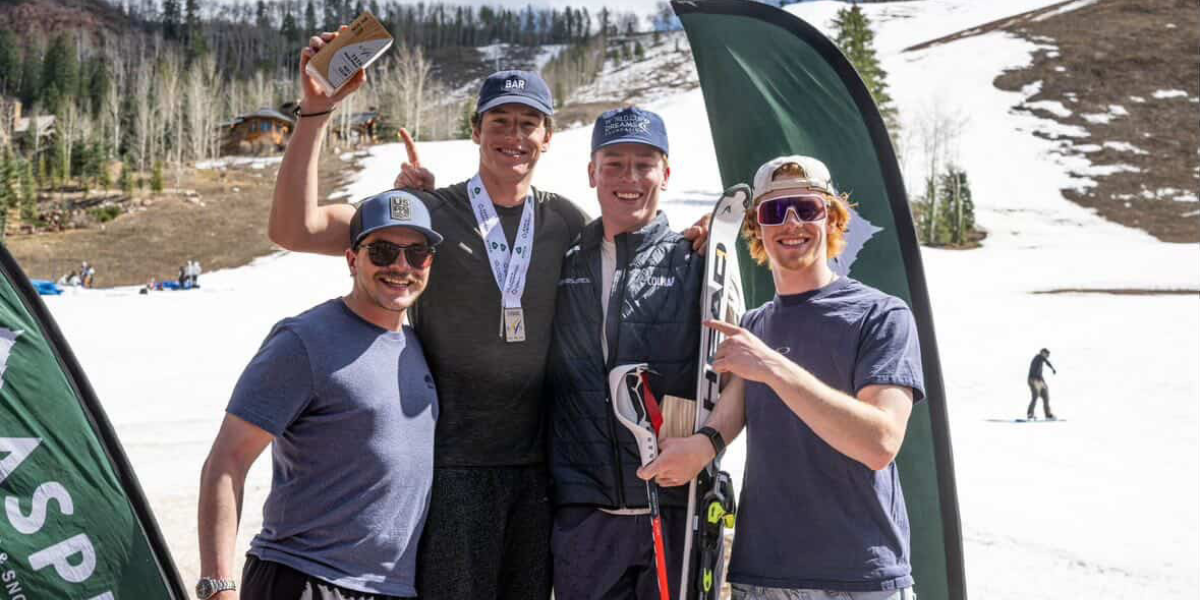
The focused environment at Apex Academy, free from academic demands, allowed him to channel all his energy into skiing. "Apex really allowed me to focus more on my skiing," he said. "Skiing was the only thing I was doing." This intense focus, combined with training alongside highly motivated peers, unlocked new levels of performance. "Having good guys that want to be there and want to push to get faster is always beneficial," Underhill commented, underscoring the positive impact of a high-performance training group. "I think that helped me unlock more in my skiing."
This progression culminated in a standout performance at a Europa Cup GS in Turnau, where he executed two clean runs, moving from 58th to an impressive 11th place. This result was not a sudden burst of talent but a confirmation of a trajectory patiently built over years. "That felt like a big mark in my season," he recalled. "Like, this is where I need to be." Underhill’s journey challenges the notion that development must be linear or confined to early adulthood. "I think a big misunderstanding is that development has to happen when you’re 20 or 21," he argued. "A lot of people mature at different rates." For him, his path was simply "a different path," one that ultimately led him to the level he always believed was within reach.
The Broader Question: What Happens After Talent is Identified?
The contrasting journeys of Maxi Hoder and Bradshaw Underhill, now converging at Apex Academy, cast a sharp spotlight on a critical and persistent question within U.S. men’s ski racing: What happens after talent is identified, and perhaps equally important, what happens when it is not identified early enough, or when an athlete is "de-identified" from traditional pathways?
Two Paths, Same Environment: Systemic Reflections
Hoder and Underhill’s experiences, though distinct, reflect two sides of the same systemic coin. Hoder’s development occurred largely outside the traditional U.S. Ski & Snowboard pipeline, by his own design. His self-imposed "gap year" in Europe, focusing on fundamental improvement rather than competitive starts, exemplifies an athlete taking ownership of his development timeline, refusing to be rushed by external pressures. His success challenges the implicit assumption that constant exposure to higher-level competition, regardless of readiness, is always the optimal path.
Underhill, conversely, was identified early, even spending time on the U.S. Ski Team as a U21 athlete. However, a crucial moment arrived when he was not re-named to the national team. For many, such a decision marks the end of their professional aspirations. Yet, for Underhill, it spurred a redirection into the NCAA system, a path often perceived as a "fallback" but which he transformed into a robust developmental space. He spent four years honing his skills, strengthening his mental game, and maturing as a person before re-emerging at a higher competitive level.
The "Gap" in U.S. Ski Racing Development
Together, their trajectories illuminate a significant "gap" in the U.S. alpine development model. There has long been an emphasis on early talent identification, with younger athletes often funneled into national development groups or junior national teams. However, the support structures and flexible pathways for athletes beyond these initial stages, particularly when progress isn’t linear or when they face setbacks, have historically been less clearly defined. Development is rarely a straight line, and it frequently doesn’t adhere to the timelines dictated by governing bodies or team selections.
Hoder’s decision to wait reflects a proactive strategy to fill this potential gap himself, prioritizing readiness over premature engagement. He capitalized on his timing, entering the NorAm circuit when he was physically and technically prepared to make a significant impact. Underhill’s journey highlights the resilience required when an athlete is released from the "system." His trajectory didn’t restart; it continued, albeit in a different, highly effective environment provided by collegiate sports.
The Rise of Alternative Pathways and Independent Academies
The NCAA pathway, once sometimes seen as a departure from elite skiing, is increasingly proving its worth as a formidable development ground. Athletes like Underhill, who spend four years maturing physically and mentally within a structured academic and athletic environment, are returning to the international level more complete and often more competitive than when they left the national team system. This trend is not isolated; a growing number of U.S. Ski Team athletes have significant NCAA experience, demonstrating its viability as a legitimate pathway.
Concurrently, independent environments such as Apex Academy are becoming indispensable components of this evolving landscape. For athletes transitioning out of college, Apex provides a professional bridge back to international competition. For others, like Hoder, it offers a dedicated space to build skills and confidence before fully committing to the next level. These independent academies offer continuity, a high degree of athlete autonomy, and a clear sense of ownership over development—qualities that are not always consistently present within larger, more traditional systems. They represent a flexible, athlete-centric approach that complements, and sometimes surpasses, existing structures.
Redefining Development: Beyond the Timeline
The deeper layer of this conversation transcends mere pathways; it challenges the very definition of development itself. Identifying talent is merely the initial step. What follows—the sustained nurturing, the adaptability to individual growth rates, and the provision of stable, supportive environments—may matter far more. Development is not solely physical or technical; it is profoundly shaped by time, mental stability, and whether athletes are given the latitude to progress even when that progress isn’t immediately visible or doesn’t conform to predetermined benchmarks.
Hoder and Underhill are not anomalies. If anything, their experiences are increasingly reflective of a broader reality in professional sports, where diverse journeys to success are becoming the norm. Their stories highlight that the "gap" in development is not necessarily a void, but rather an opportunity for innovation in support structures and a more nuanced understanding of athlete maturation.
Finding the Same Level: A Shared Future
Now, after their individual odysseys, Maxi Hoder and Bradshaw Underhill find themselves in the same crucial juncture. Training side by side at Apex Academy, they are pushing toward identical next steps, building off each other’s strengths in an environment that seamlessly accommodates both their unique developmental histories.
For Underhill, the concept of development has never been confined to a rigid timeline. "I don’t think development is over until you’re 25 or 26," he asserts, a perspective forged through his own experiences of setbacks and late-stage growth. His journey is a powerful testament to the idea that progress doesn’t always manifest early; it can be a slow burn, requiring sustained effort and belief over many years.
For Hoder, the lesson arrives from a different direction but converges on a similar conclusion. His path has been meticulously defined by patience and strategic timing, choosing precisely when to step forward rather than succumbing to the pressure of premature engagement. His success validates the wisdom of deliberate preparation and waiting for the moment when readiness aligns with opportunity.
Both approaches collectively underscore a fundamental truth: progress in ski racing, and indeed in any high-performance endeavor, is not ultimately defined by how quickly it happens, but by its continuity and sustainability. The gap between "early bloomers" and "late developers" is proving to be far less fixed than once assumed, and the lines between traditional national team pathways and alternative collegiate or independent academy routes are increasingly blurring.
There is no singular model for success in modern ski racing. There is no perfect timeline. Instead, there are dedicated athletes like Hoder and Underhill, navigating an ever-evolving system, diligently seeking out environments that allow them to move forward on their own terms. And in this case, two profoundly different paths have converged at the same start line, poised and ready for whatever comes next, exemplifying the rich, multi-faceted tapestry of U.S. men’s ski racing development.

