
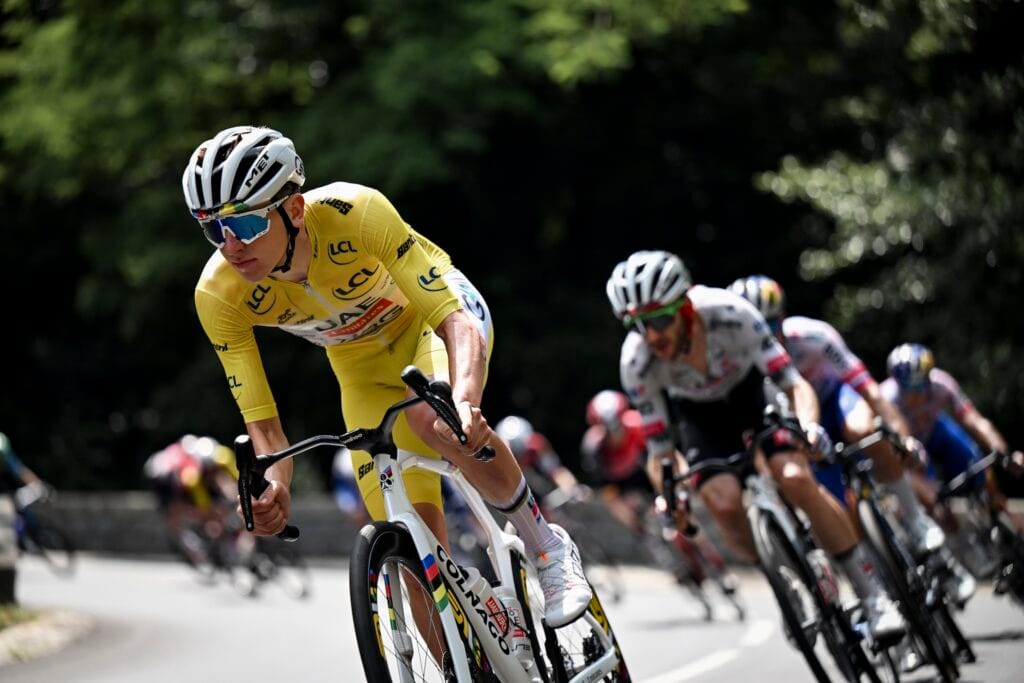
The 2025 Tour de France is set to commence in Barcelona on Saturday, July 4th, marking the beginning of an epic 21-stage journey spanning 3,321 kilometers and featuring a formidable 54,459 meters of elevation gain. For Tadej Pogačar, the Slovenian phenom, this edition represents a historic quest for his fifth overall victory, a remarkable third consecutive triumph in what will be his seventh appearance in the Grande Boucle. He will face off against a peloton of 183 elite cyclists, each vying for glory and a place in cycling history.
The Science Behind Pogačar’s Peak Performance
The demanding nature of the Tour de France necessitates a scientific and highly individualized approach to nutrition. Gorka Prieto-Bellver, the performance nutritionist for Pogačar’s UAE Team Emirates XRG, provided an in-depth look into the team’s meticulous dietary strategy. "Every meal is precisely calculated according to each rider’s individual needs," Prieto-Bellver explained in an interview with Olympics.com. This personalized approach is crucial, especially for a rider like Pogačar, who consistently pushes the boundaries of human endurance.
While the temptation of indulgent treats is ever-present, Pogačar’s commitment to his performance is unwavering. "Pogačar sends me many suggestions for things we simply cannot serve, such as brownies with lots of butter and chocolate, and that sort of thing," Prieto-Bellver revealed. This highlights the strict discipline required to maintain peak physical condition throughout such a demanding event. However, even within this rigorous framework, there are room for culinary preferences. "Pogačar is very fond of cheesecake and beetroot risotto," Prieto-Bellver added, revealing a glimpse into the rider’s personal tastes that are still accommodated within the team’s nutritional science. This balance between strict adherence and individual preference is a cornerstone of elite sports nutrition.
Fueling the Classics and Mountain Stages
The energy demands on cyclists vary significantly depending on the stage profile. Prieto-Bellver elaborated on the differences between one-day classics and the stages of the Tour de France. "One-day races are often over 200 kilometers and can be harder and more demanding than, for example, a flat Tour stage," he stated. These races, characterized by their sustained intensity and often unpredictable tactics, require a robust fueling strategy to ensure riders can maintain power output from start to finish.

The mountain stages of the Tour de France, however, present a unique and extreme challenge, often serving as the ultimate deciders of the overall classification. For these pivotal days, the team’s nutritional support becomes even more critical. Beyond the in-race fueling, which riders are often reminded to consume via team radio, a substantial pre-stage meal is essential. "On the toughest mountain stages, such as stages 18 and 19 of this year’s Tour [referring to the final Alpine stages], riders consume a meal with around 3.5 grams of carbohydrates per kilogram of body weight approximately four hours before the start," Prieto-Bellver detailed. This strategic carbohydrate loading provides the necessary glycogen stores to power the immense efforts required on steep climbs and during prolonged ascents. The flexibility in how these carbohydrates are consumed allows riders to choose formats that best suit their individual digestive tolerance and preferences.
The Foundation: Breakfast and Pre-Race Nutrition
The day for Tour de France riders begins with a carefully orchestrated breakfast, typically consumed about four hours before the stage start. The team offers a diverse array of options, ensuring that each rider can meet their specific nutritional targets. "What individual riders eat depends on the recommendations I give them," explained Prieto-Bellver. "We have a mobile app where they have their individual goals, and for breakfast, they choose foods that count towards this goal."
The daily carbohydrate target can be substantial, often around 250 grams. To put this into perspective, this is equivalent to approximately eight to nine slices of bread or about one kilogram of cooked rice. The breakfast menu is designed to accommodate these high demands while offering variety:
- Porridge: A staple for sustained energy release.
- Rice Pudding: Another excellent source of complex carbohydrates.
- Various Breads: Including options with olives, raisins, sun-dried tomatoes, and turmeric, offering diverse flavors and micronutrients.
- Pancakes and Waffles: Including chocolate and apple variations, providing a palatable way to consume carbohydrates.
- Chocolate Biscuits: Offering a quick energy boost alongside other breakfast items.
This comprehensive breakfast strategy ensures riders begin each stage with a full tank of fuel, ready to tackle the day’s challenges.
Fueling the Engine: In-Race Nutrition
The demands on a cyclist’s body during a Tour de France stage are astronomical, requiring a constant intake of energy and electrolytes. Prieto-Bellver emphasized the highly personalized nature of in-race fueling: "All riders have their individual recommendations for what they need to consume during the race and how much salt they need. This also depends on the weather and temperature."
The team employs sophisticated methods to determine individual salt loss. "We conduct salt tests to see how much salt each rider loses per hour. Some lose one gram per hour, others lose 300 milligrams. Therefore, what they need to consume varies greatly," he stated. This level of detail is crucial for preventing hyponatremia, a potentially dangerous condition caused by an imbalance of electrolytes.
The standard recommendation for carbohydrate intake during a race is between 100 to 120 grams per hour, a feat that requires significant physiological adaptation. "This has become very popular, and only professionals do it," Prieto-Bellver noted. "I cycle a lot myself, but I would never try to take in 120 grams per hour. I would have stomach problems. But riders can do it because they train daily."
The process of building this tolerance is systematic and progressive. "The amount of carbohydrates they take in varies from week to week. Some weeks they consume a lot to build up tolerance, from 100-120 grams and up to 130 grams. Some tolerate even more, but this is something they train for, and it is very individual. How often they train for this also varies. Some do it once a week, others a couple of times a week," he explained. To put this into context, 120 grams of carbohydrates per hour is equivalent to approximately four sports drinks or six to seven energy gels.
Crucially, the composition of these carbohydrates is not arbitrary. Prieto-Bellver highlighted the importance of the correct blend of glucose and fructose. "Previously, there was a lot of confusion because bars and gels were not in the right format. They must have a ratio between glucose and fructose of 2:1 or 1:0.8. And there are different gels. If you only take glucose (maltodextrin), for example, the gut cannot absorb it all. Then carbohydrates remain in the stomach, and you can get stomach pain, cramps, and diarrhea." This scientific understanding of carbohydrate absorption is vital for optimizing energy delivery and preventing gastrointestinal distress, which can be race-ending for any rider.
Recovery and Refueling: Post-Stage Nutrition
The work doesn’t end when a rider crosses the finish line. Post-stage nutrition is critical for replenishing depleted energy stores and initiating muscle repair. Typically, riders receive three meals after a stage: an initial liquid meal, followed by two solid food meals. The exact amount and composition can be adjusted based on individual energy expenditure and recovery needs.

For logistical simplicity and to ensure consistency, the team often provides a standardized meal for all riders after the race. "After the race, all finishers receive the same thing, to make it a bit easier for the chefs. How much each rider eats is individual, but if we make chicken, everyone eats chicken. If we make salmon, everyone eats salmon, regardless of what their favorite dishes are," Prieto-Bellver explained. The dinner menu is then tailored based on the day’s efforts, factoring in the watts generated and the duration of the ride.
Despite the need for standardization in the main course, the team provides an impressive array of accompaniments. "We usually have 15 types of pasta, 10 different salads, and 80 different desserts," Prieto-Bellver noted, underscoring the team’s commitment to providing variety and catering to individual preferences within the overall nutritional plan.
A typical dinner includes:
- Two types of vegetables: Providing essential vitamins and minerals.
- Three types of carbohydrates: Including a sauced option (e.g., pasta with tomato sauce), a plain option (e.g., white rice or plain pasta), and a third, often more indulgent, variant like pizza.
- Bread: A staple source of carbohydrates.
- Desserts: Including popular choices like cheesecake and tiramisu, offering a well-deserved treat after a grueling day.
This comprehensive nutritional strategy, from the meticulously planned pre-race meals to the detailed in-race fueling and the restorative post-stage recovery, is a testament to the scientific rigor and dedication of modern professional cycling. For Tadej Pogačar and his rivals, their success in the Tour de France is as much a product of their physical prowess and tactical brilliance as it is of the sophisticated dietary science that fuels their extraordinary efforts. The subtle nuances of carbohydrate ratios, electrolyte balance, and precise calorie intake are the invisible engines driving these athletes towards their ultimate goals.

