
The high-altitude resort of Tignes has been compelled to terminate its summer glacier skiing season ahead of schedule as an unprecedented heatwave continues to reshape the operational landscape of the European Alps. Originally slated to remain open for skiing and snowboarding until Sunday, July 19th, the resort management announced a premature cessation of activities on the Grande Motte glacier, effective Thursday, July 16th. This decision follows more than two weeks of sustained extreme temperatures, during which the freezing level—the altitude at which the temperature transitions from above to below zero degrees Celsius—consistently exceeded 4,000 meters. This atmospheric threshold is critical for the preservation of glacial ice, and its prolonged elevation has resulted in rapid surface melt and deteriorating safety conditions.
In an official statement released on Wednesday, resort officials emphasized that the decision was rooted in the necessity of maintaining skier safety. "The Grande Motte glacier will be closed to skiers starting Thursday, July 16th," the resort confirmed. "Due to the current state of the glacier, safety conditions are no longer optimal for skiing." The early closure highlights the increasing vulnerability of high-altitude glacial terrain to the shifting climate patterns of the 21st century, specifically the intensification of summer "heat domes" over Central Europe.
Comparative Status of Alpine Glacial Operations
While Tignes has shuttered its slopes, other high-altitude areas in the Alps and Scandinavia continue to operate, albeit under varying degrees of environmental stress. The international ski area shared by Zermatt in Switzerland and Cervinia in Italy remains open to the public. These resorts benefit from some of the highest lift-served terrain in Europe, with the Matterhorn Glacier Paradise reaching altitudes that provide a slight buffer against the rising isotherm. Similarly, Passo Stelvio in Italy, a destination traditionally dedicated exclusively to summer skiing, continues its operations.

In Austria, the Hintertux glacier remains a primary hub for summer snow sports. As of mid-July 2026, Hintertux reports the most extensive skiable terrain in the Northern Hemisphere, with approximately 24 kilometers (15 miles) of slopes still available for use. Despite the challenging conditions, the resort intends to adhere to its original seasonal plan, with a closing date set for July 26th. Following the cessation of skiing, Hintertux officials stated they would transition to non-skiing glacial tourism. "After that, we’ll enjoy the glacier summer to the fullest off the slopes," a spokesperson noted. The resort anticipates a return to skiing in September 2026, with the high-profile ‘Hintertux Park Opening’ currently scheduled for early October.
Contrasting the closures, Saas-Fee in Switzerland is moving forward with its scheduled opening for the 2026–27 winter season on Saturday, July 18th. To mitigate the impact of the midday heat, the resort has implemented an early-morning operational schedule, with lifts running from 7:00 am until noon. This strategy aims to allow athletes and enthusiasts to utilize the snow during the firmest conditions of the day before the afternoon solar radiation triggers significant softening of the surface. Saas-Fee management plans to remain operational until October 31st, provided that meteorological conditions do not deteriorate further.
Outside of the Alpine chain, the Galdhøpiggen summer ski area in Norway continues to offer limited skiing. Situated on Northern Europe’s highest mountain, the resort typically benefits from a cooler Scandinavian climate, though it has not been entirely immune to the broader warming trends affecting the continent.
Atmospheric Dynamics and the 4,000-Meter Isotherm
The current heatwave is the longest recorded so far in the summer of 2026. Meteorologists have observed a persistent high-pressure system that has trapped warm air over the continent, pushing the 0°C isotherm to heights usually reserved for the highest peaks of the Mont Blanc massif. When the freezing level remains above 4,000 meters for an extended period, glaciers lose their ability to "recover" overnight. Without a nightly refreeze, the meltwater penetrates deeper into the glacial structure, lubricating the interface between the ice and the bedrock and increasing the risk of crevasse opening and icefalls.
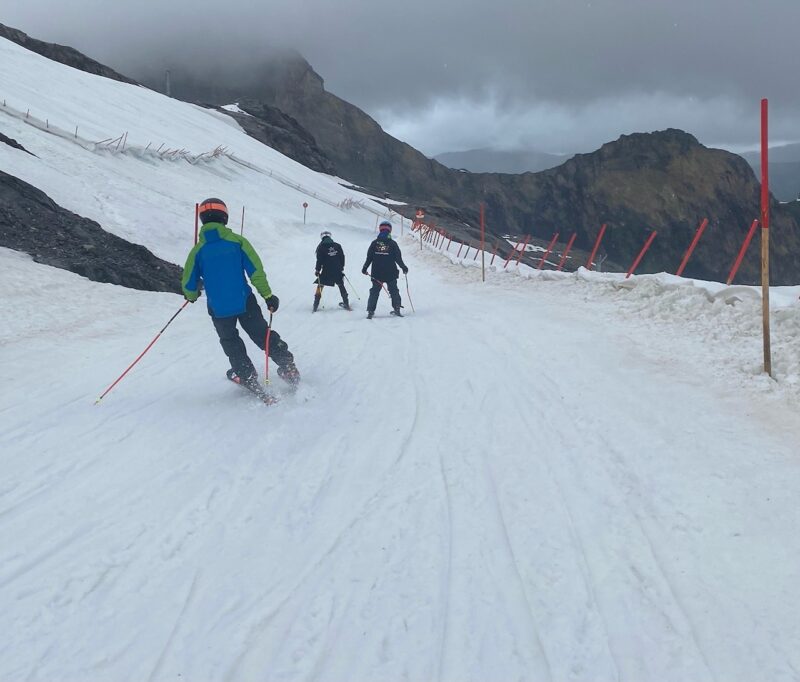
The environmental impact of this heat is most visible in the rapid disappearance of the seasonal snowpack. In many areas, the "firn"—the multi-year snow that acts as a protective blanket for the ancient glacial ice beneath—has already melted away. This leaves the darker, older ice exposed. Because this ice has a lower albedo (reflectivity) than fresh snow, it absorbs more solar energy, which in turn accelerates the melting process in a feedback loop that scientists have labeled as a primary driver of glacial recession.
Wildfire Crisis and Environmental Hazards
The heatwave has not only affected the cryosphere but has also created catastrophic conditions for the region’s forests and grasslands. Large swaths of the Alps and the Pyrenees are currently experiencing extreme drought, leading to a surge in wildfire activity. The situation turned tragic in the Savoie region of the French Alps, where a 22-year-old firefighter lost his life while battling a blaze. The incident has underscored the growing danger posed by wildfires in mountainous terrain, where steep slopes and erratic wind patterns make containment exceptionally difficult.
Data from the European Forest Fire Information System (EFFIS) indicates that 155,569 hectares have burned across Europe so far this summer. While this figure is currently lower than the 228,098 hectares recorded during the same period in 2025—which stands as Europe’s most destructive wildfire year on record—climatologists are concerned. The early onset of the 2026 fire season suggests that the total burned area could eventually surpass previous records if the heat persists into August. The combination of dry timber, low humidity, and high temperatures has turned much of Southern and Central Europe into a tinderbox.
Scientific Analysis of Glacial Loss
Researchers monitoring the Rhone Glacier in the Swiss Alps have provided sobering data regarding the current rate of ice loss. Recent measurements indicate that some sections of the glacier have lost nearly 1.5 meters of ice thickness in just the past few weeks. This rate of ablation is significantly higher than historical averages and points to a critical loss of stored water resources.
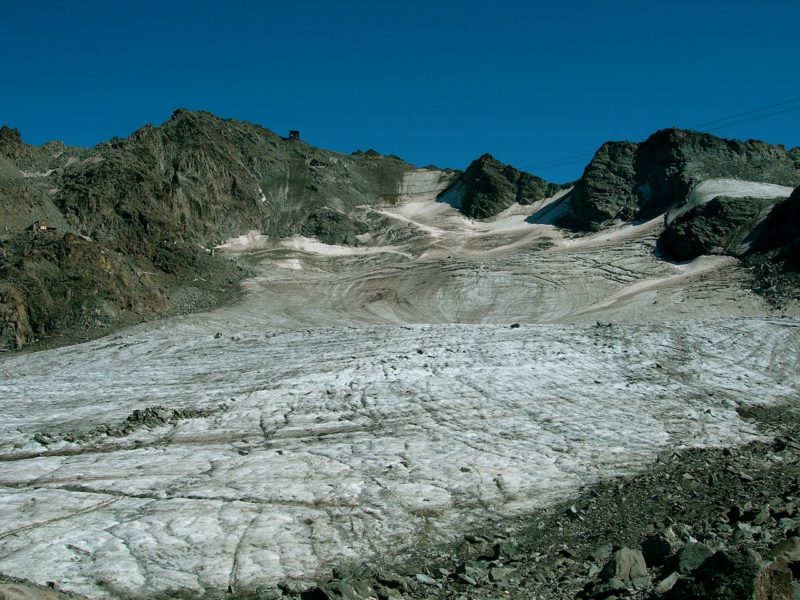
Glaciers serve as "water towers" for Europe, regulating the flow of major rivers such as the Rhone, the Rhine, and the Po. The accelerated melting witnessed during the 2026 heatwave raises long-term concerns regarding water security, hydroelectric power generation, and agricultural irrigation in the valleys below. As the snow cover vanishes earlier each year, the "ancient ice"—some of which has been frozen for centuries—is being liquidated at an unsustainable rate. Scientists warn that Europe has been the fastest-warming continent over the past 30 years, warming at twice the global average rate.
Implications for the Snowsports Industry
The early closure of Tignes and the modified hours at Saas-Fee represent a broader trend of adaptation within the ski industry. For decades, summer skiing was a staple of Alpine tourism and a vital training ground for professional ski teams. However, the shortening of the summer season and the total abandonment of summer operations by several resorts in recent years suggest a fundamental shift in the business model of mountain tourism.
Resorts are increasingly diversifying their summer offerings to include mountain biking, hiking, and "glacier walking" tours that do not require the same snow consistency as skiing. However, the loss of summer skiing has a significant economic impact on local economies, particularly for specialized hotels, ski shops, and coaching academies that rely on the summer influx of athletes.
As the heatwave begins to ease, temperatures are forecast to drop toward the end of July. While this may stabilize the remaining glaciers and reduce the immediate wildfire risk, the damage to the 2026 glacial mass balance has already been done. The focus for the industry now shifts to the autumn, with hopes that an early cold snap in September might allow for a timely start to the 2026–27 winter season. For now, the silent lifts on the Grande Motte serve as a stark reminder of the environmental challenges facing the high mountains of Europe.

