
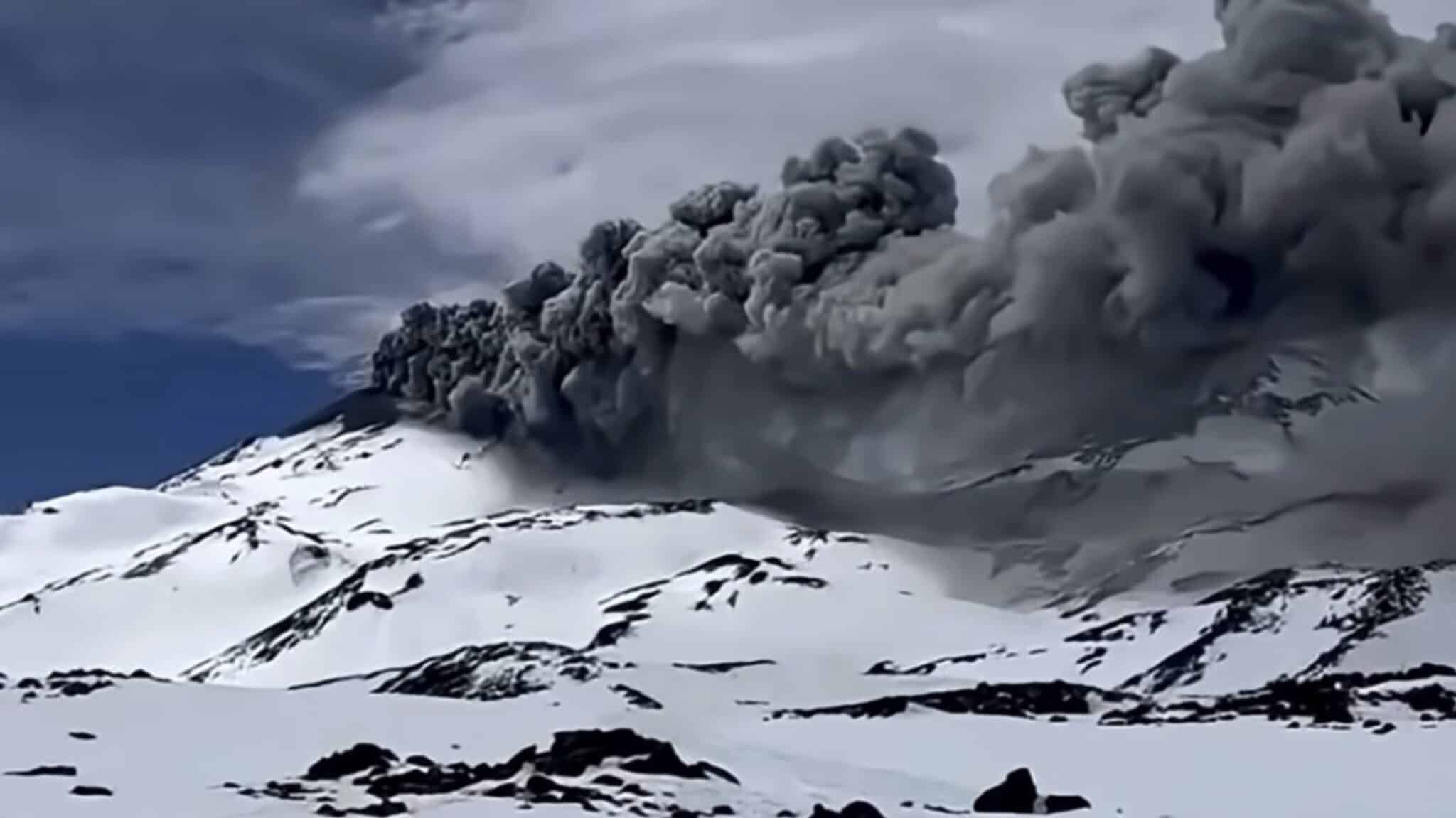
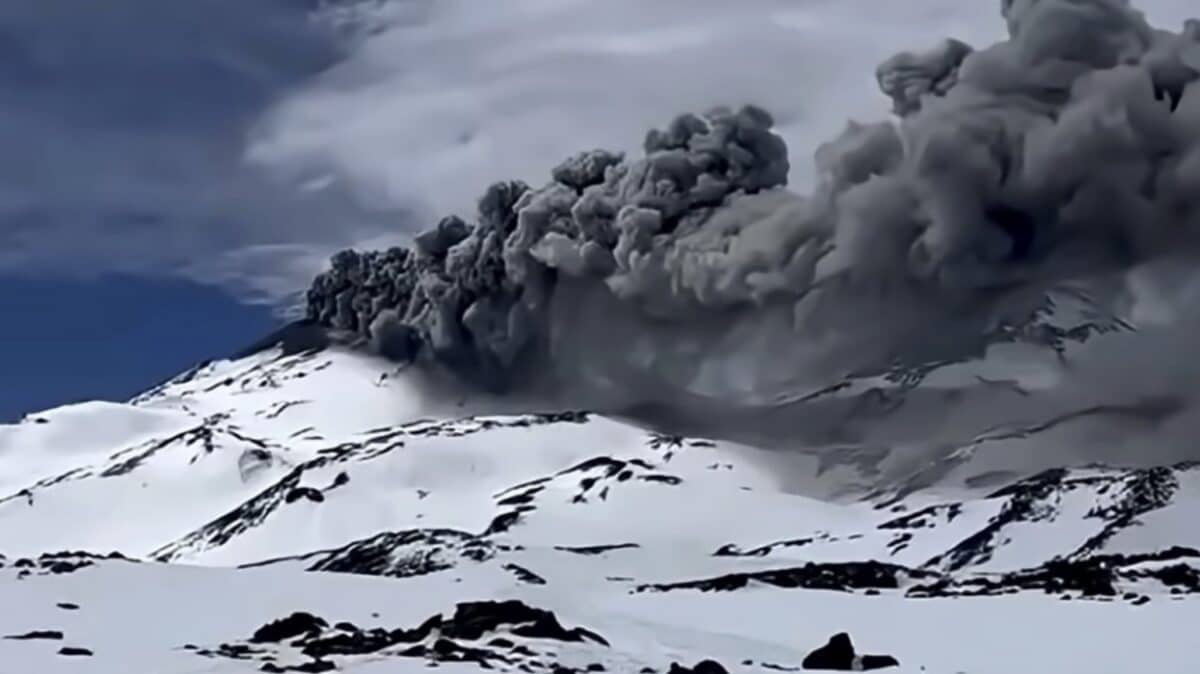
Skiers enjoying the final days of the winter season at one of South America’s most distinctive mountain destinations received a dramatic reminder of the volatile landscape beneath their feet on Friday afternoon. The Nevados de Chillan volcanic complex, situated in Chile’s picturesque Ñuble Region, produced a sudden eruptive pulse that hurled a dense column of pyroclastic material approximately 1,250 feet into the air above its active crater.
The activity, which commenced at approximately 2:10 p.m. local time on September 18, originated from the Nicanor Crater. According to reports issued by Chile’s National Geology and Mining Service (Sernageomin), the explosive event propelled gas, ash, and volcanic rock fragments southward across the upper elevations of the mountain. While the initial burst captured immediate attention, monitoring agencies confirmed that continuous low-level pyroclastic emissions persisted for several hours following the primary event.
Despite the striking visual impact of a 1,250-foot plume, Chilean authorities opted to maintain the existing Yellow Technical Alert level, which has regulated activity at the complex since mid-June. Initial assessments from local emergency management teams confirmed that no injuries, structural damage, or disruptions to regional communities were reported in the immediate aftermath of the eruption. However, the event underscores the unique and precarious coexistence of heavy winter recreation and active geological hazards in the Andes.
An Intersection of Alpine Recreation and Volcanic Activity
The geographic reality of Nevados de Chillan places it in a rare category of mountain resorts operating directly atop an active volcanic system. Featuring 23 distinct trails and 13 ski lifts traversing extensive high-alpine terrain, the resort is a premier destination for international snowsports enthusiasts. Its official 2026 winter calendar designated September 20 as the final day of scheduled lift operations, meaning Friday’s eruption occurred during the absolute twilight of the ski season.
Resort administrators and safety patrols faced a complex operational environment in the wake of the event. Although published calendars indicated that ski operations were slated to continue through the weekend, up-to-the-minute operational updates regarding trail closures within the immediate vicinity of the crater were limited. The resort had been operating under the constraints of the ongoing Yellow Alert for the entirety of the winter season, successfully balancing standard guest services with heightened geological oversight.
Under the provisions established by Sernageomin, a strict safety perimeter spanning approximately 0.6 miles has been enforced around the Nicanor Crater. While this exclusion zone restricts access to the immediate summit area, it historically leaves the primary lift-serviced ski terrain outside the direct line of hazard, provided volcanic activity remains within baseline expectations for a Yellow Alert.
Chronology of the 2026 Eruptive Phase and Seismic Precursors
Friday’s eruption did not materialize without warning; rather, it represents the latest escalation in a multi-month period of heightened subterranean restlessness at Nevados de Chillan. The historical timeline of the complex reveals a pattern of persistent instability that has kept regional geologists on high alert throughout the year.
The current phase of elevated activity began in earnest on June 15, 2026. On that morning, Sernageomin officials officially raised the technical alert level from Green to Yellow following the detection of a sustained surge in volcanic seismicity. Monitoring instruments revealed clear geophysical indicators of fresh magma shifting upward beneath the Las Termas sector of the complex.
That June transition was punctuated by a series of five minor, short-lived explosions that generated ash and gas columns reaching roughly 650 feet above their emission vents. These early winter pulses established the precedent for the current safety protocols, prompting the implementation of the 0.6-mile exclusion zone around the Nicanor Crater.
When evaluated against these mid-winter benchmarks, Friday’s eruptive pulse stands out as a significantly more powerful manifestation of the volcano’s baseline instability. Reaching an altitude of 1,250 feet, the pyroclastic column was nearly double the height of the June emissions. Nevertheless, Sernageomin officials emphasized in subsequent technical statements that the scale and characteristics of Friday’s activity remained entirely consistent with the parameters of a Yellow Technical Alert, precluding the necessity for a higher emergency classification.
Understanding Pyroclastic Emissions and Monitoring Protocols
For the lay observer, the dense material billowing from the Nicanor Crater is frequently mischaracterized as simple smoke or steam. In geological terms, however, Friday’s event was defined by the expulsion of pyroclasts—heterogeneous fragments of solid rock, solidified magma, and fine volcanic glass produced by explosive magmatic and phreatomagmatic processes.
The composition of the plume observed on September 18 featured a high concentration of these pyroclastic fragments, driven southward by prevailing high-altitude winds. The ongoing surveillance of these emissions is managed through a comprehensive, round-the-clock national monitoring network operated by Sernageomin. This infrastructure includes real-time seismic sensors, tiltmeters to measure ground deformation, and high-definition thermal cameras capable of detecting subtle shifts in thermal output before visible eruptions occur.
This rigorous oversight is essential given the complex’s prolific history. According to data maintained by the Smithsonian Institution’s Global Volcanism Program, Nevados de Chillan is one of the most active volcanic centers in the Southern Andes. Its eruptive record includes a notably protracted, multi-year sequence of intermittent explosive events that spanned from 2016 continuously through 2022, establishing a modern precedent for prolonged periods of unrest without catastrophic failure.
An Eventful September Compounds Operational Challenges
The timing of Friday’s volcanic pulse adds to an already extraordinary and challenging month for the management and community surrounding Nevados de Chillan. Just under two weeks prior to the eruption, on the morning of September 7, the resort was struck by a severe structural fire.
The blaze completely destroyed the prominent Hotel Alto Nevados and inflicted varying degrees of damage on several adjacent auxiliary buildings within the Plaza Otto sector of the resort village. Swift emergency response protocols and the effective evacuation of the property ensured that all guests and employees escaped the incident without physical injury. In the days following the fire, resort leadership outlined phased recovery strategies aimed at salvaging the remainder of the winter season and preparing for the transition to summer operations.
The convergence of a major structural fire and a notable volcanic eruption within a span of less than fourteen days has made September 2026 an unforgettable chapter in the resort’s operational history. While investigators confirmed that the hotel fire and the volcanic activity are entirely unrelated geological and human-caused incidents, their chronological overlap tested the resilience of the local tourism infrastructure.
Broader Implications and Ongoing Safety Measures
As the winter ski season draws to a formal close, the events at Nevados de Chillan serve as a case study in the intersection of extreme terrain management and natural hazard mitigation. Operating a major tourism enterprise within an active volcanic zone requires a delicate equilibrium between economic viability and public safety.
Chilean authorities have demonstrated a commitment to this balance through transparent communication, utilizing the tiered technical alert system to inform the public without inducing unwarranted panic. By classifying Friday’s 1,250-foot pyroclastic column as a standard manifestation of Yellow Alert parameters, Sernageomin has reinforced confidence in its predictive models while maintaining necessary boundaries.
For visitors and local stakeholders, the landscape remains a stark reminder of the dynamic planetary forces shaping the Andes. As monitoring teams continue their continuous observation of the Nicanor Crater, the exclusion zones remain strictly enforced, ensuring that adventure tourism and geological volatility can continue to coexist under the watchful eye of modern science.

