
The landscape of Norwegian cross-country skiing has undergone a subtle but significant shift as two of the nation’s brightest talents, Karoline Grøtting and Karoline Simpson-Larsen, navigate a hybrid existence between the national team and their roots at Team Anlegg Øst Entreprenør. Despite being officially inducted into the national squad in May, the pair has remained largely detached from the centralized training programs, opting instead to maintain the specific, high-intensity training methodology that propelled them to international success during the 2025-2026 season.
The Dynamics of a Strained Integration
The ongoing situation highlights a growing tension between the Norwegian Ski Federation’s mandate for centralized preparation and the increasing effectiveness of private professional teams. Following a winter that saw Simpson-Larsen capture Olympic gold and maiden World Cup victories, and Grøtting secure a breakthrough podium finish, both athletes had clearly defined their professional trajectory. They had committed to continuing their development under the guidance of coach Emil Hosøy, a figure whose training philosophy has proven exceptionally potent.
When the national team selection process concluded in the spring, the transition to the official squad was met with resistance from the athletes. They sought exemptions from the mandatory landslag (national team) structure, citing the efficacy of their existing environment. The refusal of these applications by the federation led to a period of administrative friction, eventually forcing the skiers to accept national team spots—albeit under a self-imposed condition of minimal engagement with the centralized training camp schedule.
Chronology of a Disjointed Preparation
The timeline of this friction reveals a systematic divergence in training philosophy. In May and June, the athletes participated in the initial national camp at Sognefjellet, marking their first point of compliance. A second mandatory appearance was logged in Sandefjord just prior to the summer holiday period. The upcoming gathering at Mosetertoppen, scheduled for October 5–9, represents the third and final mandatory engagement of their current commitment.
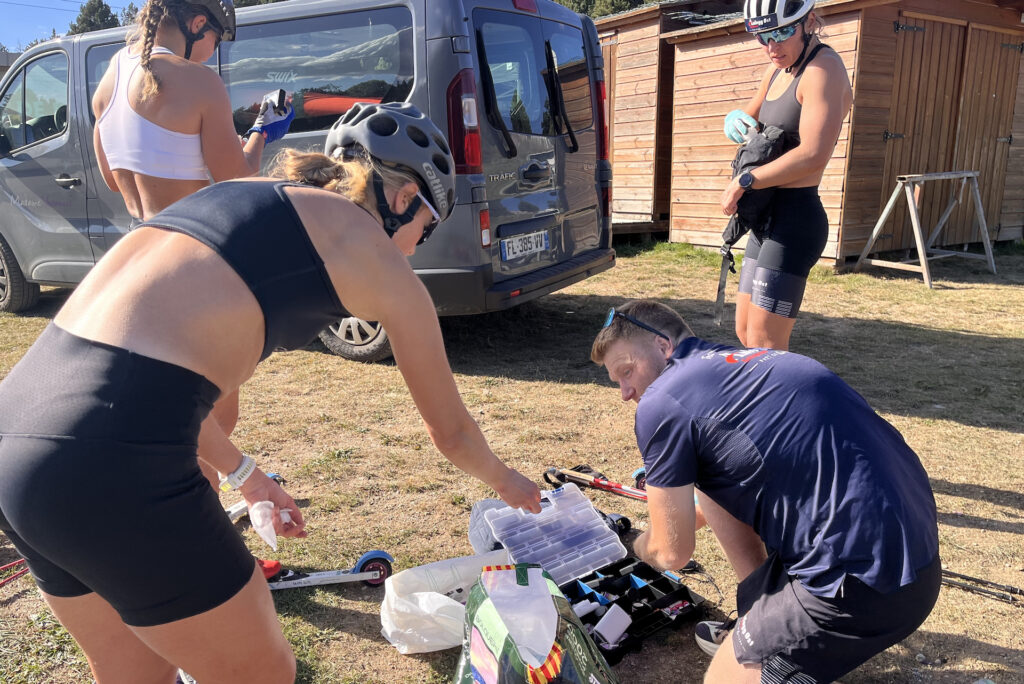
However, the gaps between these events have been filled entirely by the private regimen of Team Anlegg Øst Entreprenør. The most striking example of this detachment occurred in September, when the national team traveled to Font-Romeu in the French Pyrenees for high-altitude conditioning. Rather than integrating with the national group, Grøtting and Simpson-Larsen organized their own presence at the same location, residing and training a mere two kilometers away from their national teammates. Data from the camp suggests this was a significant anomaly; out of the 11-athlete national roster, only four participated in the full scope of the Font-Romeu project, highlighting a broader fragmentation within the squad.
The Efficacy of Private Coaching
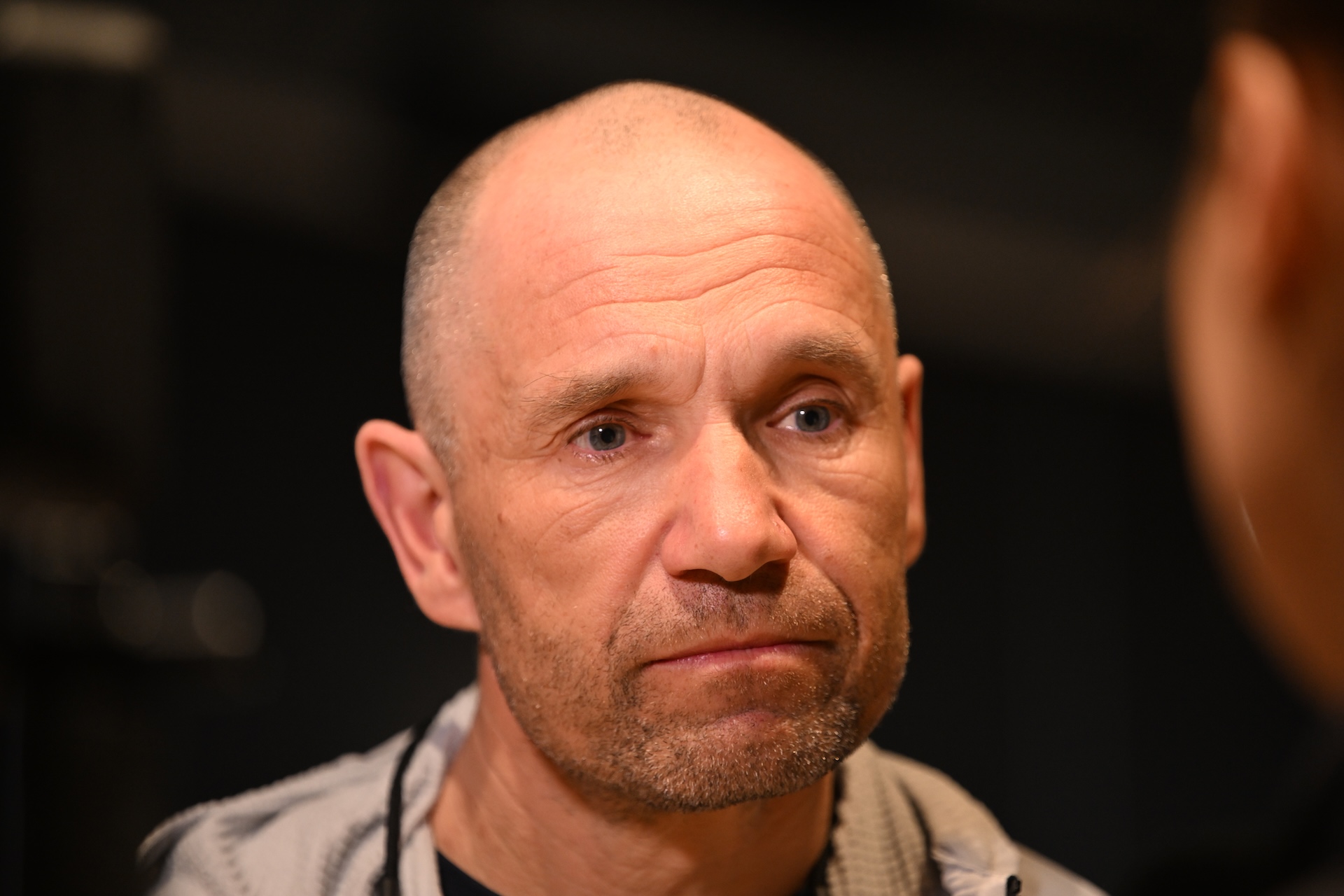
The success of Team Anlegg Øst Entreprenør has forced a re-evaluation of the traditional "centralized is better" model. Emil Hosøy, the architect behind the team’s success, was recently honored as Coach of the Year by the Norwegian Ski Federation’s own coaching committee. This irony—that the federation is celebrating the very coach who is effectively "luring" talent away from its core operations—underscores the complexity of the situation.
The athletes’ preference for the private team is rooted in the concept of "sporting security." In an elite environment where margins are measured in milliseconds, the athletes argue that the consistency of a proven, individual-focused plan is superior to the broader, occasionally generalized, national team approach. By following the high-altitude protocol of the private team, they maintain the continuity that yielded their breakthrough results last winter.
Official Stance: Pragmatism Over Dogma
Per Elias Kalfoss, the national team manager, has adopted a surprisingly pragmatic, if slightly strained, position regarding the non-compliance of his athletes. In recent statements, Kalfoss has consciously avoided labeling the situation as "unfortunate," acknowledging that the federation’s goal should be to create a training environment so compelling that athletes feel no desire to seek alternatives.
"I won’t use the word ‘unfortunate,’" Kalfoss noted in recent discussions regarding the team’s cohesion. "We hope to offer a program so strong that they want to be with us all the time. We believe we achieved that during our last camp, and I hope that next time, they will have an even greater desire to be part of our group."
Kalfoss further conceded that the federation must respect the established relationship between the athletes and their coach. By acknowledging the high level of trust the skiers have in Hosøy’s methodology, the leadership has essentially opted for a policy of non-interference. It is an admission that, in the modern era of professional skiing, the power dynamic has shifted toward the athletes’ ability to curate their own support systems.
Broader Implications for the Norwegian Model
The implications of this standoff extend beyond two individuals. The "Norwegian Model," which has long relied on the dominance of a centralized, state-supported, and unified training structure, is facing a modern evolution. As private sponsorship increases and specialized coaching becomes more accessible, top-tier athletes are discovering that they no longer need the federation to facilitate their peak performance.
If this trend continues, the Ski Federation may be forced to revise its participation policies. The current requirement for athletes to choose between the national team and total isolation—the "sign here or stay home" mentality—is proving to be a blunt instrument that risks alienating elite talent. Analysts suggest that the federation might eventually move toward a "modular" national team structure, where elite athletes are permitted to integrate their private coaching teams into the national framework rather than being forced to discard them.
Data and Performance Analysis
From a performance standpoint, the data supports the athletes’ caution. The 2025-2026 season saw a notable shift in the power rankings of the women’s circuit, with the Team Anlegg Øst Entreprenør athletes consistently outperforming peers who followed the traditional, high-volume, centralized national team model. The specific focus on recovery, altitude-specific acclimation, and personalized training loads provided by Hosøy has created a "bespoke" athlete experience that the broader national team, which must balance the needs of 11 diverse individuals, finds difficult to replicate.
Furthermore, the economic reality of these private teams—often backed by private construction or industrial sponsors—provides a level of stability that allows athletes to focus entirely on performance without the administrative burden of federation politics.
Conclusion: A New Era of Athletic Autonomy
As the squad gathers at Mosetertoppen this October, the eyes of the Norwegian sports community will be on the interaction between the athletes and the coaching staff. It remains to be seen whether this "arrangement of convenience" can hold for an entire Olympic cycle or if the structural friction will eventually necessitate a formal change in the federation’s statutes.
What is clear, however, is that the era of blind adherence to national team protocols is fading. Karoline Grøtting and Karoline Simpson-Larsen represent a new, empowered generation of skiers who prioritize their own proven developmental pathways over institutional tradition. Whether this ultimately benefits the Norwegian national team’s collective success remains the defining question of the upcoming season. For now, the sport is witnessing a fascinating experiment in how much autonomy an elite organization can grant its stars before the concept of a "national team" becomes purely symbolic.

