
The 2026 South American Cup (SAC) speed circuit reached a definitive and high-stakes conclusion in Corralco, Chile, as athletes gathered for a final, intense two-day push to secure podium finishes and critical FIS points. Between September 28 and September 29, the slopes of Corralco hosted four individual races—two downhill and two super-G events—that ultimately served as the deciding factors for the season’s overall, downhill, and super-G standings. The series saw a masterful performance from Czechia’s Barbora Nováková, who dominated the women’s field, while American athletes, led by Rhett Lindsey and Mary Bocock, carved out significant victories that signal a strong trajectory heading into the upcoming World Cup season.
The event, held in the scenic shadows of the Lonquimay volcano, presented unique technical challenges. Organizers faced unpredictable weather constraints that required meticulous course preparation, resulting in a surface that demanded precision and tactical adaptation from the field. For the athletes, these final races were not merely about the individual medals; they were the culmination of months of training in the Southern Hemisphere, a traditional pilgrimage for top-tier alpine skiers seeking to refine their craft ahead of the northern winter circuit.
A Masterclass in Consistency: Barbora Nováková’s Dominant Run
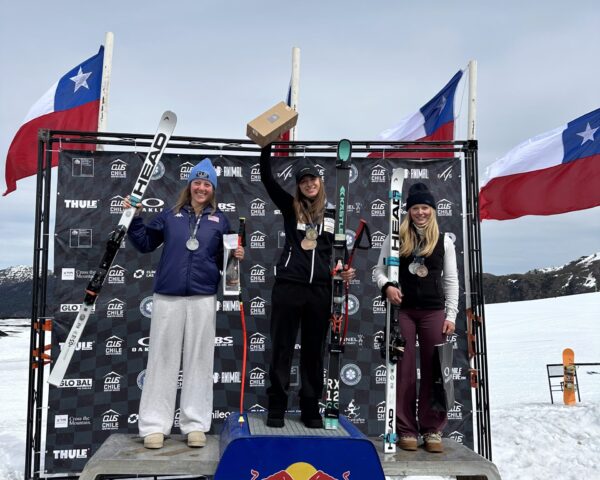
Barbora Nováková’s performance in Corralco will likely be remembered as one of the most efficient displays of skill in recent South American Cup history. Entering the final series with momentum, Nováková secured victory in three out of the four women’s races, punctuated by a perfect sweep of the super-G discipline. By the time the final results were tallied, she had accumulated 740 points, placing her 177 points ahead of Britain’s Giselle Gorringe in the overall standings.
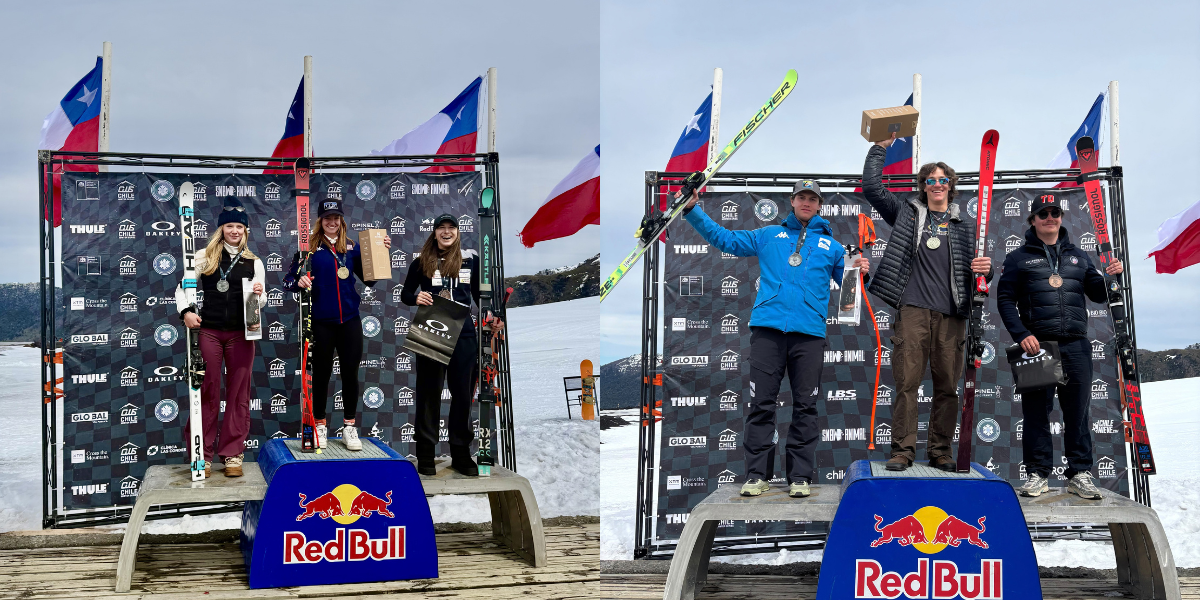
Nováková’s ability to navigate the soft snow conditions of the Corralco course—which challenged many competitors—was the hallmark of her success. Her tactical approach in the super-G, where she won both races, allowed her to secure a maximum of 400 points in the discipline, leaving no doubt regarding her title. Her performance was a testament to a complete, well-rounded technical package, proving that her speed is not limited to a single discipline but is a byproduct of high-level consistency.
American Gains: Bocock and Lindsey Lead the Charge
The United States contingent utilized the Corralco series as a springboard for their upcoming World Cup campaigns. Mary Bocock, representing the Stifel U.S. Ski Team, opened the series with a victory in the first women’s downhill, edging out Germany’s Gina Oberhuber by a mere three-hundredths of a second. The win was a strategic victory for the Rowmark Ski Academy alumna, who finished with a time of 1 minute, 8.36 seconds.
Bocock’s reflections on the race highlighted the difficulty of the course, noting that the flat, speed-dependent nature of the run required constant, perfect tucking. "It’s really hard to differentiate yourself on this course because it’s so flat," she remarked. Her ability to adjust between training and the race day—a critical skill for professional skiers—demonstrated the maturity of the young racer as she prepares for the season opener in Sölden.
On the men’s side, independent American athlete Rhett Lindsey enjoyed a breakout performance that effectively validated his two-month training block in Chile. Lindsey’s progression through the four-race series was methodical: he secured a third-place finish in the first downhill, followed by a victory in the second. His momentum continued into the super-G, where he placed second and then tied for fourth in the finale. This consistency earned him a runner-up spot in the season’s final downhill standings, just 20 points shy of Germany’s Felix Roesle. Lindsey, who has spent the last two years training in Austria following a challenging knee injury in 2023, expressed that these results were the culmination of a long-term recovery process. His performance suggests a significant leap in his ability to "create speed," a key metric for success at the elite level.
Technical Analysis: The Competitive Landscape
The Corralco races were characterized by extremely tight margins, a reality that underscores the depth of the current FIS field. In the men’s first super-G, the competitive parity was stark: only 0.13 seconds separated the top six athletes, and the top 10 finishers were within seven-tenths of a second of each other. Such slim margins reflect the high degree of preparation and the technical level of the equipment and training methods employed by the athletes competing in the South American Cup.
The role of course setting was a significant factor in the outcome of these races. Given the softer conditions, the course setters opted for configurations that rewarded efficient gliding and clean lines. This played into the hands of technical specialists like Nováková and power-skiers like Lindsey. For athletes like AJ Hurt, who added a runner-up finish in the super-G to her record, the series provided an opportunity to test her slalom and giant slalom prowess in a speed-oriented environment, further diversifying her skill set.
Chronology of Events and Final Standings
The rapid-fire schedule, with four races condensed into 48 hours, placed a premium on physical recovery and mental fortitude. The event timeline unfolded as follows:
- September 28: The series opened with back-to-back downhill races. Mary Bocock claimed the women’s opener, while Attila Eberhard Banyai (Hungary) took the men’s title. In the afternoon, Barbora Nováková and Rhett Lindsey emerged as the respective victors in the second downhill races.
- September 29: The focus shifted to the super-G. Nováková continued her dominance, sweeping both races, while Tiziano Gravier (Argentina) and Aaron Pedimina (Croatia) claimed the respective men’s victories.
The final standings reflect the consistency required to compete at this level. In the women’s overall category, Nováková topped the field, followed by Gorringe and Nicole Begue (Argentina). On the men’s side, Germany’s Nickco Palamaras clinched the overall title, reflecting a broad base of success for the German program, while Lindsey’s sixth-place finish overall highlights his impressive ascent within the rankings despite missing some earlier stops.
The Broader Impact: Preparing for the World Cup
The conclusion of the South American Cup is more than a seasonal milestone; it is the final litmus test for athletes before the World Cup season commences. For the Stifel U.S. Ski Team, the results in Corralco provide a clear data set on which athletes are prepared for the rigors of the upcoming schedule. The performance of developing athletes alongside established World Cup racers indicates that the competitive floor for international skiing continues to rise.
The success of the organizing committee in Corralco, particularly in navigating adverse weather, highlights the critical nature of the Southern Hemisphere training circuit. Without these venues, North American and European teams would lack the high-intensity, race-simulated environments necessary to fine-tune their form before the European winter.
Looking Ahead
As the focus shifts from the peaks of the Andes to the impending World Cup season, the lessons learned in Corralco will be vital. For Rhett Lindsey, the "learning process" he described—understanding how to generate speed on flat terrain—will be put to the test against the world’s elite. For Barbora Nováková, the challenge will be to translate her dominant South American Cup form into consistent podium appearances on the World Cup stage.
The 2026 South American Cup has left a lasting impression on the alpine calendar, serving as a reminder that excellence in this sport is rarely achieved overnight. It is the result of thousands of hours of training, the ability to adapt to varying snow conditions, and the resilience to compete at the highest intensity under immense pressure. As the gates drop for the first World Cup events of the year, the performances witnessed in Corralco will undoubtedly serve as the foundation for the season’s most significant storylines. The stage is now set for a season defined by the speed, precision, and tactical maturity of these rising stars.

