
The snow sports equipment industry has officially entered a new era of rapid-entry binding technology, and Rome Snowboards is at the forefront of this evolution with the introduction of the Rome Volt FASE. Designed to bridge the gap between traditional two-strap loyalty and modern convenience, the Volt FASE delivers advanced entry mechanics wrapped in a freestyle-oriented, budget-conscious package. Available in both men’s and women’s configurations, this new offering aims to capture the attention of park rats, resort cruisers, and progressing riders who have historically been priced out of premium rapid-entry systems.
As snowboarding brands race to capitalize on consumer demand for faster transition times at the top of the lift, Rome’s strategic rollout of its FASE technology family represents a calculated move to democratize gear that was previously locked behind higher price points. By focusing on a forgiving, jib-friendly flex and a streamlined unibody chassis, the Volt FASE positions itself as an approachable entry point for riders looking to test the waters of step-in and quick-entry innovations without sacrificing the traditional board-feel they have trusted for decades.
Evolution of the FASE Technology Family and Background Context
For years, the snowboarding market was sharply divided between traditional strap-in bindings, which offer unmatched adjustability and a clean aesthetic at the cost of transition speed, and mechanical step-in systems, which prioritize ultimate convenience often accompanied by bulky hardware and higher price tags. The introduction of Rome’s FASE technology platform marks a pivotal shift in how the brand approaches this dichotomy.
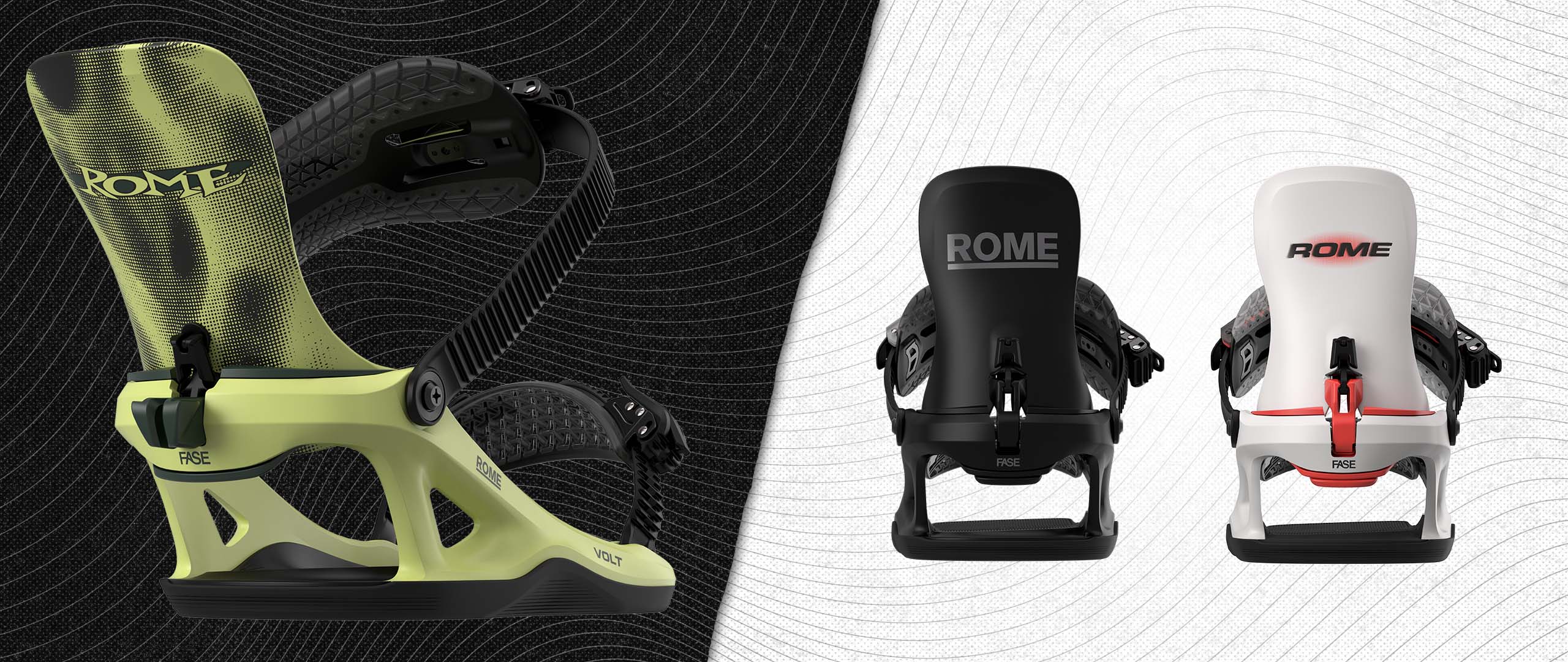
The development of the FASE system stems from years of consumer feedback highlighting a distinct market segment: riders who love the slimline look, feel, and edge-to-edge responsiveness of a classic two-strap binding, but who envy the speed with which skiers and mechanical-entry snowboarders click in and glide away. Rome’s two-tiered approach to the FASE technology line—featuring high-end chargers like the Katana at the upper end of the spectrum and the more accessible Volt family at the lower end—reflects a maturing market strategy.
While flagship models cater to aggressive all-mountain riders requiring extensive customizability and rigid response, the Volt family is engineered specifically for freestyle enthusiasts and casual resort riders. By targeting this demographic, Rome is addressing a critical pain point in the snowboarding accessories market: providing modern innovation without requiring consumers to make a heavy financial commitment.
Anatomy of the Baseplate: The MonoFrame Chassis and Materials
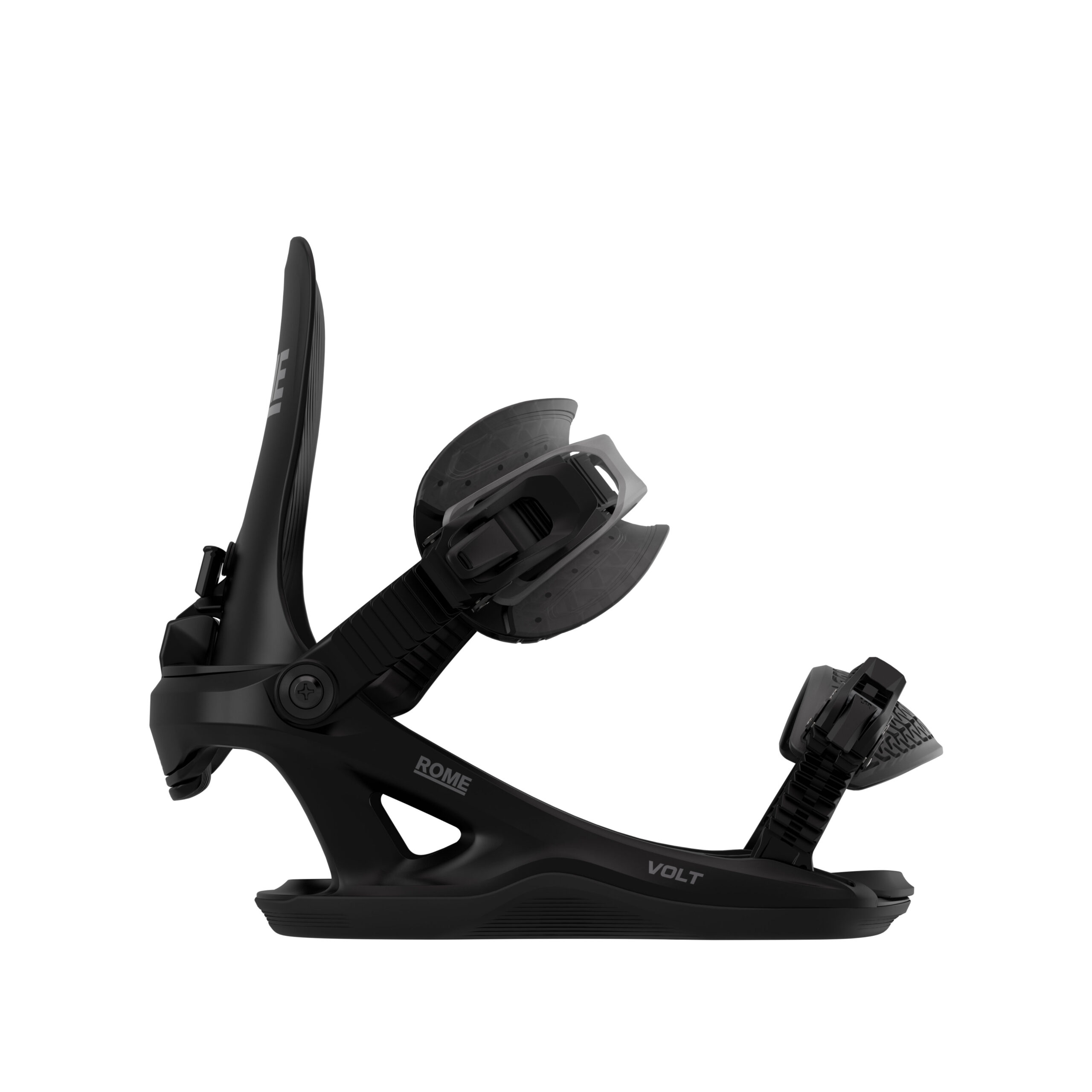
At the structural core of the Rome Volt FASE is the newly engineered MonoFrame chassis, which serves as the headline act of the binding’s design. Unlike traditional bindings that utilize a separate aluminum heelhoop bolted onto a baseplate, the MonoFrame fuses the baseplate and heelcup into a single, cohesive piece of injected nylon.
This unibody construction is composed of a specialized blend of 30 percent glass and 70 percent nylon. According to structural testing and on-snow reviews, this material ratio yields a genuinely uniform flex profile from edge to edge. Rather than experiencing rigid dead zones where metal components meet plastic, riders benefit from a smooth, press-friendly, and surfy feel that is ideally suited for low-speed jibs, butter tricks, and playful all-mountain cruising.
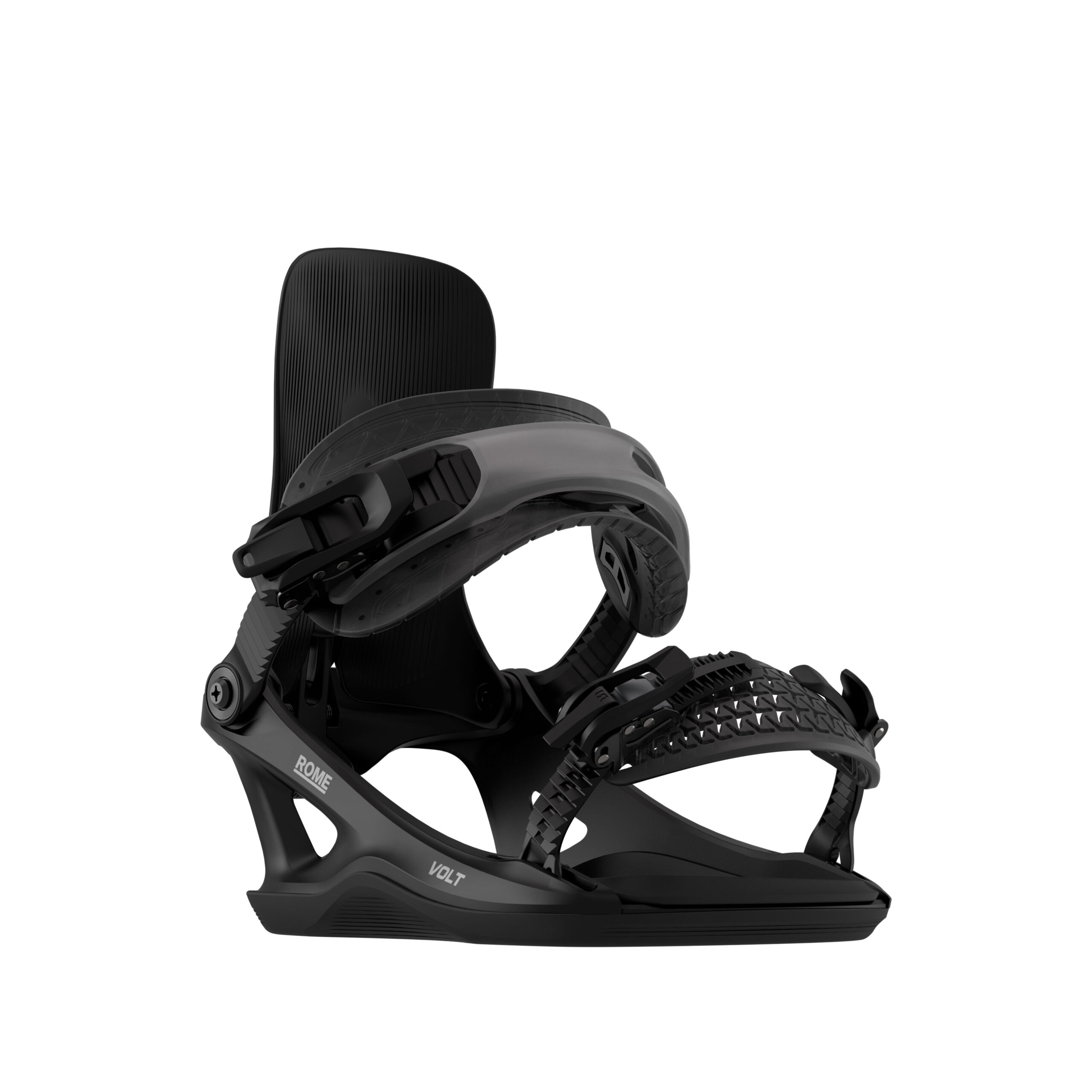
To further enhance comfort and reduce fatigue during long days on the hill, Rome has integrated a 2-degree dual-density footbed into the baseplate architecture. This slight canting aligns the rider’s joints into a more natural, ergonomic stance, reducing strain on the knees and ankles. Additionally, the inclusion of a universal mounting disk maximizes adjustment options, ensuring seamless compatibility with virtually every major snowboard brand’s mounting pattern and a wide array of boot sizes.
Straps, Mechanics, and the Reclining AutoBack System
The defining characteristic of the FASE ecosystem is its mechanical entry method, which relies on a reclining AutoBack highback. Unlike pedal-activated systems popularized by competing brands, the FASE mechanism utilizes a trigger mechanism centrally located within the assembly. The moment a rider’s boot slides fully into the chassis, the highback snaps shut automatically.
Once the rider is secured by the auto-closing highback, the entry process is completed by engaging the ankle strap. To streamline this step, Rome implemented a long, connected ladder system on the OmniFlex ankle strap, allowing riders to cinch down the binding efficiently with a single hand. The OmniFlex strap itself blends a rigid thermoplastic polyurethane (TPU) spine for power transmission with a softer overall padding profile, maintaining the playful, tweak-friendly flex demanded by freestyle snowboarders.
Versatility is further dialed in through the inclusion of two FASE Kink Ladder positions. Riders can opt to mount the ladder higher for a more locked-in, responsive feel during high-speed carves, or lower it for a looser, more mobile setup ideal for rail lines and surface tricks. Complementing this is the highback itself—constructed from a 10 percent glass and 90 percent nylon composite—which comes pre-rotated by six degrees to mirror the human body’s natural anatomical stance. Two adjustable forward-lean settings allow users to fine-tune their calf response.
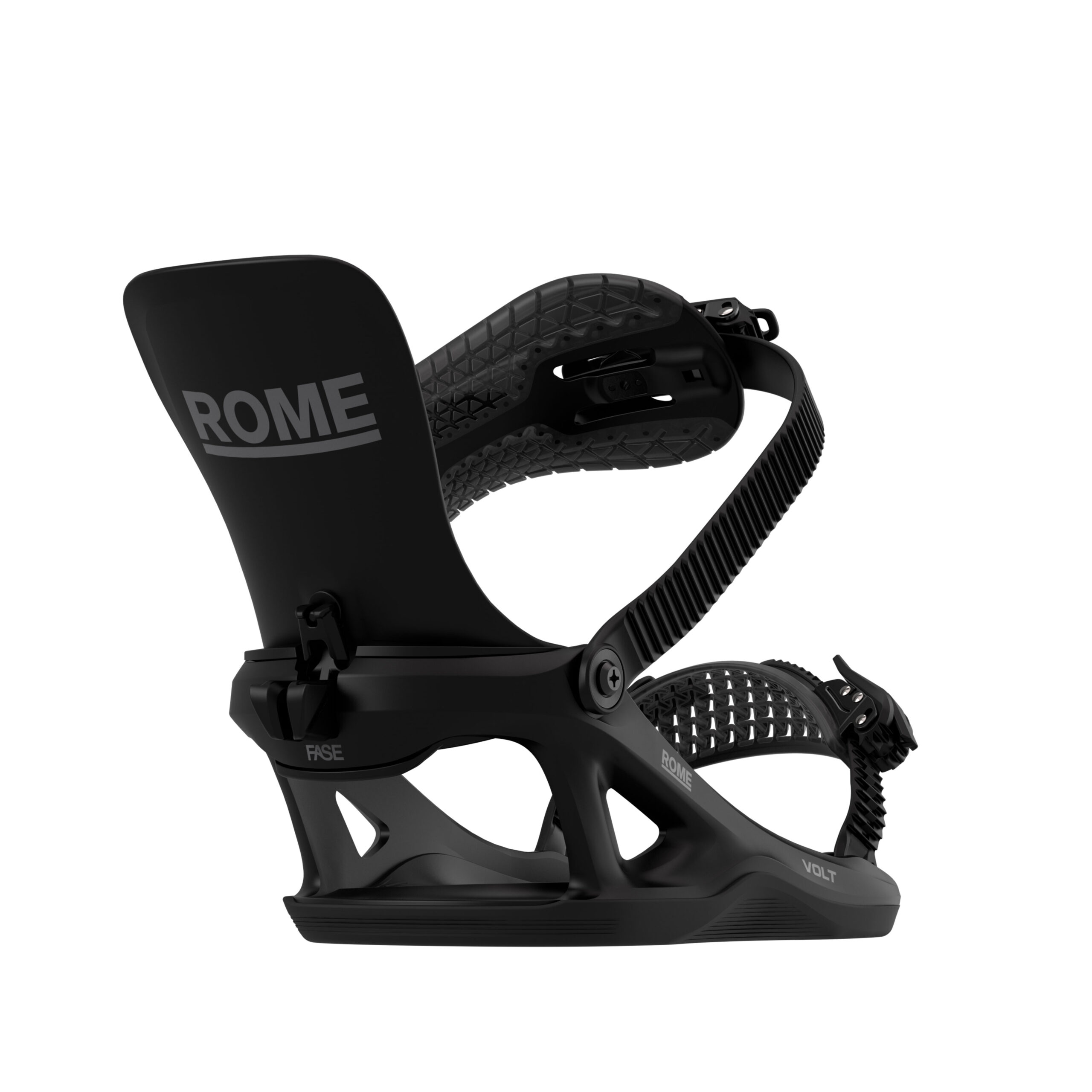
At the front of the binding, the ProGrip toe strap utilizes auto-locking ladders. This "set-it-and-forget-it" design means riders only need to adjust the toe strap sizing once, leaving the FASE system entirely unobstructed to handle rapid entry and exit duties throughout the day.
Industry Implications and Market Analysis
The launch of the Rome Volt FASE arrives at a critical juncture for snowboard hardware manufacturers. Industry data indicates a steady rise in the adoption of rapid-entry systems, driven largely by aging core demographics who value time-saving efficiencies, as well as newer snowboarders who expect seamless, frictionless equipment experiences.
However, market analysts note that rapid-entry adoption has faced resistance from two-strap loyalists who view alternative systems as overly complex, heavy, or visually unappealing. By focusing heavily on maintaining a slimline silhouette that closely mimics the aesthetic of a traditional freestyle binding, Rome has deliberately targeted this skeptical consumer base.
Priced competitively within the mid-tier hardware market, the Volt FASE lowers the barrier to entry for advanced manufacturing techniques like unibody injection molding and automated mechanical highbacks. Industry observers suggest that this pricing strategy will force competing brands to reevaluate their mid-range product lines, potentially accelerating the standardization of rapid-entry technology across all price points rather than restricting it to premium, high-cost models.
Expert Testing and On-Snow Performance
Field testing conducted across various resort terrains and terrain parks provides concrete insight into how the Volt FASE performs under real-world conditions. Lead gear tester Maria Kuzma highlighted the practical efficiency of the hardware during multi-lap park sessions.
"The FASE system worked as designed… a little faster in and out," Kuzma noted following extensive on-snow evaluations. "The Volts worked well overall, especially paired with the awesome Viper Pro board."
Testers universally praised the binding’s compatibility with freestyle maneuvers, noting that the mellow flex of the MonoFrame chassis allowed for effortless presses on boxes and rails. While reviewers acknowledged that the Volt cannot match the granular, micro-adjustable customizability of Rome’s higher-end Katana bindings, consensus indicates that the trade-off is entirely justified by the reduction in price and the simplification of the entry process. The binding successfully strikes a balance between performance and accessibility, proving that riders do not need to compromise their playful riding style to enjoy the benefits of fast-entry innovation.
Conclusion and Future Outlook
The release of the Rome Volt FASE underscores a broader industry movement toward practical, rider-centric innovation. By successfully distilling the core benefits of the FASE rapid-entry ecosystem into a more affordable, freestyle-focused chassis, Rome Snowboards has created a compelling product for a wide demographic of snowboarders.

As consumer demand for efficient slope-side transitions continues to grow, equipment manufacturers will undoubtedly look to the Volt FASE as a benchmark for how to balance advanced mechanical engineering with traditional aesthetic preferences and accessible pricing. For resort cruisers and park enthusiasts alike, the Volt FASE offers an inviting pathway into the future of snowboard binding technology, signaling that fast entry is no longer a luxury reserved for the highest tier of the market.

