
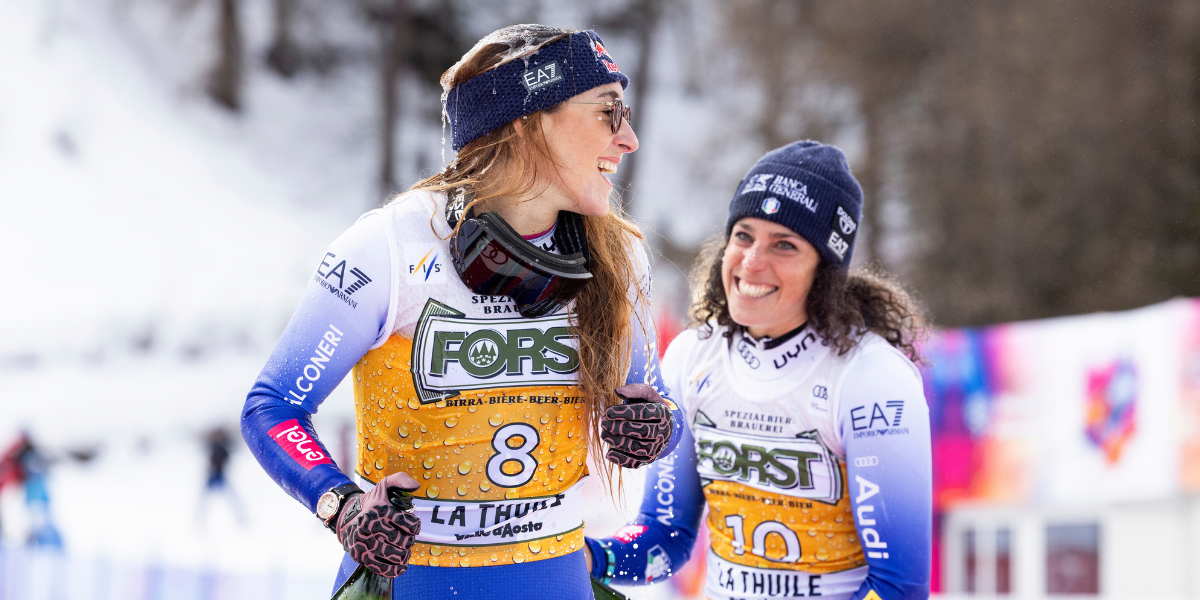
The Italian alpine skiing community remains in a state of watchful waiting as two of its most decorated athletes, Federica Brignone and Sofia Goggia, navigate complex health challenges ahead of the upcoming winter season. Speaking on Saturday, October 3, at the prestigious Festival dello Sport in Trento, Italy, both women addressed the media to provide transparency regarding their physical conditions. Their updates arrive at a critical juncture for the Italian national team, as the sport prepares for the FIS World Cup circuit, with the absence of two such dominant figures casting a significant shadow over the early season calendar.
The dual appearance served as a poignant reminder of the physical toll extracted by elite-level skiing. Brignone, a powerhouse of technical discipline, and Goggia, a downhill specialist synonymous with courage and speed, have combined for an staggering 66 World Cup victories and 154 podium finishes throughout their illustrious careers. Their current status, however, is defined not by competition, but by the slow, often frustrating process of clinical recovery.
The Path to Recovery for Federica Brignone
For Federica Brignone, the focus remains on the structural integrity of her left knee. The 36-year-old athlete underwent a surgical procedure on August 25, 2026, specifically to remove hardware—a plate and screws—that had been implanted following a catastrophic crash at the Italian national championships in April 2025.
Reflecting on her journey, Brignone offered a candid assessment of her recent tenure in the sport. "In the last two years, I have reached the peak that I had dreamed of all my career," she stated during the event. "Unfortunately, I touched it and saw it fade away so quickly." This sentiment underscored the mental weight of her recovery, which took place in the lead-up to the 2026 Olympic Winter Games in Cortina d’Ampezzo.
Brignone’s performance at the Cortina Games was nothing short of historic. Competing just ten months after suffering a severe leg injury, she secured gold medals in both the super-G and the giant slalom. However, she revealed that the path to that triumph was paved with physical peril. She acknowledged that her body had sent clear warning signals regarding the stability and health of her knee throughout the preparation period. "I pushed myself to compete," she admitted, noting that she ultimately crossed a physiological threshold that she would not typically recommend to other athletes. Her determination to succeed at a home Olympics superseded her body’s natural defenses, and now, she is tasked with ensuring that her body remains viable for the long term.
Sofia Goggia and the Unexpected Viral Setback
While Brignone’s challenges are largely orthopedic, Sofia Goggia’s current hurdle is biological. The 2018 Olympic downhill champion, who has spent much of her career battling severe bone fractures and ligament tears, found herself sidelined this autumn by an unexpected illness that forced an early departure from a high-altitude training camp in Ushuaia, Argentina.
Goggia’s ordeal began in July, when she noticed a precipitous decline in her energy levels. Initially, she dismissed the fatigue as a byproduct of the summer heat and the intense, high-volume training regimen required for the World Cup season. However, as the symptoms persisted, it became clear that the issue was systemic. Upon returning to Italy, clinical testing revealed that she was suffering from two distinct viral infections: chikungunya and parvovirus B19.
The impact of these viruses on a professional athlete is profound. While the acute phase of the illnesses has passed, Goggia noted that lingering symptoms continue to interfere with her daily life and athletic capacity. Her frustration is palpable, yet she remains characteristically resilient. "I have always come out of difficult situations using my best weapon—willpower, the desire for redemption, and not giving up," she told the audience in Trento. For a racer whose style is defined by aggressive, high-risk lines, the need for patient, gradual conditioning represents a significant departure from her usual training philosophy.
Chronology of a Challenging Cycle
The recent history of both athletes reflects a pattern of resilience followed by sudden, forced pauses:
- April 2025: Federica Brignone suffers a serious leg injury during the giant slalom at the Italian national championships, occurring shortly after she clinches her second overall World Cup title.
- February 2026: Despite the injury, Brignone triumphs at the Cortina d’Ampezzo Olympic Winter Games, winning gold in the super-G and giant slalom.
- July 2026: Sofia Goggia begins to experience severe fatigue, which she initially attributes to training load.
- August 25, 2026: Brignone undergoes surgery to remove the hardware from her knee.
- August 2026: Goggia travels to Argentina for training, but is forced to cut the trip short due to worsening health.
- October 3, 2026: Both athletes provide health updates at the Festival dello Sport, confirming their uncertain status for the start of the 2026-27 season.
Implications for the World Cup Season
The absence of Brignone and Goggia from the opening races of the season—most notably the traditional curtain-raiser in Sölden—has immediate implications for the Italian national team. The absence of two such high-caliber athletes shifts the pressure onto the younger members of the squad and alters the competitive landscape of the women’s circuit.
From a medical and training perspective, the situation highlights the increasing difficulty of the modern ski calendar. With the sport becoming more physically demanding and the gaps between major events narrowing, athletes are frequently operating in a state of "controlled recovery." Experts within the Italian Ski Federation (FISI) have expressed that for both Brignone and Goggia, the primary objective is no longer immediate victory, but long-term sustainability.

Brignone, in particular, has signaled that she is not interested in returning to competition for the sake of a single race. Her participation will be predicated on her ability to perform at a level consistent with her own high standards. Meanwhile, Goggia’s recovery is more nuanced; the viral nature of her illness requires a cautious approach to avoid cardiac stress or long-term fatigue syndrome, necessitating a slow reintroduction to the intense physical strain of downhill skiing.
The Mental Toll of Elite Performance
The discussions in Trento brought to the forefront the psychological resilience required of athletes who have spent their entire adult lives in a state of physical flux. For Brignone, the act of reflecting on the 2026 Olympic cycle suggests a period of transition. Having reached the pinnacle of the sport, she is now balancing the desire to compete with the reality of her physical limitations.
Goggia’s narrative remains one of defiance. Known for her ability to return from injury faster than projected—often shocking medical staff with her recovery speeds—her battle with a viral illness represents a new, intangible challenge. Unlike a broken bone, which provides a clear path to healing, viral recovery is often non-linear, demanding a patience that is notoriously difficult for elite athletes to maintain.
Looking Ahead
As the winter season approaches, the Italian team and their fans are left to wait for further developments. The return to snow is a distinct milestone from the return to the starting gate, and both athletes are currently focused on the former.
The FIS World Cup remains a grueling test of endurance, and the timing of these health updates suggests that neither athlete will be forced into a premature return. The consensus among analysts is that the Italian team will prioritize the health of these two icons, ensuring they have the best possible chance to compete at the World Championships and the remainder of the season. For now, the focus in Trento was not on medals or podiums, but on the fundamental, human necessity of recovery—a challenge that even the greatest skiers must eventually confront. As the frost begins to settle on the slopes of the Alps, the world of alpine skiing waits to see if these two legends can once again overcome the odds.

