
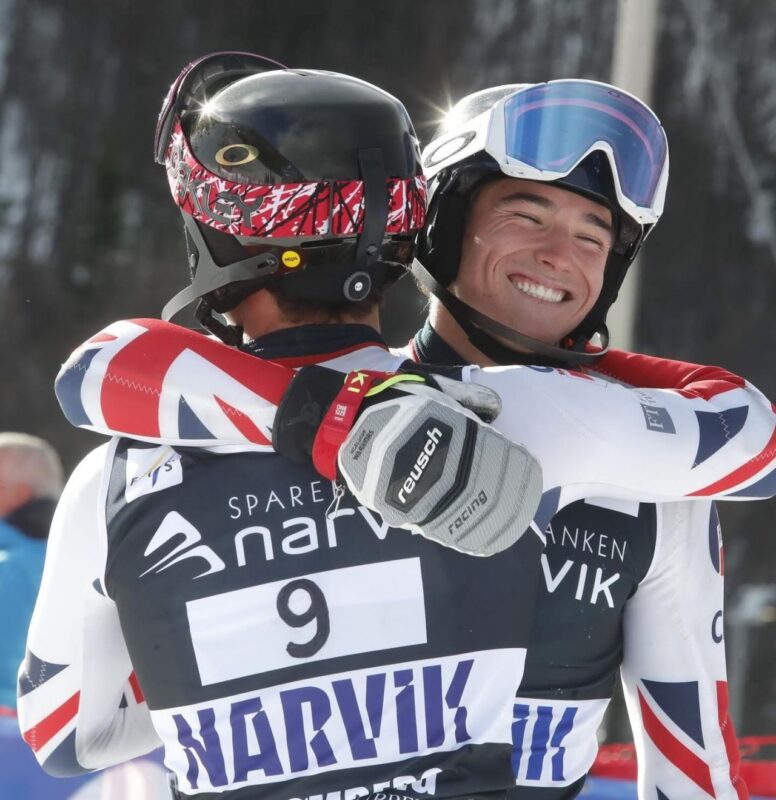
The 2026 FIS Junior World Alpine Ski Championships in Narvik, Norway, have concluded with a narrative defined by the extremes of sporting fortune for the Carrick-Smith family. While 19-year-old Freddy Carrick-Smith secured a career-defining silver medal in the men’s slalom, the event was equally marked by the competitive heartbreak of his older brother, Luca, and the physical resilience of his twin, Zak. The performance of the three brothers, who operate as a self-funded unit within the high-stakes world of international ski racing, has drawn significant attention to the rising profile of British alpine skiing and the precarious nature of the sport where medals are won and lost in fractions of a second.
The championships, held in the Arctic Circle at the Narvik ski resort—a venue currently positioning itself as a premier destination for global alpine events—provided a demanding backdrop for the world’s elite under-21 athletes. For the Carrick-Smiths, the slalom event was the culmination of a season’s worth of preparation, representing a critical juncture in their transition from the junior ranks to the senior international circuit.
The Slalom Masterclass and the Margin of Error
The men’s slalom event began with an opening run that suggested a historic sweep for Great Britain. Luca Carrick-Smith, 20, delivered a performance of clinical precision, navigating the technical gates of the Narvik course to establish a lead of more than one second over the rest of the field. In the context of professional slalom, a one-second lead after a single run is considered a massive advantage, often described as a "lifetime" in a discipline where podiums are frequently decided by hundredths of a second.
Following closely behind was Freddy Carrick-Smith, whose first run placed him in second position, while Zak Carrick-Smith, battling a back injury sustained during his descent, managed to slot into 10th place. The atmosphere heading into the second run was one of high tension, with the prospect of two British brothers standing on a World Championship podium becoming a distinct possibility.
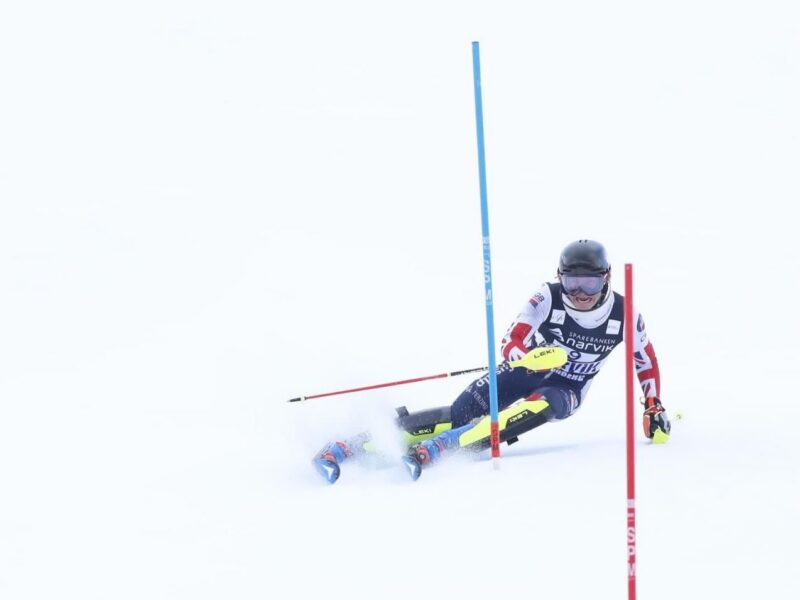
As the second run commenced, the course conditions became increasingly challenging, with the surface hardening and the gate patterns requiring absolute technical discipline. Zak Carrick-Smith was among the early starters in the top tier, managing to complete his second run despite visible physical discomfort. He ultimately finished 20th, a testament to his grit following a highly successful earlier performance in the Giant Slalom (GS), where he placed 7th.
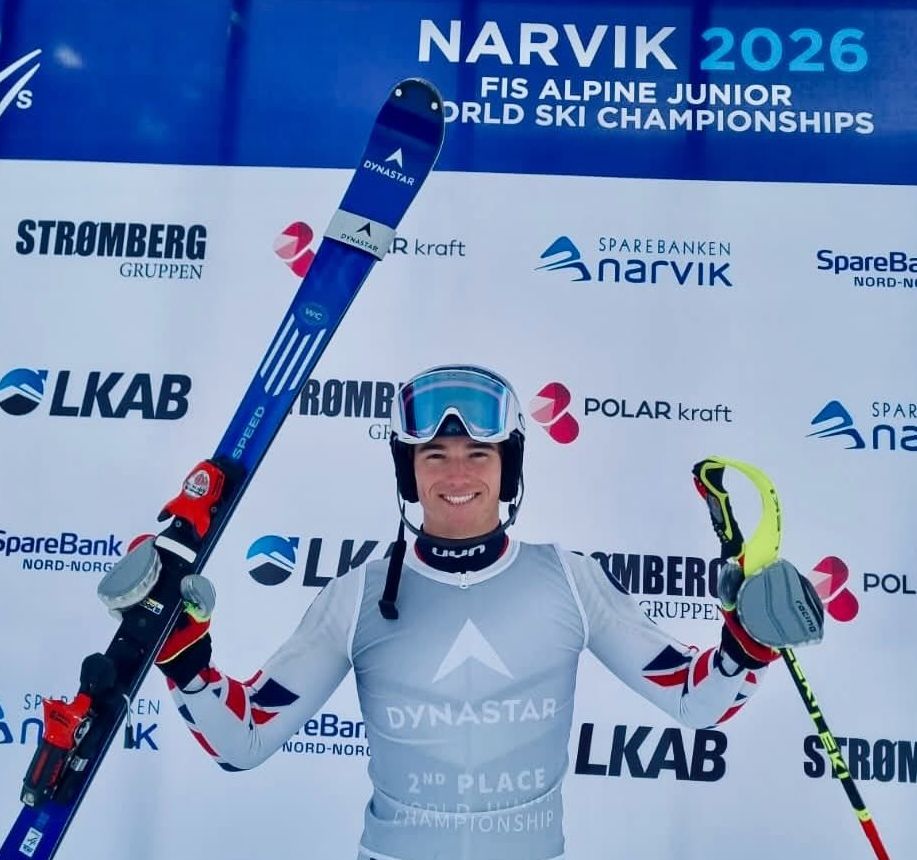
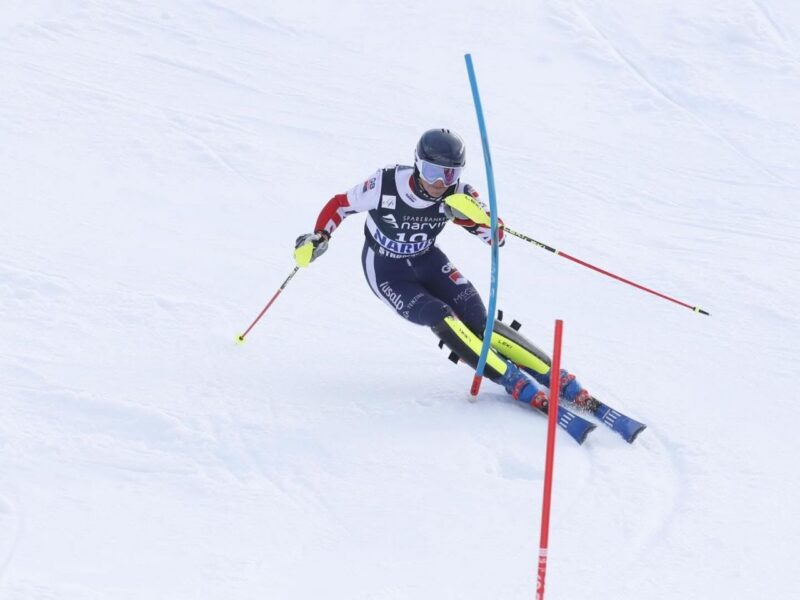
Freddy Carrick-Smith then took to the course, knowing that a clean, aggressive run would guarantee him a medal. He delivered a composed performance, crossing the finish line with a combined time that momentarily put him in the lead. Although he was eventually overtaken by Switzerland’s Giuliano Fux, Freddy’s performance secured the silver medal, marking the highest achievement of his young career and affirming his status as one of the premier junior slalom specialists in the world.
Heartbreak Ten Gates from Glory
The final racer of the day was Luca Carrick-Smith. Carrying a substantial lead from the first run, Luca did not merely defend his position; he extended it. By the mid-course split time, he had increased his advantage to more than two seconds over Fux. Observers and coaches on the sidelines began to anticipate a gold medal for the Briton, which would have granted him an automatic invitation to the World Cup finals the following week—a prestigious opportunity to compete against the absolute best in the senior world rankings.
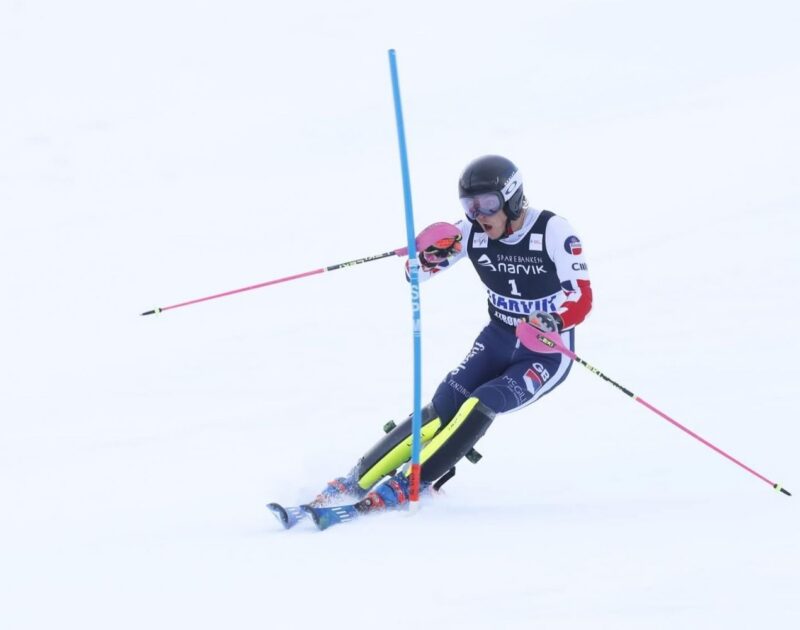
However, the volatile nature of slalom skiing intervened. Just ten gates from the finish line, Luca committed a minor technical error. An "impatient turn," as described by his coaching team, led to a straddle—a situation where one ski passes on the wrong side of the gate pole. In an instant, his two-second lead evaporated into a "Did Not Finish" (DNF) result.
The emotional impact was immediate. Emma Carrick-Anderson, the brothers’ mother and a four-time Olympic ski racer who serves as their coach, described the scene as one of the most difficult moments the family has faced in professional sport. "We don’t think emotions get much tougher than yesterday," she remarked. "Sport has a way of being emotional at times, and today was the biggest we’ve ever felt. There were definitely tears shed by many."
Analytical Context: The Technical Straddle and its Implications
In alpine skiing, the "straddle" is the ultimate heartbreak for a slalom racer. Because athletes must clear the gates as tightly as possible to maintain the fastest line, they often "flush" the poles with their shins and guards. A discrepancy of millimeters in foot placement can result in the ski tip or binding catching the wrong side of the pole.
For Luca Carrick-Smith, the stakes of this error were particularly high. A victory in Narvik would not only have added a gold medal to the bronze he won at the previous year’s Junior World Championships but would have also served as a critical performance indicator for sponsors and national governing bodies. The transition from junior (U21) to senior (World Cup) level is notoriously difficult; a World Championship title acts as a bridge, providing both the confidence and the FIS (International Ski Federation) points necessary to secure better starting positions in major races.
Despite the DNF, technical analysts noted that Luca’s pace until the error was of World Cup caliber. His ability to build a two-second lead against a field that included the best young racers from traditional powerhouse nations like Switzerland, Austria, and the USA suggests that his trajectory remains upward as he moves into the senior ranks.
Team Carrick-Smith: A Self-Funded Dynasty
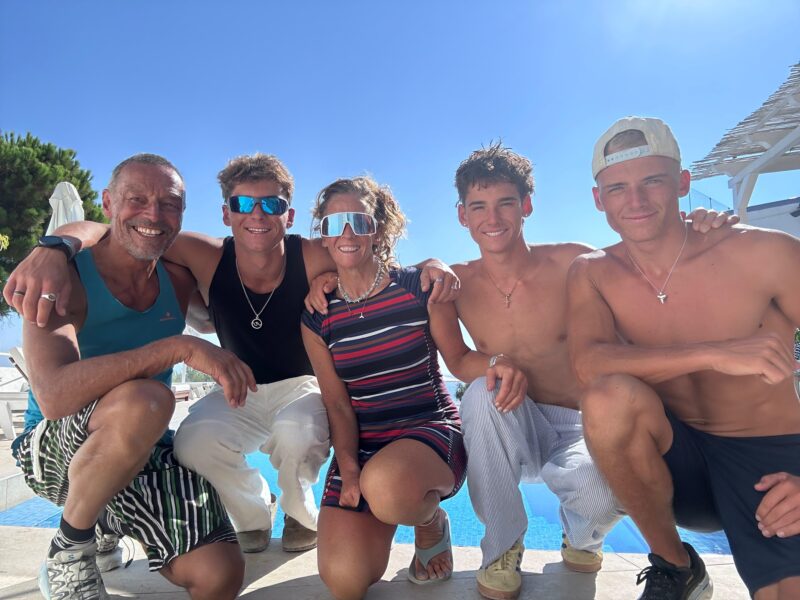
One of the most remarkable aspects of the Carrick-Smiths’ success is their operational model. Unlike many of their competitors who are supported by well-funded national programs with extensive support staff, "Team Carrick-Smith" is largely a family-run, self-funded endeavor.
Their father, Phil Smith, and mother, Emma Carrick-Anderson, manage the logistics, coaching, and mental preparation for all three sons. This grassroots approach requires a relentless schedule of travel, equipment maintenance, and fundraising. The brothers rely heavily on sponsorship and public donations via platforms like GoFundMe to cover the exorbitant costs of elite-level skiing, which include lift passes, travel to remote glaciers for summer training, and the maintenance of multiple pairs of racing skis.

The success of Freddy in Narvik and the overall competitiveness of the three brothers highlight a shift in British alpine skiing. Following in the footsteps of Dave Ryding, the UK’s most successful slalom racer, the Carrick-Smiths are proving that British athletes can compete with Alpine nations despite the lack of domestic high-altitude training grounds.
Looking Ahead: The Europa Cup and British Nationals
The conclusion of the Junior World Championships does not mark the end of the season for the brothers. The schedule remains grueling as they seek to capitalize on their current form.
Freddy Carrick-Smith is slated to compete in the Giant Slalom at the Europa Cup finals in Austria. The Europa Cup is the second-tier continental circuit, sitting just below the World Cup. Success here is vital for accumulating the points required to move up the international rankings. Freddy’s silver medal in Narvik will undoubtedly provide a psychological boost as he faces a field of seasoned professionals.
Following the Europa Cup, the family will travel to Santa Caterina, Italy, for the British National Championships. This event is a staple of the UK ski racing calendar, where the brothers will compete for domestic titles and the honor of being named the best in Britain. It also serves as an important scouting ground for the next generation of British talent.
Broader Impact on British Snowsports
The performance of the Carrick-Smith brothers in Narvik is expected to have a positive "halo effect" on British snowsports. At a time when funding for winter sports is under constant scrutiny, the ability of self-funded athletes to reach the podium at a World Championship level provides a powerful argument for the talent depth within the UK.
Freddy’s silver medal adds to a growing list of British successes on the snow, reinforcing the idea that the "Ryding Effect"—named after Dave Ryding’s breakthrough World Cup win in Kitzbühel—is inspiring a new generation to believe that podiums are achievable.
While the heartbreak for Luca was significant, the consensus among the coaching staff and the family is that the experience will serve as a catalyst for future growth. As Luca ages out of the junior category, his focus will shift entirely to the senior FIS and Europa Cup circuits. Meanwhile, the twins, Freddy and Zak, have another two years of eligibility in the junior ranks, leaving them well-positioned to challenge for gold in future World Championships.
The 2026 Junior World Alpine Championships will be remembered by the Carrick-Smith family as a week of "what ifs" and "what is possible." From Freddy’s silver medal celebrations to the collective resilience shown in the face of injury and technical failure, the brothers have demonstrated that they are not just participants in international skiing, but legitimate contenders for the sport’s highest honors. Their journey continues to be a compelling case study in the power of familial support and individual determination in the face of the world’s most demanding sporting discipline.

