
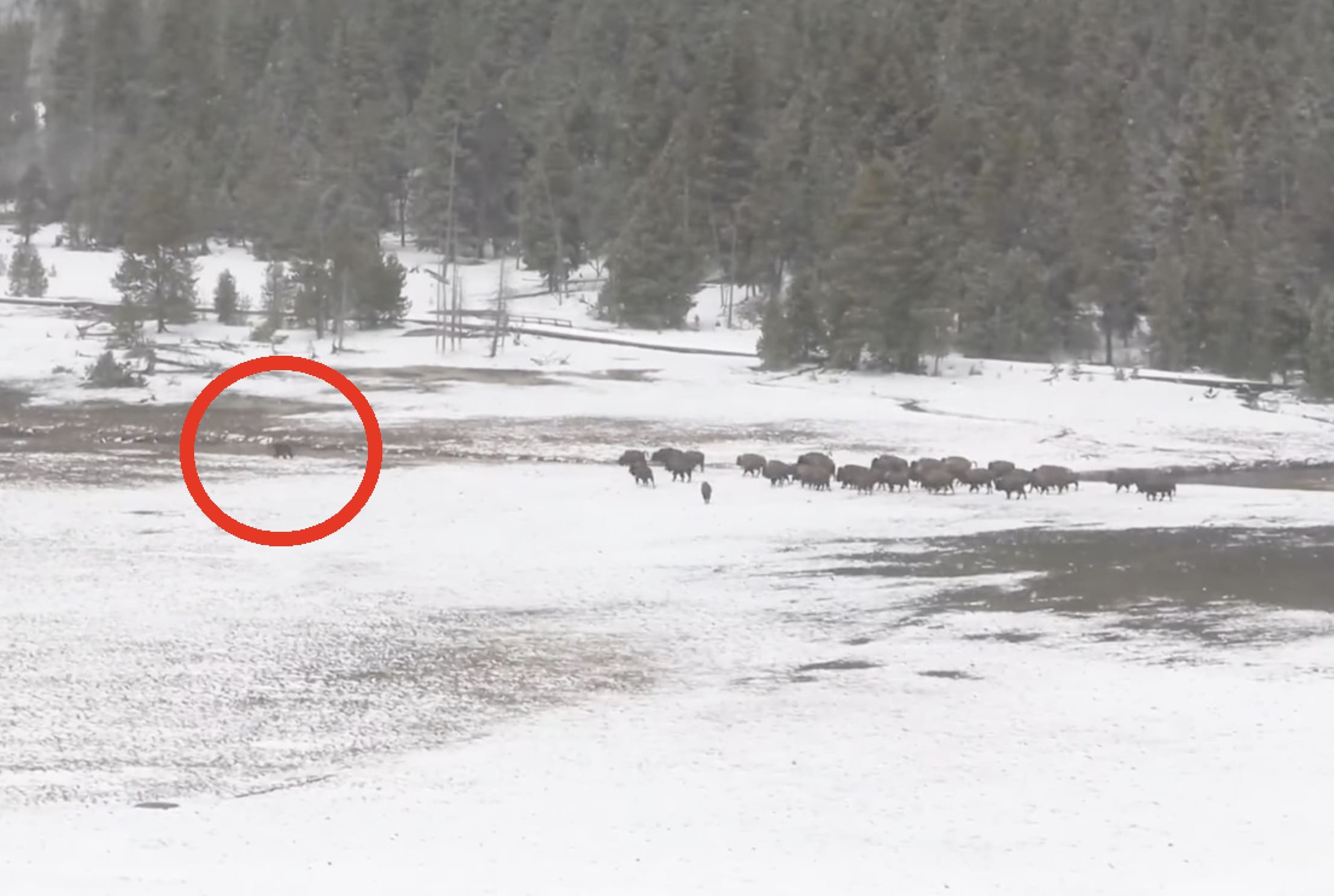
The stark reality of nature’s cycle was vividly displayed within the expansive wilderness of Yellowstone National Park on March 31st, 2025, when a formidable herd of bison successfully repelled a hungry grizzly bear. As the park awakens from its winter slumber, the emergence of its iconic wildlife from hibernation presents a delicate balance of survival, with apex predators like grizzlies facing the immediate challenge of replenishing depleted energy reserves. This particular encounter, captured by the park’s livestream webcam, offers a compelling snapshot of the raw power dynamics that define the Yellowstone ecosystem.
The Urgent Hunger of Emerging Grizzlies
Grizzly bears, known scientifically as Ursus arctos horribilis, are among Yellowstone’s most charismatic and formidable inhabitants. Their annual hibernation is a marvel of biological adaptation, a period of profound rest where their bodies dramatically reduce metabolic rates to conserve energy. During these months, a mature grizzly bear can expend an astonishing average of 4,000 calories per day simply to maintain essential bodily functions, including regulating core temperature and sustaining organ activity. This sustained energy expenditure leads to a significant loss of body mass, with individuals often shedding between 25% and 40% of their pre-hibernation weight. This physiological imperative drives their urgent need for sustenance upon emerging from their dens in the spring. The period leading up to hibernation, known as hyperphagia, is characterized by an intense feeding frenzy, where bears consume vast quantities of food to build up fat reserves that will sustain them through the lean winter months. The end of this hibernation cycle marks the beginning of a critical foraging period, where finding readily available food sources becomes paramount for survival and recovery.
An Encounter in the Upper Geyser Basin
The incident occurred in the geothermally active region of Yellowstone’s Upper Geyser Basin, a landscape renowned for its dramatic geysers and hot springs, as well as being a vital habitat for both bison and grizzly bears. On the afternoon of March 31st, 2025, a lone grizzly bear, likely still weakened and driven by intense hunger after its prolonged period of dormancy, was observed approaching a substantial herd of bison. Estimates indicate the herd comprised over 20 individuals, a testament to the resilience and social structure of these magnificent herbivores. The grizzly’s objective was clear: to capitalize on a potential opportunity for an easy meal, a stark contrast to the challenging and often fruitless hunts that may lie ahead. However, the approaching predator vastly underestimated the collective strength and defensive capabilities of the bison.
The Bison’s Coordinated Defense
Instead of scattering in fear, the bison exhibited a remarkable display of unity and intimidation. As the grizzly advanced, the herd did not retreat but instead closed ranks, forming a formidable living barrier. The sheer size and density of the bison, coupled with their powerful horns and muscular build, presented an overwhelming challenge to the lone predator. Eyewitness accounts and video footage suggest that the bison collectively moved towards the grizzly, their unified presence and aggressive posturing creating a palpable sense of threat. This coordinated defense, a behavior honed over millennia of predator-prey interactions, effectively deterred the grizzly bear. Faced with such overwhelming opposition, the predator wisely retreated, abandoning its pursuit of an unlikely meal. This event underscores the social cohesion and defensive strategies employed by bison herds, which are crucial for their survival against large carnivores.
Technological Witness: The Yellowstone Livestream Webcam
This dramatic natural event was not witnessed by park visitors in person but was instead captured through the advanced technological infrastructure of Yellowstone National Park. The footage originated from the Old Faithful & Upper Geyser Basin Livestream Webcam, a sophisticated camera system providing real-time views of one of the park’s most iconic areas. The availability of this livestream is a testament to the ongoing partnership between the National Park Service and its dedicated supporters. In this instance, the webcam’s operation was made possible through a generous grant from Canon USA, Inc., a company committed to supporting environmental conservation and education through technology.
The park employs a network of nine additional static webcams strategically placed throughout its vast expanse. These cameras, located at significant points of interest such as Mammoth Hot Springs, the West Yellowstone Entrance Station, Mount Washburn, and Yellowstone Lake, refresh their images approximately every 30 seconds. This network not only provides invaluable opportunities for public engagement and education but also serves as a critical tool for wildlife monitoring and park management, enabling researchers and rangers to observe animal behavior and track population dynamics without direct human interference, thereby minimizing disturbance to the wildlife.
Broader Ecological Context and Implications
The encounter between the grizzly bear and the bison herd highlights several key ecological principles at play within Yellowstone National Park. Springtime in Yellowstone is a period of intense competition for resources. As bears emerge from hibernation, their immediate need for calories can lead them to take greater risks, including approaching larger prey animals. Bison, on the other hand, are well-adapted to Yellowstone’s harsh environment and have developed effective collective defense mechanisms. Their ability to form a unified front against predators is a critical survival strategy that has allowed the species to thrive.
This event also serves as a powerful reminder of the interconnectedness of Yellowstone’s ecosystem. The health of the bison population directly impacts the grizzly bear population, and vice versa. A robust bison herd provides a potential food source for grizzlies, contributing to their reproductive success and overall population health. Conversely, the presence of apex predators like grizzlies helps to regulate herbivore populations, preventing overgrazing and maintaining the ecological balance of the park’s diverse habitats.
Analyzing the Dynamics of Predator-Prey Interactions
The success of the bison herd in repelling the grizzly is not an anomaly but rather a demonstration of the evolutionary arms race between predator and prey. While grizzlies are formidable hunters, their success often depends on exploiting opportunities such as targeting young, old, or injured animals. A large, healthy, and cohesive herd presents a significantly higher risk to the predator, with the potential for injury being a substantial deterrent. Bears that sustain injuries, especially during this critical post-hibernation period, face greatly diminished chances of survival. Therefore, the grizzly’s decision to retreat was a rational one, prioritizing self-preservation over a low-probability, high-risk endeavor.
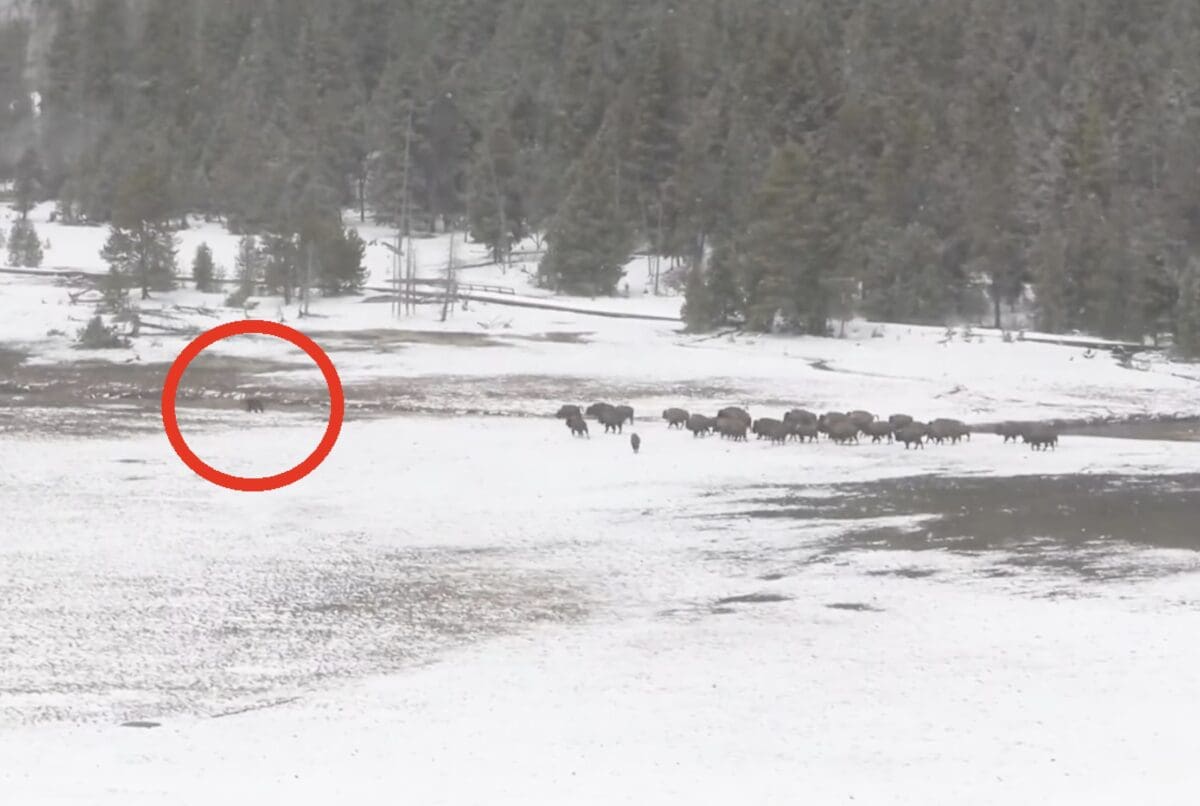
The specific location in the Upper Geyser Basin is also noteworthy. This area, while visually stunning, is a dynamic landscape where geothermal activity influences vegetation patterns and animal movements. The presence of both abundant grazing for bison and denning sites for bears underscores the complex spatial relationships that govern wildlife behavior in the park.
Official Park Guidelines and Visitor Safety
Yellowstone National Park emphasizes that all areas within the park are considered bear country. This includes not only the remote backcountry trails but also the developed areas around popular attractions like Old Faithful. The National Park Service provides comprehensive bear safety guidelines to visitors, underscoring that while the park’s safety cannot be absolutely guaranteed, visitors can significantly enhance their own safety and contribute to the well-being of the bears by adhering to these recommendations.
Key bear safety principles include:
- Maintaining a Safe Distance: Always observe wildlife from a distance. Federal regulations require visitors to stay at least 100 yards (91 meters) from bears and wolves, and at least 25 yards (23 meters) from all other animals, including bison and elk.
- Traveling in Groups: Hiking in groups of three or more people can deter bears.
- Making Noise: Talking or singing while hiking can alert bears to your presence, giving them time to avoid you.
- Carrying Bear Spray: Bear spray is a highly effective deterrent and should be carried by all visitors hiking in bear country. It should be readily accessible and users should be familiar with its operation.
- Proper Food Storage: Storing food and garbage properly is crucial to prevent attracting bears to developed areas.
- Being Alert: Paying attention to your surroundings, looking for signs of bear activity such as tracks, scat, and diggings, is essential.
The park strongly advises that any encounter with a bear, regardless of its perceived severity, should be reported to park rangers or the park’s authorities as soon as possible. If cell service is available, dialing 911 is the recommended course of action. Prompt reporting is vital not only for visitor safety but also for the management and conservation of the bear population, as it can inform the park’s response to potentially problematic animal behavior and ensure the safety of both humans and wildlife.
The spring of 2025 in Yellowstone has once again provided a compelling illustration of the untamed forces of nature, where the primal instincts of survival and the intricate balance of predator and prey continue to play out in dramatic and awe-inspiring fashion. The successful defense by the bison herd against a hungry grizzly bear is a powerful narrative of resilience, collective strength, and the enduring wildness of one of America’s most cherished national parks.

